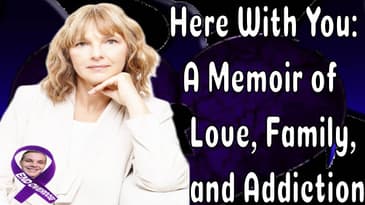


A “vivid and moving memoir” that shows the “redemptive blessing of healing and compassion.” ~ Dr. Gabor Matte, Author of The Myth of Normal Though we no longer release a memorial episode every Monday, Memorial Mondays are still an important part of what we do. Kathy Wagner, author of a book reviewed by Gabor Matte himself, joins us to share her sons Tristan's memory, the good times and the hard times she and her family had loving someone who suffered in addiction, and ultimately some of the lessons learned as she continues to heal to this day, after losing her youngest child at the age of 21 to a fentanyl poisoning.
Find a copy of this compelling read or follow Kathy's writings at
https://www.kwagnerwrites.com/
If you have a nonprofit or fundraiser that you would like to advertise for free and spread a five-minute dose of kindness to the world while doing it, you can on the latest Chuck LaFLange Production, Morning Cup of Kindness. Details here https://WWW.A2APODCAST.COM/MCK
If you are listening on the Spotify platform, you are able to share your thoughts about an individual episode in the interactive element that Spotify offers. Doing this tickles the fancy of the algorithm and really helps us to spread the message.
Also please visit our Facebook page here, and like, share, or comment on any of the posts. Your feedback there is sincerely appreciated, and taken quite seriously.
Ours sponsors, that make spreading the message possible :
Rosecrest Recovery Services Call 615-484-8792 or email info@rosecrestrecoveryservices.com
Dent Kits - http://www.dentkits.com
Together We Can Recovery Society http://www.twcrecoverylife.org
Revolution Recovery - https://www.revolution-recovery.com/
Yatra Trauma Therapy Center -https://yatracentre.com/
Nate D Foundation =https://nate-d.ca/
Chuck (00:03.145)
Hello everybody, welcome to another episode of the Ashes to Awesome podcast. I'm your host, Chuck LaFlange and with me in virtual studio today is Kathy Wagner. Kathy is the author of a book called Here With You. I will get into a little bit more about that just as soon as we welcome Kathy. How are you doing today, Kathy?
Kathy (00:18.146)
Wonderful, thank you so much for having me.
Chuck (00:20.097)
Thanks for coming on, thanks for coming on. So as I was telling you before we started recording, I haven't gotten through the book yet, so I guess you're gonna kinda do a spoiler for me at some point in this episode, but that's my own damn fault. It is so far absolutely compelling for me to read, and I gotta say, you are a gifted writer. So why don't you take us back and just kinda tell us your story the way that you tell it and how we get to a point where you're on my podcast talking about your book.
Kathy (00:36.13)
Thank you.
Kathy (00:48.27)
Sure, absolutely. And I'll try not to give too many spoilers, but it's clear just from reading the back of my book, is where it's a story of my experiences living through my son's addiction, recovery, relapse and death.
and how the healing that he found in recovery helped to heal our entire family. So that is my story in a nutshell. I have three children. My oldest, two out of three, struggled with addiction. My oldest is now six and a half years sober in recovery. My middle daughter never struggled with addiction at all and my son passed away in 2017 from the toxic drug supply
Chuck (01:13.547)
Okay.
Chuck (01:24.543)
Amen.
Kathy (01:33.2)
relapse when he was in recovery after struggling with addiction for about six years. So he was 21. Yeah so he began his addiction when he was 15 years old.
Chuck (01:40.197)
How old was he at the time then? Sorry. Okay, okay, yeah, continue.
Kathy (01:53.438)
And I guess, you know, so my story is that when Tristan, you know, even though my oldest daughter also had her addiction struggles, they were not as prevalent. They were more, you know.
It's like I compared it to as Jen, my oldest daughter, like a toddler running around with a knife. You know, you want to save them. But in the meantime, I had another toddler running with a loaded gun into a busy freeway. So that was that was my son. So my experience of being a parent through that, I felt very isolated, very alone, very hopeless.
Chuck (02:16.342)
Yeah.
Chuck (02:25.397)
Puts in perspective, yeah.
Kathy (02:37.854)
particularly early interest in sediction and I wrote this book to share my experiences so that other parents would not feel alone because we are not. There are way too many of us and
I think like addiction, it's the stigma and the shame that can be particularly harmful. Being a parent of kids, particularly youth who are in addiction, can have its own stigma and shame and it's very, very hard for parents to talk about it.
Chuck (03:10.985)
Yeah, yeah, right. Something we talk about a lot on the show is the stigma. And the stigma to somebody who's suffering in addiction, and we don't really use the word addicts anymore on the show at least, you know, my eyes were open to that, because it adds to the stigma, right? People don't say, my diabetic, right? They say, my son who has diabetes, or, you know, my son who suffers an addiction, right? So we kind of look at...
The verbiage matters, words matter, right? As you well know, of course, with your history and being a writer. Stigma faces somebody in addiction in a big way. However, one of the things that our show has really tried to focus on is the families, right? And how it affects you, the mother of somebody who's suffering in it. And how hard it is to talk about it, how hard it is to find other people to talk with about it. You know, and maybe if you wanna speak to that part of your experience, you know.
Kathy (04:05.746)
Yeah, you know, it's interesting because in a way my journey kind of mirrored my son's journey. I don't want to compare it because they're not comparable, but they are in terms of, you know, I felt isolated and alone and lost until I found a community of people to share with. So when Tristan was 15 and in addiction.
Chuck (04:22.538)
Right? Yeah.
Chuck (04:26.801)
Sounds awful familiar. Yeah, right. It's like, yeah, yeah.
Kathy (04:33.966)
That's, you know, I knew enough about addiction runs in our family. It runs in his dad's family. So, you know, I knew enough about it to be terrified. And there was no help. He was not accepting any help.
We were chatting earlier about treatment options for youth. I tried everything I could to find a path into treatment for him when he was young, but he wasn't having it. He didn't want it. He didn't have a problem. Even though he'd been kicked out of three schools, he was no longer in school.
you know, he lost all of his interests, he lost all of his friends, still he didn't think he had a problem. And the health care system didn't think he had a problem either, you know, he was the one that needed to say, okay, yes, I want help in order for him to get any kind of medical or, you know, recovery, you know, addiction support help.
Chuck (05:35.369)
Yeah.
Kathy (05:36.166)
So you know as a mother it's terrifying and it makes absolutely no sense. I ended up, I'm fairly, I'm a creative problem solver and so I did, and I was limited in terms of you know my ex-husband and I lived separately and Tristan shared you know his life between our two homes so if he didn't like something that I was
of putting in front of him he would just go stay with his dad and vice versa. So it was very difficult to set really strong consequences I think. That's a conversation that's all good.
Chuck (06:07.191)
Yeah.
Chuck (06:11.901)
And I can only imagine, and sorry to interrupt you, and I tend to do that, I guess it's kind of my job, but. Right? I can only imagine as a, like, for somebody who's not facing the addiction problems and all the things that go with that, that's a game teenagers are gonna play anyway, right? You know, two separate houses, I can bounce from one to the other, and how frustrating that must just be for any mom to add in that dynamic to it. Now.
Kathy (06:28.998)
Mm-hmm.
Chuck (06:41.387)
Was dad supportive of your efforts or you know?
Kathy (06:43.739)
You know, I, well, we did not always see eye to eye for sure. His, you know, he comes from a family where there was much more.
Chuck (06:47.462)
Okay.
Kathy (06:55.138)
of high risk addiction in his family. He had, you know, brothers who had gone through addiction treatment centers, for example, and he didn't see that as an option for Tristan either unless Tristan chose it. So, you know, when Tristan was 15, you know, I was considering doing an intervention, things like that, but that would not work because Tristan would just go to his dad's and his dad didn't see that as a viable option for him at that time.
Chuck (07:06.765)
Okay.
Chuck (07:19.775)
Yeah, there's another layer of frustration. Yeah, yeah.
Kathy (07:21.99)
So I needed to find something that Tristan wanted to do and would give him a chance at kind of health and healing and I found that by sending him to China of all places. I think you've
Chuck (07:34.257)
I, you know, that part of it, I gotta say, I was, well, I was moved to tears, right? That you went to those efforts, right? To find something that was gonna work for him and it's gonna work for you. And as a single mom, the financial struggle that goes with that, I was absolutely moved to tears reading that part of your book. And I think that says a lot about you and your efforts. So please continue, yeah.
Kathy (07:58.846)
It was one of the hardest, it was one of the best creative solutions I've ever come up with, I have to say. It was not easy. There's nobody around me that was really supportive of it. You know, who would, right? My kid's in addiction and I'm going to send him over to the opioid capital of the world. Why is that a good thing, right? But it was because...
Chuck (08:04.953)
Not kidding.
Chuck (08:13.003)
Yep.
Chuck (08:20.523)
That's right.
Kathy (08:25.494)
Tristan was a martial artist. You know, he began training in taekwondo when he was five or six. It had been his passion. He had always wanted to open up his own martial arts school, be a taekwondo master. You know, he had got his first black belt when he was 12 or 13. So that had been his passion. And he was starting to lose grip of that as well in his addiction, but I knew it was still there. So I was looking around to see if there were any options
get him away from you know the town and the friends and his drug environment and really inspire him in that particular way because it was the only thing I could think of that he had any spark left for.
Chuck (09:10.687)
Yeah.
Kathy (09:11.65)
And then I was fortunate was the early days of the internet. So 2011 and people were just starting to blog and there was a few people that were blogging about their experiences with this one particular Kung Fu master over in China who taught international overseas students and came over. So that took that you know I went over there with him for five weeks just after he turned just after his 16th birthday.
Chuck (09:31.105)
Okay.
Kathy (09:39.546)
and spent that time together and I knew right away it was the best possible place for him. From a combination of the physical, a lot of outdoor physical activity like seven, eight hours a day of intense exercise is pretty good at detoxing the body and mind. And it was community, it was the first time that I think he really felt in community with people.
Chuck (09:44.379)
Okay.
Chuck (09:58.857)
Yeah, yeah, no kidding.
Chuck (10:07.41)
OK.
Kathy (10:08.302)
and so that was a great experience. Of course it did not change his addictive tendencies or his love of drugs and so when he came back he fell right back into that. He also fell into the kitchens, the professional kitchens as a cook and then that was his new passion. You know Tristan was the kind of person who gave his all to whatever was in front of him and he would connect
Chuck (10:26.751)
Yeah, yeah.
Kathy (10:38.437)
deep kind of passionate level.
Chuck (10:39.473)
good at what he did. There's something you said in the book, you talked about it a few times in the book, his temperament when it came to the cooking and how it was like when he did good, he did great and it was a reason to celebrate, but when he did bad, now that's the part there, or when he perceived himself to have done not a good job. Talk about that with us, if you could, please. I just think it really speaks to.
Kathy (10:59.754)
Yes.
Kathy (11:06.554)
Yeah, I think there's a lot of layers. You know, yeah, I think that there's a there's a level of perfectionism or that he had. He was emotionally he was always very, very hard on himself. So he is he was a super sensitive person. Very empathetic to those around him, always willing to help give, give everybody the last
Chuck (11:08.521)
kind of the turmoil that was there, right?
Chuck (11:22.197)
Yeah.
Kathy (11:34.05)
dying the last minute, the shirt off, anything. But he expected an awful lot of himself. He struggled with emotional reactivity for his entire life. That was not necessarily something that was unique to addiction. To him, in addiction, he was an emotionally reactive child. Not
Chuck (11:50.507)
Yeah.
Kathy (11:59.946)
That sounds like he was violent. It wasn't that. It's just he had big emotions and he was hard on himself. So cooking.
Chuck (12:06.181)
Yeah.
Kathy (12:10.102)
cooking was no difference. You know, there's the, again, he was elated when it was wonderful and he was such a joy to be around. His joy was contagious. He had the best laugh. He showed his love by cooking and feeding people. Like so many mornings he'd wake me up with a fresh homemade cinnamon bun and a cup of tea and he would make everybody's birthday cakes and so forth. But
Chuck (12:30.965)
Wowie. Yeah.
Kathy (12:40.706)
that, you know, that was it. And I, you know, I could, I could even read that scene. It's not very long, but he just took out his, his moods were big, no matter what they were, they were big. So when he was in a bad mood, it was a bad mood for everybody around him. And I think, you know, one of the things that
I, you know, addiction and I hate the term codependency and yet, you know, if the shoe fits, I can wear it. Like there's this psychological interaction between people who are struggling with addiction and their caregivers sometimes where they just kind of...
Chuck (13:11.933)
Yeah, right. Yeah.
Kathy (13:22.114)
fit into each other. So with Tristan's moods, I was always tiptoeing around them, you know, being very careful, trying to save, you know, trying to prevent his bad moods, trying to not make them worse. And of course it never worked at all. It just...
Chuck (13:38.282)
Yeah, yeah. It's almost fueling the fire in a weird way when somebody's like that, right? You know, and yeah, right.
Kathy (13:43.41)
Yeah, yeah, it is. And then, yeah, so I think in the book, I do have that scene that shows kind of his ups and downs of his cooking and the ups and downs of his moods. But his moods certainly were volatile during that stage of his life, even outside of his cooking, like all the time when he was really...
His drug of choice was cocaine and it just made his moods pretty volatile to be honest.
Chuck (14:17.213)
Yeah, yeah, I get that. My drug of choice myself for a long, long time. So I do understand that, I do understand. So now he's back from China. Okay, now we get into the spoiler parts and I deserve it, so whatever. But, right, because here's at the point of the book where I'm kind of at now. How does he go from this wonderful place of, you know.
doing so well when he gets back. Well, I guess that happened pretty quick too, the deterioration, right? If I'm remembering right from what I read, right?
Kathy (14:50.706)
Yeah, I mean, he came back from China, went back to school for a while, went back to drugs for a while, went back to China again for a while to get himself clean, ended up in Thailand. So, you know, and all of this stuff, he was, you know, he was only barely 18 when he went to Thailand. So, you know, he had an adventurous life. He did a lot of living in it. And
Chuck (15:03.921)
Oh, that's right, too. Yeah. And then Thailand, right? Yes, yes.
Chuck (15:13.94)
Yes.
Kathy (15:20.042)
I'm comforted by that in some ways. When he came back from Thailand, same thing, returned to the drugs, and same thing for me, I'm trying to solve his problems, figuring out what's next. My creative solution for him at that point was culinary school. So that's what he did for a year and again, threw his whole heart into it.
Chuck (15:22.633)
Yeah, yeah, right.
Chuck (15:34.074)
Okay, okay, okay.
Chuck (15:41.802)
And was he still dabbling with the drug scene while he was in culinary school?
Kathy (15:44.498)
He was not dabbling. He was in hardcore active addiction. And, you know, I had a, I had a heart, I had a conversation with, um, a youth counselor, uh, before he went to saying like, Oh, I don't know if I could do this or he can do this. Yeah. And again, I was advised not to be throwing his money away cause he wouldn't be able to, he wouldn't be able to sustain the effort through it. Um, but he did, you know, he absolutely loved, loved cooking.
Chuck (15:48.628)
Okay.
Chuck (15:55.629)
Okay, at the Tim Hortons, right? Yeah, yes, okay, yeah, yeah.
Chuck (16:10.345)
right? And there's that old way of thinking maybe isn't, you know, it's, maybe it's got to evolve some, right? You know, all right, so yeah.
Kathy (16:15.undefined)
Yep.
Kathy (16:19.423)
And he did really well despite the fact that he was using through that time and it gave him a sense of accomplishment, it gave him a sense of purpose, of passion, marketable skills. He ended up with...
Chuck (16:30.817)
Direction and purpose are huge, right? Yeah, yeah.
Kathy (16:33.546)
he ended up with a really good job in a really good restaurant before he even graduated. And all of that put me in a position at that point to be able to say, okay, I have done all I can for him. He has a good job. He has all of the tools that I can possibly give for him. And now it's up to him. And I knew it would be up to him to fall. But at that point, I couldn't hold him
Kathy (17:03.74)
you know, an apartment, a room in a shared house and paid the deposit and bought him some sheets and towels and told him I loved him, but I wouldn't save him anymore, and I still kept saving him.
Chuck (17:12.346)
Sounds familiar? Yep. Yeah.
Chuck (17:23.433)
Let's focus for a minute if we can, Kathy, on the great parts about him. And I consider this, I'm gonna release it tomorrow, it's a Memorial Monday episode. And the mission behind Memorial Mondays when I started them was to help people to understand that the people we lose are so much more than a statistic or how they passed, right? And by doing that, I think we can get the attention of more of the muggles, I call them, because that's how policies change.
Kathy (17:42.586)
Yeah.
Chuck (17:50.313)
Right? Is by getting everybody, their attention and getting them to speak to, you know, their politicians and whatever. So let's, let's talk about that. Who was he without, without the drugs involved? Who was Tristan?
Kathy (18:04.55)
You know I have to say I am forever incredibly grateful that he chose treatment and he chose recovery because although he was himself in many ways throughout his entire addiction and he was still you know the son who I loved with all my heart you know the last 14 months when he was in recovery more than not it was a bit of a slipslidy path for him but
Chuck (18:29.908)
never a linear path.
Kathy (18:31.63)
But he came back to himself. He came back to our family. He came back to building the relationships that he was capable of building and wanting to be part of. And he had his whole world back and I had my son back. I'll just share a couple little things first because I could write a whole book about all of the wonderful things. But you know...
Chuck (18:57.769)
I'll bet you could.
Kathy (19:01.002)
There was, I was contacted a couple days ago from the woman who gave him a place to stay on the last night of his life, who had been a friend from earlier days, which means a friend from his drug-using days, but she was in recovery as well.
Chuck (19:24.669)
long-term recovery or herself.
Kathy (19:24.83)
um by that time she was I she was in recovery and she they in it she was in stable way she did smoke weed to manage uh she was not abstinent recovery but she was abstinent from hard drugs um so she gave Tristan a place to stay the last night um because he had been kicked out of rehab for a couple nights and he spent a night with me and then he was
Chuck (19:31.753)
in a stable way is what I mean to ask there, right? Okay.
That's her recovery. Yeah. Yep.
Kathy (19:52.874)
checking in with friends and he was figuring out his path forward. But she just reminded me that the last night together, they were just sitting in the sun on the patio, like laughing their pants off, sharing stories, talking about life. You know, he helped a neighbor to carry in her groceries. He was introducing himself to the neighbors, you know, helping out.
They were watching, you know, watching movies, eating pizza and popcorn, just a regular fun night of friends and laughter and community. And that's part of who he was. And then I had another friend reach out to share me photos of photos, photos of all of the good times that they had that they spent together. And also saying how, you know, this was a recovery friend and he was sharing how.
How Tristan was a hero to so many people in recovery for his ability to come back and to...
to share honestly and openly about his struggles, but to always, always come back and try again, kind of dig himself in a bit deeper, focus a little bit more strongly, understand himself a little bit more deeply. And he was only 21, and most of his teenage years were spent in addiction. So it's not like he was old and wise, right? But he was trying, he was trying really, really hard. And I think that's one of,
Chuck (21:13.952)
Yeah.
Chuck (21:22.038)
Yeah.
Kathy (21:27.224)
Tristan is he would he would always just put his put his best into it, but put his best effort into it. He was funny. He laughed a lot. He
Chuck (21:32.649)
Yeah. No kidding.
Kathy (21:39.758)
felt so good about helping people and that was one of the things that he really connected with in recovery was he was a very nervous he was a very nervous speaker but once he once he got the feed once he understood that the things that he could share about himself really helped others he was he was always willing to share his story and he believed in the power of sharing our experiences to help others and that's one of the reasons why
Chuck (21:46.049)
the service side of it.
Kathy (22:08.082)
I feel good about writing this book and sharing things about him. In the book I share things about him that he never shared with me that I found out later that he wouldn't have shared with me to be honest and I wouldn't have wanted to know. But they became part of my story.
Chuck (22:12.043)
Yeah.
Chuck (22:20.647)
Yeah.
Chuck (22:27.209)
Yeah.
Kathy (22:31.75)
And then his story became my story. And I know that he believed so deeply in the power of sharing our stories that I'm kind of continuing that legacy in writing this book.
Chuck (22:45.209)
Awesome, awesome. So, there's a few things I wanna ask you and I'm just considering the order in which that I ask them.
Chuck (22:58.901)
The Recovery Community Now, you've written this book, I mean, we connected through Amanda Stahler, who Amanda is like, she's a rock star in the Recovery Community, right? She's absolutely amazing. She's one of all the guests I've had on the show, her episode, the top three amount of traffic that it's driven, right? And we're talking, that's with some pretty crazy, you know, pretty crazy numbers, right? I had no idea it was gonna go there when I brought her on. I just thought it was a great story, so.
Kathy (23:09.761)
Yep.
Chuck (23:28.097)
How do you connect with Amanda and now the recovery community as a whole, how have you been a part of that both before and since Tristan's passing?
Kathy (23:36.67)
Yeah, good question.
Well, as I said, Tristan joined Recovery at a treatment center in New Westminster. I don't know if I'm supposed to share names or not. So he joined The Last Door, which is a pretty big organization in terms of creating community and recovery, capital and recovery presence in New Westminster. So when he joined that, I joined the parents group there that is there, that is that they offered to support parents
Chuck (23:46.665)
You can say the name, absolutely you can. Yeah, yeah.
Chuck (23:57.173)
Yep, yep, I'm aware of them, yep.
Chuck (24:06.109)
Okay, yep, yep. Which is, I gotta say, sorry to interrupt again, something I didn't know was a thing with treatment centers. So like TWC is one of our sponsors, I'm sure you know who TWC is, right? But they, okay, yeah. They have a whole section there dedicated to parents and loved ones and all that. I had no idea that was a thing. I've never actually gone through technical treatment, right? So I was blown away, and now you're talking about with The Last Store as well.
Kathy (24:09.029)
kids.
Kathy (24:18.37)
Tristan also went to TWC, yeah.
Kathy (24:29.356)
Uh huh.
Chuck (24:32.809)
I think that's fantastic that is a thing, right? Nevermind that I didn't know about it. So, you know.
Kathy (24:35.487)
It is. Like TWC offers education sessions for parents. The Last Door offers a weekly meeting similar to a NAR-NAN, which is like NA, but for people who love people who are struggling. So it's kind of...
Chuck (24:48.821)
Yeah. Did you do the L-anon or the R-anon? Did you try an R-anon?
Kathy (24:53.43)
the Naranon. I did went to a few sessions, but I honestly I found that the weekly meeting at the last door was much was what I needed. And then I then I spun off a few of the moms and I started a step group. So we started doing some Naranon step work separately to that. So most of my and then my son also
Chuck (25:02.897)
Okay, okay.
Chuck (25:08.429)
Thanks for watching.
Chuck (25:14.001)
Okay, yeah, yeah.
Kathy (25:22.634)
because of his success. You know, I pause saying success in recovery because it's hard to say his success in recovery when he passed away. And yet I don't think that those, it was success. And it is, I mean, quite frankly, I don't think that his death made his recovery unsuccessful. It made it unfortunate that the toxic drug supply shortened it and didn't allow it to continue.
Chuck (25:34.205)
At the time it was success, we can call it success, if that helps you to validate that at all. Right, yeah. Yeah.
Chuck (25:51.093)
Right. Yeah.
Kathy (25:52.422)
But because of his success in recovery, my oldest daughter, who was at that stage, she had her own daughter and was afraid that she was not able to be the kind of mom she wanted to be.
So she ended up going to Westminster House in New Westminster as well. So I was pretty connected with between my two kids and myself and the other, knowing the other moms in the area, pretty connected with the people in New Westminster. I think my daughter met Amanda originally at West... I'm going to tell a story. I don't even know if it's...
Chuck (26:11.986)
Okay. Yeah.
Chuck (26:31.521)
tell it it's your truth right so it's okay yeah right that's okay
Kathy (26:31.766)
I think, I think, it's my truth. Somebody might correct me if I'm wrong. I think that, I think that Jen met Amanda when she was working at Westminster House for a little bit. And if I recall correctly, I remember her saying, that is one crazy lady and don't want anything.
Chuck (26:43.935)
Okay, yeah.
Chuck (26:51.91)
She really is, eh? Yeah, right. I love her. I do. Oh wow.
Kathy (26:54.01)
But it was like, I don't want anything to do with her. Like, she's crazy. And then a couple of months later, she's like a Jen sponsor or something. And like, just going about how much she loves her. I think what happened? And she goes, well, she is crazy, but I got to know her. And she's like, wonderful, crazy. So.
Chuck (27:07.469)
Ha ha ha ha ha ha ha ha ha ha ha ha ha ha ha ha ha ha ha ha ha ha ha ha ha ha ha ha ha ha ha ha ha ha ha ha ha ha ha ha ha ha ha ha ha ha ha ha ha ha ha ha ha ha ha ha ha ha ha ha ha ha ha ha ha ha ha ha ha ha ha ha ha ha ha ha ha ha ha ha ha ha ha ha ha ha ha ha ha ha ha ha ha ha ha ha ha ha ha ha ha ha ha ha ha ha ha ha ha ha ha ha ha ha ha ha ha ha ha ha ha ha ha ha ha ha ha ha ha ha ha ha ha ha ha ha ha ha ha ha ha ha ha ha ha ha ha ha ha ha ha ha ha ha ha ha ha ha ha ha ha ha ha ha ha ha ha ha ha ha ha ha ha ha ha ha ha ha ha ha ha ha ha ha ha ha ha ha ha ha ha ha ha ha ha ha ha ha ha ha ha ha ha ha ha ha ha ha ha ha ha ha ha ha ha ha ha ha ha ha ha ha ha
Chuck (27:14.806)
I could totally, if you know Amanda for longer than 10 minutes, all of that makes sense, right? Yeah, okay.
Kathy (27:19.594)
Yeah, yeah, exactly. Yeah, so that's kind of my connection there. And to me, so my recovery was founded in that community in the New Westminster Recovery Community, predominantly through the group sessions at the last door, and then at a step group that some moms and I started working through. And...
Chuck (27:37.792)
Okay.
Chuck (27:45.606)
Okay.
Kathy (27:48.478)
It was one of the first times that I found that kind of community in my life where I was able to talk about anything. Like we could talk about anything in those groups and laugh at, and some of those scenes are in the book, like we laugh at some really dark things, but like, you know, you might as well laugh about them, right?
Chuck (28:04.601)
I'll interrupt you yet again now, right? I'll interrupt you on that. We used to do six episodes a week. Thursdays, I have this genius comedic guy, he has a podcast called No New Friends out of Florida, Scott Maffey, and we would kind of poke fun at living in sobriety and some of the things. And he's forever, he was forever going, man, like, I don't know, like, are we gonna offend people? I'm like, man, here's the thing, right? Once you've been an addict,
or somebody suffered an addiction, or the loved one of somebody who suffered, your bar has moved forever, right? Like, forever and ever, things that you will find things funny that most people will just be shocked at. But the bar has moved now, right? Your normal day is very different than most people's normal day as such. Everything is relative, right? So continue, just continue, yeah.
Kathy (28:40.17)
Yeah.
Kathy (28:50.867)
Yeah, and when you're living in it.
Kathy (28:56.882)
Absolutely. And when you're living in it, you need that release, right? You need to be able to laugh about some things that you can't change because otherwise you can't cry all the time, right? You know, one of the things that I love about the recovery community and that I learned as I was going through my own process of recovery is like you're saying the bar has changed and that's true, but it's true in so many ways. Like I developed such an incredibly strong appreciation for the
Chuck (29:07.477)
Right? True story. Yeah.
Kathy (29:27.356)
like just the little things like one good day, the sunshine coming out, the you know a hug from my granddaughter, seeing my son sober, like the smallest things can bring such gratitude and such appreciation. And then when he passed,
Chuck (29:46.429)
Absolutely, right? Absolutely. Yeah.
Kathy (29:51.254)
I was no longer part of any of those communities anymore. And that was another loss, right? So, you know, in the grief world, we talk of...
Chuck (29:57.101)
Hmm. And perhaps when you needed them the most as well, right? Like, you know.
Kathy (30:02.11)
I needed someone the most but it couldn't be those people anymore and that was the thing, right? Like there's we talk about a secondary losses in grief. So losing Tristan was the primary but I lost so many other things along with that and the recovery community supports was one of them. It wasn't that I wasn't welcome. It wasn't that I couldn't continue to be part of those things, but I couldn't continue to be part of those things. Like I couldn't sit in a room where other moms still had their sons and talk about
Chuck (30:13.391)
Obviously.
Chuck (30:25.758)
You're different, yeah.
Kathy (30:31.604)
I just I couldn't do that. So I. Well, I wouldn't I wouldn't go into that particular group again, because it's not. It's not where I need to be. I certainly can talk to to.
Chuck (30:32.417)
Ah, right. Yeah. Now, can you?
Chuck (30:47.135)
Yeah.
you would feel more comfortable and not feel that kind of pang of whatever it would have been at that time, right?
Kathy (30:54.322)
No, yeah, no, I don't like I I'm very I love spending time. I love spending time with other parents who have children. Well.
in recovery particularly because that's heartening. But I'm also very comfortable spending time with, you know, I talk to other parents who have kids who are in active addiction and can just hold space for that. And I have facilitated a support group through Healing Hearts Canada for loved ones who've lost, or parents who've lost loved ones to drug harms. So I can hold space for people in grief as well.
Chuck (31:29.448)
Okay.
Yeah, yeah. Healing Heart said that's part of the mom's thought the harm. Is that part of that same network? Yeah, yeah, okay, yeah, yeah. Yeah, they're doing great things. So continue, sorry. Yeah, yeah, yeah.
Kathy (31:37.118)
It is, yes. Yeah.
Kathy (31:41.578)
Yeah, yeah, no, it's a it's a great organization. So I think, you know, honestly, I think once I after Tristan passed Mum Stop the Harm was the community that I gravitated to. In terms of, you know, they've got the two branches, really, they've got the advocacy, the very strong advocacy branch, but they're also a very good grief support network.
Chuck (31:52.454)
Okay, yeah.
Chuck (32:03.165)
Yes. Yeah.
Kathy (32:03.482)
And for me, after Tristan had passed, that was where I went to kind of pour out all of my grief and hear other people's grief. And then I had to take a step away because I didn't want to hear anybody else's grief. I needed to process mine. And then I was able to step back into that and offer more of that, a support for others without it impacting me because I have...
Chuck (32:10.137)
Okay, okay, yeah.
Chuck (32:27.745)
That's admirable. That is really admirable. Yeah, yeah, yeah. Okay.
Kathy (32:32.37)
I think and that's part of the thing about that I've seen in recovery and in community is the idea of you heal and then you give back to others as a way of continuing to heal and that's, that's been my path as well.
Chuck (32:46.281)
Right, right, without a doubt, without a doubt.
Chuck (32:53.949)
We're getting to a point now where I almost don't want to ask it because, but can you tell us about what happened?
Kathy (33:02.786)
Um, yeah, so somebody I had my book launched last week and somebody came up to me afterwards said what was it like when Tristan passed?
I don't mind answering that, but how can you? How can I answer that? What I can say is I have written about it. If you want to know what it was really like, you can read the book. And I'm not trying to shirk off that answer, other than it's too complex. What am I going to say about it? He ended up...
Chuck (33:20.373)
can't imagine.
Kathy (33:44.428)
up until a few days before he passed and he was he was kicked out that time you know he had been in and out a few times and he was kicked out for relapsing behaviors so
Kathy (34:03.67)
The plan was that he was going to connect with his sponsor, who was an absolutely magical man, who just did so much good work.
in the community and they were going to figure out next steps. And I think Tristan was hoping to stay with him for a while again. And I don't know that ever happened because Tristan started using. And I think when he started using, then he would just push all of those other things off for a while. So
Chuck (34:40.589)
Of course, they're off. The way I like to explain that, that particular thing to people, sorry to interrupt again.
Kathy (34:46.328)
Mm-hmm.
Chuck (34:48.809)
when you're in it, and I can speak from my personal experience, all the things you're supposed to care about, all the things you do care about, all the things you're supposed to give priority to are in, they're in another part of the house behind a locked door. So people say they chose, you know, he chose drugs over his kids, or he chose, you know, he chose to get high instead of his parents. It doesn't work that way. He chose drugs, right? And then once those are in front of you, when you're.
Kathy (34:55.458)
Mm-hmm.
Chuck (35:16.077)
when you're somebody who suffers an addiction, once that's in front of you, there is nothing else to choose, right? And then the odd time that you could pull your head out of your ass long enough to open that door, that to go to that other part of the house, to open that locked door and look inside, shame. Shame covers you like a wet blanket and you just slam that door shut and write, oh, look, I've got a coping mechanism built for just these type of feelings. I've already got that wired into me and you go running back to the drugs.
Kathy (35:20.695)
Yeah.
Kathy (35:32.951)
Yeah.
Kathy (35:42.71)
Yeah.
Chuck (35:44.022)
And to help people understand that, I think if people did, they could handle it with so much less resentment, right? In all the things. So continue though, continue, yeah.
Kathy (35:46.571)
Yeah.
Kathy (35:52.17)
Yeah, and I think that that's true. And I think, you know, Tris... No, I think that's great for me to hear because I have never struggled with...
Honestly, any addictions, let alone drug addiction. So I have tried my best to understand it. And I listen to stories, but it's, you know, it's through hearing what things are like for you that I better understand what things were like for my son. But I do know, like he loved it was Dr. Don Hedges was his sponsor in New Westminster, and he loved Doc and looked up to him. And and I think that there was a degree of shame. It's like, OK, here he is.
Chuck (36:09.601)
Yeah.
Chuck (36:18.901)
Yeah, yeah.
Chuck (36:26.623)
Okay.
Kathy (36:33.708)
one more time, he screwed up again. That just made him pause and go back to using for a while. And he didn't admit to anybody he was using. I knew he was using because of his behaviors and his responses, but he was not admitting to it. So even the woman and her boyfriend that he spent time with on his last night, although he was smoking weed with them, he was denied.
Chuck (36:42.525)
I, without a doubt, yep.
Chuck (36:50.95)
and your mom, right? Yeah.
Kathy (37:03.528)
that he was using. He was talking about taking his 60 days coming up or whatever. After they went to bed and he stayed up and continued to use what he used, he died from lethal doses of cocaine and fentanyl in his system.
Chuck (37:24.333)
It was fentanyl and the cocaine, yeah? We assume, right, yeah.
Kathy (37:27.474)
it you know I again you know in my mind there's you know it's a mystery right I mean there's um again you can read the book for all of the details I had a long call with the coroner to talk about could be this could be that could have been this could be that I mean it's down as um
Chuck (37:37.325)
Fair enough, fair enough.
Chuck (37:51.261)
Okay, yep. It's a conjecture now, I guess, right? Yeah, right.
Kathy (37:58.508)
I mean, I don't know.
Chuck (38:00.873)
Yeah, yeah, fair enough, fair enough. Okay, sorry to do that. So he stayed up using and, you know, how do you get the phone call? How does that hit you if you can walk us through that?
Kathy (38:14.86)
Um
Kathy (38:22.311)
Yeah, you know, it was...
Kathy (38:31.223)
Eat it.
I'm, you know, I'm, this one, I think I am just gonna say, you know what, you're gonna have to read the book. I don't know that this is a moment that I really wanna relive here. It's, I can tell you one thing, it didn't happen, you know, I had envisioned it for years. I envisioned what this moment would look like. And it was different. And it was...
Chuck (38:39.861)
And that's fair, that's absolutely fair, yeah.
Chuck (38:46.857)
Yeah, yeah, yeah. I can't imagine, so.
Chuck (38:56.497)
And I get that impression from what I've read so far.
Kathy (39:04.018)
It was different. And it took time to process like to really to really well, you know, obviously, it's a pretty traumatic event, it takes time to process years in some ways. So one of the things that I'll kind of segue into is, is that you know, the whole, the whole idea of processing your trauma and understanding it
Chuck (39:06.782)
Yeah.
Kathy (39:34.522)
is something that I had never really intended to integrate into the book. When I started writing the book, what was in my mind is that I would write a book that it would help people to understand that addiction can happen to anybody in any family, which is true.
Chuck (39:49.645)
Hmm. Very.
Kathy (39:50.926)
I wholeheartedly believe it. And what I understood through the course of writing is that we were not just any family. Like how I could have been in denial enough to even think that for a moment was beyond me given the fact that there's functional addicts in my immediate family everywhere.
there were homeless street addicts in my extended family and very severe addiction in the kid's father's family. So it's not like it's just any family. And there's trauma that runs with that, right? So part of what my experience through writing was, was working through the trauma and seeing it for the first time. And...
Chuck (40:40.833)
Okay.
Kathy (40:42.254)
One of the things that, actually I'd be interested to hear what you think about this. One of the things that I did was I came to terms and understood Tristan's trauma better. So Tristan,
again was an extremely like hypersensitive person. So he felt deeply and was traumatized by things that others might not be traumatized by. And then he was a victim of some circumstances that were absolutely traumatic. And in addiction, I believe that people live in traumatic circumstances when they are in addiction.
So, so he had a lot of trauma that he was working through. And one of the things that as a parent I had done with him growing up and through most of, most of the time until after his death is separate him from his addiction. And I know a lot of parents do this. They say, Oh, that's the, that's the addiction talking. That's not him. Or, you know, if they, you know, are,
Chuck (41:26.609)
I can relate.
Kathy (41:54.782)
violent or, you know, lose their home or acting erratically. That's the addiction. That's not that's not Tristan. That's not my sweet boy. That's not how he would be. So it's very separate. And one thing that I did kind of work through in the book is I came to the point of realizing that as much as we like to say our kids are so much more than our their addictions and they are and that's not the addiction. That's them. And it's true that
that the inner part of who they are is not in addiction. The reality is that they did engage in those behaviors. They had those thoughts and they don't have the luxury of separating from them like I do, right? Because they're living it. Yeah, and so, exactly, they're thinking it, they're doing it, and they're feeling it.
Chuck (42:40.714)
because they're living it, they're not projecting it, and they're not thinking about it, they're thinking it, right? So, yeah. Yeah.
Kathy (42:49.742)
Like one of the things I mentioned in the book is I kind of thought of it is like if addiction was driving the car there were times that Tristan was along full hearted, full heartedly for the ride. It's like come on let's do it and there's times he was like whatever and there were times where he was fighting to take over that steering wheel, fighting for his life to take control of it but whichever way he was he was the one with those thoughts, with those behaviors,
consequences both internal and external of all of those things. And when I tried to separate addiction as a different entity from him, I was not giving him credit for...
certainly his recovery, the work he was doing, you know, the work and the effort it took for him to take control of that car and bring it back onto track, to take control of his thoughts and his feelings, to take responsibility for his behaviors and to develop the strength that he was developing in the process of that. Like I think that's where a lot of the respect that I have for people who
of the tremendous effort and strength that they have shown in that and by separating somebody from their addiction you don't give them credit for that either.
Chuck (44:19.461)
That's interesting, I've never heard it put like that. So I'm processing it as you're saying it, as somebody who has been in it for decades. And you're right. You're right, like in a profound way. It's not often I hear profound things on the show anymore. You know, 170 some odd episodes. Speaking to the trauma, and I think.
Kathy (44:27.424)
Mm-hmm.
Chuck (44:47.657)
But a lot of people don't know, and I've learned, I've been fortunate, but one of our sponsors is a trauma centre out of Phuket, Thailand, a Yatra treatment centre, who is from your part of the world. He's a lower mainland guy whose career took him to Thailand and he started out that way. I've learned a lot from him. I've learned a lot from Ryan Baffgate, our Wednesday guy. I've learned a lot from Lisa on the weekends. I've had some really amazing professionals. The thing about trauma is that it happens
within you, not to you. So what people minimize sometimes, and I don't think in a malicious way, I think in an unintentional way, something that happened to say Tristan when he was six years old, especially I'm a hyper, hyper sensitive person. I'm reminded of that often. It's not an episode if I don't cry. You know, it's like that for me. So I can kind of relate to that part of it, right?
Kathy (45:17.791)
Uh huh.
Chuck (45:46.677)
whatever it is, something that's seemingly inconsequential happens to somebody when they're six years old and it starts to form this trauma in their brain. 20 years later, 18, 15 years later, whatever, people, well, that was 15 years ago. And it might've been something as simple as, I'm a twin, right? So my mom favored my brother, right? I thought that for a very long time. And whether it was true or not is inconsequential because my reality is my perception.
Kathy (46:15.754)
Yeah.
Chuck (46:17.653)
that forms, and it's like, well, that was so long ago. It's been building in my brain for 20 years. So you say it was so long ago, but to me, it's been snowballing inside. So it happens within me, not to me. So something, and a lot of people don't even know where their trauma comes from. You know, it's some minor thing that happened, minor, and I say that trepidatiously when I say that, but just somebody when they're a young person can turn into something really big.
Kathy (46:23.787)
Yes.
Kathy (46:31.202)
That's right.
Chuck (46:47.253)
Right? And if addiction is the smoke, then trauma is the fire. Almost always, right? Almost always, you know, so.
Kathy (46:51.102)
Yes. Yeah. And I like how, you know, Gabor Matej talks about the big T and the little T trauma, which has helped me to really understand because I've never really felt any need to talk or address my trauma because I'm riddled with little T trauma. But the big T's, like, well, I probably...
Chuck (47:01.61)
Yeah.
Chuck (47:19.541)
Death of a son is big T for most certainly now, but yeah, right, yeah, right.
Kathy (47:21.754)
At this point, at this point, yeah, now, but it's like, okay, that trauma is for other people, right? Not for me in terms like I don't deserve to look at myself because look at all of these other people who have it really bad, right? And then, you know, even for Tristan, he did have some big T traumas in his life, but even still, it's the little ones, it's like you said, that make the reality and even, you know, as a sensitive person and somebody who's self-
Chuck (47:30.665)
Yeah.
Chuck (47:36.044)
Yeah.
Kathy (47:50.842)
just very hard on himself or you know poor self-esteem. You know you start telling yourself that you're not worthy enough times and it becomes the truth. And that is trauma in and of itself and you know.
Chuck (48:05.985)
That's that little T trauma that specifically I'm not worthy. That's the net result of little T traumas, right? You know, right? Yeah, yeah, absolutely.
Kathy (48:09.835)
Yeah.
It is. It is. And that's a huge thing. Right. That's a huge thing. So so for me, that's you know, that was the that was the biggest thing for me personally, to explore my little T trauma as and looking how it shaped my world and how it shaped and contributed to, you know, the family dynamics that contributed to dysfunctional and addictive behaviors in my kids.
Chuck (48:39.381)
which benefit of hindsight, you know, I think it's, when I hear somebody say that, I'm like, but don't blame yourself, like, so, you know, and I think you're at a point in your healing where you're past any of those kind of, I would hope anyway, I shouldn't project on you, any sort of self-blame, but when somebody else hears it, I just like, no, but be careful because you're allowed to have those, you know, things happen to you and, you know, but go ahead, yeah.
Kathy (49:00.406)
Well, sure, I-
Kathy (49:05.242)
Well, of course, you don't know, right? You don't know what you don't know. And I think in a lot of the books, you know, as a parent who...
I have yet to meet the parent who has a child living in an active addiction who does not feel some guilt. And I have yet to meet a parent who has lost their childhood drug harms who does not feel guilt. So, so as much as it's nice to say, oh, you don't need to feel it. The reality is we do. And it's okay to acknowledge that because we all do it's our job as parents to raise our children as well and have them live healthy long lives. And when that doesn't work out, it feels like our fault.
Chuck (49:20.461)
Right, right.
Chuck (49:31.17)
Yep.
Chuck (49:42.226)
I don't think you're human if you don't somewhat hold some blame on yourself, right? Whether or not you should doesn't matter, but. Right, yeah, yeah.
Kathy (49:49.118)
Right. And it's important to understand really that feelings are not fact. Right? You know, we might feel at fault when in fact we are not. You know, we have to remind ourselves that we have... Like, I remind myself I did every single thing I possibly could. I did everything I possibly could that I knew how to do.
Chuck (49:56.842)
Yeah. Yep.
Chuck (50:10.265)
And I think you're one of those cases from what I've been reading. Holy cow. Are you ever one of those people? Right. Um, I've, I've dubbed you warriors of love. The mothers like yourself. Right. And I've done that some time ago. Right. And then I don't say that casually. I mean it. I really do. Right. You know, like
Kathy (50:15.646)
Yeah. Eh, eh.
Kathy (50:20.879)
Okay.
Kathy (50:24.094)
Yeah, and it is that's exactly what is we fight fiercely out of love doing everything we possibly can. And and that's like that's kind of what I you know what I like to share with people now is that like any parent who is.
struggling with a kid in addiction who is operating from a place of love and good intention is a freaking hero because nobody understands how hard it is. And I don't care if it's if they're enabling and codependent or doing tough love or whatever because honestly, I don't think I think every person is different if it's good intentions and love and you're trying your best You know That's all you can do
Chuck (51:10.333)
Yeah, yeah, right. Absolutely. There's something I like to share with people, now and again it occurs to me, Dr. Lisa from our Weekend Rambles, she spoke to choices once, and how addiction is a choice. Yeah, right? And here was kind of her take on it, and I'm gonna play it for you. And.
It's, to me, it was, it's quite profound. It put it in words that, well, I'll just play it for you and I'll let you, I'll let you decide. Okay, so yeah.
Chuck (52:48.269)
Does that just, for me that was like, when she said those words, I was like, oh my God, right? Thank you, thank you for saying it that way because it just, it helps, it just helps understand.
Kathy (52:48.951)
Yeah.
Kathy (52:59.806)
Absolutely. You know, we all make, you know, the other thing that drives me crazy, we all make choices every day of our lives with, you know, the food we eat, or whether we exercise or not, or all of these things that help contribute to health and wellness or not. And yet, it doesn't always play out, right? You know, you've got, you know,
There's all sorts of health conditions, heart disease, type 2 diabetes, all sorts of things that are lifestyle related. And yet even that, those don't carry the same stigma.
Chuck (53:37.213)
No, they certainly don't. When you walk into a hospital, you don't have to convince anybody to treat you. If you have a heart attack because you ate poorly and didn't exercise for 20 years, you are immediately granted all the medical attention that you could possibly need, at least in Canada here, and you are done so with fervour. If you walk in after making one decision about addiction, a handful of micro-choices, I call them, that led you to a place of
Kathy (53:41.762)
No.
Kathy (53:45.523)
Right, and...
Kathy (53:55.666)
Yeah, and some of those people.
Kathy (54:04.572)
Yep.
Chuck (54:06.373)
of absolute despair and on death's doorway, in death's doorway, you have to convince them. You have to work the system. You have to, right? And if you're lucky, those efforts will end up with you getting help, right? And that is stigma, right?
Kathy (54:10.922)
You still don't get help.
Kathy (54:21.782)
If you're very lucky. You know, it drives me crazy that it's not about a personal choice or not. Because personal choice, when it impacts physical health, not an issue whatsoever. It's only about mental health. And we do not treat mental health in this country as if it's health. Like, how can we separate? Like, I don't understand how as a society we separate mental health from physical health, as if it's not, as if our brains are different, are not part of our body.
Chuck (54:50.773)
Right, and I understand 100%, right? You know, again, nobody would hesitate to say, my son has a broken leg, right? But my son is wrestling with severe addiction, a substance use disorder, right?
Kathy (55:04.694)
And there is enough evidence, scientific evidence, to say that it is brain chemistry, that it is biochemistry, it is not, oh, I'm just going to decide I'm going to have substance use disorder because that sounds like a good escape route from something. Like, no. It's like...
Chuck (55:12.605)
100%.
Chuck (55:21.305)
Right? So the first time I was ever introduced to Fentanyl, I had never been around it knowingly. I'm sure by this point it had been somewhere in my life. But because I was an upper guy, I was a coat guy, not a heroin guy, and the two, back 10 years ago even, the two sides would never even have occasion to speak. There were two totally different worlds, for the most part, right? Something changed with Meth and Fentanyl, came on the scene together, but anyway.
The first time I was ever exposed to fentanyl, I was in a motel room, this girl had gone to sleep. I left, I came back, I went into another part of the motel room, and I was like, she'd been sleeping for three hours, I don't know what it's like for her to be dope sick. Like I'd only ever seen ornery before, I had never seen really dope sick. And then a few minutes later, we heard this horrible screaming coming out of the front room. We go out there, and there's this mid-20s girl.
screaming, rolling around in pain. Like just in the most, and there was no way that was manifested. There was no way she was faking it. What I saw in front of me was a human being suffering in the most, like a horrible way. At the time, fentanyl was very new. It took me hours to find something for her to get better, as they say. But I remember sitting there thinking, nobody chooses this. Nobody, nobody chooses this.
Kathy (56:43.562)
Nobody chooses this.
Chuck (56:45.869)
There's some micro choices that got this human being to suffering, to suffering in a way most of us will never experience in our lives. And that's how she starts every single day. So continue, yep, yep.
Kathy (56:49.72)
Yeah.
Kathy (56:54.538)
No. And you know what's interesting?
Yeah, and that's inexcusable that we would allow that to continue for people. And one of the things where I think that the opioid crisis is raising awareness of what withdrawal looks like and maybe is opening up some doors to better supports for that, hopefully. What's interesting to me too is what I learned. Well, Tristan also was a stimulant addict.
Chuck (57:02.326)
Right?
Kathy (57:28.876)
So again, not the horrific physical withdrawals. But one of the things that I learned was that like, steaming cocaine has one of the worst psychological withdrawals in terms of how long lasting the mood disorder, sleep disorder, emotional dysregulation and intense cravings for up to 18 months.
and that's a brain chemistry thing, not a choice thing. It's like your brain is wired to have those things occur and it takes at least 18 months to heal, which is a longer healing time than some than some of the other things. But again people don't like, people don't give as much, there's not as much awareness to the brain chemistry aspects as to the physical, to the other physical things. It's like okay.
Chuck (58:09.354)
percent.
Chuck (58:22.241)
Right? It's something that Lisa speaks to quite a bit actually. Right? No, no, no. Right? I can tell you, if not for the podcast, there's no way, there's no way. Had I got, went out and gotten a job, you know, I could put all the PTSD aside and when I got a job in a warehouse, there's no way I'm sober today. No way. And I haven't been sober a year yet.
Kathy (58:25.866)
Yeah, you've been sober for three months now, you should be able to make good choices. And the reality is no.
Chuck (58:50.025)
I'm three weeks away today actually, three weeks away from a year. Thank you, thank you for that. There's no way that I do it without the podcast because I've got all these supports and I live it. 16 hours a day, this is what I do, I live recovery. I can't imagine, and on top of that, the stimulant sings, so I don't know if, was Tristan with ADHD at all? Was that a thing with him? Aha, aha.
Kathy (58:52.174)
Congratulations.
Kathy (59:04.012)
Yeah.
Kathy (59:15.018)
Yes. Yeah. It was undiagnosed until he was in recovery. Yeah.
Chuck (59:19.561)
Me, me too, me too. I've been self-medicating for 20 some odd years with stimulants, right? Somebody else does cocaine, they're peeking through the blinds, they're paranoid, they're whatever. For somebody like myself, and I'm guessing, Tristan, I can't speak for him, it was more of a, I'm where I need to be now, right? That's what it was, right? So meth, cocaine, that's self-regulating for me. And still,
Kathy (59:24.234)
Yeah, exactly.
Kathy (59:38.622)
Yes, he would find his flow. That's what it, yeah.
Chuck (59:49.281)
technically undiagnosed, I have been. I have a psychiatrist that I speak to at least a couple times a week, right? And the therapist, we know what's going on now. And you know, whatever, I've got some access to some medication just in the last couple days. So this is a new thing to me. For months, for months, it's been, because I didn't know this, I didn't know it until I was sober for a few months, that oh.
Kathy (59:56.991)
Mm-hmm.
Chuck (01:00:16.309)
you had ADHD and that's why you were self-medicating all these things. My buddy's wife had said it to me and I remember thinking, I wish I didn't know that. I wish I didn't know that because for me to solve this problem is 40 bucks in a phone call. I moved to provinces so I have some healthcare things that I'm trying to deal with so to get in front of an actual doctor, get the real prescription, all that jazz is a real pain in my ass right now. For me to solve the problem is 40 bucks in a phone call. For me to get rid of this unwanted chaos.
Kathy (01:00:36.754)
Mm-hmm.
Chuck (01:00:45.429)
that's been there now for almost a year, all I gotta do is make a phone call, right?
Kathy (01:00:50.498)
Well, I hope. You know, the thing is that the ADHD, my middle daughter, I mean, actually, all my kids have ADHD, diagnosed late, and my oldest chooses not to, to medicate because she's quite comfortable with her ADHD. My middle daughter is going to school and finding that's a...
Chuck (01:01:04.877)
That's okay.
Kathy (01:01:10.41)
a hardship so she's trying to find the right medications but she's not finding it easy to find the right medication so it's not necessarily a quick and easy but I remember a conversation I had with Tristan a few months into his recovery after he was given ADHD meds and he was like mom he says it's a whole new world he says I can actually follow conversations
Chuck (01:01:10.837)
detriment, right?
Chuck (01:01:18.127)
Yeah.
Chuck (01:01:37.173)
Right? Yeah.
Kathy (01:01:39.824)
and he'd be like, uh, uh. It's like, it's because it's cause it's like, you all, you all sounded like Charlie Brown, brr, you know, the Adelson. And, and he said, and now I can actually carry on a conversation with somebody. So.
Chuck (01:01:42.938)
Smile and nod. Yeah. 100%. I can relate to his struggles so much. To Cathy, right?
Chuck (01:01:55.113)
Right? And that's kind of the cutesy funny stuff about it, about the ADHD thing. But then there's the other side, right? And it's something that I had no real, because again, I've been self-medicating for 27 years. I never tried sobriety on, not once in all that time. And.
Kathy (01:01:59.789)
Yeah.
Chuck (01:02:14.721)
the unwanted chaos, right? So it's one thing to wanna be able to focus on a conversation and trust me, when you wanna focus and you can't, it's not something you're ever gonna take for granted again, that's most certain, but the unwanted shit that's going on in your brain, looking at a mess you need to clean up right now for four days and having no idea why you can't do it. Well, like why, like you're paralyzed, right? Fuck, it's horrible, it's a shit sandwich, right? So, oh.
Kathy (01:02:34.731)
Yeah.
Kathy (01:02:38.984)
Yeah, yeah, yeah.
Chuck (01:02:44.309)
40 bucks in a phone call, right? So to have that knowledge is almost worse, right? So again, I can relate to some of what Tristan was struggling with there, right? So I'm glad he found that towards the end though.
Kathy (01:02:55.734)
Yeah.
Well, yeah, I don't think it's always worse if you can get this sorted out at any stage. I think there's more and more people that are getting late adult diagnoses of these things and are able to take more control, make their own choices about what's going to work for them or what isn't than there ever has been before. So I think that's only a good thing.
Chuck (01:03:16.413)
Absolutely, absolutely, right, absolutely. Oh, I could go on for hours with you, Cathy. I really could. I wanna touch base on at least one more subject here. Mandated treatment, because we did kind of speak about it in the beginning. Having lived it, I'll give you my thoughts real quick to it and I'll let you run with it after that. My mind has changed.
Chuck (01:03:47.693)
changed a lot lately, right? String of deaths, you know, people reaching out to me wondering what do I do. And I made a Facebook real not long ago to say, with, if it was, like I don't have kids of my own, but I have a niece and nephew and I've been stepfather, so I, you know, when people ask me what to do, my advice is be there, keep a connection open, answer the fucking phone, right? Like do all those things, and just because connection is everything.
What would I do if it were my kids, my niece or my nephew? I don't know. I don't know that I wouldn't physically go take them and handcuff them to a pipe in the basement. I don't know, right? So I see mandated treatment as a necessity now at a point, not for everybody, not in every case, but as a tool. And I'll let you run with it and your thoughts on that.
Kathy (01:04:41.938)
Yeah, I think it's complicated. I think, you know, for me, I 100% would have put Tristan into treatment when he was 15. And if I had the choice, and I 100% think that could have been a very good thing for him. Do I think that if I put him in against his will at 15, would he have stayed sober? No, I honestly don't think so. But he would have started on that recovery path sooner.
and he would have started practicing those skills sooner and I think he would have landed, had a much higher chance of landing solid, you know, solid in his sobriety sooner and hopefully soon enough to have missed this fucking opioid crisis which killed him. So
Chuck (01:05:25.322)
Yes.
Kathy (01:05:27.526)
So I would have done it at that time. I don't believe that a child should have a child who is inactive addiction and struggling with mental health issues. I do not believe that they should be the ones who call their health care shots. I do believe a parent should be able to say, you know what, my kid needs help. Right now that that's not the way that it works.
Chuck (01:05:47.021)
100%.
Kathy (01:05:51.698)
So, you know, I was literally told that he needed to OD or break laws or do something to get any sort of help. I was like, fuck, can we not? Why does it? Why does at 15? Why does that need to happen? I also am a big believer in evidence and evidence-based care and evidence-based approaches. And I know that there has been some evidence to support the fact that
Chuck (01:05:59.501)
What the f- Like, like, yeah.
Kathy (01:06:19.158)
that forced care is not good and does not help. I don't know, I haven't looked at all of that. So.
Chuck (01:06:26.925)
It's worth a look, it's worth a real look at it because there's some skewed, as there always is, right, with any study, with any statistic, there's always an end goal, right? So you have to, you know, right, yeah, yeah.
Kathy (01:06:31.35)
Well, this is the thing.
Kathy (01:06:36.198)
Well, there is and this is the thing, like I think that within this addiction recovery space, we need to be looking very closely at who's doing the research and who isn't and who's funding it and who isn't.
Chuck (01:06:48.445)
And the causology, as we call this, right? Yeah, yeah.
Kathy (01:06:52.058)
So I, you know, all I can say is I think for minors, I think there's there should be. I'm sure that there have been some instances where it has been the wrong approach at times, because that's the name of the game. There's not a single, there's no one approach that is going to work for everybody. And I think that
Chuck (01:07:11.053)
There's no recovery method that, as a matter of fact, the rates are across the board, right? The rates are horrible, right? You know, success rates, right? You know?
Kathy (01:07:15.667)
Yeah. Well...
Right. I mean, and maybe the measurements are horrible. What does success mean? Does it mean you go into treatment and then you have a year of consecutive clean time? Clean time, hate that. You have a year of consecutive abstinence-based recovery and that for like one year, five years, is that a success? Or was Tristan's recovery a success, which meant he was
Chuck (01:07:39.274)
Yeah, yeah.
Chuck (01:07:45.129)
Which, yeah.
Kathy (01:07:48.712)
sober for 12 out of the last 14 months of his life and he had regained his abilities to function, to contribute, to love, to be loved. You know, is that not a success? Like we really have to start looking at what these things are.
Chuck (01:08:01.714)
I would say it is, yeah.
what success is, right? We're not gonna have a drug-free world. That's the reality, right? There's always going to be this, the substances in the things, right? In my mind, if your recovery method, whatever it is, whatever you're using as a recovery tool or method, today is better than yesterday, or your life is moving in the right direction, then you're using the exact right one, right? Whatever that means. If you're not moving closer to death.
you know, then you're doing better.
Kathy (01:08:36.005)
Bye.
I heard somebody speak at the recovery conference lately, which opened my mind to really what harm reduction could be. And she is now living three, I think she's at three or so years in abstinence-based sobriety. But she was saying when she, you know, there was a time in her life where she considers her hard drug use to be harm reduction.
because if she was not using those hard drugs she would have committed suicide. So being able to escape the pain that she was in allowed her to live for long enough for her to reach out for help. So you know harm reduction is a spectrum and recovery is a spectrum.
Chuck (01:09:25.953)
Right. Yeah.
Chuck (01:09:32.029)
It really did truly is. My mind has been opened so much to all of it, right? I leaned much towards harm reduction when I first started out the podcast. And then you get to talking to more people about the other side of it. And then what I've come to realize is that there's a big toolbox and a lot of tools in it. And this all or nothing, whatever end of the spectrum you're at is a shit attitude that stops a lot of really great conversations from happening.
Kathy (01:09:57.616)
Yeah.
Chuck (01:10:02.168)
you know so you know
Kathy (01:10:02.306)
Yeah, and it's, you know, when there's people in one camp, like knocking the other people on the other side of the spectrum as if their experiences are not valid, or, you know, it's damaging, like, it is such a huge crisis that we really do need to work together to, you know, everybody has their own perspectives, everybody has their say in it, there's room to value all of those things if we would just come together.
Chuck (01:10:15.177)
Right? Yes.
Chuck (01:10:29.093)
To put the crisis into perspective for anybody that might be listening and isn't aware of what the problem really is, in North America, a 747 falls out of the sky every single day. That's how many people die. 85 people a day in Canada, 2022, died of an opioid overdose. Four times the amount of car accident deaths. And it's worse.
Kathy (01:10:51.754)
Yeah.
Yeah it is the leading cause of yeah it's a leading cause of death in people between the ages of 10 and 59 I think the leading cause of death. Yeah.
Chuck (01:10:58.697)
Right now. Go ahead.
Chuck (01:11:05.129)
Which is crazy, that age gap keeps jumping, right? Like it was much smaller than that three years ago and it just keeps that age, you know, right? Oh my God.
Kathy (01:11:12.746)
I. And to talk about the crisis like you like you were saying if you know addiction is the smoke, then trauma is the fire. You know if the deaths are just the final symptom that crisis.
If it's the number of deaths, you can times that by a thousand, and that's the number of people who are living in trauma and in crisis and in active addiction, or who have been overdosed and are impaired.
Chuck (01:11:44.593)
Absolutely. And then take that number, then take that number and here's something I do all the time. I use 10 as a very low arbitrary number for the amount of people affected by that person's suffering. Right? You as a mother, all of your kids, all of the extended family, the friends that, what is that, 10 is a ridiculously low number. Right? So...
Kathy (01:11:54.678)
Yeah, exactly.
Kathy (01:12:05.63)
And then the communities that they're not able to contribute to in the way that they otherwise would, it's... Yep.
Chuck (01:12:11.166)
Here's a way you'll never be able to measure, right? You know, so, ah, it's horrible. It really is, right? No, no.
Kathy (01:12:17.346)
People don't understand. People do, they fail to understand because they fail to look, right? They don't want to see it.
Chuck (01:12:22.773)
Yep, yeah, 100%. And that stigma, all comes back to stigma at the end of the day and I get so pissed off and riled up about it and it's still, there's still people in my life that kind of have that same old moral model mentality about it and it's just like, ah, it gets frustrating, it really does, you know, right? But I guess all we can do is what we're doing, keep trying to get the message out, right? You know, and that's, yeah, you know.
Kathy (01:12:47.874)
Keep sharing our stories.
Chuck (01:12:50.925)
100%. I'm sure glad that you came on. Where can people find your book? It's on Amazon, I'm assuming, right?
Kathy (01:12:58.806)
It is on Amazon and Chapters Indigo or your local bookstore retailers. So anywhere you buy books in Canada it doesn't come out in the US until March 2024. So it's in Canada now, in the US and other places in the spring. If it's not in your local bookstore you can ask for it and they'll bring it in. And libraries, go to your library and ask for it if it's not in there.
Chuck (01:13:04.045)
Okay.
Chuck (01:13:09.842)
Okay, okay, yeah.
Chuck (01:13:18.601)
Absolutely, absolutely.
100%, right? So, and of course that'll be in the show notes as well. And if you click on Cathy's link there on the episode, there'll be a link to her little bio page on the website and we'll have that information in there as well. So I gotta thank you for coming on, which leads me to my favorite part of the show and that's the daily gratitudes. So edit, okay. All right, Cathy, for daily gratitudes, what you got for us?
Kathy (01:13:34.722)
Thank you.
Kathy (01:13:47.73)
I think I have to share how deeply grateful I am for the fact that Tristan introduced our family to recovery and to the healing that he brought and that we are still experiencing in my family and now my granddaughter is living in a family that embraces recovery as opposed to Hyde's addiction.
and I'll be forever grateful for Tristan for bringing that into our world.
Chuck (01:14:25.045)
almost made it. Fuck sakes. Okay. Oh. Myself, I am so grateful for you for coming on to the show and sharing your story, Cathy. We used to do Memorial Mondays every week and I had to step back from that. Just, it was too much, right? But I, when we do them, love is the wrong word.
I appreciate that they are a very necessary thing to do, so I'm glad that you're able to come on and share your story. I'm glad that you wrote your book. So many people need to know that there's more people out there struggling the way they are, and hopefully somebody's able to take some of your experiences and use those to learn from. My final gratitude is to the listeners, watchers, supporters, whatever you guys are doing, please keep doing it.
We are on all the social media networks. Every single one of them now is kind of exhausting at times. If you see the logo, drop a like, comment, share. Spotify, leave a comment if you could. We really do like those on there. I do publish all of the comments as long as they're appropriate. Anytime you do any one of these things, you're getting me a little bit closer to living my best life. My best life would be to make a humble living spreading the message. The message is this. If you're in active addiction right now, today could be the day. Today could be the day that you start that lifelong journey.
Reach out to a friend, reach out to a family member, call into detox, go to a meeting, do whatever the hell it is you need to do to get that journey started, because it is so much better than the alternative. And if you are the loved one of somebody who's suffering an addiction right now, you've just taken the time to listen to our conversation. If you could just take one more minute out of your day and text that person, let them know they are loved. Use the words.
Kathy (01:16:09.886)
You are loved.
Chuck (01:16:12.725)
That little glimmer of hope just might be the thing that brings him back.
There.

Shattered Stigma
Yatra

Morning Cup