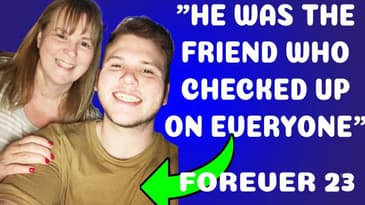

Jacob Harrison Aug 25 1997 - May 14 2021.
Jacobs Mom, Joy, shares not just a cautionary tale of recognizing challenges your kids might be having, but also the memory of what a great human Jacob was, and how his memory is keeping her involved in much needed education and advocacy around the realities about the opioid epidemic.
Hello, I'm Chris Horder (aka Chuck LaFLange) the host of the Ashes to Awesome podcast, dedicated to illuminating the stories and challenges of those affected by addiction and related challenges. Through my personal journey, I've managed to surmount the odds, transitioning from a survivor of addiction (one year sober on Oct 21st) and PTSD to an advocate and member of a community that spans several countries, and proudly promotes stopping stigma and using love and inclusion to help both individuals who suffer in addiction and their loved ones.
I am ecstatic and humbled to share that I've been awarded a scholarship for trauma treatment at the Yatra Center in Phuket, Thailand. This incredible opportunity not only provides me with healing tools but also allows me to continue my mission in a setting that supports sustainable living, with a much lower cost of living, making my podcasting and advocacy even more impactful.
My family, ever my pillars of strength, have generously stepped in to cover my airfare.However, there's a hurdle in this otherwise amazing journey: my current podcasting setup. To ensure I continue providing quality content and stories, I need a laptop robust enough for intensive video processing. A past endeavor saw a previous laptop overwhelmed by the demands, and I'm determined not to let technical constraints deter my mission this time. My current desktop computer is just too big to take with me.
While sponsorships for the podcast have been a blessing, covering most of my expenses, I still occasionally lean on my family for essential needs.
In this new chapter, Yatra Treatment Center graciously covers my first month's living expenses in Thailand. Post that, I'm charting my path, with a heart full of determination but pockets that could use some bolstering.That's where you come in. I'm reaching out to this amazing community to help me secure the laptop that can keep up with our shared mission and maybe a safety net for those unpredictable moments.
In gratitude, every donation, whether from kind individuals or benevolent organizations, will be acknowledged in my podcast episodes.
This isn't just my calling; it's our collective journey. I've always found ways to push through, but with your support, we can make the path a little smoother. Let's turn ashes into something truly awesome, together.
Thank you for being a part of this story.
If you are listening on the Spotify platform, you are able to share your thoughts about an individual episode in the interactive element that Spotify offers. Doing this tickles the fancy of the algorithm and really helps us to spread the message.
Also please visit our Facebook page here, and like, share, or comment on any of the posts. Your feedback there is sincerely appreciated, and taken quite seriously.
Ours sponsors, that make spreading the message possible :
Rosecrest Recovery Services Call 615-484-8792 or email info@rosecrestrecoveryservices.com
Dent Kits - http://www.dentkits.com
Together We Can Recovery Society http://www.twcrecoverylife.org
Revolution Recovery - https://www.revolution-recovery.com/
Yatra Trauma Therapy Center -https://yatracentre.com/
Nate D Foundation =https://nate-d.ca/
Chuck (00:01.331)
Hello everybody, welcome to another episode of the Ashes to Awesome Podcast. I'm your host, Chuck LaFlandre, and with me in virtual studio today is a special guest, Joy Harrison. How are you doing today, Joy? Thank you for coming. Ah, thanks for coming on and being willing to share your story. And to the listeners, to the watchers, Joy lost her son to addiction some time ago, I guess it was in 2009.
Joy Harrison (00:11.254)
I'm doing well, thank you. Thank you for having me, Chuck.
Chuck (00:25.627)
21, 21 it was, okay, okay. So she's here to share a story of, well, that story and just as much if not more so who he was. So, Joy, I'd just like to get started with, where's the story start for you? And let's kind of go from there.
Joy Harrison (00:42.87)
Well, my son was an amazing kid. I will, I'm sure every mom says that. I remember when he was about seven and he jumped into the car in car line and he told me, mom, I'm gonna be president of the United States one day. And, you know, I remember that miracle boy. I was told after he was born that, well, I was told at nine months.
Chuck (00:59.383)
Oh, it's lofty gold.
Joy Harrison (01:11.774)
Now that you've gotten this far, we'll tell you that we didn't think you were ever gonna carry him to term. And so he was my miracle child. And he was so smart. He played multiple instruments, picked him up with nothing. Like, you know, I didn't even know he had the talent, but he did.
Chuck (01:16.423)
Oh.
Chuck (01:20.077)
Wow.
Chuck (01:35.839)
I've always admired that, yeah.
Joy Harrison (01:39.722)
And one of the stories from school was he didn't want to go back the second year to band to play the drums. And I asked him why and he said, because they bully me. And we were in a school that he was in the gifted program and then there was also a fame program, you know, fine arts. And the fine arts kids were required, but the gate kids, it was a choice.
Chuck (01:57.701)
Okay.
Joy Harrison (02:04.006)
and he chose to be in the band to play the drums. And the band director said, oh, well, the reason they bully him is because they don't get a choice, but they're no good. And he's great, and he has a choice. And so he went back thinking he was the big guy in the band now. And so, but he was really smart. He had a perfect ACT. He had...
Chuck (02:14.294)
Ahahaha.
Okay, okay, yeah.
Hehehehehehehehehehehehehehehehehehehehehehehehehehehehehehehehehehehehehehehehehehehehehehehehehehehehehehehehehehehehehehehehehehehehehehehehehehehehehehehehehehehehehehehehehehehehehehehehehehehehehehehehehehehehehehehehehehehehehehehehehehehehehehehehehehehehehehehehehehehehehehehehehehehehehehehehehehehehehehehehehehehehehehehehehehehehehehehehehehehehehehehehehehehehehehehehehehehehehehehehehehehehehehehehehehehehehehehehehehehehehehehehehehehehehehehehehehehehehehehehehehehehehehehehehehehehehehehehehehehehehehehehehehehehehehehehehehehehehehehehehehehehehehehehehehehehehehehehehehehehehehehehehehehehehehehehehehehehehehehehehehehehehehehehehehehehehehehehehehehehehehehehehehehehehehehehehehehehehehehehehehehehehehehehehehehehehehehehehehehehehehehehehehehehehehehehehehehehehehehehehehehehehehehehehehehehehehehehehehehehehehehehehehehehehehehehehehehehehehehehehehehehehe
Chuck (02:28.159)
ACT for listeners and art.
Joy Harrison (02:30.938)
You have SATs and ACTs that you take for college entrance boards, and the ACT is usually for the left brain kid with math and science skills. He worked hard. At first he scored not low, but not perfect, but then he went on to have a great score and could have gotten into any college he probably applied to. He chose the party one.
Chuck (02:33.356)
Okay, okay. Yeah, yeah, okay.
Chuck (02:40.376)
Okay.
Chuck (02:52.624)
Okay.
Chuck (02:59.535)
Yeah, yeah, I'm familiar. I went there too. Yes, yes. Yeah.
Joy Harrison (03:00.882)
Unfortunately, yeah. Um, he was in a fraternity. He was loved by so many people. Um, I don't think he realized how many people, you know, thought of them. And what I found amazing when we were at his service and afterwards that people contacted me and said that they were high school friends and they'd been out of school for maybe four, four or five years. And he still.
Chuck (03:26.579)
Okay.
Joy Harrison (03:28.074)
would at least once a month contact all of his friends and just say hey how are you doing? Is everything okay? And there were so many people that came back and said brought these stories oh yeah I just talked to him last week. I didn't even know he'd talked to that person since high school let alone that he had been but they all said the same thing. Yeah he just would always just randomly check up on them or if they posted something on their Facebook page about how they
Chuck (03:35.133)
Wow.
Chuck (03:47.239)
certainly speaks to who he was, doesn't it? Yeah, yeah.
Joy Harrison (03:57.538)
girlfriend or something, he'd send him a message and say, oh, congratulations, that's really great. And so I was, that was something mom didn't know was going on in the background, but you know, it speaks to him volumes how he was just a friend to all. If he met you in the bathroom at the gas station, you were his best buddy. He, it's like you had known him your whole life and he'd come walking out of the store with you and he'd give the guy a hug and he'd get back in the car and I'd go, who's that? And he goes, oh, his name's Tim.
Chuck (04:15.959)
I'm sorry.
Joy Harrison (04:27.83)
blah, blah. And I was going, oh, well, where do you know him from? Oh, I just met him inside. And you know, and he would often say, I got that from you, though, Mom. And so, you know, I don't know. When he was a sophomore in high school, I guess that's when the addiction story begins. He played football. He had a concussion.
one stroke of the doctor's pen said, hey, dude, you don't get to play sports ever again. Because if you get hit again, that could be it. And so he lost that. And in Texas, where I'm from or where we're from, it's that's a lifestyle. It's not a sport. It's a lifestyle. And so he lost that. And then he lost that friend base that went with that. And
Chuck (05:18.264)
Yeah.
Joy Harrison (05:25.366)
Then there were some other things that happened. He had his first girlfriend, his first, you know, and his first breakup. And then my aunt, which was like the grandmother figure to them, passed away. And he had a suicide attempt. And he went into the program, you know, the eight week, eight week, eight week thing. And they prescribed alprazolam, or Xanax.
for the generic of forum. He was 15.
Chuck (05:57.121)
and he's how old, sorry, at this time?
Joy Harrison (06:02.806)
And I've now realized and found out all about Xanax. And of course, it's a cycle because it just continues. So the nine pills became the 15 to become the 20, to become the 30 to, OK, that's not enough. I need to go on the street and find them. And so that became his nemesis, that Xanax, and then future Xanax bars.
Chuck (06:24.611)
Yeah.
Joy Harrison (06:32.546)
than that last one that he took that morning wasn't Xanax. It was fentanyl. And I believe based on everything I've pieced together, he went into the restroom, took it, and then made it to his floor, and that's it. And so it was a very fast once he took that fentanyl. He did take some of the others, but that's that kicker of that.
that pack of pills that he got was that some were Alpraselam, some were Xanax, and he took those and he continued through the evening partying with that, but that last one was not. It was something else. And so that's...
Chuck (07:06.023)
Yeah.
Chuck (07:21.948)
Yeah.
Chuck (07:25.46)
dear.
Joy Harrison (07:27.734)
That's how I lost him on May 14th. This year, it had been two years on Mother's Day. I celebrated this two year anniversary on Mother's Day this year. And, you know, it was hard and then it was easy too. You know what I mean? There was just a lot of different back and forth emotions as to, you know, all of this.
I still will never know exactly what happened that day. Obviously, no one will. The dog doesn't talk. I don't know why, but he doesn't. And, you know, but it all began with that prescription that a doctor gave him, and then it progressed through the years. And...
Chuck (08:03.675)
rise in my day.
Chuck (08:15.387)
So you say it progressed through the years. Was it, I hate using the word typical, but that's what comes to mind. Was it that typical kind of addict's story, or was he a big part of the family? Did he end up ostracized the way that happens sometimes, or can you kind of fill in some of those years for us? Just.
Joy Harrison (08:34.434)
Um, yeah, so he went off to college and his, in November of 20, so that would have been 2015, he went to college and in November of 2015, I, uh, I actually was at a college fair and he called me and he was all so excited and sent me photos and he said, Oh, this is where we're going to live next year. You know,
where we were going to rent this apartment together. And he and two other members of his fraternity were going to rent this place. They signed their lease ahead of the schedule. They had a big party because they weren't even built yet, these house apartments that they were going to live in. And so the place had models, and then they had a party for all of the students trying to get people to rent there the next year.
Chuck (09:18.064)
Okay. Yeah.
Joy Harrison (09:27.518)
And so they signed their contract. It was going to be three of them. They were all excited over it. And he actually had a court date for a ticket that he had gotten on Monday. And I went up on Saturday to pick him up and I was about halfway there. And I got a phone call that said that one of the young men that he had signed with Bradley had been found unresponsive that morning and he passed away. And.
That was who my son at the time considered his best friend. You know, that was his best bud. He did not do well with his death. And although he stayed at school, he did not go to class, and he did not go take his finals. And he didn't find that out until after he came home for Christmas break. So we took him back to take those finals to get rid of that semester,
that he should stay at home for a semester to try to get his head back. Because of the previous mental health issues, we felt that he needed that. And that was maybe a good idea, maybe not a good idea, because he started hanging around with the wrong type of people. And this one particular individual who was the supplier who was the catalyst to getting bars versus prescribed Alprazolam.
Chuck (10:56.207)
Yeah.
Joy Harrison (10:57.078)
you know, really took him down quite a path there. And then he got his crap back together for the summer, made straight A's. We sent him back to school. He made straight A's. He did absolutely wonderful. He started, not during that time. That was a break. That was a break period, yes. We had gotten him sober basically, and he was not using. But he went back.
Chuck (11:08.679)
Was it, was he using during that time?
No? Okay, okay, okay. Okay, yeah.
Chuck (11:20.279)
Was that with the help of a program or anything? Sorry to interrupt, I'm just trying to get it.
Joy Harrison (11:24.454)
No, that's fine. You can interrupt. No, actually, that one was not with a program. That one was just he was seeing a psychologist, but not for the addiction, just for the mental health. And it just was a good old fashioned love and everything. And then he went back to school and he got a roommate and they started using. Tremendously. And that was all she wrote for that story, because
Chuck (11:29.4)
Okay, okay, yeah.
Chuck (11:37.818)
Okay.
Yeah.
Joy Harrison (11:54.07)
He really was addicted. I've got phone calls from people that said, you need to send your son to a program.
Chuck (12:01.817)
Okay.
Joy Harrison (12:02.962)
And he came home, he worked for a while, he floundered for a while, he used, it was an off and on type of thing. He wrecked several vehicles, he got in trouble with the cops. You know, we went back and forth with all of that stuff. In 2019, he, well, in 2018, he lost another friend to an overdose. In the, in the
Chuck (12:26.735)
Yeah.
Joy Harrison (12:31.186)
October, by October of 2018, he had lost seven friends to addiction issues. I had sat with five different sets of parents and helped pick out clothing and talked and whatever. And then I actually spoke to that fact to the kids at the school that I was substituting in. And then in 2019,
Chuck (12:38.876)
Ah.
Joy Harrison (13:00.586)
A lot of different things occurred. He did go in for mental health because of a suicide thing. And then in the end of 2019, he got arrested in October. And we didn't bail him out. We told him he had to stay.
Chuck (13:15.391)
Okay, okay.
Chuck (13:21.63)
Can I ask what he was arrested for?
Joy Harrison (13:23.614)
Um, he had found a way to purchase a large amount of those bars because he didn't have transportation. He was finding it hard to get what he wanted and he was self-medicating. And so he went out and purchased a large sum. And when he got caught, which I believe he was set up for, um, but I mean, he had them.
Chuck (13:31.1)
Okay.
Joy Harrison (13:53.122)
But I'm just saying that the child that didn't get in any trouble and didn't get a ticket, you know, but when he got caught, he had enough there that they consider it manufacturing and distribution.
Chuck (14:00.113)
Yeah.
Joy Harrison (14:11.19)
But like I said, and even the officer said, I don't think he's selling them. I think he was using them. You know, like he even said to me, he goes, no, I think he was self-medicating and he was stockpiling so he had what he needed. You know, he didn't have any way of getting anywhere. He didn't have any way of doing anything. So I think that's what he was doing. He was stockpiling so he had a supply. But anyway, he went into.
Chuck (14:11.358)
Yeah.
Chuck (14:17.319)
Yeah.
Chuck (14:28.944)
Yeah.
Chuck (14:36.965)
Okay.
Joy Harrison (14:41.198)
to prison, you know, he went into jail. We told him we weren't gonna let him out, but there had been a lot of things occur in our family that year. I had surgery, Jacob had been in the mental health facility, my husband had surgery. And so literally we had no out of pocket cost, any anything left. And so we looked into, we had been recommended to La Hacienda in Kerrville. And
Chuck (15:01.053)
Yeah.
Chuck (15:07.279)
Okay. Yeah.
Joy Harrison (15:10.29)
We looked into it and we talked to them and it literally The insurance covered everything and we had no out-of-pocket cost and so for that reason we said, okay We'll get him out the Wednesday before Thanksgiving So we bailed him out the Wednesday before Thanksgiving. We got him a haircut. We got clothes ready we went to the doctors and did what we had to do we You know, he had to go see probation. So we did that like we did everything on Wednesday. We could we had our last Thanksgiving together
And then on Friday morning at 6 a.m. we drove him to Kerrville and dropped him off and he was in a program and it was good. It was a good program. And, you know, he came home and he was sober. He went to sober living and go ahead.
Chuck (15:43.571)
Okay.
Chuck (15:50.46)
Yeah.
Chuck (15:56.795)
So if I can, what made that program good? In your mind, in his mind, and speak for him.
Joy Harrison (16:03.978)
Um, you know, I'm not sure they work with them. They, um, you know, like they have group sessions, they have individual sessions. They did the family sessions where we came down for a week and had a program with them and you talk about a lot of things in that family session, you know, like the triggers and how does it make the parent, how did it make me feel? So like what, one of the questions, which I thought was, you know, um, when did you feel the safest?
regarding your child. And I said when he's in jail, which, I mean, like that says it all, like, you know, every siren I heard, I thought they were headed to me. Every time the phone rang, I jumped because something, it was going to be the other shoe falling. And, you know, it just kind of was, that was the way I lived my life back then, you know, not knowing what the next, what was the next thing going to be.
Chuck (16:41.36)
It really does.
Chuck (16:48.068)
Yeah, right.
Joy Harrison (17:03.646)
It's difficult for the family to watch their child go for a mom, especially to watch their child just go down that sill.
Chuck (17:10.727)
unspeakably difficult. I'll interrupt again, as the family, did you feel that you experienced stigma that made it hard for you to find people to talk to? Yeah.
Joy Harrison (17:23.082)
Absolutely, absolutely. I, so I was PTA president. And my son's first arrest, you know, was marijuana. Just a simple thing and a misdemeanor. And yet my principal called my board in and had me resign.
Chuck (17:29.956)
Okay.
Chuck (17:35.485)
Yeah.
Chuck (17:48.392)
Wow.
Joy Harrison (17:49.334)
because I wasn't the role model that they wanted.
Chuck (17:54.195)
that says it all right there. That is, it's almost, and that's not that long ago. Like how long ago is that? That's...
Joy Harrison (17:55.972)
It says it all right there. Yeah.
Joy Harrison (18:01.714)
No, that would have been in 2014 that it occurred.
Chuck (18:06.327)
Well, I like to think a lot has changed since then. I don't know that it has. And of course, things are different in your part of the world than they are in my part of the world. So it's, you know, I can't really say for sure, but wow, it says it all. And I really hope things have changed, that it's not quite like that anymore, right? I feel the stigma is, it's probably the worst enemy we have.
Joy Harrison (18:09.222)
I would like to think so too.
Joy Harrison (18:23.466)
I kind of do too. I kind of do too.
Chuck (18:32.443)
in all of it, right? Because if we can't talk about it, we can't understand it. We can't understand it, right?
Joy Harrison (18:33.29)
Well, I think that the stigma is not as bad for me, even though people don't want to talk to me about it. But I think the stigma is worse for those other people that choose to ignore it. Because you can't say, not my child. You can't. And then it happens to not my child. And
Chuck (18:40.542)
Yeah.
Chuck (18:53.423)
Yeah, yeah. No.
Joy Harrison (19:00.93)
They're like, well, I don't understand. I don't know what happened. I don't know how this happened. And I'm like, you know, no. That's what I try to tell people. It's not, it's, it touches every family. It touches the poor. It touches the rich. It touches the religious. It touches, it's, it's not just single file. Like there's a clear cut.
Chuck (19:17.679)
100% Yeah, it does.
Chuck (19:23.695)
a profile or something. No, it's most certainly not. No, no.
Joy Harrison (19:25.138)
Yeah, like there's not a clear-cut list of things. Okay, this is it. Here I was, I was so active in my children's lives. So active. And yet, you know, I mean, I was very active and I was there and present, and yet I still had that son who, you know.
Chuck (19:33.22)
Yeah.
Chuck (19:48.927)
who ended up on all that path, right? So, okay.
Joy Harrison (19:50.442)
Right. Well, 2020 ruined everything because even though he came home and went to sober living, 2020 occurred and then that brought, I'm sorry, it made it easy for drug dealers. They could drive up to your house, walk up to your door, knock on the door and hand you your drugs and get your, get their money because, because everybody was delivering everything. And so nobody knew that they were the drug dealers delivering. They thought they were your groceries or your.
Chuck (20:07.891)
Yeah.
Chuck (20:12.304)
Yeah.
Joy Harrison (20:18.442)
medicines or your whatever it was.
Chuck (20:18.479)
Yeah, right. And then the other thing that COVID did was the payments, right, that were coming from the governments, right? I mean, yeah, everybody's, you know, yeah. Yeah.
Joy Harrison (20:23.966)
Yeah. Yes. So people had money and they were able to do it, but it did. It, you know, it made the drug business. My son even said that, you know, somebody came to the door and I said, Oh, did you order food? And he's like, no, I got, and I was like, dude, come on. You know? And so like I said, it was just that and there, and he kept calling them blips. I had a blip. I'm sorry, mom. And they were, they weren't good. They were bad ones. And
Chuck (20:41.023)
Right, yeah, yeah.
Joy Harrison (20:53.406)
you know, 2020 was a really bad year for his blips. And then on October 9th and, you know, no offense. He had a young lady that was in his life. And on October 9th, he was. Slurring his words badly, and I walked in on him for lack of better sharing, but he was urinating on the floor in the bathroom, not even at the toilet.
Chuck (21:22.615)
Okay, yeah.
Joy Harrison (21:23.25)
And I was like, what are you doing? And he's like, what do you mean? Why are you in my bathroom? Well, the door is wide open. And you know, and he was walking like, he had polio across the floor. And I was trying to assess the situation and I wasn't, she threw my phone and some other things occurred. And I finally found the drugs and I took them and.
Chuck (21:37.266)
Yeah.
Joy Harrison (21:52.686)
and I took them away. I didn't take them. And clarifying that one for everybody. And then, you know, my, his dad was on the phone with me, and he's like, I'm calling 911. And she was gonna let me call 911. And so I finally she was going to take my phone again. And I said, No, I need you to read this. And she read what I showed her. And it says,
Chuck (21:58.411)
Yeah.
Hehehehehehehehehehehehehehehehehehehehehehehehehehehehehehehehehehehehehehehehehehehehehehehehehehehehehehehehehehehehehehehehehehehehehehehehehehehehehehehehehehehehehehehehehehehehehehehehehehehehehehehehehehehehehehehehehehehehehehehehehehehehehehehehehehehehehehehehehehehehehehehehehehehehehehehehehehehehehehehehehehehehehehehehehehehehehehehehehehehehehehehehehehehehehehehehehehehehehehehehehehehehehehehehehehehehehehehehehehehehehehehehehehehehehehehehehehehehehehehehehehehehehehehehehehehehehehehehehehehehehehehehehehehehehehehehehehehehehehehehehehehehehehehehehehehehehehehehehehehehehehehehehehehehehehehehehehehehehehehehehehehehehehehehehehehehehehehehehehehehehehehehehehehehehehehehehehehehehehehehehehehehehehehehehehehehehehehehehehehehehehehehehehehehehehehehehehehehehehehehehehehehehehehehehehehehehehehehehehehehehehehehehehehehehehehehehehehehehehehehehehehehehe
Joy Harrison (22:21.378)
how to know that they're overdosing on alprazolam. And she said, oh, he's doing all five of those. Yes, that's what I'm trying to tell you. And so then she kind of was like, oh, I guess, you know. So then the police showed up with the ambulance, and he was taken away. And that one was a bad one. It they.
Chuck (22:30.815)
Alright.
Joy Harrison (22:49.322)
felt there was some kidney stuff and some other things. And the doctor, he was going to be in the hospital for like five to seven days. And the doctor said, um, I'd like to send him to the mental facility again. And I said, I don't understand. He needs to go to rehab. They need to send him to a drug rehabilitation program, not to, to whatever. Um, because it was 2020, La Hacienda did not respond. So I'm assuming they were closed. Um,
Chuck (23:10.299)
Yeah.
Joy Harrison (23:19.338)
and I did find another one down in, oh gosh, I don't even know the name of this city now. Anyway, he did go to that one. He was there for 55 days. He had one of the most wonderful counselors there that she worked through a lot of his triggers and his points. And then he came home and he was 103 days sober. And that girl showed back up.
Chuck (23:30.76)
Okay.
Chuck (23:44.033)
Okay. Yeah. Yeah, right.
Joy Harrison (23:47.89)
And that was the end because everything went, there was never a regaining after that. And he did go back to rehab one more time, but he had no intention of doing, he literally, I was told he literally slept, he would show up for his stuff, but he did not participate. And he said, I've already gone through all of this, I'm not doing this again.
Chuck (23:56.763)
Yeah, yeah, unfortunately.
Chuck (24:04.903)
going through the motions. Yeah.
Chuck (24:14.471)
Jeez, eh? Jeez.
Joy Harrison (24:15.282)
And so basically he went for 30 days. He was home for 20 minutes and went and got high.
and was high the entire first weekend. And for the first time, his father had come home, he had doctor's appointments, so he was at the house. And for the first time, he got to see firsthand what these blips look like, and how his anger and how all this stuff. Because up to that, it was me calling him and complaining and crying and.
Chuck (24:43.409)
Okay.
Joy Harrison (24:51.67)
you know, telling him what was going on. And he had never really witnessed one in person. And yeah, well, yeah, out of sight, out of mind kind of thing, you know? And so he got to see it firsthand and then he was very apologetic. He's like, I'm so sorry. I really didn't have any idea.
Chuck (24:57.275)
kind of easy in human nature even to kind of minimize that in your own mind when you're right. Yeah, yeah, right.
Chuck (25:10.723)
Okay, so the validation that must have brought for you.
Joy Harrison (25:14.134)
Oh, it was, it was, yes, it was a, it was a moment in, yeah. Yeah. To say the least. Yeah. Like, cause up to that point, like I felt very isolated and very alone cause I was, you know, I had other people that were going through similar things that I could talk to you, but for the most part, you know, I saw the head, the eyes rolling and the head shaking and the, you know, when you're talking and, you know, and then him.
Chuck (25:18.195)
validating experience. No kidding, no kidding. Okay, so.
Chuck (25:33.691)
Yeah, right, yeah.
Joy Harrison (25:42.206)
you know, there was no validation about that I was going through anything. Well, you know, you'll it's it. I used to get it's all me. I caused it all because that's what my that's what his dad would always say. You know, it must have been you. You must you must have said something. You must have did something. And I was like, you don't understand. I'm not. It's it's not me. And so that was validation that I'm sorry that you're I didn't realize what you were going through. Yes. And so.
Chuck (25:42.463)
terrifying.
Chuck (25:52.943)
Jeez, jeez, right. Because there isn't enough guilt involved, right? Yeah, yeah.
Chuck (26:02.267)
Yeah, yeah, right.
Joy Harrison (26:12.086)
But, and then, and then we let, I, you know, the day before I left was up, well, that whole week had been, we had a blip, um, on Wednesday before Mother's Day that week. And Mother's Day was the eighth of, um, of May that year. And so approximately the sixth, he had this, it was a blip and, um,
Chuck (26:12.579)
Oh wow.
Joy Harrison (26:37.142)
We had gotten through it and he came in that morning and said, I'm sorry, I didn't mean to do that, blah, blah. I don't have anything else. I had gotten rid of everything and I said, okay. And literally he was sober that whole week and on mother's day was good. You know, I got flowers. He fixed dinner for me. Um, he did, you know, got me a, gave me a card, wrote me this beautiful note in it. Um, it was wonderful. It was a wonderful mother's day.
And he was sober the whole week. And so on Wednesday night, the girlfriend and him got into a fight. And they were outside yelling at each other at 2 o'clock in the morning. And I went out and said, you guys got to come inside. You can't be doing this in the street. We have neighbors. And she proceeded to tell me that she was going to leave by Sunday. She wouldn't be there when I got back, because they were going to take a break, because they needed a break from each other. And they both needed to get sober and stay sober.
And I said, that's wonderful. I'm so glad you all were sober this week. This week has been a good week, blah, blah. I said, I'm so proud of both of you, da, you know, went through that whole thing. And so I left Thursday because my daughter was graduating from law school. And I left on Thursday morning. But for whatever reason, that morning I got ready early. I never am ready early, but I was ready early that day. And so I literally had like.
Chuck (27:54.235)
Okay.
Joy Harrison (28:08.778)
I set my alarm for 8.15 to get up to finish getting everything in the car to leave by 8.30. And it was like 6.30 when I got done. So I had fixed coffee and some food and I went in and I was sitting and watching TV on my bed. And he came out of his room and went to the restroom and I said, what are you doing? And he goes, oh my God, mom, I'm going to the bathroom obviously, because I came out of my bedroom and I went into the bathroom and now I'm, you know, and you know, like silly mom.
Chuck (28:33.817)
Yeah.
Joy Harrison (28:36.458)
You know, and so then he came into the room and he was standing there talking to me for a couple of minutes. And so then he jumped up on the bed and he sat with me. And so like, he sat with me that whole time. And we sat and talked from that point till 8 15 when my alarm went off. And we talked about doing, you know, vision boards the next week and, you know, having breakfast for dinner, because that's something we like to do. And we always watched movies and did snacks. And so that was another thing we were going to do that on Sunday.
And he told me that this movie was coming out on Friday and so we could watch it on Sunday. And I said, yeah, that sounds absolutely wonderful. And so he had gotten up and I had gotten up when the alarm went off and I said, okay, give mom a hug. And he gave me a hug and told me he loved me, same vice versa. And then he went back in his room. And so after I got everything ready, I went and knocked on his door and I said, okay, I'm leaving now. And so he got up and he came and he gave me a hug. He said, I love you. And then as I walked away, he came behind me and gave me another hug, which is something he did.
he liked to do. And then he actually followed me out to the car, which is something I would never have expected him to ever do. And we agreed, we gave each other hugs in the garage again and said, I love you. And that was the last time because when I, he passed the next morning. Um, and when I got home, he was gone. I think the big realization, I mean, I lost it when I was told, obviously, I don't really kind of remember. There's a lot.
that's hazy during that period of time. But when I got home, his car was parked in the middle. It was weirdly parked in the middle of the driveway. And so we couldn't get our cars in the driveway, nor could we get any cars that were in the driveway out. So we were going to have to find his keys. And so we had made a deal. We weren't going in there till Sunday. But because of the car, we were going to have to go in there. So.
Chuck (30:06.492)
Yeah.
Joy Harrison (30:31.578)
His dad went to get food and I went in the room to try to find the keys. And I think that was the biggest realization at that moment of time in opening that door was seeing his earrings, his bracelet and his necklace sitting on the corner of the bed. Because then this was real. Because he wouldn't have been without those.
And so.
Sorry. Me too. So but yeah. So that was the point that all of this was real. This drug addiction of his had finally taken him. And until we got the, you know, when we got the report and it was fentanyl, you know, it's funny because we had these conversations. We were talking about how it's in everything.
Chuck (31:01.131)
I'm sorry.
Chuck (31:22.162)
Yeah.
Joy Harrison (31:29.846)
And so to me, and he said, I know mom, I only get from, you know, and so I think that's part of this is that I think that there's someone out there that was his friend that gave him this.
Chuck (31:44.283)
Yeah, right. Well, and probably not knowingly though, either, right? It's the guy with the pill, the guy with the pill press is the guy that's putting fentanyl in it, right? And you know what I mean? Right? Yeah. You know, so if for whatever comfort, you know.
Joy Harrison (31:48.199)
Maybe.
Joy Harrison (31:51.774)
Yeah, and that's way up the line, I'm sure. I mean, this was not, this wasn't that bus buy that he made back when he bought the large amount. This was a tiny, you know, he bought, you know, I mean, there were three left, so he didn't buy very much, you know.
Chuck (32:01.507)
Yeah. Yeah, right.
Chuck (32:08.635)
And it's, what I like to tell people or explain to people is that most dealers are just street level guys trying to supply their own addictions. You know what I mean? Like it's not, it's just, yeah, right? The vast majority of dealers, that's all they're doing, right, is, you know, rather than stealing, they're selling dope, right? You know, right?
Joy Harrison (32:13.861)
Sorry.
Joy Harrison (32:21.086)
Right. If I sell 10, then I can buy what I need to use.
Joy Harrison (32:31.551)
So back in the day when my son was just smoking pot, that was kind of his thing. He sold a little bit to smoke a little bit. Yeah.
Chuck (32:41.499)
As it was mine. Yeah, I was like the first guy to buy a gram and make three joints so I could sell them and whatever, right? You know, that kind of thing. So, you know, so, yeah. Yeah.
Joy Harrison (32:47.678)
Yeah. So, and that's what he told me. He said, you know, and then he stopped that because I lied to him and told him the cops had him on their radar. And they have your name on the list. They're watching you. And, and I got the SRO to help me at school because I had those connections. And so he said, yeah, Jacob, you're on the list. You better watch out because they're watching you. And so, so he stopped. Yeah. Like, yeah.
Chuck (32:55.594)
Hahaha.
Chuck (33:05.659)
Yeah.
Chuck (33:13.631)
Yeah. Well, good white lie if there ever was. Right. Yeah. No, no, no. I don't imagine. Right. So. So since then, since that horrible day, what's going on with you? What are you doing? What are you? You know, are you in advocacy at all? Are you in like what's? Tell me about that. Yeah.
Joy Harrison (33:17.39)
Mom, you know, back then you could scare them, but later on, not so much. Yeah. They were invincible. Yeah.
Joy Harrison (33:39.038)
Yes. So I, um, one of the, so I've worked with a few different groups in different areas. Um, while I was still in Texas, because that's where this happened, um, uh, there's an organization out of the Flower Mound area called Winning the Fight. Um, wonderful group of people. Um, they, you know, um, are very supportive of, uh,
Chuck (33:48.723)
Okay.
Chuck (33:58.896)
Okay.
Joy Harrison (34:07.314)
You know, like they go in and do a monthly dinner, I believe still with wham whiskey and milk, which is a, one of the it's for the 18 to 25 year olds. Um, it is a, um, you know, like an AA meeting and they meet on Friday nights in, uh, Preston Presbyterian, I think it is, but it's in Preston and Preston area in, um, Dallas.
Chuck (34:21.803)
Okay, okay, yeah.
Chuck (34:28.665)
Okay.
Chuck (34:34.244)
Okay. Yeah.
Joy Harrison (34:34.85)
They're very large and they're very wonderful for children, you know, well, children, I'm sorry, they're young adults, but for that, that set, and they're very, very good. Um, like they just have some really dynamic meetings for that. Um, and so, you know, but winning the fight is one out of flower mound, like I said, and they're, they're wonderful people there. And then since moving to Tulsa, Oklahoma, I'm with Oklahoma's supporting.
Chuck (34:49.072)
Okay. Yeah.
Joy Harrison (35:03.61)
Oklahomans in the drug epidemic. And so we have done, coming up, because red ribbon weeks are happening. So the next few weeks are really busy with this because they do assemblies within the schools. Plus, we go to just, we just held a rally on August 31st, which was National Fentanyl Awareness Day.
Chuck (35:06.799)
Okay.
Chuck (35:31.939)
Yeah, yeah, yeah. Overdose Awareness Day, right? Yeah, yeah, yeah. We switched our logo to purple, actually.
Joy Harrison (35:32.982)
We, yes, yes. So we particularly are focusing on our fentanyl because that seems to be a huge thing right now. And we just went to the DEA summit last week and they were talking about it. And I saw an article where they said they have seized so much between the Mexican and the US border, enough to kill every single individual in the United States.
Chuck (35:45.131)
It's reality, yeah.
Chuck (36:00.799)
hold it up. Yeah, I can imagine.
Joy Harrison (36:01.654)
That's how much they've seized. So, and still there's enough getting over here. So.
Chuck (36:07.299)
Oh, and yeah, we know they're only seizing just a very small portion, right? Yeah, a fraction of what's actually coming.
Joy Harrison (36:09.998)
Correct. Yeah. So, I mean, that just says so much. And so I've worked with them and I've kind of struck out on my own now and I'm doing the opposite end of it. I'm not doing the student end of it right now. I'm doing the parent end of it. And so I'll be going back to my old school district. I've reached out to my old school district since that's the one my son was in and I've said, whatever you want, you want me to talk to counselors, you want me to talk to whatever.
Chuck (36:26.235)
Yeah. Okay. Yeah.
Joy Harrison (36:39.546)
Um, and so I've reached out to a lot of districts. I do still have those connections in that organization I mentioned earlier that I got fired from. Um, but I, um, and I have been reaching out to friends in that group and saying, look, I'd love to come in and talk to parents about this and share my story. And so that's what I've been trying to do. I, there is, it is even more, it's getting more, more people want.
Chuck (36:47.638)
Yeah.
Chuck (36:58.851)
Yeah. And has there been some reception for that? Yeah.
Chuck (37:08.047)
Well, it is, yeah.
Joy Harrison (37:08.09)
So I feel like two years ago, there was this big resistance to anything. Nobody wanted you to come in and talk about drugs. Even before my son died, I was talking to parents at the conventions about drugs and telling them, these are the things I noticed in my home. So if these things are happening in your home, I'm not saying because these things are happening in your home that there's definitely don't don't, you know, I'm not.
Chuck (37:32.499)
But yeah, but there's a red flag there you might want to pay attention to. Right. Yeah.
Joy Harrison (37:34.55)
But these are red flags and if these are happening, then please, please start talking to your kids and you know, don't be their friend. Cause that's, I think that's one of the biggest things that parents want to be their kids' friends. They don't want to be there, you know, whatever we've come to a society where everybody, you know, like the, nobody should be punished for anything. There's no punitive. Unfortunately, if they start using drugs and they go into a program, it's punitive. It's not.
Chuck (37:40.68)
Yeah.
Chuck (37:56.956)
Yeah.
Chuck (38:02.291)
Yeah.
Joy Harrison (38:04.19)
Like I think we need to change that, but that's going to require a lot. Cause I think that we need to find out why the three year old little boy became. An 18 year old addict. Cause that three year old little boy went through something or that seven year old little boy went through something and that's what led him further down that road.
Chuck (38:17.159)
Right.
Chuck (38:26.427)
which is, there's a conversation that I like to have with people about trauma, right? Where it's not something that happens to you, it's something that happens within you, right? So, and I'm just beginning to learn, right? So, you know, my sponsor, Yachty Treatment Centre, I've learned a lot from Mike Miller, like a lot from Mike Miller, and you know, from some of the other professionals involved with the show, and something that happens to a three-year-old or a seven-year-old might seem like inconsequential. Inconsequential to you or to them.
Joy Harrison (38:30.155)
Yeah.
Joy Harrison (38:34.207)
Yes.
Joy Harrison (38:53.73)
They'll get over it. They're young.
Chuck (38:55.663)
Right? But somebody says, well, that was 25 years ago. Or was that 25 years that thing has been wrapping around and snowballing inside somebody's brain?
Right, so what was something inconsequential, which was a minor, it was a three year old, but everything's relative. To a three year old, losing his toy is as bad as a 40 year old losing his job. So there's a trauma thing that happens there, and it begins to turn and build inside your brain, and until you address those things, you don't have a chance, right? That's, you know, yeah.
Joy Harrison (39:16.267)
Right.
Joy Harrison (39:29.75)
And it's sometimes hard to turn off. My son would brought up at 20, 21 or 22 that I told him to go get a grocery cart. Because he was going to be homeless when he was older. So it was a motivation. Well, it was a motivational speech because he turned to me what the, in the class that he was in, the teacher drops one grade.
Chuck (39:43.711)
Yeah, yeah, yeah. Who knows? Right? Yeah.
Chuck (39:57.776)
Yeah.
Joy Harrison (39:58.494)
And he just decided he wasn't going to do this paper. And he goes, it's okay. It's not going to affect my grade. I still have an A if I don't do this because she's dropping one. And I, I likened it to football. And I said, are you going to run to the 10 yard line and say, oh, well, that was good enough, or are you going to go across and get the touchdown? And that was my analogy. And he said, you know, well, I just don't understand because why do I have to work harder?
Chuck (40:06.151)
Yeah.
Chuck (40:17.094)
Yeah.
Joy Harrison (40:28.426)
when I don't have to and I couldn't come up with anything. I said, well, if that's your attitude, you might as well go find a grocery cart and start decorating it because, you know, with that attitude, you're not getting anywhere in life. And of course, that was just a motivational analogy that I was making. Of course, that stuck with him like forever. And when he was 21, he brought that back up. Oh, my God, Mom, you told me to go get a grocery cart because I was going to be homeless. And I was like
Chuck (40:38.172)
Yeah.
Chuck (40:52.773)
Yep.
Chuck (40:57.647)
Well, and it seems like, yeah, right, but it happens within you, right? You know, right? So, and I think it's refreshing that you do get that because a lot of people will go the rest of their lives without understanding that those things, not that they did that, you know. Yeah, right, right. Yeah.
Joy Harrison (40:58.518)
Doctor tried to explain to him. Yeah Right, I get it. Yes. Yeah
Joy Harrison (41:10.475)
Yes.
Joy Harrison (41:17.962)
Something triggers, something affects you, but you don't... And we can't, I mean, and each individual is individual. So what I have as a trigger may not be what someone else has as a trigger, you know?
Chuck (41:24.995)
Yeah, you have no idea, right?
Right? So it seems like you're, yeah, what do you do? How do you possibly fight a fight like that, where you can't, you know, you have no idea ever, right? You know, right? Yeah.
Joy Harrison (41:36.874)
Well, you can't. You know, I had someone tell me the other day because I was complaining about something that happened in service, you know, that their employee had done. And, you know, not in a real negative way, but still yet, whatever. And he said, OK, so I can't go back and change anything that's happened. It's impossible. What I can do is take what you're telling me.
Chuck (41:51.628)
Yeah.
Joy Harrison (42:04.298)
try to change things that occur in the future and learn from what you're telling me. And I like that. That was, you know, that was the best handling of that situation because you're right. You can't change what's happened in the past, but you can look at what's happened and make something better.
Chuck (42:27.087)
And the only thing you can control in the entire world is how you react. That's the only thing in your control, right? At the end of the day, you know, and hey, right? So, that's a lesson that takes a lot of us a long time. So.
Joy Harrison (42:30.126)
Correct.
Joy Harrison (42:38.294)
But I think that there's still a stigma and my going out and telling the story is, you know, I don't know, hopefully they'll relate. Hopefully they'll get that, you know, it could be your child and that I don't want it to be your child. I want you to see the signs. I want them to be clear, you know, and I want you to never join my club because it's not something I wanted.
Chuck (42:50.463)
I hope so. And that's it, right? That's it, yeah, yeah.
Chuck (43:00.466)
Yeah.
Joy Harrison (43:08.37)
It's not something, you know, even though I had an addict for a child, it was not something that I ever thought was truly going to happen. I mean, I think in the back of my mind, I knew it was always a possibility. And there was always a fear that call was going to come or that, that knock was going to come at the door, but you know, until it happens, you have no idea. And the pain that comes with that is.
Chuck (43:17.096)
Yep.
Joy Harrison (43:38.154)
just mind-blowing, like an elephant on your chest, and there's no way to move. And so...
Chuck (43:41.243)
begin to imagine. I can't begin to imagine. I can't. We've done 20 some-odd memorial episodes on this show now and still I can't begin to imagine. I cannot begin. Right? Oh, it's yeah, it's not even a drop in the book. It's not even a drop inside the drops of the buckets, right? Like it's yeah, you know, unfortunately.
Joy Harrison (43:51.346)
Yeah. And that's only a handful.
Joy Harrison (44:02.226)
I saw a statistic yesterday, the other day that was 111,783 or something like that in the year, yeah, in 22. And they said it's
Chuck (44:09.915)
Last year, yeah, yeah. To put it in perspective, at 747 falls out of the sky every single day. That's how many people die as a result, right? Yeah, right. And what frustrates me, and this is stigma driven, is anything else. COVID never even got close to those numbers.
Joy Harrison (44:18.636)
Yeah.
Well they said every three minutes now someone dies of an overdose.
Chuck (44:34.095)
and we shut down the world. The economy of the world was shut down. We are just beginning to feel the pain of what happened by shutting down the world. We're not even really, we haven't even dealt with the consequences of that in their entirety yet. And we never even got close to those numbers.
Joy Harrison (44:35.754)
world. Yep.
Joy Harrison (44:48.522)
Yep. So we're lucky that some states are starting to, you know, like that drug dealer is now going to get, you know, arrested and charged for murder. That's happening in multiple states now, which is really great. Texas just did that. Oklahoma, some counties have done that, not all of Oklahoma. But Oklahoma hands out naloxone like it's water.
Chuck (44:59.951)
Yeah.
Chuck (45:03.856)
Yes, it is.
Chuck (45:14.448)
Yeah.
Joy Harrison (45:15.046)
and you just have to text them and sign a thing and say yes and give them your address and they'll send it right to your home for you.
Chuck (45:22.439)
Which do not agree with that as policy or? Oh, okay, good. I was like, oh, I don't wanna. Okay, yeah, yes.
Joy Harrison (45:24.562)
Oh no, I agree that is positive. Absolutely. Oh no, no. I think, I think everyone should carry. I think everyone should have naloxone. I have one in the drawer over there. I have one in my car and then there's one in my purse that I always carry. Um, okay. All right.
Chuck (45:35.335)
bit.
Chuck (45:40.679)
which is the perfect time for a PSA. So we'll be right back after this. Our PSAs actually have, it's about carrying naloxone, how everybody should have naloxone. So, yeah, right, right. So yeah, I just marked that clip off and then I can edit it out. But yeah, that's, yeah, every single episode has that, right, as a, yeah, yeah. I just, you don't know when it's gonna be around you. You know, what do we say?
Joy Harrison (45:51.176)
Good subway!
Joy Harrison (46:00.514)
Very cool.
Chuck (46:08.927)
You might not plan on being around irresponsible opioid use, but you never know when it's gonna be around you, and you can save the life of somebody who loves and that is loved, right? Really? Let's talk about that right now. So, okay, so we're back from the break. During the break, you were telling me about using your own Narcan Lock Zone, whatever you wanna call it.
Joy Harrison (46:15.198)
I just used one of mine in the drawer the other day, so I just got a new one. Yeah. Some kid in the middle of the street out here.
Okay.
Chuck (46:35.995)
Tell us about that because it's a perfect example of why we have that PSA. Right. So, yeah.
Joy Harrison (46:39.422)
Right. So the other night I was taking some boxes out to my storage and there was a car and there was like 20 cars backed up behind him because he was turning or I thought he was turning and I remember coming back up on the porch and going he doesn't even have his turn signal on why is he not putting his turn signal on to turn so I came back out with another box I came back up on the porch and as I was walking up the porch I'm going wait there's no vehicles coming there's no cars like why is he not turning?
Chuck (47:08.808)
Yeah.
Joy Harrison (47:09.318)
And so it hit me, so I ran down the sidewalk to look in the vehicle and he was slumped over into the other seat. And I motioned to the cars that were behind him to go around and I ran in real quick and I got my Narcan out of the drawer and I ran back out and a car had stopped behind him and I got to the sidewalk and the lady goes, oh my God, thank God, I'm a nurse, let me do this. And so she took my Narcan.
Chuck (47:33.436)
Oh.
Joy Harrison (47:37.958)
Even though I could have done it, but she took it and she, you know, did what she had to do with them. And then two other men had stopped and they got him out of the car. And, and then the police officer stopped behind them. And then we, they pushed, well, they, I moved the car. I got in the car and drove it over to the side street. And then the ambulances, I don't know what happened after that. Sorry. I don't have the rest of the story, but.
Chuck (47:46.755)
Yeah.
Chuck (47:58.908)
Yeah.
Chuck (48:03.731)
But that's okay.
Joy Harrison (48:04.338)
At that point I was done with my job, but I had provided Narcan. And so, and well, all I know is that when she gave it to him, the first one didn't, but then, like I said, the guys put them on the sidewalk and she was giving him, you know, then she was doing compressions and then she gave him the second one. And I did see him go, which it's, it's like, yeah. So I, yeah, exactly. There's somebody, someone.
Chuck (48:08.695)
Had he and that did he like do we know if he lived?
Chuck (48:22.078)
Yep.
Chuck (48:25.651)
Okay, oh my, right. So that's somebody's son, right?
Joy Harrison (48:32.586)
You know, that's what I say constantly. And I think that's another thing that like our officers and first responders, they need to realize that these are somebody, someone. And I get it. I get it. You're tired. Right. I get it. You're so tired of seeing these overdoses, but you know, some mama is going to cry her eyes out over this. And so you need to have as much compassion as you can possibly have in that.
Chuck (48:44.207)
And it, yeah, the apathy is so easy to come by, right? You know, right?
Chuck (48:56.039)
Yeah, right.
Joy Harrison (49:01.89)
being the first one on scene. And, you know, I remember my son had, you know, at one point they had to come to a hotel for him. And of course he survived that one. And the off, that was what the officer said. He, you know, when he was standing there, he was going, oh my God, another blah, blah. You know, and.
Chuck (49:03.975)
Right, right, yeah.
Joy Harrison (49:24.762)
And that got back to me because one of his friends was there and said, yeah, well, the officer, I don't think he really cared whether he, you know, or not. Cause he made this comment. Well, I know those people at that police department because I've worked with them with the angel trees with our school district and everything. And so I, I went in there and I said, I want a meeting. And chief was like, wait, what's your, what's your, you know, like, what's your agenda? You know, he knew me.
Chuck (49:48.607)
Hehehehe
Joy Harrison (49:53.086)
He knew what, you know, and I said, well, because, and he goes, okay, he let me go before their meeting, you know, both in the morning and in the afternoon and tell them that this is somebody, someone, you know, like you all know me, this was my child. I don't know which one of you was there, but this was my child. You know, me. Like, did that make a difference? And then like every officer in the room were like, that knew me was like, yeah, that, that would have made a difference. Yeah.
Chuck (49:53.423)
Yeah.
Chuck (49:59.525)
Yeah.
Chuck (50:11.527)
Yeah, right.
Chuck (50:18.911)
Of course it does. Of course it does, right?
Joy Harrison (50:21.05)
And so that's, you know, I can't say enough. And then they also need to know about naloxone and that they should give naloxone immediately to anyone who appears to be in an overdose situation, because it can mean the difference between life or death. And
Chuck (50:35.28)
Yeah, right.
Chuck (50:39.515)
I know in some jurisdictions, law enforcement doesn't give it out because of liability issues or something. And I've just, like, you know, right, which is, yeah. Yeah, yeah, yeah.
Joy Harrison (50:44.618)
No, most of them now carry it, so most of them are permitted to do it. I mean, they don't give it out, but they can use it. Most have been trained now in the use of it, and most have been doing it. But there's still this part of it that they don't understand. Like, if you give it and it's not an opioid, it's not going to do a thing. It's like giving them water. It's like shooting saline up there.
Chuck (51:06.779)
Yeah, right, right. Yeah, it's not gonna hurt them, right? Yeah.
Joy Harrison (51:10.058)
It's not going to hurt anybody. And I think that's part of their whatever. I think the other part of this is that in some places, it's hard to get. So if I'm not going to absolutely know for sure that I'm making a difference, I'm not giving it because I don't want to use it, which is kind of crazy if you think about it. That's like keeping the bottle of champagne in the back of the thing for a special occasion.
Chuck (51:20.58)
Yes.
Chuck (51:31.123)
Right.
Chuck (51:38.267)
Yeah, yeah, right.
Joy Harrison (51:38.834)
or the china, I'll give a better one because I don't want to do alcohol. The china is up in the cupboard and you don't use it because it's only good, it's good china and you're not going to use it until it's a special occasion. So it collects dust up there for twenty some years because you just never use it. What's the point?
Chuck (51:45.598)
Yeah, yeah, yeah.
Chuck (51:57.019)
Yeah, what's the point, right? What's the point? So, yeah, yeah. I know part of our PSA, it doesn't matter where you are in the world, and you know, well, South Africa is the one request that I wasn't able to fill so far. But it doesn't matter where you are in the world. If you can't find it for free in your area, we'll find it, right? And if I can't find it, I'll get it to you, right? So, you know, yeah.
Joy Harrison (52:14.635)
Right.
That's what I've told people. People are on sites that I'm on and they're like, well, I can't get it. And I'm going, where are you at? And I go searching. And then I come back to that person and send them a private message and say, I found a place, go here. They're ready and waiting for you to come and show up and get your.
Chuck (52:23.206)
Yeah.
Chuck (52:32.971)
Exactly, right? Yeah, it's just all too important. It's all too important.
Joy Harrison (52:35.594)
Yes, it is important. You know, I highly believe you need to have Narcan on hand. I don't have any users in my house anymore. I don't, I still needed it, exactly. Well, I mean, you know, the guy came, I get on my soap box a lot and I talk about fentanyl and I talk about, you know, so I had.
Chuck (52:41.459)
Yeah.
but you still needed it, right? 100%, you still needed it, right?
Chuck (52:53.415)
And good for you. Good for you, right? Yeah, yeah.
Joy Harrison (52:56.426)
the air conditioning guy came to do the annual check, whatever. And so I was having a conversation with him and I said, you should really carry Narcan because you go into homes all the time. You know, you don't know what you're going to run into. You should probably carry Narcan. And he's like, Oh, no, no. And because I offered to give him my box, actually I was getting ready for a, um, an event, so I actually had a case of it. So I offered to give him some and he did, he said, no, he declined it. And so.
Chuck (53:06.759)
Dab straight. Dab straight, yeah.
Chuck (53:14.363)
Yep, yep.
Joy Harrison (53:25.262)
Two days later, while his boss was with him, so I don't know if that had something to do with it or not. He was still in training, so I don't know if that was something. But two days later, he showed back up at my door and he knocked on the door and he said, "'Ma'am,' he goes, "'I'm sorry to bother you, "'but could I still have that Narcan you offered me?' "'I said, absolutely you can have it.'"
Chuck (53:25.567)
I can't believe that.
Chuck (53:48.334)
Good for you, right?
Joy Harrison (53:52.166)
And he said, yeah, he said, well, he goes, the story I didn't tell you was that my cousin had died of it several months ago. And I said, it touches so many lives. It does. And he said, and I kept thinking about what you were saying about in my business and going into all these homes. And I thought, you know what? She's absolutely right. Like I go into homes all the time and they're drunk or they're high or they're whatever. And he said, you never know when you're going to need it.
Chuck (54:11.987)
Right?
Chuck (54:18.087)
You just, I don't, what you've just sparked within me now is all of these companies, all of these companies that I'm just thinking about them and going, why don't you have it with you? You are the people that if anybody, right?
Joy Harrison (54:25.026)
Mm-hmm.
Joy Harrison (54:33.656)
You're not a first responder, but you're first line because you go into homes every day.
Chuck (54:36.495)
Yeah. Wow. Okay. Well, there's another there's another mission. Geez. Yeah.
Joy Harrison (54:40.194)
So I was, I was on my soapbox in the bank the other day. You know, I went to do an account and I was on my soapbox and I went off on, you know, talking, cause you get me started, I'll talk about fentanyl and, and you know, that all the, all day. And so I was on my soapbox and I was doing my thing. And when I got down off.
There was a gentleman who I apparently had been listening behind me that I didn't know was even there and he walked over and he Introduced himself as the bank manager and he said yeah, we actually have naloxone in the back. I Said that is I said I almost wanted to cry. I said that's amazing. He said yeah, he said He goes I went to this thing and he said so now we have we have a case back there ready and willing And I said, you know, even though it has an expiration date. I said don't say it's expired. Okay
Chuck (55:13.919)
Good, good, right?
Joy Harrison (55:31.85)
because the truth is that in the United States, we have to put dates on everything, but it's still good for, they, yeah, for considerably longer. And then I explained how if they're doing an overdose and it's not naloxin that it's, he goes, oh, I didn't know that. And I said, yeah. So if it's not an opioid, it's something else, that's okay. You're not gonna hurt them. So it's better to give than to not give.
Chuck (55:32.295)
Yeah.
Chuck (55:37.115)
Yeah, for considerably longer than what it is. Yeah, yeah it is, yeah.
Chuck (55:54.907)
Yeah, right. Yeah, yeah, right, air on the side there for sure, right? So, yeah, yeah. That's amazing. Well, we're getting to the hour mark here, which is typically why we try and keep it. So, if you had anything to say to parents, specifically parents, why don't you take a couple minutes and tell us your thoughts there.
Joy Harrison (55:59.882)
And so, so yeah, I'm, I'm a proponent for it.
Joy Harrison (56:06.891)
All right?
Joy Harrison (56:19.366)
Know who your children's friends are. Listen to them when they tell you that things are happening in their school. I'm not going to tell you that having them in sports and doing all that stuff is going to change everything, but keeping them active is a good thing. But it's not going to change everything. And my son's
The biggest thing that he kept saying was, I'm offered it every day in the locker room, Mom. So it's not the kids you think that are doing it. It's some of the ones you don't expect that are.
Chuck (57:04.22)
of history.
Joy Harrison (57:06.386)
And don't ever say, not my child.
Chuck (57:09.167)
Enjoy. We haven't said his name. Jacob. OK. Good. No, no. It occurs to me. I'm like, oh, my Lord. Right. I don't think so. Anyway, so. OK. When was Jacob brought into the world?
Joy Harrison (57:11.542)
Jacob I haven't said his name
Joy Harrison (57:21.422)
Jacob.
Joy Harrison (57:25.222)
825-1997.
Chuck (57:30.711)
When did he leave us?
Joy Harrison (57:32.37)
May 14th, 2021.
Chuck (57:38.191)
Oh, all right. All right. Well, that brings us to my favorite part of the show, and that's the daily gratitudes. Edit, edit, edit. What you got for us for gratitude today, Joy?
Joy Harrison (57:49.29)
Well, I am ever grateful that I was given him for 23 years, eight months and 19 days. I'm grateful that I get to share his story. I'm grateful that I still have my daughter and my granddaughter. I'm grateful that his life changed a few.
And I have those stories to be thankful for. And I'm grateful he was that kid that checked up on his friends even after five and six years.
Chuck (58:30.515)
kidding, eh? No kidding. Yeah, so. For myself, I... I could never be more appreciative than I am when I have a memorial mom on that comes on to share that story, because the people we lose are so much more than a statistic or how they passed. And I think this is how we get the attention of people and let them know, right? So, you know, it's by doing things like this.
course I'm just appreciative of the story and for you coming on so very much right as well and for my final gratitude it goes out to the listeners the watchers our supporters in general whatever you guys are doing please keep doing it we're getting the message out if you see us on any of the social medias give us a like comment share
we do enjoy that, especially the Spotify. You can comment on any one of the episodes and I like to see those things as well. If you go to our website, 80waypodcast.com, you can leave a voice message, which is new to me. I didn't even realize we could do that till just recently. So by all means, leave a voice message and I'm more than happy to put it on the show as long as it's not too profane, right? Keep the profanity out of it, right?
Joy Harrison (59:34.158)
Ha ha ha ha ha ha ha ha ha ha ha ha ha ha ha ha ha ha ha ha ha ha ha ha ha ha ha ha ha ha ha ha ha ha ha ha ha ha ha ha ha ha ha ha ha ha ha ha ha ha ha ha ha ha ha ha ha ha ha ha ha ha ha ha ha ha ha ha ha ha ha ha ha ha ha ha ha ha ha ha ha ha ha ha ha ha ha ha ha ha ha ha ha ha ha ha ha ha ha ha ha ha ha ha ha ha ha ha ha ha ha ha ha ha ha ha ha ha ha ha ha ha ha ha ha ha ha ha ha ha ha ha ha ha ha ha ha ha ha ha ha ha ha ha ha ha ha ha ha ha ha ha ha ha ha ha ha ha ha ha ha ha ha ha ha ha ha ha ha ha ha ha ha ha ha ha ha ha ha ha ha ha ha ha ha ha ha ha ha ha ha ha ha ha ha ha ha ha ha ha ha ha ha ha ha ha ha ha ha ha ha ha ha ha ha ha ha ha ha ha ha ha ha
Chuck (59:37.291)
And anytime you do any one of these things, you're getting me a little bit closer to living my best life. My best life would be to make a humble living, spreading the message, and the message is this. If you are in active addiction right now, today could be the day. Today could be the day that you start that lifelong journey. Reach out to a friend, reach out to a family member, call into detox, go to a meeting, do whatever the hell it is you need to do to get that journey started, because it is so much better than the alternative.
Joy Harrison (01:00:04.427)
You are loved.
Chuck (01:00:07.436)
And if you are the loved one of somebody who is suffering an addiction right now, you're just taking the time to listen to our conversation. If you could just take one more minute out of your day and text that person, let them know they are loved. Use the words.
Joy Harrison (01:00:19.722)
You are loved.
Chuck (01:00:21.299)
that little glimmer of hope just might be the thing that brings them back.

Shattered Stigma
Yatra

Morning Cup