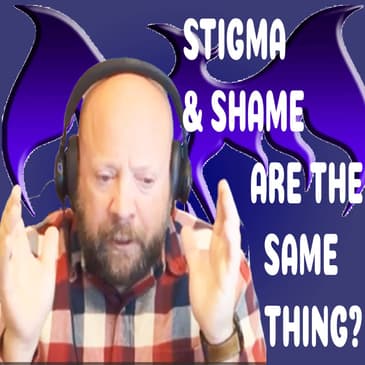


Ryan Bathgate and I discuss stigma, always a hot button issue for us both. Specifically we delve into how shame and stigma very similar, and how unfair it is that the loved ones of people who suffer in addiction are faced with that stigma, due to the age old "moral model"
Hello, I'm Chris Horder (aka Chuck LaFLange) the host of the Ashes to Awesome podcast, dedicated to illuminating the stories and challenges of those affected by addiction and related challenges. Through my personal journey, I've managed to surmount the odds, transitioning from a survivor of addiction (one year sober on Oct 21st) and PTSD to an advocate and member of a community that spans several countries, and proudly promotes stopping stigma and using love and inclusion to help both individuals who suffer in addiction and their loved ones.
I am ecstatic and humbled to share that I've been awarded a scholarship for trauma treatment at the Yatra Center in Phuket, Thailand. This incredible opportunity not only provides me with healing tools but also allows me to continue my mission in a setting that supports sustainable living, with a much lower cost of living, making my podcasting and advocacy even more impactful.
My family, ever my pillars of strength, have generously stepped in to cover my airfare.
However, there's a hurdle in this otherwise amazing journey: my current podcasting setup. To ensure I continue providing quality content and stories, I need a laptop robust enough for intensive video processing. A past endeavor saw a previous laptop overwhelmed by the demands, and I'm determined not to let technical constraints deter my mission this time. My current desktop computer is just too big to take with me.
While sponsorships for the podcast have been a blessing, covering most of my expenses, I still occasionally lean on my family for essential needs.
In this new chapter, Yatra Treatment Center graciously covers my first month's living expenses in Thailand. Post that, I'm charting my path, with a heart full of determination but pockets that could use some bolstering.
That's where you come in. I'm reaching out to this amazing community to help me secure the laptop that can keep up with our shared mission and maybe a safety net for those unpredictable moments.
In gratitude, every donation, whether from kind individuals or benevolent organizations, will be acknowledged in my podcast episodes.
This isn't just my calling; it's our collective journey. I've always found ways to push through, but with your support, we can make the path a little smoother. Let's turn ashes into something truly awesome, together.
Thank you for being a part of this story.
If you are listening on the Spotify platform, you are able to share your thoughts about an individual episode in the interactive element that Spotify offers. Doing this tickles the fancy of the algorithm and really helps us to spread the message.
Also please visit our Facebook page here, and like, share, or comment on any of the posts. Your feedback there is sincerely appreciated, and taken quite seriously.
Ours sponsors, that make spreading the message possible :
Rosecrest Recovery Services Call 615-484-8792 or email info@rosecrestrecoveryservices.com
Dent Kits - http://www.dentkits.com
Together We Can Recovery Society http://www.twcrecoverylife.org
Revolution Recovery - https://www.revolution-recovery.com/
Yatra Trauma Therapy Center -https://yatracentre.com/
Nate D Foundation =https://nate-d.ca/
Chuck (00:02.615)
Hello everybody, watchers, listeners, supporters. Welcome to another episode of Clyde's Scope Wednesday on the Ask Us to Awesome podcast. I'm your host, Chocolate Flange, and with me in virtual studio, of course, is Ryan Bathgate. How you doing today, Ryan?
RBK Kaledoscope (00:15.398)
Chuck, I'm well rested. I got a little bit sick over the long weekend. I was down for about three days with the flu. And yes, being sick sucks. I mean, as soon as the kids hit the elementary school and that Petri dish, it's just like, you know, and so like, it ran through the house last week and everybody got sick but me. And then I was talking to my boss and he was like,
Chuck (00:31.432)
I was just going to say, you mean Petri dish, right? Yeah.
Chuck (00:39.712)
Okay, okay, so...
RBK Kaledoscope (00:44.15)
Oh yeah, so I guess you'll be sick next week. And I'm like, dude, that's like saying shut out to your goalie when he's not letting goals in and there's five minutes left. You know, what are you doing? And sure enough, I spent, so it was a long, it was a much Sunday, Friday, Saturday, Sunday, Monday I had off. I was sick Sunday, Monday and yesterday, missed work. And so that's why we're getting into this in the 12th hour. Yeah.
Chuck (00:57.996)
Yeah, yeah, right.
Chuck (01:05.464)
Yep.
Oh dear, eh? So, yeah. Little bit later than, yeah, right? Yeah.
RBK Kaledoscope (01:14.43)
I do want to address last week as relative to how I'm doing. I always feel remiss when we don't get an episode out. But you know, like, the way of the world, man, I mean, you know, what's the old saying? Not that I'm a religious man, but you want to hear God laugh, tell him what your plans are, you know? Like, yeah. And so, so yeah. So like, you know, it's a...
Chuck (01:17.991)
Okay.
Chuck (01:26.783)
Yeah.
Chuck (01:37.151)
Yeah, you want to make God laugh, make plans. Yeah, I say that one all the time. Yeah, yeah, right, so.
RBK Kaledoscope (01:44.442)
It's just kind of the way things go. I know you had some stuff going on in your end, and timing on my end wasn't great. So I do want to apologize to the listeners. I know I got some feedback on social media about when the show's coming out. The reality is it's today, a week later. I did go and get myself a new mic.
Chuck (02:08.267)
Yeah, yeah, right. Yeah, yeah, hey, hopefully that's coming clear to the listeners. Well, here's the thing though, when you have great equipment, they're not supposed to notice, right? So it's one of those, you know, yeah, never. Yeah, right, so yeah, so hopefully, hopefully that's coming, yeah.
RBK Kaledoscope (02:16.498)
Right. But I didn't have great equipment. That's how we noticed. Yeah. So yeah. But I mean, you know, other than that, I'm pretty good, man. I mean, you got a lot going on, you know, with, you know, the Ashes to Awesome Network and I got stuff, you know, the book is cooking along and then, you know, everyday life and counseling and doing a job and raising kids.
Chuck (02:40.523)
Yeah, yeah, yeah. Yeah, right. So we, um.
RBK Kaledoscope (02:45.482)
I think it's time for the winter beard to start, so I've stopped shaving and trimming for the old Paul Bunyan look. And uh, wow, this is pretty much the uniform all winter, you know?
Chuck (02:53.635)
Yeah, yeah, well you've already rocking the plaid today, so you know, there you go.
Yeah, yeah, I'll winter if you want to call it that out there. But who am I to complain, right, with my upcoming, you know, so, you know, and let's speak to that real quick too. Last week, things kind of blew up in my world and well, we've made the best of the situation and I'm off to Thailand. So yeah, in less than a month's time, I'll be, you know.
RBK Kaledoscope (03:06.536)
Ah, please.
RBK Kaledoscope (03:18.318)
exciting.
Chuck (03:22.123)
hosting from Thailand, right? But also the main purpose to go, or the original kind of purpose to go is so that I can address some of my own trauma issues and go visit Mike at the Autotreatment Center and get some treatment for those things, right? So I'm pretty excited for all of the above, right? All of the above, so, yeah, yeah.
RBK Kaledoscope (03:33.772)
Yeah
RBK Kaledoscope (03:41.722)
And on that note, Mike's such a good dude. Like, you know, what he's doing, the amount of scholarships that he gives out. Like, he's just, he's a guy, much like Devin, who...
Chuck (03:47.811)
Wow, hey, right. Yeah.
RBK Kaledoscope (04:01.102)
You know, it's really easy to see the guys doing this for the right reason and really easy to see the guys doing it for the wrong reason. And Mike is one of those guys doing it for the right reason. Not to mention his skillset is out of this world. I'm at awe and at times in envy of his abilities. So, yeah, very cool.
Chuck (04:07.743)
sure is. Yeah. Without a shadow of a doubt, right? Yeah.
Chuck (04:23.015)
Yeah, yeah, right, yeah, no, yeah. Yeah, it's an exciting thing. And I guess, I'll mention too, I do have a GoFundMe going. I'm just, I'm trying to get a laptop up and going. So anybody that's watching this, it's in the show notes.
If you can help out, it'd be much appreciated for that. I recently switched to a desktop but my laptop crapped out on me and I can't take it with me. It's just too big and too much to bring a suitcase with me, right? So I do have to switch over to a laptop and of course a little bit of an emergency fund. As it stands, I kind of rely on my family for a lot of my essential needs month to month. So there's really no extra room, but yeah.
RBK Kaledoscope (04:47.455)
Yeah.
RBK Kaledoscope (04:59.518)
Yeah, you know, and there's, you know, as we know and as we're learning, it's, uh, this is a hobby of passion, and it's a really difficult one to turn into a hobby, a livelihood of passion.
Chuck (05:10.167)
Hehehehehehe
Yeah, yeah, I certainly know Lamborghinis or business class tickets being tossed around. That's for certain, right? So, yeah.
RBK Kaledoscope (05:16.831)
Yo.
RBK Kaledoscope (05:20.41)
No, but you know the proof is in the pudding as they say. I know I'm sure you get as many as I do of the amount of thank yous and gratitudes that come our way for being able to help people along the way just with some sage advice or a better understanding of mental health and substance use in general. So, yeah, I mean, we make these commitments.
Chuck (05:42.643)
Absolutely, right? Absolutely. Yeah, you know.
RBK Kaledoscope (05:49.83)
And it's not blind. There's a good idea that, like, I knew going into this that I wasn't gonna be hitting the Forbes top 500 or 100 companies. And my idea here was just to sustain a family and provide a livelihood while maintaining an impact in helping people get through these difficult times, especially in the middle of a...
Chuck (05:51.766)
Yep.
Chuck (05:59.843)
Ha ha
Chuck (06:13.818)
Fair enough.
RBK Kaledoscope (06:15.546)
opioid crisis and I think we have this year crossed 1,600 fatalities in British Columbia And that is it's almost such a large number that it almost like Desensitizes it, you know Yeah, like you hear about what yeah, yeah
Chuck (06:22.975)
Wow.
Chuck (06:33.779)
Yeah, right, yeah, yeah. Those are war deaths, right? Those are wartime deaths is what that is, you know, right? And it's easy to now, you just kind of attribute that to this big thing that's happening and maybe, like you said, desensitize to it, right? Like you would about a war, right? So, yeah.
RBK Kaledoscope (06:48.658)
Yeah, and like, to me, the solutions are so radical that I just don't see any government willing to get behind it, which is exactly what needs to happen. And then there's the moral model stigma that is just so alive and well.
Chuck (07:03.904)
Yeah.
Chuck (07:11.439)
Oh man, right, yeah, it really is.
RBK Kaledoscope (07:18.782)
on the phone with families, just not having a clue like what to do and being afraid is, you know, I'm going to say
Maybe I need to look at that being billable or something because there's a lot of time I spend going between places talking on phones and trying to help families understand what they're going through because nobody knows what they're doing something wrong or they're doing something right. It's such a sensitive and deeply painful process that yeah, yes, and that is probably something we're going to talk about as the show goes on.
Chuck (07:50.579)
an individual one to boot, right? Like, right?
RBK Kaledoscope (08:01.427)
Um, they, so afraid to make the wrong move, you know, and getting advice from people that, to be frank, have no, no place giving advice in these things. Cause you know what I hear is, you know, cut them loose. You know, uh, you know, yeah.
Chuck (08:03.947)
Yeah, right, right.
Chuck (08:13.427)
Yeah, right, right. Oh man, don't even get me, whoo. Right? I get pretty passionate about that stuff, right? You know, as you well know, right? Yeah. Absolutely it is, right? And it's because they don't understand. And I've been there, I've done that, I've had a loved one. Okay, maybe you did and maybe you were, but that was at a different time. Right? That wasn't when death was, because now, let's be honest, when you wait for someone to hit the rock bottom, they die.
RBK Kaledoscope (08:21.034)
And to be honest with you, that's 9 times out of 10. That's the advice that people are getting from people that don't understand this.
RBK Kaledoscope (08:37.079)
Yup.
Chuck (08:43.644)
That is our new reality, right?
RBK Kaledoscope (08:45.723)
There's a really interesting book written by William Burroughs, who's part of that beatneck generation. It's called Junkie and it's about opium addiction or opiate addiction in the 1940s. In that book, it really portrays, it gives a different hustle. In those days, they hustled for scripts from old doctors that just would hand scripts out and because there was no system, they would just go doctor to doctor to doctor and get their...
Chuck (08:58.691)
Yeah.
Chuck (09:11.701)
Yeah. Right.
RBK Kaledoscope (09:13.902)
Met morphine at the time, but when you go down to the skid row It speaks to you know there was no Drugs down there. It was all guys drinking port wine You know and that was and then you go like you go look down at you know down Hastings or Even where I am here in mission, you know, there's no alcoholics can Know it's fentanyl. It's meth
Chuck (09:19.308)
Yeah.
Chuck (09:26.923)
Yeah, yeah, right.
Chuck (09:38.771)
No, no, there isn't, right?
Yep.
RBK Kaledoscope (09:43.694)
And it's, what was that new one on the street? No, I shouldn't say it's new, but anyway, now there's a new one out called, they call, well everything's got Benzos in it now and it's just like, there's a new thing called Pink Heroine that's killing people. Not heroin for the record, it's fentanyl. But I mean, it's like that movie, American Gangster, the Blue Magic.
Chuck (09:51.887)
Oh, the tranks are the... Yeah.
Yeah, xylosine or something like that. Oh, okay.
Yeah, it's fentanyl.
RBK Kaledoscope (10:11.854)
You know, just give it a name and people market it. Yeah, yeah. So, yeah, so I mean, I guess really like, I guess what we could get into is talking about, you know, how big of a impact stigma is transgenerationally. And what I mean by that is from generation to generation, we pass on these things.
Chuck (10:11.911)
Yeah, yeah. Branding it, yeah, right, so.
RBK Kaledoscope (10:38.642)
And it's often like the same thing I talk about all the time. I will like have we stopped to question our own definitions of what we the way we see the world. Like I'm talking to you with headphones and a mic. Now I consciously have made a decision to define a headphone as a listening apparatus that I put around my ears and a mic is something that I talk into. I could call it a you know a polo stick in a in a in an Ottoman.
But then I got to get in there every time. I call it this because I have freedom of choice. I'm not going to do that every time. But it is. I mean, for ever I thought what being a man was working hard, playing hard, and f'ing hard. And that's something I picked up through the transgenerational programming of my father, my father's father, and on and on and on, which really came from an agricultural era where they didn't have time for feelings.
Chuck (11:08.803)
Yeah.
Chuck (11:16.015)
Yeah.
Chuck (11:27.901)
Yeah.
Chuck (11:38.068)
Yeah, yeah, right, right.
RBK Kaledoscope (11:39.134)
And so, and I think that the moral model comes from that, and we see it, especially in mostly, like the people who are outside of it, who haven't lived with it and don't know what to do, or they come from, like I get a lot of this, is like the father doesn't want nothing to do with the son or daughter because they are substance use disorder people. You know what I mean? And then,
Chuck (12:03.207)
Yes. Yeah.
RBK Kaledoscope (12:05.846)
the mother having to navigate in between that because they want a deeper understanding but have no idea what to do. They know it's the right way, isn't to cut them out like the father does, but they don't know how to attend to this individual.
Chuck (12:22.199)
I would say every single Family Friday that we've recorded, that is the tone. That is the dynamic, right? And throw in stepfather, and that just, you know, that only amplifies everything you're saying right now, right? You know, right?
RBK Kaledoscope (12:27.266)
That it. That it. Yeah.
RBK Kaledoscope (12:35.462)
Yeah, so why don't we just look at what, let's look at the literal definition of stigma, okay? A mark of disgrace associated with a particular circumstance, quality, or person.
Chuck (12:46.891)
Yeah, yeah, let's do that.
Chuck (12:54.604)
Yeah.
RBK Kaledoscope (12:56.079)
A mark of disgrace.
Chuck (12:59.886)
Doesn't that just like wrap it up right there, right? You know? Yeah, yeah, yeah.
RBK Kaledoscope (13:02.595)
Right? And like, you know, I think of like, you know, in America, in the South, they have a Southern way. And it's very embedded in their cultural being of a gentleman is this, a gentlewoman is this. And if you don't fall into that, it's like you get a scarlet letter, you know, like, and the reality is, nobody falls into that.
Chuck (13:14.881)
Yeah.
RBK Kaledoscope (13:30.722)
They never really have. They just appear to do that. You know what I mean? Meanwhile, there's all this shit happening in behind that is creating so much turmoil that it would be so easily, um, attended to by open, simple, open, loving dialogue. Yeah.
Chuck (13:33.191)
Yes, yes, yes.
Chuck (13:46.399)
Right, right, and that's it, that's it. Once it ceases to be our dirty little secret. Once, right, yeah. Right, there's nothing, nothing about it, no, right? Yeah, yeah.
RBK Kaledoscope (13:50.518)
Well, because it really...stigma? Tell me about how stigma is different than shame.
RBK Kaledoscope (13:58.038)
Right, so what does shame need in order to flourish?
Three components. If you put it in a Petri dish and you add secrecy, silence, and judgment, shame will flourish. Ah, right. Now, if we correlate that into family systems and how traditional family systems, especially like post-war nuclear family era, it is embedded in
Chuck (14:08.768)
Yeah.
Chuck (14:14.809)
Oh, sounds like stigma to me. 100% right? Yeah.
RBK Kaledoscope (14:34.942)
secrecy, silence, and judgment. And so when we apply that, we're really talking about the moral model. Now, addiction, mental health, so I put them together because they are. And when you look at any, right, I mean, even in the world, the...
Chuck (14:37.087)
Absolutely.
Chuck (14:54.68)
without a shadow of a doubt, yeah. I mean, any modern way of thinking, right?
RBK Kaledoscope (14:58.422)
The political world is even going that way where it's not, they don't use the, nobody, I mean, you don't use the word addiction anymore. We use substance use disorder. You know, and so I was, I used to be a director of mental health and substance use, MHSU. So they're together. Right, and so.
Chuck (15:06.048)
Yeah.
Chuck (15:15.115)
Yes, they are. I know here in Alberta, the ministry is addiction and mental health, right? So that whole ministry has changed, right, at that level. So, yeah. Yeah, yeah, of course, of course.
RBK Kaledoscope (15:24.33)
Yes, but it used to always be separate, right? Now, the way that we have been programmed or socially informed or influenced is that they are different. If we even just look at like alcohol and heroin, let's have a look at that. Socially, alcohol is accepted. So it's an acceptable thing and it's actually reinforced over and over.
Chuck (15:39.627)
Yeah.
RBK Kaledoscope (15:53.842)
You get a promotion you drink someone dies you drink you have a wedding you drink. It's Tuesday you drink. It's Friday You drink, you know what I mean? Everything is drink and then like oh and then all of a sudden He's an alcoholic. Well, he must be morally defective, you know, and I'm like the entire tapestry is Open this gate for this to be such a thing now and then I used to get guys like come into my treatment floor and be like No, no, I'm not like them. No, I'm an alcoholic
Chuck (16:01.389)
Yeah.
Chuck (16:08.125)
Yeah.
Chuck (16:14.334)
Absolutely.
RBK Kaledoscope (16:22.766)
so I need to be treated differently. You know, and this is why I like the word overdose is gone from my vocabulary, because it's a reinforcement of stigma. That, you know, and I'll give you the example that really changed my mind around this, is you ever hear about an alcohol overdose?
Chuck (16:23.459)
Hahaha, yeah. Yeah.
Chuck (16:32.747)
Yeah.
Chuck (16:37.59)
Okay.
Chuck (16:44.627)
No. Alcohol poisoning, right? Yeah. Yep. That's perfect. I can't believe... Yeah. I can't believe I've never seen that.
RBK Kaledoscope (16:45.858)
What do they call it?
So, in other words...
In other words, by accident I poisoned myself with alcohol. But an overdose is like I took too much, it's some kind of like, you know what I mean?
Chuck (17:00.107)
Yes.
Chuck (17:04.991)
Yeah, that nuance is huge though, right? It is, it's subtle, but its connotation is massive, right? Right, I thought it though, yeah.
RBK Kaledoscope (17:08.211)
It is. So...
And the proper vernacular these days is drug poisoning.
Chuck (17:17.875)
Yes, yes.
RBK Kaledoscope (17:20.19)
Yeah, and we can't separate alcohol from drugs.
Chuck (17:23.679)
We can't, the only difference is legislation, period. Period. Right?
RBK Kaledoscope (17:27.454)
It actually, there's actually, no, there's a massive difference and it goes the other way. Think about, okay, so I've done a lot of drugs in my life. Now, alcohol, I get a hangover, I'm wiped out the entire day. I black out, I do things, I have no idea, also I notice I got broken knuckles and no pants on. You know what I mean? And I'm like, where am I? Okay, perfectly fine. Now...
Chuck (17:43.339)
Yeah.
Chuck (17:51.476)
Yeah, yeah, yeah.
RBK Kaledoscope (17:56.93)
Cocaine. Wake up the next day. Still pretty, you know, like don't really black out. I wake up the next day maybe a little bit tinny, maybe a little bit slow in thought, but doesn't, I'm not sleeping with, you know, all the curtains shut and the blinders are my ears because I got a headache that you wouldn't believe. Heroin, you know, throw up when you first time you use it, but really the next day you're fine unless you are past 18.
Chuck (17:58.135)
Yeah.
RBK Kaledoscope (18:26.782)
uh, bodily dependence or physical dependence, and then you get dope sick. But that takes 18 straight days of use in order to set in, uh, you know, uh, crystal meth, you don't really have a wicked hangover. You know what I mean? Like the power of alcohol is so.
Chuck (18:29.555)
Yeah.
Chuck (18:34.306)
Yeah.
Chuck (18:39.825)
Yeah.
RBK Kaledoscope (18:44.174)
devastating to the body in comparison to all of the other drugs, it does way more damage. Yet, without a doubt, yet because some racist legislation that came around in the early 1900s to suppress migrant workers made opium legal to suppress the Chinese workers after the railroad was finished.
Chuck (18:46.155)
Yes.
Chuck (18:53.883)
Oh, without a doubt, yes.
RBK Kaledoscope (19:14.634)
cocaine to suppress the African-American workforce because they worked longer, harder, didn't take breaks, and worked for half as much money. And the same thing with marijuana or cannabis, sorry. And that was to target the culture of Mexicans. So it was really about finding a new way of form of slavery, just like they passed the 13th Amendment, you know, after Lincoln was shot.
Chuck (19:25.312)
Yep.
Chuck (19:31.003)
Yeah.
RBK Kaledoscope (19:41.218)
They passed the 13th Amendment to abolish slavery. But in the writing, it says, if you commit a crime, you lose all your rights. So they started putting people in jail for life for spitting on the street, African-American people. And then what did they do? They went and worked at the plantation. Nothing changed. And I'm bringing this up because we need to look at where we're coming from to understand.
Chuck (19:46.024)
Yeah.
Chuck (19:50.815)
Yeah, yeah, right.
Chuck (19:55.724)
Yeah.
Chuck (19:59.359)
Yeah. Right. Yeah.
RBK Kaledoscope (20:09.838)
the trajectory of where we're going and how we need to alter that trajectory in order to find a way to have an equitable society.
Chuck (20:17.989)
Okay, yeah, so.
Chuck (20:22.003)
circle back to stigma, and specifically, what we wanted to do in this episode was maybe to the families, right? So, yeah, loved ones, yeah, I should, I'm careful, okay. So, how does it affect them, right? And that's, to me, is the real, that's the real piss off. You know, and it is to the individual as well, to the person who's suffering, right? But at least there's some choice there. I just, you know, right? Right? Yeah.
RBK Kaledoscope (20:27.776)
or loved ones.
RBK Kaledoscope (20:45.512)
person that's suffering gets a break like I'll die on that hill
Chuck (20:51.155)
My mother, I guarantee you, as much as she champions me and as much as support as she gives me, still to this day worries every single day. Right? Yeah, yeah, right? Damn right she has, right? She has, without a doubt, right? So people that, how stigma affects those people, to me it's just so unfair, just so, so unfair. There's somebody close to the show.
RBK Kaledoscope (21:00.706)
Why wouldn't she? She's fucking earned that. Sorry bro. Sorry.
Chuck (21:19.647)
gonna have to do a retake on an interview that I've already done with her. And I think I told you about this some time ago. She was helping her ex-husband, like she let him move in with her to get his shit together and whatever. She couldn't tell any of her friends and family.
because they had all told her they would stop speaking to her if she did that. Again, we did talk about this, right? And I think I've talked about it on the show as well. But just imagine, like imagine, you're being this person, this loving person who's trying to help somebody and your family and your friends are threatening to ostracize you for doing just that, for being a loving person, right? And fuck them, sorry for the language, but that serves the person that is doing the threatening. That's it, that is it, 100%. It has nothing to do with trying to do better
RBK Kaledoscope (21:55.626)
Yeah. And who does that serve?
RBK Kaledoscope (22:02.282)
Exactly. And so...
Chuck (22:07.021)
who's the family member of the loved one.
RBK Kaledoscope (22:09.154)
So, I'd like to take that back again to the definition. A mark of disgrace. Disgrace to who?
Chuck (22:17.855)
Yes. Right? Yes.
RBK Kaledoscope (22:21.642)
You know, so many times I think that people pick the easy road because it serves them in their comfort level and not the one that they love. And all you need is somebody who is uninformed to co-sign that and your decision is made. You know, so when we look at, we talked about shame, shame being secrets, judgment and what was the other one? Silence.
Chuck (22:31.423)
Yeah, yeah, yeah.
Chuck (22:38.227)
Yeah. Right.
Chuck (22:50.703)
Silence.
RBK Kaledoscope (22:52.106)
So that also is really the definition of a closed family dynamic. A closed system, a closed family system, is one that thrives on secrets, silence, and judgment, where people, you're going to have people, I mean, pretty much in that dynamic, you have, it's hierarchical, you have the ring lead, the father, whoever that is at the top.
Chuck (22:57.663)
Yep.
Chuck (23:16.855)
Yeah.
RBK Kaledoscope (23:17.506)
who is probably, you know, typically an abuser. You wouldn't have a closed system unless there were secrets to have, you know? And then, so then you have a whole bunch of unheard, unseen, unloved and unlovable people dependent on that system. Stigma works the same way.
Chuck (23:24.56)
Yeah, right.
Chuck (23:39.046)
Yeah.
RBK Kaledoscope (23:42.13)
It is, what it does is it takes away our ability to have human connection. It takes away our ability to be heard, to be seen, to be loved and feel lovable.
Chuck (23:48.811)
Yeah, yeah, it does. Yeah, it does. Especially the feel lovable, right? You know, yeah, you know.
RBK Kaledoscope (23:50.782)
You know, and it's usually, yeah, and it's usually like, the problem is that it's so ingrained in our social tapestry that the revolution of the love model has a hard time when it goes against the stubbornness of the moral model. And you know, my mentor used to always tell me like, it takes a community to create substance use disorder and it takes a community.
Chuck (24:09.728)
Yeah, it does.
RBK Kaledoscope (24:20.418)
to fix that substance use disorder. It is not an individual issue that requires an individual solution. And that's like my greatest, I think the greatest gift of the recovery communities is the word community. You know what?
Chuck (24:33.995)
Yep, yep, yep. And that, now we can take that back decades now, right? Community, and really think, I would think, and I'm no expert in this, you know more than I do, but go back to 12 Steps and what that's done. And I mean, there's all sorts of conversations to be had around 12 Steps, but the idea of community, right, and recovery, that's where that comes from, right? You know, and we gotta, yeah. Yeah, yeah, right, yeah.
RBK Kaledoscope (24:39.55)
Yeah.
RBK Kaledoscope (24:54.887)
Yeah. And just like, like-minded issues. So stigma leaves us feeling lonely. I'm sorry. Yeah, lonely, yeah. Not just alone, but lonely. Stigma tells us that we are not enough. Stigma tells us that there's something wrong with us. It will never be better. Stigma also tells the loved one that they're not doing enough, or they're doing too much, or...
Chuck (25:07.071)
Yeah, yeah it does. Yeah, yeah.
Chuck (25:19.398)
Yeah.
RBK Kaledoscope (25:21.442)
they're enabling or they're not enabling or you know like there's just so much ambiguity to what the loved one
Chuck (25:25.724)
Yeah, yeah. There's a fire word. There's a fire word for me, enabling, right? Since when is feeding a human being enabling them, right? That pisses me off, right? That's what that does, you know, or answering the phone. You know, that just, oh, you know, right, yeah.
RBK Kaledoscope (25:30.368)
Well, yeah.
Wow. So...
RBK Kaledoscope (25:39.242)
Yeah, me too, man. But you know, like, that's what I mean. That's not about helping. That's about helping yourself. You know, and so like...
Chuck (25:45.907)
Yeah, yeah, right. And that's fine, your boundary is your choice, right? But let's not point, let's not blame that on the person who's suffering an addiction. Let's own that for what that is, instead of villainizing somebody else to justify our own decisions, right? You know?
RBK Kaledoscope (25:55.339)
Well...
RBK Kaledoscope (26:00.386)
So I had a conversation last week with someone, just an example of this, of the great ambiguity. And it's not just like unclear or uncertain, it's also your heart and everything you have is tied in. So let's say it's your child, like everything you have is tied into this. Everything you, you know, your entire life becomes this person getting better who doesn't want help or can't seem to figure it out. And what do you do? And so like, she'd ask me like,
I let him in to have a shower. He's not allowed to stay at our house. At the end of his shower, he tried to hang out and I asked him, I told him he can't be here, he's got to go. Am I a horrible person?
Chuck (26:43.629)
Oh...
RBK Kaledoscope (26:45.118)
You know, and my response was absolutely, you did everything that you could do while maintaining a trustful, integral boundary that will pay off when the time comes.
Chuck (26:53.375)
Yes. Yeah, yeah. You showed some heart, you know, but you stuck to your boundary. And yeah, right. But what?
RBK Kaledoscope (26:59.318)
Yep. Yes. Because if you say, you know, like, you know, she's not like, she's just like, you know what, you're an addict, you're out. It wasn't like that. This is a long period of time that she had to come to a boundary that she had to set for the sanity of herself and the rest of her family. You know, and so for me, I'm like, that's how, that is a perfect example of using the love model in a way to support your loved one without having to really
Chuck (27:08.787)
Yeah.
Chuck (27:17.179)
Absolutely, right? Absolutely.
RBK Kaledoscope (27:29.254)
uh what's the word well no um decompose your own family or your own personal values or family values so you're still strengthening
Chuck (27:31.464)
ostracize.
Chuck (27:39.799)
Right? And what a horrible thing to have to ask yourself. Am I a horrible person, right? So what that person is going through, what that person is going through is plenty, is plenty. We do not need any sort of outside shame or stigma put on top of that. Because that person is already, like they're already seriously questioning their own, you know, whatever, right? You know, so.
RBK Kaledoscope (27:47.616)
Yeah.
RBK Kaledoscope (27:57.651)
Ugh, no.
RBK Kaledoscope (28:05.219)
Oh yeah. Yeah.
Chuck (28:07.879)
Yeah, we don't need anybody adding to that. We just don't, right? And piss off with it, quite frankly. It's a passionate subject for me. I just, you know.
RBK Kaledoscope (28:16.194)
Well, it is, because like, we get, we leave this enabler, you know, I hate the term, because most people don't understand it. So, I'll be clear about this. Enabling is giving, taking away all the consequences somebody needs to be forced to look at themselves. In other words, giving them $150 every day to smoke fentanyl in their basement.
Chuck (28:23.871)
Yep.
Chuck (28:36.568)
Yeah.
Chuck (28:44.371)
Yeah, right. Right. Yeah.
RBK Kaledoscope (28:45.834)
Yeah, pretending that there's not an issue there, even though you know one, there is one. Doing nothing is enabling. And those are, none of those are for the substance use disorder person. Those are all for the individual, so they can feel better. Because, I mean, can you imagine, like, you telling your child you can't be here?
Chuck (28:54.687)
Yes. Yeah. Yes.
Chuck (29:12.799)
Yeah, no, I can't. I can't. Right?
RBK Kaledoscope (29:14.662)
You know, knowing that you're putting them out on the street.
Chuck (29:18.003)
Yep, yep, yep.
RBK Kaledoscope (29:20.566)
Like, wow, what a difficult spot. And so, but that's not the stigma part. That's beyond, that's an evolved sense beyond the traditional moral model and the stigma. Now, on the other side, it's like, well, the other thing is like, my husband wants nothing to do with him. He's written him off, doesn't even pretend like he's alive.
Chuck (29:22.911)
Yeah, right.
Chuck (29:34.508)
Yeah.
Chuck (29:43.136)
Yeah.
Ah, yeah, yeah.
RBK Kaledoscope (29:47.902)
And so now you're in this space between wanting your child to get better, and the almost like, to me it's a bully energy of like, no, that's not gonna happen, no, he's just a junkie.
Chuck (30:07.196)
Oh, yeah, yeah.
RBK Kaledoscope (30:07.882)
You know? And so like, that's a shitty, shitty spot to be in. And so, and where do you go? Who do you call? What do you do? Where's the resources? Oh, yeah.
Chuck (30:18.899)
Yeah, well, and that's, we're seriously lacking in that, right? And as I've often said, raw minimum, 10 people for every person that suffers an addiction are in that fight, right? And the scarcest resources are, 90% of those resources are going to 10% of the people affected, and that is the person suffering, right? So, you know, right? And, you know, those are all just, you know, whatever, anecdotal numbers for sure, but, you know, yeah. Yeah.
RBK Kaledoscope (30:26.946)
Yeah.
RBK Kaledoscope (30:37.834)
Yeah, yeah, yeah.
RBK Kaledoscope (30:43.734)
Well, but you know, there are things to look at, that's for damn sure. And so like, I think when we look at, I think we have to ask ourselves, first of all, for me, I want to get a sense, I want to match what stigma is to how I feel. And then we talked about, in our Emotional Intelligence Lexicon series, we talked about how to take these things and then match them to our feelings so that we are not overwhelmed by that.
Chuck (31:03.821)
Yep.
RBK Kaledoscope (31:12.758)
and we can understand it. So when I've done this, taken the word stigma, and what do you know? It sure matches the shame feeling. And so when I know that shame feeling is here, I know, okay, no, this is not the road or the route that I want to be on, and I want to start looking beyond what I think I know, because all I know really is the stigma effect. I mean, I remember when I first like, went into recovery like 150 years ago, and I called my grandma who's got rest her soul.
Chuck (31:12.853)
Yep.
Chuck (31:19.819)
Yeah.
RBK Kaledoscope (31:42.398)
I was long past now, but I remember her saying, telling me that, Oh, I heard you got the cure. Absolutely. But I mean, that's where she came from.
Chuck (31:50.475)
I know that. When he told me that, I was like, are you serious? Like, did she mean it? Right? You know? Yeah, yeah, yeah. But, you know, what's funny is that's kind of an enlightened view because at least then she views it as not a moral failing, right? That there is something to care. So, yeah, at that point, 150 years ago, whatever, that's an enlightened view, right? As messed up as that is, right? You know? Right?
RBK Kaledoscope (32:08.703)
Yeah, and like, you know, but she also, she's a product of the agriculture industry. I mean, she came from North Dakota with my grandpa who's from Illinois and took free land in the Depression to be farmers in Canada. That's how I ended up here. I would have been American. So yeah, I mean, and a lot of that comes back to that. It's like...
Chuck (32:25.675)
Yeah, yeah, right. Ha, ha.
RBK Kaledoscope (32:33.186)
You just get so many of the old school thinking and it is so not helpful. I mean, and if you go, I don't know, I go look on the threads about addiction and we have a bit of a population here in Mission and a lot of the comments are really old school. We should all just ship them off to an island where they can fend for themselves or stop.
Chuck (33:00.608)
Ah, yeah.
RBK Kaledoscope (33:01.13)
spending taxpayers money and all this crap that makes me so mad. My wife gets so fired up about it and just starts lighting them up on Facebook. Well, she is.
Chuck (33:11.239)
She's one of those is she? Yeah, good good. I'm glad somebody's taking the time to do it. Yeah
RBK Kaledoscope (33:15.606)
She is definitely, she's an outreach extraordinaire, and her ability to connect with our demographic is something else. But anyways, so having said that, you know, I think there's so much more to be said about this issue. I just, I know we're hitting a mark here, we gotta get to the mailbag, but I want to, here's what I wanna say. If you have something you're not clear about,
Chuck (33:23.435)
Yeah.
Chuck (33:29.975)
Thank you.
RBK Kaledoscope (33:44.426)
reach out to any one of us on this show. We have a wealth of experience and knowledge, especially around open family systems, around the love model opposed to the stigma model, the more model, and probably have some good insight as to what you're going through and some ways to navigate this with a personal touch. I am more than happy to help in any way I can, speaking for myself, and I'm sure I'm...
Chuck (33:46.58)
Absolutely.
RBK Kaledoscope (34:13.57)
I can't speak for everyone on the show, but I've got a pretty good idea that everybody's in the same boat as me. We're all eating Kraft Dinner and doing podcasts to try to help people.
Chuck (34:17.751)
Perhaps we're all here for the same reason, right, at the end of the day. Myself, you know...
Chuck (34:29.881)
I'm only 346 days into the whole thing right now, but you know, hey, all this shit I talk about not counting days, we're 10 days off, man. We're 10 days off from a year, right? You know, right? Like, yeah, yeah.
RBK Kaledoscope (34:38.042)
Hey man, listen, you know what? I don't count days because I've been at this for 100 million years. You know, and like I told you, my first one year cake, everyone was there. My fourth one year cake? I didn't tell anybody. You know.
Chuck (34:50.906)
Hahaha
Chuck (34:56.731)
Yeah, and I'm not getting a cake. I don't plan on doing anything, anything close to that, but it'll be a weekend ramble actually, so that's exciting, right? That one will be, yeah, right, right? So yeah, yeah. That'd be cool. That'd be really cool. I've actually invited KTA back for that one as well, you know, if you could come on. So we'll see if he's available or not, but yeah.
RBK Kaledoscope (35:04.779)
Oh good, yeah.
Maybe I can get into that.
RBK Kaledoscope (35:13.597)
Okay.
RBK Kaledoscope (35:17.014)
Yeah, well let me know. I, you know, to tell you the truth, I think, um, if you want to... Huh. Yeah. Yeah, definitely. Um, however, if you wanted to, if you wanted to, uh, you know what, let's look at this more. I don't think we're done with stigma.
Chuck (35:22.743)
You know who I really got to invite for that one? Mum.
Chuck (35:30.951)
Yeah, yeah. Mailbag.
Chuck (35:41.119)
We're not, we're not, we're not done with such a, I think I see the beginning of a series, if you're in for that.
RBK Kaledoscope (35:48.158)
I think so, I just need to brain map a little bit on it, but I did want to do a series on family and loved ones.
Chuck (35:52.48)
Yep.
Chuck (35:58.795)
Well, and this affects them just as much. So, you know, maybe we do this now and then it move into a family and loved ones next and kind of, you know. Here's the thing, man, it's our show. We can do whatever the hell we want, right? So, yeah, right.
RBK Kaledoscope (36:05.074)
Yeah, or maybe it's a six part series with three of them being about stigma.
RBK Kaledoscope (36:11.33)
Yeah, I think, yeah, just spitballing here. I think there's some stuff to be said about CSA as childhood sexual abuse that is very prominent in my substance use disorder, clientele. And so, again, stigma falls deeply into that and is a big barrier for people being able to talk about it.
Chuck (36:19.71)
CSA.
Chuck (36:23.559)
Ah, yeah.
Chuck (36:28.491)
Yep. Yeah.
Chuck (36:35.203)
Absolutely. And I think those of us that are a little more in tune with what's happening, mental health and addiction are the same thing, right? Mental health though, I feel like we've come a long way in the stigma, we still have a long way to go, but we've come a long way to addressing that, right? From where we were say 20 years ago even, right? Remember when we were kids, you know? Okay. Fair enough, fair enough, yep. Yep.
RBK Kaledoscope (36:54.902)
I... so I agree and disagree. It's not happening fast enough in my opinion. In my lifetime, you didn't go see a counselor, you got what you see to shrink. You know, like... Yeah.
Chuck (37:07.891)
Yeah, right, right. Or remember, Pinocchio. Remember, remember, we talked about this once before on the show, right? That was like a, that was an insult. It was a blatant insult. Oh, you gotta go to Pinocchio, right? But we used to joke about that as kids all the time. And for the listeners, Pinocchio is a, you know, a city where there is a psychiatric ward of sizable, a sizable psychiatric ward here in Alberta, right? But, yeah.
RBK Kaledoscope (37:30.232)
My dad used to call it the bean plant.
Chuck (37:32.459)
Right, right, yeah, right. So.
RBK Kaledoscope (37:34.688)
Yeah.
Chuck (37:37.515)
But I think we've come a long way, again, we have a long way to go without a doubt, right? And I wouldn't deny that, but you know, we have to even catch up to what little progress has been that way with substance use disorder as well. So yeah, conversations like this. Yep, yep, without a doubt.
RBK Kaledoscope (37:41.738)
Yep, we do, yep.
RBK Kaledoscope (37:48.862)
And honestly, this is how it's going to change. What we're doing, people like us. And hopefully one of these days we'll get to legislation and start making some real laws that help our citizens instead of help the 1%, which I believe is what's happening right now. There's a massive business around the war on drugs. Everyone knows it's a devastating failure.
Chuck (38:04.513)
Yeah.
Yeah. Yeah, yeah.
RBK Kaledoscope (38:16.874)
the war on drugs. Everyone knows, everybody on this planet knows that. Why is it still here? Because it's a sixty billion dollar a year industry. That's why.
Chuck (38:18.975)
Right? Right, yeah, that's what I told. Yeah.
Absolutely. You get big pharma. Wow, there's a whole new series right there. So you know. I know I almost regret saying it. Yeah.
RBK Kaledoscope (38:29.846)
Yeah, and I could go for days on with passion and hatred My god, you need to watch that show Michael Keaton What's it called dope sick?
Chuck (38:44.981)
I can't believe I haven't seen that. What network is that on?
RBK Kaledoscope (38:46.278)
So good. I think it might have been an apple maybe. It's so, so good dude. And it's like, you know, because I lived that era. Like I was doing Oxy-80s, like the repairist thinking it was fine because the doctor prescribed it. You know, like nodding out at my computer at work. And uh, and I could-
Chuck (38:51.123)
Oh, that'd be why, yeah, okay.
Chuck (39:04.374)
Yep.
Chuck (39:08.183)
Oh, it's on Hulu. Okay. Yeah.
RBK Kaledoscope (39:11.716)
I can name about 15 of my good friends that have went out to the oil field, fell off a rig, got put on oxycontin, then the copyright ran out, they went to heroin and end up dying over fentanyl or heroin overdose.
Chuck (39:26.665)
Right? You know, then that's very much in our young adult lifetime is when all of that became like a huge reality, right? Yeah.
RBK Kaledoscope (39:30.598)
Oh yeah. And so this show is like, I was there. Everything that happens in the show, I remember it all. And then Michael Keaton, in this one scene, man, it's like he finally gets into treatment and is finally doing well and the rep that talked him into selling Oxycontin, he was a doctor, comes to visit him to apologize for fusing. He didn't know and he was told all this thing. And at the end of it all, he goes, hey, do you got any in your car? And I was just like, no.
Chuck (39:36.959)
Yep, yep, yep.
Chuck (40:00.325)
Oh, wow.
RBK Kaledoscope (40:00.61)
But that's it, that's how, like it's so real. You know what I mean? And like.
Chuck (40:03.763)
Yeah, yeah, yeah. Don't tell us how that question ended, because now I want to know, right? But I'm going to watch it.
RBK Kaledoscope (40:09.918)
Well, there's another good one with Steve Carroll, I think my son or something like that. Heartbreaking, but really good, really honest depiction of...
Chuck (40:21.119)
Oh, I think I've seen this one. Yeah. Yes. Yeah. On Netflix, which is Yeah, which is fantastic, right? documents that whole that whole series of events, right? The pharmacist as well is another one that is right. Isn't that something else? Like, yeah, man. Yeah.
RBK Kaledoscope (40:24.234)
Yeah, really good. And then, and Painkillers is the new one on Netflix. It's really good. Yeah.
RBK Kaledoscope (40:33.79)
And it goes, the farmer's just excellent documentary, yeah. Yeah, yeah, yeah. And like, dude, it's fucking crazy. Like, and you know, like, and that's all real. That's what's happening. And all of that embodies how stigma has driven us to where we are, along with poor policy and mostly, I think, you know, like El Chapo and like, so like what Purdue Pharmacy did was he,
when he created, the Sacklers created a whole new clientele for when El Chapo escaped prison. And got out and was like, oh shit, yeah, and hey, why do you think fentanyl is here? Don't have to import it, you can make it.
Chuck (41:10.079)
I guess so, eh? Yeah, right? Yeah, yeah. Exactly, right? Yeah, the precursor's too important and the rest is, yeah, right? So, you know, yeah, yeah. Well, I think when it comes to fentanyl, there's, it's definitely in context. So, let's get a couple mailbag questions in, right? You had one sent directly to you. If you wanna read that, or did you send it to me? I don't think you did.
RBK Kaledoscope (41:17.944)
Yeah.
Yeah, it's fucked up. Anyway, sorry for the language.
RBK Kaledoscope (41:38.018)
You know what? We can't do that one today because I don't have a... I don't have anything... Oh, I lied. I lied. Yeah, I can read it.
Chuck (41:42.535)
Okay, okay, okay.
Chuck (41:48.995)
You got permission? Okay, okay. Yeah, if you want to just read it out directly instead of me reading it to you, that works okay.
RBK Kaledoscope (41:56.358)
Okay so I'm going to leave out a little bit of personal stuff here. So this is from Bodhi from Surrey. And so he says, I've been with someone for about a year. I met her at a treatment center that they were both at and ended up moving in together. About five days she relapsed and I had to get her out. So my question, five days into living together.
Chuck (42:01.428)
Okay.
Okay.
Chuck (42:22.775)
five days ago.
Oh, okay, okay. Yeah, yeah.
RBK Kaledoscope (42:28.262)
My question is I'm very hurt and I'm very upset, but should I let her go and move on or should I stick beside her and fight with her? I love her with absolutely everything. I thought she was an amazing woman and did a lot for me. I need to watch out for her as well, but she's still young and I don't know if she's exactly ready. How do you deal with someone in a relationship that is still using but I am not?
Chuck (42:36.515)
Okay.
RBK Kaledoscope (42:57.018)
I just took blank blank. A nice amount of time. But I want to be there for the same time she's still out there and still plans on using.
Chuck (43:10.323)
still plans on you.
RBK Kaledoscope (43:13.581)
Yeah.
RBK Kaledoscope (43:17.024)
So my first thought is...
You can't make someone ready.
Chuck (43:24.203)
No, I think that's the most significant part of that question is she still plans on using.
RBK Kaledoscope (43:29.314)
Right, so what I would say to that, Bodhi, is I think this is a point where we need to understand for ourselves what it means to love from afar. And to have firm boundaries, still be supportive, still answer phone calls or still make phone calls, still text message, still let them know that you care. But setting the boundaries of...
Chuck (43:41.991)
Yeah, yeah, yeah.
RBK Kaledoscope (43:58.658)
you know, those enabling things and like, you know, I would be constantly reaffirming that when you're ready, I'm here. You know, and I'll drop everything in this world to be there, but not until you're ready. Because it's, and I agree, and I think that to stay in that Bodhi and walk with her while she's not ready, I think is just a ticking time bomb for your own demise, in my opinion.
Chuck (44:06.835)
Yeah.
Chuck (44:13.747)
And protecting your own recovery is paramount, right?
Chuck (44:26.015)
Yeah, yeah, right, right.
RBK Kaledoscope (44:28.054)
But if she is ready, then I say, you walk with him. You love him. Do everything you can. But again, boundaries are essential.
Chuck (44:33.343)
Yeah, guns are blazing, right? Yeah, yeah. Yes, yeah, without a doubt, right?
RBK Kaledoscope (44:41.95)
Yeah, so I hope that answers. And then he also said thanks to the network and how much he's been inspired by our clips and our videos and our shows.
Chuck (44:58.167)
Thank you, Bodhi. Thank you very much for that.
Chuck (45:05.505)
Let's get into one here about you, just about you, right? Marie in Edmonton says, in your opinion, what are the quality or skills that makes a successful and effective counselor?
RBK Kaledoscope (45:22.871)
Huh...
Chuck (45:27.863)
little bit of this, you know, see how you do with some humility, but at the same time having a, you know, reality in there and, because let's be honest, you are an effective, you know, therapist or counselor, so.
RBK Kaledoscope (45:40.373)
Okay, so in my opinion...
RBK Kaledoscope (45:45.234)
Okay, there's some, you know, it's important to be educated. It's important to be trained properly. I think mentorship is a huge part of that. I think you only learn so much in the textbook and in school, but having somebody that is well established, I think is extremely important.
I think you also need to have some introspective before going into this. And I've seen too many times people that want to be counselors who just aren't and never will be. And they get all the education and they still end up being, I mean what I hear a lot of is, you know, I went and saw this counselor and it was just, everything was from a textbook and all they did was agree with me.
Chuck (46:17.674)
Okay.
Chuck (46:29.868)
Yeah.
RBK Kaledoscope (46:30.578)
And so I think it's important to have a certain amount of, and I use this word, but I don't know how else to explain it. There's a certain toughness that you need to work in this industry. And it's not a physical toughness or even a mental toughness, but it's almost an emotional toughness and an ability to learn how to oscillate between objective and then in it or subjective with the individual. And so I...
Chuck (46:57.059)
And what a balance that must be to hold. Dr. Lisa talks quite a bit about that as well.
RBK Kaledoscope (46:59.166)
And it's a skill that you just learn over time. But there's a level of intuition. Yeah, yeah, and she, so she, because she has it and she knows it. And so, you know, I think that, you have to have an understanding that you're there for them, not you. You don't give advice, we make suggestions. What else is there?
As far as quality goes, empathy is essential. Active listening is essential. You have to be able to listen without agenda. I always say trust yourself, trust the client, and trust the process. If you can learn how to do those things, then you have a good foundation of where to go from. Also, and then I guess the other thing I'll say is...
Pick a discipline, pick a modality, and live within the tenets of that modality. I say that because you'll never be lost if you understand what model you're working from. And it was one of the big things when I started is I'd have clients or counselors that I was developing who didn't have a good understanding of the model they worked out of. And what would happen is they would freeze in session and not know what to do. But if you understand your discipline, then you always have something to go back to. I'm an existentialist, so I always go back to humanism. I'm never lost.
Chuck (48:12.927)
Yeah.
Chuck (48:24.275)
Okay. Yep.
RBK Kaledoscope (48:25.674)
You know, I'm a phenomenologist, so I always go back to consciousness, so I'm never lost. Does that make sense?
Chuck (48:31.039)
Yeah, it does, it does, absolutely, right? Yeah. Which, and you've spoken to before, it's kind of the same thing as living within your values, right, so you're never lost if you, you know, yeah, right. All right. Yeah, these are personal questions today, which is, as opposed to what I would classify as advice questions, I guess, right? Yeah, I know you do, I know you do. And there's some ego in there too, right? So yeah, yeah. Yeah.
RBK Kaledoscope (48:38.914)
Yeah. Yeah, yeah.
RBK Kaledoscope (48:52.298)
Yeah, I kinda like that. Oh, it's a nice break. Haha Yeah Haha
Chuck (49:01.605)
Umm...
Michael Chauin from Thunder Bay, Ontario. Could you explain the significance of unpacking the past to influence the presence in the therapeutic process?
RBK Kaledoscope (49:16.561)
Uggh...
RBK Kaledoscope (49:21.703)
Okay, I...
RBK Kaledoscope (49:27.07)
I don't spend a lot of time in the past. I'm much more Gestalt-y like that, in that Gestalt is a model of therapy that is about the presence and it's about psychosomatic connection. It's about what's happening in the now.
Chuck (49:33.728)
is stalt, explain that.
Chuck (49:46.261)
Okay.
RBK Kaledoscope (49:47.206)
and how we use that to go forward, it actually means to be complete or whole. It's a German word for that. And so having said that, that's why the word recovery doesn't work well for me because I don't believe we recover anything we add on to what already exists from a Gestalt lens, right? So all of our experiences are worth something. So when we look at the past, we're just looking at data. So I always say our past is our archive. It's our library.
Chuck (49:55.49)
Okay.
Chuck (50:05.335)
Okay, yeah.
RBK Kaledoscope (50:17.16)
we go to get information about our lives that might help us in a situation for the now that will set us up for a consequence for tomorrow. And in order to go into that archive or library, we need to leave our emotions at the door. So it's a very data collection, left side of the brain.
Chuck (50:23.618)
Yeah.
RBK Kaledoscope (50:34.806)
just getting information, we bring that out of the library, we apply it to our now, we can add some emotion and then propel us into what future we're writing for ourselves. So unpacking the past, like okay, when I specifically like abuse, so I'll go into abuse and what I'll do is I'll take whatever that abuse might be and then correlate it into what the problem is now and see how those fit and it's usually like boom, you know, people are like, oh my God. Like my mother always talked down to me.
Chuck (50:44.651)
Yes.
RBK Kaledoscope (51:05.301)
and I can't seem to hold a relationship because people think I'm an asshole. And it's like, well...
Chuck (51:09.299)
Yeah.
RBK Kaledoscope (51:11.294)
Does it make sense that maybe you weren't born, or you weren't, you didn't foster intrinsic resource like self-esteem and self-worth because it was depleted by that relationship and that relationship has never been processed so now it's showing up in all your relationships. Specifically if it's a mother, specifically with women, or father, specifically with other men, you know what I mean? Or we might look at how the history has created blind spots in our day. So I unpacked it. I only unpacked the past as it's relevant to the future.
as it's relevant to now and our unwritten future. Yeah, I don't know if that makes sense. I just think it's too much to be living in that over and over and over again. We just take the data and apply it. Data, we depersonalize it. Because here's the reason.
Chuck (51:45.475)
Okay.
Chuck (51:53.203)
Fair enough, fair enough, right?
Chuck (51:58.179)
Well, that's a perfect answer. Yeah.
RBK Kaledoscope (52:01.47)
My past, I believe, is mostly fictional because it's only the degree or lens of the reality I was living in based on the influences I had at the time. So if I think about my experience as a seven-year-old, you know, getting in a fight in the schoolyard and how thinking that everything was the other person's fault, well, now I'm 45 and looking and I go, man, you know what, I really picked that fight, you know what I mean? So in order to look at it...
Chuck (52:28.008)
Yeah.
RBK Kaledoscope (52:31.366)
So basically that one degree of reality is missing 359 degrees surrounding it. You know what I mean? Our history of our memory lacks integrity, in my opinion.
Chuck (52:37.011)
Yeah, yeah, absolutely I do. Yeah.
Chuck (52:45.683)
Yeah, yeah, yeah. Well, we know that, so yeah, OK. We got time for one more? Sure.
RBK Kaledoscope (52:47.914)
Yeah, okay.
RBK Kaledoscope (52:53.454)
Sure.
Chuck (52:58.533)
Um... They're all doing the same kind of vernacular today.
Chuck (53:08.383)
This is interesting.
Chuck (53:13.502)
All right. Jim in Toronto, there's a lot of Canadian questions today. How do you incorporate clients' cultures and values into your counseling practice? Why is it so important to consider these factors?
RBK Kaledoscope (53:27.79)
Um...
Chuck (53:27.799)
That's interesting, eh? Like, that's kind of out of left field at you, so let's see how you do with that one.
RBK Kaledoscope (53:33.219)
Hmm.
RBK Kaledoscope (53:37.146)
Okay, so how I incorporate a client's cultures and values.
Chuck (53:43.763)
I would specifically, I look at cultures there and go, you know, if you had, if you had a, well, whatever, somebody from a deeply religious that is deeply religious or somebody that is, you know, from another part of the world, right?
RBK Kaledoscope (53:58.946)
So what I think what I try to do is humanize that beyond the culture and practice. We are, you know, there's cultures everywhere that are all different, but what isn't different is the human beings within them. And so how, so really when I hear culture I hear...
Chuck (54:12.139)
Yes.
RBK Kaledoscope (54:17.938)
a lack of choice, which I hear oppression. So, you know, if, and that's not always the case, but I want to, that's the way I want to go at it. This is like, as a human being, is this actually what you believe or is this what you're told to believe?
Chuck (54:29.215)
Yeah, yeah.
RBK Kaledoscope (54:29.694)
You know what I mean? And if it's what you believe, then I'll take that as a value, and I'll add it into what we're doing and try to mold our direction or trajectory in a way that's in line with that value. Or the other way, where we'll abandon that is not actually my belief, but a belief that was put upon me, which is usually shame-based, and try to move that away from where we're going. And so, you know, like...
Chuck (54:53.404)
Okay, okay, yeah, yeah.
Well said, man. Really well said. I gotta give you a lot of credit to that one. Because that's like, that's beautifully said. Yeah, absolutely it is. Yeah.
RBK Kaledoscope (55:01.206)
Ha ha
And I think, like, look at Thanksgiving, for example. Christmas. Christmas is not something I believe in. However, I practice it. And the reason I practice it is because I believe in the values that Christmas brings along about togetherness, about family, about rest, relaxation, you know, all the things that aren't the commercial elements.
And so I take those values and we celebrate Christmas in a way that's about family and togetherness and not about the birth of Christ, which is not where, I'm not going to ruffle any feathers, but I just don't, I'm not a Christian. So yeah. And
Chuck (55:44.923)
Yeah, yeah, of course, of course, right? So beautifully said, man. I think you answered that one perfectly already. I don't think you need to unpack it anymore. Yeah, yeah, and we're getting to that point. So we're getting to my favorite part of the show, which is the Daily Gratitudes. Edit, edit, edit. What you got for us today, right?
RBK Kaledoscope (55:54.442)
Okay, okay. Okay.
RBK Kaledoscope (56:07.386)
I'm grateful for health, being sick, and I'm grateful for the cycle of life, especially the early parts where...
Chuck (56:12.16)
A few days of not having it to you.
RBK Kaledoscope (56:24.83)
Youth is wasted on the young and that's exactly what I am. So when I get sick, all of the ailments that have, when I get the flu specifically, all the ailments of my stupidity in the past, being head first into everything, first guy jumping off the cliff, all that stuff, it's really like my back, my knees, my shoulders, my elbows, my thumb, all these just like three days of absolute pain.
Chuck (56:32.564)
Yeah.
Chuck (56:40.291)
hahahaha
Chuck (56:53.918)
The man flu.
RBK Kaledoscope (56:53.998)
I'm feeling like I'm 95 years old with this flu. Now having said that, I am super grateful for my beautiful wife and her, probably annoyance, but her ability to take care of three children instead of just two for three days in a row.
Chuck (57:17.619)
That commercial with the pam pam.
RBK Kaledoscope (57:20.074)
Yeah, bam. Yeah, that's me, yeah. And then, you know what, I'm gonna give a shout out to a good friend of mine that came and visited on the weekend, my friend Rachel Weaver. She came and hung out with the family and we had a nice little Thanksgiving, even though I was sick for half of it.
Chuck (57:35.06)
Okay.
RBK Kaledoscope (57:46.918)
and she is an avid listener of the show and is always quick to give me some feedback about how I messed something up or didn't do something right. Her critical lens is really good and she's very helpful and I'm really grateful for her.
Chuck (57:56.587)
Ha ha ha.
Okay, okay, yeah. I've seen her following me on Instagram now as well, following the show, so yeah, right, yeah. Yeah, yeah. All right.
RBK Kaledoscope (58:05.246)
Yeah, oh yeah, she's one of the ones like, where's the show? She's like, I went to go have a bath and listen to the show. And I was like, oh, it was a TikTok reel. It's like my baths are longer than one minute.
Chuck (58:17.321)
Well, thank you for paying attention, Rachel, and here you go. We're back on track now. As the next month or so goes, we're going to have to try and figure out a schedule to make sure that we are. I've got this move to Thailand coming up, so we're going to have to try and get ahead of schedule, I guess, to make everything work.
RBK Kaledoscope (58:35.031)
Yeah.
Yeah, I mean, I've been trying to do that for a long time, but yeah.
Chuck (58:42.047)
Well, now we're gonna actually, because we've been trying to do that for a long time too. So anyway, yeah, yeah. Yeah, yeah. For myself, very thankful for so much right now, so much. My mom, again, my family for stepping up and just helping me get to Thailand. Mike in Thailand for helping me with that scholarship. That is not an inexpensive thing, right? So that's a pretty big deal. It's a pretty big deal.
RBK Kaledoscope (58:43.732)
Yeah.
RBK Kaledoscope (58:46.922)
Yeah, we'll figure it out.
Chuck (59:10.891)
Dr. Lisa and her family for Thanksgiving Supper. What an honor that was to sit at that table with those folks because they are amazing people, right? They really are. So for that, I'm very, very grateful. And of course, I'm very grateful to all of you, all of your listeners, watchers and supporters, right? What you guys are doing, please keep doing it. See us on the socials.
RBK Kaledoscope (59:17.262)
Very cool, yeah.
Chuck (59:33.325)
please drop a like, comment, or share. If you go to the website, you can leave a voice message. There is a button to leave a voice message on the website. So there's that, right? Which I keep forgetting to talk about, and it's kind of cool. So please do, and I will be more than happy to play them as they come in.
RBK Kaledoscope (59:44.994)
Very cool.
Chuck (59:49.363)
Yeah, anytime you do any one of these things, you're getting me a little bit closer to living my best life. And of course, my best life would be to make a humble living spreading the message. The message is this, if you're in active addiction right now, today could be the day, today could be the day to start that lifelong journey. Reach out to a friend, reach out to a family member, call into detox, go to a meeting, do whatever the hell it is you need to do to get that journey started, because it is so much better than the alternative.
And if you have a loved one who's suffering in addiction right now, just taking the time to listen to our show, if you could just take another minute out of your day and text that person, let them know they're loved. Use the words. That little glimmer of hope could just be the thing that brings them back.
RBK Kaledoscope (01:00:21.152)
You are loved.

Shattered Stigma
Yatra

Morning Cup