


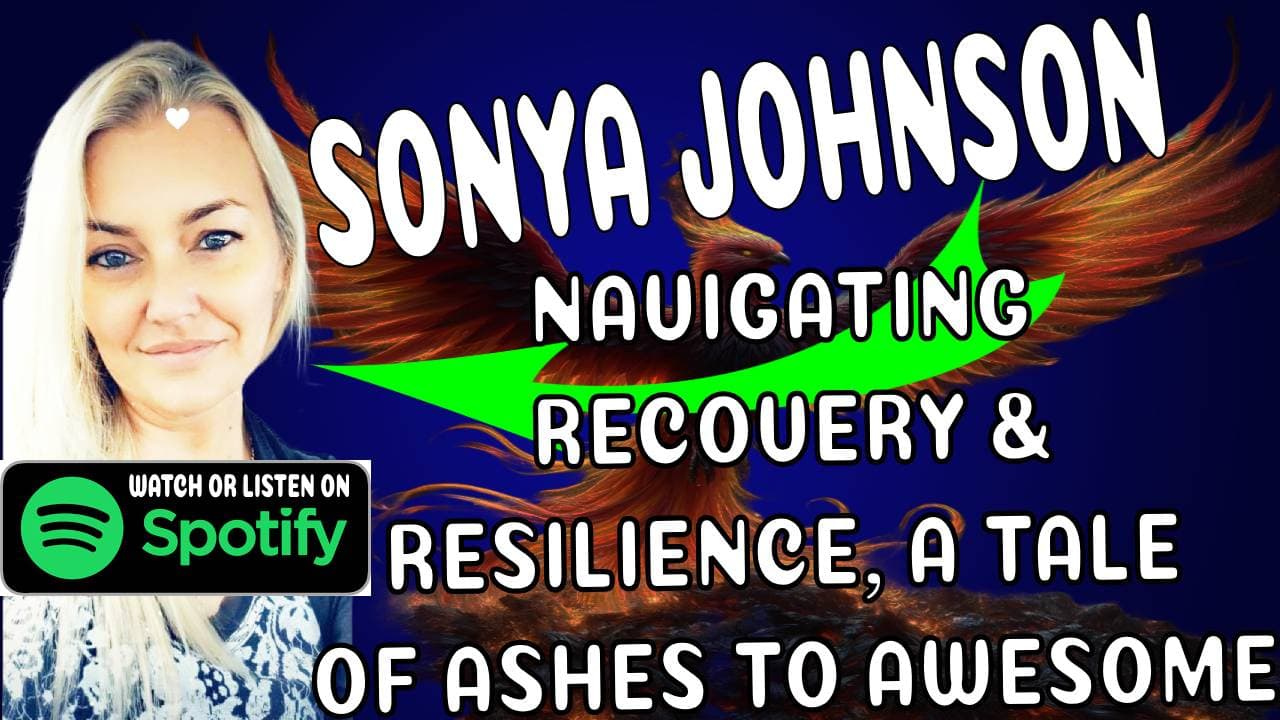
In this episode of the Weekend Ramble on the Ashes to Awesome podcast, hosts Chuck LaFlange and Lisa, along with their guest Sonia Johnson, engage in a profound discussion about the journey through addiction recovery. The episode highlights Lisa's insightful contributions and her role in guiding the conversation through the complexities of addiction and resilience. Together, they explore the nuances of substance misuse, the critical role of support systems, and the transformative journey to self-worth. Lisa's expertise adds depth to the discussion, shedding light on the emotional and psychological aspects of recovery. The episode is a beacon of hope, offering valuable perspectives on overcoming addiction and the power of rebirth, symbolized by the phoenix's rise from the ashes.
Hey everyone, it's Chris Horder here, but you might know me as Chuck LaFlange from the Ashes to Awesome podcast. We dive deep into the realities of addiction and trauma, something I know all too well. I'm celebrating a huge personal victory – a year of sobriety as of October 21, 2023!
I've got some exciting news to share: I've been given an incredible opportunity for healing therapy at the Yatra Center in beautiful Phuket, Thailand. This isn't just a chance for personal growth; it's also a strategic move to keep the podcast thriving in a more cost-effective location. My family has been amazing, covering my travel expenses, but I'm still facing a financial shortfall.
The podcast does bring in some sponsorship funds, but it's not quite enough to cover everything. The Yatra Center is kindly covering my first month's stay in Thailand, but beyond that, my financial future is a bit up in the air.
This is where I need your help. I'm reaching out to our incredible community for support. Any contribution you can make will go a long way. As a token of my gratitude, I'll give a special shoutout to you on my podcast. If addiction has touched your life, we can also share a story in honor of your loved one.
Whether it's a modest $5, a generous $25, or if you're able to contribute $100, your donation can make a significant difference in my journey.
Join me in this chapter of healing and transformation. Your support is invaluable. Thank you for being a part of this journey and for being a part of my story. Donate HERE
If you are listening on the Spotify platform, you are able to share your thoughts about an individual episode in the interactive element that Spotify offers. Doing this tickles the fancy of the algorithm and really helps us to spread the message.
Also please visit our Facebook page here, and like, share, or comment on any of the posts. Your feedback there is sincerely appreciated, and taken quite seriously.
Ours sponsors, that make spreading the message possible :
Rosecrest Recovery Services Call 615-484-8792 or email info@rosecrestrecoveryservices.com
Together We Can Recovery Society http://www.twcrecoverylife.org
Revolution Recovery - https://www.revolution-recovery.com/
Yatra Trauma Therapy Center -https://yatracentre.com/
Nate D Foundation =https://nate-d.ca/
Chuck LaFLange (00:01.798)
Hello everybody, watchers, listeners, supporters of all kinds. Welcome to another episode of the Weekend Ramble on the Ashes to Awesome podcast. I'm your host Chuck LaFlange with me in virtual studio halfway around the world is Lisa. How you doing today, Lisa?
Lisa (00:13.943)
I'm very good Chuck, how are you?
Chuck LaFLange (00:15.802)
I'm great, thank you. I'm great, just loving life here in Thailand. It is 1230 in the morning and it's still 30 degrees. So I'm sweating away. With us, we have a special guest today, Sonia Johnson. Sonia is a recovery content creator on Facebook and lives in Florida. How are you doing today, Sonia?
Lisa (00:21.506)
Hahaha
Sonya Johnson (00:35.735)
I'm doing so good. Thank you so much for having me today. I think it's so cool how we can sit and have this conversation all over the world. We're in different places and yet here we are having this talk. So I'm glad to be here.
Chuck LaFLange (00:46.61)
No kidding. Thank God for technology, right? So that's not often we say that, I guess, but sometimes it is. Hey, Sonja, before we get into it, actually, before we get into it, as I'm not running my usual intros and stuff, I just wanna give a quick, this episode is brought to you by the Yatra Treatment Center, which is why I'm in Thailand at all. They are a trauma treatment center specializing in internal family systems, EMDR, eye movement desensitization, reprocessing.
Lisa (00:55.431)
Mm-hmm. Yep.
Chuck LaFLange (01:16.822)
CBT, Cognitive Behavioral Therapy. Their program is holistic in nature. They cover everything. I can just tell you, I went through a 30 day, well, more like a 35 day treatment in the residential treatment program just now here in Thailand.
and absolutely transformative in so many ways. They have made all the difference in my world. So check them out guys at Yatra Centre That's C-E-N-T-R-E.com not E-R.com. And for more information I highly suggest you check them out. So yeah.
Lisa (01:47.902)
And Chuck, I got to tell you before you go on, you look different.
Chuck LaFLange (01:50.33)
Yeah. Oh, hopefully that's a good thing.
Lisa (01:53.602)
You do, you look different, you know, even other, in a good way, but even other people I know who follow have commented to me that you look healthier, you look happier, you look, you know, just, yeah, less anxious, more settled. It's awesome.
Chuck LaFLange (01:58.27)
Thanks for watching!
Chuck LaFLange (02:07.102)
Mm-hmm. I am. On all counts, I really am. I really am, right? It could just be the tan, you know, maybe, but right. In this light, I look rather ghostly, but. Ha ha
Lisa (02:18.753)
That always helps. The tan always helps.
Sonya Johnson (02:18.844)
Hahaha.
Sonya Johnson (02:31.814)
Hahaha
Chuck LaFLange (02:34.874)
Sonja, why don't you just kind of give us a background? Like we were kind of joking, but look behind the curtain here. We got to build up credibility with the audience. Like, why is it that I want you to come on our podcast? Right? So why don't you give us a bit, a synopsis of your story, if you will.
Sonya Johnson (02:50.467)
Yeah, I would love to. I was in active addiction for 20 years. I always love to explain to people that what led me to my addiction was trauma. In my teenage years, I went through a series of traumatic events. When I picked up alcohol and drugs for the first time, it was the band-aid, but at the time, it felt like the solution. It fixed all my problems. It made me feel better. I didn't…
experienced the pain and I could come out of my shell and be the person I wanted to be. So I loved it. I loved it so much. I remember every single thing. Well, there's like a series of first times. So the first time I put a substance in my body, I was 11. First time I found my first drug of choice, I was 15. And that right there, like I remember everything about that moment. I'll never forget it. You know, I fell in love, literally fell in love.
Chuck LaFLange (03:25.231)
Can I ask how old you were the first time? Can I ask how old you were the first time you got messed up? Yeah.
Chuck LaFLange (03:46.534)
So tell us how it made you feel. How'd that make you feel? Oh, you fell in love, I guess that states it right there. Were you self-aware enough to know at the time why you fell in love? Like it gave me this sense of, or were you self, no, no. That's always a question I wanna get to before I let somebody continue on with the rest of their thing is, were you self-aware at the time? It's like a 70-30 split. 70 to your answer.
Sonya Johnson (03:51.675)
Oh, yeah, I fell in love. Ha ha ha.
No.
Sonya Johnson (04:02.218)
No.
Sonya Johnson (04:07.315)
No, absolutely not. Yeah. Yeah, no, I remember everything about it. Like I remember the way I felt. I remember the way it smelled. I remember who I was with. I remember the way the room looked, like everything. And I had this like massive amount of energy I was ready to take on the whole world. And I just felt this euphoric overload. Like it was just the best feeling. And I have to say, ever since that first time, I've never had that much of a euphoric experience since.
Chuck LaFLange (04:37.606)
Wow, right, chasing that dragon forever and ever, amen. Right, so.
Lisa (04:41.79)
And this is something, you know, we've talked about many times through this podcast, but, and it's something I noticed, like talking to patients. When I talk to patients who are, who have addiction, so there's, you know, people who use substances, but they're not addicted to them. When I speak to people, though, with addiction, their description, right? I mean, Chuck, we've talked about this many times, but it, there is that common theme of it.
being kind of Sonya like you're describing, like this incredible, you know, like I've had people say to me, it was like the heavens opened. I felt good for the first time in my life. You know, tends to be that very euphoric. Yeah.
Chuck LaFLange (05:20.998)
Mother's hug is the common one. Yeah, yeah, right. All right, so let's move forward from there then. So that was your first time. What happens after that?
Sonya Johnson (05:27.899)
Mm-hmm. Yeah.
Sonya Johnson (05:36.248)
Yep.
Well, so the people that I was hanging out with, right, when you hang out with people that use drugs, eventually they use other kind of drugs. And so I continued to use drugs on the weekends and it became during the week, then it became every single day, then I had no ambitions for life, right? I didn't want to go to school, I didn't want to go to work, you know, I just wanted to do drugs. And so that's what I continued to do for 20 years. And it didn't really get bad until I would say like the last 10 years.
I had a lot of rock bottoms. It just didn't matter how many times I hit the rock bottom. I just kept using. I had no willingness to stop. But then the consequences started to come in my life. So, I've done every single thing you could possibly imagine a person doing for drugs. There was no stops. I didn't care who I had to hurt, who I had to screw, who I had to rob. It just did not matter. If it was my mom, like I've stolen from my mom. I've cheated on my husband. I've done all of the things that I should not.
Chuck LaFLange (06:07.99)
Mm-hmm.
Sonya Johnson (06:34.295)
do, but in order to get more drugs, I did those things. So then I started to have consequences, right? I started going to jail. I started going in and out of detox centers. My family wouldn't let me come over to their house. Then eventually it ruined my marriage and I lost my children. That for me was, that wasn't exactly the turning point, but that's when I didn't want to use anymore, but I used against my own will, right?
Every day I would get up and I would tell myself like, today I'm not gonna do drugs, today I'm going to quit. And then every day I would use again. And every night I would hurt somebody or hurt myself again. And so what happened is, is they took custody of my kids away and they gave me a case plan. Like if you stop using drugs and you do X, Y, and Z, then you can get your kids back. And so my husband had some health complications. He had endocarditis as a result of using.
And so I just felt like I got to this point where I lost my husband, I had lost my children, I was living with the dope man, using dope every day and it just got so freaking bad. It was so dark. Like I was with a guy who was like a big, big time drug dealer and he practiced in the dark arts, like witchcraft and he was a total like...
He was two different people. During the day, he would be one person, and at night, he would be another person. And basically, I was like his sex Barbie doll, for lack of better words, you know? And it was just so traumatic for me. When you talk about the big T and the little T, that was my big T event. So on top of losing my children and my husband, I was living in this trauma. It literally was evil. Literally, I could feel the darkness around me, you know? And I wanted to stop every day, but I didn't know how to.
And so what eventually led me to getting clean was the law interfered in my life. It wasn't the first time I had been arrested because I had been arrested many, many other times. But from 2018 until 2019, I went in and out of jail over and over again on the same charges. I kept violating my probation because the terms of my probation were don't use. But guess what? I didn't know how to not use. I didn't have any tools in my toolbox. The only thing that I knew how to do was use and run. And so that's what I did because those were my.
Sonya Johnson (08:52.399)
coping skills. I really like to express that to people because that was the only thing that I knew that fixed my problems even if temporarily it made me feel better. Not that it made me feel better, it made me numb. It made me numb for that day, for that hour when I used, I didn't experience all of the catastrophe that was happening around me. I could run from my problems, but I was also running from the law.
Chuck LaFLange (09:07.058)
Yeah.
Chuck LaFLange (09:16.387)
Oh yeah, yep.
Sonya Johnson (09:22.619)
My last arrest was on July 1st of 2019. I overdosed the day before I was arrested. Nobody Narcan me, like I, by the grace of God, that's the reason I'm alive, because I woke up on the floor, the dope man, the guy that I was living with was sitting right next to me. He didn't care if I lived or died. Like he was gonna let me die, because there had been so many overdoses already called around him, that he was more worried about his self than he was me. And so,
You know, my mom had found out where I was living at and she called Crime Stoppers and reported me for my felony warrants. And so the cops came to pick me up that morning and that started my recovery journey. You know, so I found my recovery, my, what I call my gift of desperation in jail. And that's really where things started to change for me.
Chuck LaFLange (10:12.85)
So did you have to go cold turkey in jail then without Matt? Without an AMAT?
Sonya Johnson (10:18.867)
Yes, it was freaking awful. No, they offer MAT now in the jail, but when I got clean, they didn't. And so they just like let me kick it on the floor in what they call medical, which is where they put all of like the drunk tank, right? Except for it's the people that are like drunk, people that are using drugs, they let them all come off the drugs together in a 10 by 10 room with glass walls so that they can see you in case you have a seizure or die.
Chuck LaFLange (10:35.282)
Yeah.
Chuck LaFLange (10:41.266)
Yeah.
Sonya Johnson (10:46.799)
But you're in there with like 12 other women, they're all shitting and puking and sweating and arguing and it was awful. But like, oh, it was so bad. But when I say my gift of desperation, like that's what I'm talking about because I was so spiritually broken at that point in time. I had lost everything. I was in this horrible room. I had no bond. Like I was not getting out of jail this time. I was facing some charges, facing going to prison. Nobody would speak to me.
Chuck LaFLange (10:53.855)
Oh my god.
Sonya Johnson (11:16.087)
And, you know, I didn't have my one coping skill, right? I didn't have the drugs. And so I was just so spiritually broken, I was desperate. I didn't want to live that way anymore. And the years prior, like I didn't want to continue to use, but I didn't know how to stop. And so I was just at this like, you know, fork in the road, you know, like, do I want to continue living this life or do I want to get my life back? And at that point in time, like I didn't know that was really possible, but I-
definitely knew that I was tired of living the way that I was living.
Chuck LaFLange (11:49.254)
kidding me no kidding wow that's
Lisa (11:49.73)
Hmm. Wow. Question for you about the cold turkey. Um.
If you could go back now and have the option of having been given MAT, would you have taken it?
Sonya Johnson (12:09.875)
I would have for sure taken it. In a lot of ways, I'm kind of glad that I wasn't offered that, although I will say that I am an advocate for MAT, especially. I think that it saves lives. You know, I mean, if it can give somebody a good enough chance to become a stable and a productive member of society and do some of that healing work, it really helps people to be successful in recovery. So I'm a huge advocate for it.
However, my story is that I had done MAT prior to that in one of my attempts to get clean. And it just didn't work for me at the time because I wasn't ready. So honestly, I'm not sure if I would have been offered it then. I absolutely would have taken it because I went through about a 14 day detox. But I can't say whether I would have been successful or not because I don't know. But I certainly would have. Yeah.
Lisa (13:04.42)
And then hopefully I can ask this, but now in your recovery, are you reconnected to your children?
Sonya Johnson (13:12.139)
I am. So that's what happened, right? When I was in jail, I was facing going to prison and I had custody of my kids taken away, but I had what they call case plan where you have to do like certain things to show that you've changed your behavior through the courts and they'll give you your kids back, right? And so without that arrest, I would have never been able to do the things. And so what happened is, is I was supposed to be going to prison. They had offered me 20 and a half months in prison.
That was the offer. I had talked to my public defender. I was gonna take it. I get to court the next morning and somebody that advocates for women in the jail showed up in court. Like it was truly like a miracle that this happened. She showed up in court that day and she advocated for me to go to treatment. So instead of going to prison, like I had planned that day, I got a chance to go to treatment. And by the time that happened,
you know, during my time in jail, women would come in and they would share their stories. And so by the time that happened, I had hope that I believed that maybe I could have what those women had if I was willing to do what they did. And so when I went to treatment, I started learning about myself, learning different coping skills, dealing with the trauma that I had been through. And I also started to be able to work the case plan. And so I went up completing that treatment center, my husband and I.
reunited in our recovery journey. He got clean two months after I got clean. And then we finally brought our family back together when I had about a year clean. And so now I just wanna say this because I think all of the stuff that we've been through can turn us into the person that we are, right? So today, like what I do for work is I help parents who've lost their kids navigate through the court process to be able to get their kids back. And so I'm just a huge...
believer that all of our pain can be our purpose. You know, like everything that I have been through has helped somebody else who's going through that same thing. And not only that, it's also helped me, right? Because it's given me that sense of purpose to where I can help somebody else. So it's kind of like this domino effect, right? Like you help others, it helps you. Then they help others, it helps them. So it's just really cool how this works. Like once you catch on to it. And so
Sonya Johnson (15:31.315)
Yeah. And here I am, my kids have been homing me for now almost four years, and I'm coming up on five years in recovery and my life is just, I mean, oh my God, it's amazing. Like I never thought that this would ever be possible for a junkie like me. You know what I'm saying? Like I shot dope. Like I was an absolutely low bottom, like no holds back. Like I was that person, you know? And today.
I live a life beyond my wildest dreams. And I think that's like a loaded statement, right? Like I say that, but I mean that. Like life is good. Doesn't mean life doesn't happen, because life happens. Like I've recently had life show up, which I'll tell you guys about later, but you know, just for today, like I don't have to use. And as long as I don't use, there's hope for a better tomorrow. Like the desire to use has been lifted. That alone is the best miracle that I have found in recovery, because I never.
Lisa (16:17.407)
Hmm.
Lisa (16:25.737)
Mm-hmm.
Sonya Johnson (16:27.843)
thought that I would be able to get through a day or an hour or a minute without thinking or using a drug. And here we are today.
Lisa (16:35.662)
Hmm. It's amazing. Do you still struggle? Like almost five years in? Do you do you have days, moments, weeks, whatever where you still crave you have urges? Does that still happen?
Chuck LaFLange (16:35.91)
That's amazing. I love all of that.
Sonya Johnson (16:52.171)
Well, sometimes clean time can be our enemy, right? Like the longer that we have clean, like I still have this disease in my brain that lies to me in my own voice and tells me things that are not true, that are dangerous and that I should not do, which is why having a support network is so important. But when I say the obsession or the desire to use has been lifted, what I mean by that is that when I was using all day, all that I thought about was
using and getting more drugs. Like everything that I did revolved around that. All my thought processes revolved around that. So that has been lifted to where I'm not consumed by the thought of using. But sometimes, right, I'm coming up on five years and sometimes I think, was I really an addict? Was I really that bad? Maybe I could just do this and it wouldn't be a big deal. Just one time, you know? So I have to like be honest about those thoughts and share those thoughts.
because, and I have to remember how bad it got because I can't use one time and I know that about myself. Doesn't mean I don't fucking think about it sometimes though.
Lisa (18:00.91)
Hmm. Yeah. And I think that's good for people who are listening who are earlier in recovery to hear about. Right. Because I think, you know, I've had people describe for me, you know, addiction is your most patient friend. Right. It will sit there quietly, forever. You know,
Chuck LaFLange (18:01.944)
Right, right.
Chuck LaFLange (18:20.026)
Yeah, yeah, right. Yeah, cunning and relentless, right? Cunning, the demons of addiction are cunning and relentless. So yeah, that's for sure. There's so much to talk about there. I love that you're doing that right now, Lisa. It's like, don't be, don't be. I love it, I love it, right? Yeah.
Lisa (18:30.326)
Yeah. Can I ask another question?
I know. I'm sorry. I'm just like so many questions. I don't know how old your kids are, but it sounds like both you and your husband are in recovery. Do your kids understand about your histories, your illnesses?
Sonya Johnson (18:41.348)
I'm done.
Sonya Johnson (18:58.963)
Yeah, so the thing is with mine, right, I have a 13 and a 15 year old and so I've been clean for four years, right? That means that they have seen the worst of me. Like they've seen me overdose in front of them, they've seen John's coming in and out, they've seen me disappearing to use, they've seen it all. They've seen the paraphernalia, like they know.
what addiction is and they know how sick I was and their dad too. They watched their dad almost die. They know the reality of my addiction. They had to live with my mom for several years during my addiction, so they get that. Now that I'm in recovery, I choose to be very honest with them about it. Addiction is a family disease. It's a genetic. They are already…
genetically predisposed to addiction. It runs heavy in our family. And so in my opinion, the only way that I can help them with that is to be entirely honest about the realities of addiction and for them to see my recovery and what we do in our recovery today. And I can tell you that it gives my kids comfort to see me working my recovery. Like they...
They feel safe when they see me doing the things that I have been doing these last couple of years because they know mommy's going to be okay as long as she continues to do those things.
Chuck LaFLange (20:27.451)
No kidding.
Lisa (20:27.778)
Absolutely. I always tell people, you know, kids, kids take responsibility for things they have no responsibility over. It's just a natural thing. Kids will blame themselves for things. And they're smart and they're aware and they notice. And I think the worst thing for a child is uncertainty. Right. And so it's exactly what you're describing. Like, I think, especially when they have seen all the things they've seen, you know,
be open with them at this point is not exposing them to things they're not already aware of. And it's so true, like kids, when they're aware, when they know, there's no confusion, there's no secrecy. That's what makes a kid feel safe.
Sonya Johnson (21:03.409)
Mm-hmm.
Sonya Johnson (21:15.087)
Great.
Chuck LaFLange (21:15.358)
kidding. Yeah, yeah. And to add to that, because of the things, I mean, they've experienced their own traumas now, right? That that could, you know, potentially spiral. So the efforts that you're making in front of them, that's so great. That's so great. You know, right? I have to say to people, you think what your kids pick up on, triple it, and you're still short, right?
Lisa (21:16.202)
Yeah, that's amazing.
Chuck LaFLange (21:44.352)
And your kids have been exposed to a whole lot of things, right? So yeah, right.
Lisa (21:46.046)
Yeah, and I don't think, and I don't think you do kids favors by trying to make it out like their life is perfect, because the reality is no one's life is perfect, right? Even, even if you take addiction out of the picture, nothing is perfect. And so if you hide troubles and challenges from your kids, then when they experience their own challenges in life, they think there's something wrong with them.
Sonya Johnson (21:46.116)
Yep.
Sonya Johnson (21:55.787)
Mm-hmm.
Sonya Johnson (22:11.773)
Mm-hmm. Yeah.
Lisa (22:12.702)
you know, whereas when you're transparent about struggles, challenges, whatever, then when they face their own, which inevitably they will, then they just, they're aware, they're like, this is normal, this is life, you know, everybody goes through this, and that helps build their resilience, not sheltering them.
Sonya Johnson (22:31.391)
Right. And you know, another thing too, is that they have been through their own traumas, right? Like because of what I've done and I have to own my part in that. And by owning my part in that, I also have to be open and receptive to their own healing journey because they sometimes stuff comes up for them and I have to allow them to process through that stuff.
in a safe and loving way. And sometimes, you know, it's my fault. And that's okay, like it's my responsibility to help them on their healing journey too. Like when they talk about things, sometimes it hurts my feelings when they bring up things from the past. But, you know, I have to allow them to have their process too, because they are resilient and I need to...
what's the word I'm looking for? Like I need to honor that so that they can find their own path to resiliency and healing.
Chuck LaFLange (23:30.886)
Well said, very well said.
Lisa (23:31.19)
Yeah, yeah. And I think it's about recognizing that, well, maybe at times it's easy to think that your addiction is sort of central to things. The reality is that their own experience is central to them, independent of you and independent of your addiction, right? So it's allowing them to walk their journey besides you, regardless of whether you can draw parallels or connections back to your addiction, right?
Sonya Johnson (23:51.145)
Mm-hmm.
Chuck LaFLange (24:01.63)
Kidding, no kidding. What is this? No kidding. Hey, before we jump into the next topic here, I just, I gotta take a mention because we're gonna do this without running commercials. We're gonna try this out this time. So, Narcan. Okay, this PSA is brought to you by TWC, Together We Can. It's where Canada goes to recover. They are a group of treatment facilities and they offer all sorts of different things, family therapies.
Lisa (24:02.11)
Yeah, that's amazing though. They're lucky that they've got you as an example. It's awesome.
Chuck LaFLange (24:31.698)
um, detox, um, uh, treatment in general, addiction treatment, um, their education program is amazing. Um, some of the things they do to try and counter stigma, the base out of Vancouver BC, and you can check them out at TWC recovery life, twcrecoverylife.org. Um, and the PSA is about carrying Narcan. Something we often say is, um, you know, you might not, you might not plan to be around opioid use, but you never know when it's going to be around you. Um,
You can save the life of somebody who's loved and who loves. So if you can't find Narcan wherever you're at guys, shoot me an email, ask at swastika.com, if I can't find it in your area, I'll send you some. Just please have it around, please, please carry some. It's just reality these days, you can really save some lives, right?
All of a sudden, I really just want to pick your story apart. Not pick it apart, not like that. I just want to hear more. Um, but I did want to talk about a pick it apart. I don't believe you. Jeez. Um, we're coming up, you know, we're.
Lisa (25:29.163)
No.
Sonya Johnson (25:39.179)
I definitely gave you guys the short and simple version.
Chuck LaFLange (25:42.694)
Oh, and there's more to unpack there. And I think maybe there's an opportunity for that in the near future too, Sonia. With Christmas being a week away now, a week and nine days where you are, a week and eight days where I am, or eight days where I am, nine days where you are. Families are about to navigate some really hard times and they are navigating some really hard times, right? This show dedicates a huge portion of its content towards the loved ones and people who suffer an addiction.
and I think it's important that we try and acknowledge some of that and maybe help some people get through these times as best we can anyway. So what do you even, we'll go to you first on this one Sonja. If somebody's got somebody who's suffering in their life,
and they want to invite them to Christmas, but they don't want to invite them to Christmas. And they don't. What would you even say to somebody like that? And I know that's kind of putting me on the spot. We didn't talk about this ahead of time. So, you know, if you have any advice or anything to say to that.
Sonya Johnson (26:49.439)
Yeah, I think that's a great question. And I actually just had a friend of mine ask me about that because she has a sister who's an active addiction. And I will tell you that when I was in my addiction, the holidays were some of the hardest times for me because I knew that I was sick. Like I knew I was sick for a very long time, right? Way before I got clean. Um, but they were some of the hardest times for me and they were some of the hardest times for my family. And I'm so.
grateful that my family still let me come around on the holidays. I think that you can do that with love and with boundaries. And I think that's an important part of it. If you're going to, and you know what, everybody has to make their own decisions because you have to make a decision that you're going to be able to live with, right? Whether you choose to or whether you choose not to, both of those things are okay. So don't, you know, there is no right answer to this.
But if you do choose to let one of your family members come over and they are in their active addiction, I think that comes with a set of boundaries, right? I mean, they can come over for a scheduled amount of time, like a family get together or whatnot. And I would say that we don't give them any gift cards or any cash because I know that I used up gift cards and cash for dope when I was in my addiction.
Chuck LaFLange (28:13.679)
Yep.
Sonya Johnson (28:16.627)
you know, you just embrace that moment that you have with them because I've spoke to a lot of family members who, you know, we hear this like tough love, tough love, tough love thing where you have to put them out and you have to put up the walls and then that person passes away and you think damn, I wish that I would have just left them through this holiday. I wish I would have taken whatever time that I could just spend with them because they're not here anymore.
And so it's such a hard thing to navigate through when you have a family member that's an addiction. And again, there is no right or wrong answers, but I'm a firm believer in loving people where they're at with boundaries so that I can still protect myself at the same time.
Chuck LaFLange (28:50.589)
Yeah.
Chuck LaFLange (29:05.118)
She's our people, Lisa. She's our people.
Lisa (29:09.134)
Right? Just gonna say mic drop. Right? Yeah. Absolutely. What about gifts? And I know that sounds like such a silly question, but I guarantee you families out there ask that question of themselves. Do we get them a Christmas gift? Do we not get them a Christmas gift? Like I think that the not giving them money is like, you know,
Sonya Johnson (29:11.676)
Hehehehe. Hehe
Chuck LaFLange (29:15.534)
Yeah.
Lisa (29:34.698)
I think families watching this podcast are already at the stage probably of going, I'm not going to give you money because I know where it's going to go. But I think it's tricky because you're like, do I buy them a winter jacket? You know, recognizing that there's a probability that they'll go and sell the jacket and use the money to buy dope. But I'm just curious what you guys think about that.
Chuck LaFLange (29:40.283)
Yeah.
Chuck LaFLange (29:57.278)
I'll speak to that for a second. Who cares? I don't mean who cares if they buy dope. You're buying them a jacket. That's it. It can end there. Right? If they sell that jacket, they sell that jacket. If they're going to go get dope, they're going to go get dope anyway. But if you're going to buy your loved one a jacket because it's winter, if you're going to feed your loved one because they're hungry,
Lisa (30:19.086)
Totally.
Chuck LaFLange (30:23.986)
Who cares? Right, that's it. You're not, I get really pissed off at the enabling conversation when people start talking about the essentials, food, jackets, things like that, right? That gets me fired up, right? Well, I don't wanna feed them because they spent their money on dope and it just enables them. No, feed your goddamn son, right? Like just feed them because it's a hungry human being. How about just they're a human and then they're somebody who suffers an addiction, right? Right, so.
Sonya Johnson (30:36.735)
Yep.
Sonya Johnson (30:49.244)
Mm-hmm.
Chuck LaFLange (30:52.297)
That gets me fired up. That's just my thoughts on it. So I know you might, you know, yeah.
Sonya Johnson (30:53.453)
Yeah.
Lisa (30:54.006)
What do you think, Sonia?
Mm-hmm.
Sonya Johnson (30:57.631)
No, I actually completely agree. I mean, when it comes to essentials, and I talk to family members every single day, like from my social media, I have desperate family members reach out to me all the time. And I am a firm believer. If your family member or loved one or friend or whatever they are is hungry, feed them. If they need a shower.
let them take a shower. Those are basic human rights. If you want to get them a jacket because it's cold or you want to get them boots because they have – I mean, those are really important things to have on the streets. There is a small probability that they might sell it. Again, it doesn't matter. It is the thought and the love and the gift that counts. I can tell you when I was on the streets, I felt like a less than human.
being. I literally felt like the scum of the freaking earth. And so just having somebody that's like, hey, I know it's rough out there. I can't give you any money, but here's some clothes. I hope that this helps you. That makes a huge statement. Goes beyond just the material item. It says, hey, I love you no matter where you're at right now. I still love you.
Chuck LaFLange (32:08.798)
Right. Well said. Really well said. Note that.
Lisa (32:10.134)
Yeah, I totally appreciate that. Now the question though is like, where does it stop though? Because on the other hand, Sonja, like you talk about that in your recovery journey, you got to this place of desperation, right? So, you know, like, do we house people, feed people? Because there is a part of me that says, well, when they're housed and they're fed, then they have more disposable income to continue living in the life. You're going to make them comfortable.
Right? Like I've had people say that to me before, like I'm not gonna give you a warm bed to kill yourself in. And so it's like, I think as a family member, there's part of you that wants to help get them to a place of desperation so that hopefully they'll seek help. But recognizing that desperation and meeting basic needs don't always coexist. And so where's the line? I don't know.
Chuck LaFLange (33:05.726)
That's tough.
Sonya Johnson (33:05.935)
I personally think that letting somebody live at your house is not a great idea because it does give them – I don't know if more resources is the right word to say, but when I was living at my mom's house, I used in my mom's house, behind her back whether she wanted me to do it or not, and I made that house unsafe for many reasons. I had drug dealers coming by there. I mean, I was –
I was stealing from her, I stole her guns, I stole her jewelry, I mean anything of value, I stole it when she wasn't there. And so that's why I say, like I don't think that letting them live in your house is a good idea. But with that being said, I do think that as family members, what we can do is we can become aware of the resources in the community, right? There's a lot of homeless shelters, there's a lot of halfway houses, there's a lot of treatment centers. And if we know those things, we can say, hey listen.
I'm not gonna let you stay at my house while you're using, but I do know somewhere that you can go. And if you want me to take you there, I will. And either way it goes, whether you let them in your house or you don't, if they're in addiction, there is still a risk that they may not come back. So I think at the end of the day, we just have to make the decisions that we can live with, but we don't wanna enable their addiction. And you're right, those things coexist, right? And it's so.
hard to make those choices because when we love an addict, sometimes our love can be harmful and not helpful. So it's really tough.
Lisa (34:35.382)
Yep.
Chuck LaFLange (34:40.549)
Well said Sonia.
Lisa (34:40.621)
Do you sort of see that Chuck? Because I know you're like, I know that Chuck, you've always been vocal about that. And I totally appreciate that. It's like, and I mean, with my brother, even when my brother was homeless, I would go see him and take him grocery shopping, and we would buy all the things that didn't require a fridge. But like I said, while it's easy to kind of...
Chuck LaFLange (34:58.361)
Yeah.
Lisa (35:06.194)
make isolated statements about that sort of stuff. I also very much appreciate that for a family there's still this big question mark around at what point am I making you too comfortable and preventing you from getting to that place of desperation that ultimately is going to hopefully motivate you to go and actually get the help you need and get better, you know.
Chuck LaFLange (35:31.138)
If I think I really like what Sonia just said to that about being aware of the resources available in the community, right? Because there's a progression. And so for myself, when I was in active addiction, you know, if, if I, my case was different because I just completely stayed away from my family for years. Right. So I, they, I, we didn't have to navigate these waters together like that. Um, and when I did, mom started a campaign, the you are loved campaign. I'll call it with me.
Lisa (35:40.286)
Yeah, I agree.
Chuck LaFLange (36:01.522)
which was so important, right? And it starts there. It starts there and then it's, hey, you know what, there's resources in the community. A detox program, most detoxes you have to call into, you know, to get your bed. You can have someone call in every second day for you. So do that for that person.
call in every, you know, be that person for them so that they, you know, they don't have to try and meet this seemingly impossible thing of calling somewhere every day at a certain time. Seems easy to us all sitting here now, but let me tell you, when you're in it, making a phone call once every 24 hours can be really challenging to do, right? So you help them with that, help them with the resources. And then there's a progression as somebody begins to move through the process of recovery that they can kind of earn more stuff back, right?
Lisa (36:32.161)
Yeah.
Sonya Johnson (36:37.175)
Yes.
Chuck LaFLange (36:47.014)
But something I have said a thousand times, and I will say a thousand more times, the perceived lack of connection, perceived lack of connection was the boot on my neck for the last two years of active addiction, right? It wasn't that I wasn't loved, it was that I thought I wasn't loved. Worse, it's that I thought I wasn't lovable, right? And so if you can help somebody do that.
Sonya Johnson (36:47.415)
Yes.
Lisa (36:47.98)
Totally.
Lisa (37:03.074)
Mm-hmm.
Mm-hmm.
Chuck LaFLange (37:09.262)
and then start to work through the process. You'd be amazed at how many people start to work through that process, right? And get to a better place, right? By having that connection on their side, right? So, yeah, yeah.
Lisa (37:15.808)
Mm-hmm.
Sonya Johnson (37:21.049)
Always your coffee machines.
Lisa (37:21.538)
You know, that's one thing that Sonia, I always did with my brother, is I would text my brother almost daily. Tell him I loved him. I'm here, I will help you, you know? And then you have to hope that at some point, you know, they reach out for help. But, Chris, do you feel like if somebody is reaching out and telling you that you're loved on the daily, that helps?
Chuck LaFLange (37:41.378)
Yeah. Yeah, right.
Chuck LaFLange (37:48.814)
Oh yeah, yep, yep. I can tell you the shift, when my mom started doing that, right? Well, yeah, you just, you don't feel loved, right? The shift, and for me it was relatively quick. You know, it was probably, it was the last year that mom started doing that. And a year is a long time, but when you've been in it for 20 some odd years, a year is pretty quick too, right?
Lisa (37:53.334)
Because some of it's internal though, right? There's that, yeah.
Chuck LaFLange (38:16.698)
But the shift for me when she started letting me know I was loved, right? It took a while to kick in and there's days I was like, fuck, whatever. But it really did start to make a difference, right? You know, and Lisa, you were, we did that episode with mom about three weeks ago now, right? Two weeks ago, three, three weeks ago. Um, where she explained the words you are loved instead of I love you. Like in why she came up and Sonya, my mom. And now has her own.
Lisa (38:37.244)
Yep.
Lisa (38:44.878)
about that so many times. Yes.
Sonya Johnson (38:45.399)
hear this.
Chuck LaFLange (38:46.89)
Okay, so my mom has her own fanfare as a result of the show, right? There are mothers that rely on her, that contact her quite often. She's been on with us a few times now. So the idea with you. She is, right? So I'll speak to the You Are Love message first. And like how it became a thing with us.
Lisa (38:54.458)
Yeah.
Lisa (39:01.934)
She's Mama Norma.
Chuck LaFLange (39:13.082)
It was kind of like out of nowhere, no matter how erratic the conversations were in, you know, the conversations I'm talking about, how crazy that shit gets. Right. When you're talking to your family, you would end with you are loved. And often I would read that and go, right. And, but it always ended with you are loved. And then randomly I would get these, you are loved messages. And that when I was, when I got to that point, that desperation, right.
Sonya Johnson (39:23.86)
Yeah.
Chuck LaFLange (39:41.702)
The first time I ever tried recovery was two years ago between Christmas and New Year's. It was the first time I ever took a stab at it. It took me a year of relapsing up and down. It's never a linear path, right? The first time I did that and I messaged my mom and said, please come get me. And she did. And it was just the idea that...
that I was loved was just so profound to me in the moment. It really was, right? So, yeah, they came and got me and fuck, it was crazy. This is what I'll tell you. I'll tell you about where daily gratitudes come from now too then. In that conversation, we're on our way back, she picks us up, we talked about this in that episode too, at least I write the fucking burger. So, her and a couple friends come into the city, they live about half an hour away.
Lisa (40:30.72)
Yeah.
Chuck LaFLange (40:33.254)
They come in, they pick me up, me and my stuff. They've already got an apartment set up for me. Okay, they already have an apartment for me. It's not set up or anything. It was like this barren ass apartment, whatever. It was safe, it was warm, it was safe. And at the time, PTSD had completely taken me over. I was a train wreck at that point. I was half a version of the man I was. And we're on our way, so we stop and we get this burger. We stopped at Burger King.
Sonya Johnson (40:44.884)
Mm-hmm.
Sonya Johnson (40:52.259)
Yeah.
Chuck LaFLange (40:59.75)
and my mom her words were I snorted it like she was just like this poor human like I just like right this is our first real meal in days maybe weeks that I've had and she's like and you got to keep track of daily gratitudes and I'm like sensory overload my whole world just changed I'm in a vehicle with my mom these two people I don't know I'm on my way back to this other town where they've got an apartment for me I'm like what the fuck is going on right now you know and I'm still just coming down
Lisa (41:07.127)
I'm sorry.
Sonya Johnson (41:07.863)
I'm sorry.
Chuck LaFLange (41:27.13)
you know, off my latest high. And my mom's like, Kate, you got to practice daily gratitudes. And you got to, I'm like. I'm really thankful for this burger, but I wish you'd just shut the fuck up right now. Right. Like I never said that to her, but that's what I was thinking. Right. Like I just like, could you please just shut up? Like, can I just enjoy my fucking burger, please? You know, and.
Sonya Johnson (41:36.927)
Hahaha!
Sonya Johnson (41:41.274)
Ha!
Chuck LaFLange (41:45.33)
Couple times later, she's picking me up again and she basically hit me with this journal. I said, you're taking track of your daily gratitude. So I was okay. Right? You know, and from then on, it's when I really started with that and it's become an integral part of my journey now. And as such the show, you know, we've done daily gratitude in every show and the you are loved message in every show. Why she chose you are loved. And I'd never heard this before. Lisa heard it with me a couple of weeks ago on the show. When you say I love you to somebody who is being
Sonya Johnson (41:45.743)
I'm gonna go to the bathroom.
Chuck LaFLange (42:15.254)
erratic they can say well no you don't because if you loved me you would if you know you say you are loved it speaks to more than just me it's the people you are loved it's everybody loves you and it takes away that no you don't thing because how can you say that right like it even in an addict's brain that's like you can't say that so and otherwise even to somebody who's suffering an addiction we try not to use the word addict too much in the show
Sonya Johnson (42:45.448)
Mm-hmm.
Chuck LaFLange (42:45.99)
That's a hot spot for Lisa and we respect that. So yeah. Yeah, yeah, right. And that's why she chose the words who are loved. Yeah. Go ahead.
Sonya Johnson (42:50.046)
Yeah, I get it.
Lisa (42:52.658)
Yeah, but it's true because the thing is, is that, yeah. And I think it's that, you know, each of us, right, we're loved by so many people. It's not just I love you, right? It's the world loves you, you know, friends love you, extended family loves you. And it sort of captures that, I think. And it makes it bigger. To me, you are loved is bigger than I love you.
Chuck LaFLange (43:23.859)
Yeah, it is.
Sonya Johnson (43:23.935)
Yeah, I love that. And I can tell you that an addict does not feel, somebody who's using in substance misuse does not feel loved when they are out there. And I just know from my own personal experiences, I will never forget the people that didn't give up on me and the people that did give up on me. And I had to do a lot of intentional healing work to mend those relationships. I mean, not even what they, what I did, or what...
Lisa (43:24.418)
You know?
Lisa (43:31.694)
Hahaha!
Sonya Johnson (43:53.615)
I did to them, but the way that they gave up on me, like you gave up on me, you know, and it hurts so bad. And then to try to mend those relationships, to have that, even if it's just that one person, right? That one person that believes in you and reminds you every day that you are loved and you are human and this is not the end, makes an incredible difference.
Chuck LaFLange (44:19.226)
Right?
Lisa (44:19.694)
And that you're deserving, you deserve to feel peace. And I think that for me, like physician hat on, that is one of the things I find powerful about educating families about the disease aspect of addiction is that I think families give up less when they understand this is a disease.
Chuck LaFLange (44:24.806)
Yeah.
Lisa (44:49.29)
You know, it's like, would you walk away from your loved one if they were battling cancer?
Fuck no.
Chuck LaFLange (44:56.946)
No. Right. I love it when Lisa swears it's so rare. I just...
Lisa (45:00.342)
then why would you walk away from them? But then why would you walk away when they battle addiction? We'll just pause for a moment. But do you know what I mean? Like when you can really hone in on the fact that, you know, their shitty decisions in these moments are because their brain is not working. You know, we can image their brain and show you their brain is not working.
Chuck LaFLange (45:12.544)
Hahaha
Lisa (45:31.947)
And it's really difficult because, you know, obviously someone who's suffering with cancer, they don't tend to make decisions that are as hurtful to their family members as someone who's suffering an addiction. But when people are educated about the fact that their frontal lobe is turned off,
Chuck LaFLange (45:50.802)
Yeah.
Lisa (45:51.678)
I think it makes families more compassionate and empathetic. And again, it's that whole thing. Yes, you are entitled to boundaries to protect yourself. But to me, it helps people not give up.
Chuck LaFLange (45:57.103)
Yeah, it does.
Chuck LaFLange (46:07.982)
Yeah, yeah, right, right. It really does. It really does. I actually, before we started recording Lisa, I... Go ahead. Before we started recording Lisa, I was playing for Sonia, your quote. There's a bit of a delay because I'm in Thailand with less than great internet, so that's gonna happen. I was just, I was telling Lisa the vote. I played your quote about choices for Sonia before we started.
Lisa (46:09.995)
You know?
Sonya Johnson (46:13.611)
Yeah, I agree with that.
Sonya Johnson (46:19.615)
Well, I was just thinking like, sorry.
Sonya Johnson (46:27.91)
Okay.
Chuck LaFLange (46:35.146)
episode or before you came on, right? Yeah, so you know what, maybe I'm going to play that again real quick now that I mentioned it and then I'm going to let you make your point, okay? Sonya, does that work? Yeah? Okay. I'm going to try and play it. Sometimes it doesn't cooperate. All right.
Lisa (46:36.688)
Oh.
Sonya Johnson (46:46.263)
Yeah, I love that. Yeah, let's play it.
Chuck LaFLange (47:53.99)
what you did with, right.
Sonya Johnson (47:54.119)
I love that so much and I love the way that you said it because that we do right I was just sharing right before we got on here like we all make those choices when we're younger and for me I felt like using drugs and alcohol was a right of passage like we all go through this phase is what I thought it was but the face never ended and by the time that I realize I had a
problem. It was too late to stop. I didn't have the ability to stop. And so I can't stand when people say, oh, they use, they deserved it. I've heard some really nasty things from people on my social media pages, the way that they talk about people that have maybe overdosed or, you know, and it's not a choice. Nobody decides that they want to become an addict and lose everything and wind up on the streets. Nobody makes that decision.
but you find yourself there and it's too late to turn around by the time that it happens.
Chuck LaFLange (48:54.662)
Right, right, well said. Yeah, yeah, right, so. What was the point you were gonna make there, Sonia, before I cut you off? That was like five minutes ago now, so who knows, right? But, you know, yeah. Yeah, right. Oh, there you go, she's used to dealing with me. Like 20 things could have happened since then, so yeah, right. Yeah, yeah.
Lisa (48:56.494)
totally.
Lisa (49:06.602)
I know, I was like, if you remember this, I'm gonna be very impressed with you. So.
Sonya Johnson (49:06.92)
That's okay. I actually do. You know, it's like when we're talking about...
Sonya Johnson (49:18.787)
Well, it's just like when we talk about being worthy, right? I'm glad that I was arrested and I tell people this all the time. I've heard people say, you can only get sober for you. It's not going to work if you don't do it for you. Well, that was not my experience. I couldn't do it for me. The reason I couldn't do it for me is because I didn't think I was worthy of it. I didn't love myself. I didn't think I deserved it. I thought I was a POS, right?
piece of shit. And so I didn't think I deserved a life of recovery. So I'm glad that I got arrested because I had all this accountability over my head. Like I was going to go to prison if I messed up, I was going to lose my kids if I messed up. I had all these things, external things, right? That helped me to stay sober. And what happened is, is over the time period that I had all this accountability, I did do the work and I did work on my trauma and I did learn new tools.
I learned to love myself because other people around me gave me and showed me love, but I would have never been able to just do it on my own because I didn't have the capacity or the love for myself to believe that I should.
Chuck LaFLange (50:34.238)
Oh, Lisa, look at that. Ha ha. Ha ha
Lisa (50:35.566)
Can you see this right here? I'm just like.
Sonya Johnson (50:38.055)
Hahaha
Lisa (50:41.23)
There's two things for me. So one of them, one of them is, it made me think of, there's a friend of Chuck's who he had reached out to me about in Calgary and, you know, living an active addiction, again, tons of consequences, finding herself homeless. And we talked about her coming into the hospital when I was on call that I could see her, I could admit her to hospital, we could try to get her.
Sonya Johnson (50:44.952)
I'm sorry.
Lisa (51:09.538)
you know, addiction supports, try to get her connected to treatment programs, et cetera. Now, as a psychiatrist, when I'm in the emergency department, we have to be consulted. So when you come into the emerge, you're seen by an emergency doctor. That's your doctor in the emerge. Now, if you can convince them, or if you present in a way that they feel you need psychiatric help, then they'll call me. So I knew this person was in the emergency department, and I had notified our nurses to keep an eye out that
you know, we were going to need to get involved in this case. And so they reached out to the emergency physician who had signed up and said, Hey, like, we're aware of this person in the department, you know, we anticipate we need to get involved. Just let us know once they're medically clear. So then he called back, asked to speak to me and said, um, you know, I, I think that they're dischargeable. Like, do you really want to see them? And I was like, yeah, like,
from what I know about this case, like I don't think they're safe for discharge. Like I think I should see them. So then he's describing for me what the patient had told him, which was, yeah, no, I'm fine. I've got somewhere to stay. Like it's no issue. Like I'll be okay. Very much a case that as an emergency physician, he would just discharge. So I said to him, can you just consult me? Like, let me go and speak with her. So I went to speak to her and what just reminded me of this.
is that, you know, she and I were talking, and she also didn't remember this conversation. So capacity will shelf that for a minute. But, you know, she later told Chuck, well, I don't think that she came to see me. And I was like, nope, we have full conversation. But I said to her at one point, I said, you know, you deserve this bed, right? Like I said, as much as...
Chuck LaFLange (52:49.965)
Yeah, right. Yeah.
Lisa (53:02.534)
Any person in this city, you deserve to sit in that bed and you deserve our help." And she burst into tears.
And it just spoke to me that there's so much shame that I think you have that emergency doctor there talking to you, that I think there are people who will downplay where they're at because they're ashamed of it. And I don't think she felt worthy of holding that bed and us spending our time and our energy and our resources on her. Right? So there's the worth piece.
Chuck LaFLange (53:26.982)
Yeah.
Lisa (53:43.134)
Um, but also, you know, something I don't know how many of these episodes on you that you've watched, but we, we have talked many times about the idea of mandated treatment. Um, you know, there are people who are, who've been on the show who are very opposed to mandated treatment. I am very pro mandated treatment and I know not everyone agrees with me and that's okay. Um, but I'm very pro mandated treatment. And as I've said,
I don't mean I'm going to go get a van and drive around and throw everybody who uses drugs in the van and lock them away. That's not what I'm talking about. But you kind of just spoke to that, you know, in a way, what you're describing was, and again, you're coming at it from a place of worthiness, which I think is maybe something we haven't heard quite so explicitly with other people.
But whether it's capacity, whether it's feeling deserving, whether it's believing you can even do it, there's all these reasons why again, I think, for some people, I think mandated treatment is a good thing. Yeah.
Chuck LaFLange (54:53.438)
Absolutely right. I mean, right, right. You know, in that particular case.
Sonya Johnson (54:55.519)
I totally agree. I wouldn't be here today if it were not for mandated treatment.
Lisa (55:04.35)
I love her.
Chuck LaFLange (55:10.19)
case that we're discussing. I'd known her for 20 years, her technically still husband but separated husband for years and I have been friends for the better part of 30 years and we met at the hospital that day you know with him and his mom and her and myself and we sat there for hours and hours going
because she was downplaying her situation. She was sabotaging this effort that we were all making to get her help. And then five days later, five days later, I talked to her on the phone, I said, how you doing? And she started talking and I just started bawling. She was a totally different person.
given the opportunity to have some time to just not be all consumed with getting high and being like all of those things right and some time just to reset she went from not even like her back was covered and i mean covered in bruises when i saw them in the hospital parking lot i just like
This old me came back and I was like, I'm going to go kick this guy's door in. Like what the like, you know, and I'm not that person anymore, but like, and.
She was so out of it and just like, fuck. She was just completely downplaying her situation and sabotaging her efforts. And then I talked to her and she's like, okay, well, there's no point in talking to this nursing, like this shift, because they're about to go off for the weekend and I don't want it to, you know, they've already helped me with some of this stuff, but when tomorrow's shift comes on, we're gonna talk to them about getting a bed. And we're gonna, I was like, how, where'd you come from? And it was just like, oh my God, you're this woman I knew like 15 years ago. And it just, it melted my heart, right? Mandated treatment.
Chuck LaFLange (57:01.042)
There's no way she would have stuck there had we not and because we're like, no, here's the deal. You're staying, right? You need to say whatever you need to stay, say to stay, because you don't have anywhere else to go. You can't come here. You can't go there. You you're staying here. You're right. You know what this is happening.
Lisa (57:01.262)
Mm-hmm.
Chuck LaFLange (57:18.03)
And she finally accepted that reality. And then we, you know, it took some more fighting to get her stay. It was like a, you know, every 24 hours we had to reignite the fight kind of thing. But, um, eventually on day five. We saw a whole new person, right? A whole new person. And that's that, yeah, that'll forever remain in my heart that you did that with us. Lisa, that was a big deal. Right. So, yeah.
Lisa (57:40.91)
And I think part of it is not believing you can do it. Part of it is feeling you're not worth it. And the other thing is that you have this active brain disease that kind of wants you to go use. There's that part of you, I always say it's your true self that's exactly, right? But it's like your true self is in there trying to fight out. But then you've still got this fully alive addiction.
Chuck LaFLange (57:53.694)
Kinda. Kinda, right? Yeah. Let me tell ya, right?
Sonya Johnson (57:58.524)
Yeah.
Lisa (58:11.018)
And so even though part of you wants help, cause I think that's also a misconception that I see with families and even within, I would say the medical community who don't have personal experience with addiction or don't work regularly in the field, is that, well, they come in, they help seek on arrival. They show up and they say, look, I need help, please let me in. And what'll happen is 24 hours later, they wanna leave.
And they're like, oh, well, you know, they wanted help, but they don't want help anymore. And it's like, that's because they're craving. Like two hours from now, they're gonna want help again. So don't let them leave, you know? So it's like that battle and that battle goes on, you know, in those early days, it's up, it's down, it's up, it's down, you know? And I've had patients ask me to certify them under the mental health act so that they can't leave. Cause they're like, I know in two hours I'm gonna wanna use, please certify me so I can't go anywhere.
Sonya Johnson (59:02.702)
Yeah.
Lisa (59:09.998)
But again, if you don't understand the disease, then as a medical professional, you're like, oh, well, they're fine. They said they're fine. They don't want to be here anymore. And it's like, yeah, but you're not speaking to the person. You're speaking to their addiction right now. That's who's talking.
Sonya Johnson (59:23.919)
Yes. Oh my gosh. I agree with that. I tell people all the time when I talk to family members and I think what you just said is super important for people to understand. When you're talking to somebody who's using or has recently used and they're wanting to go back to using, you are talking to the diseased part of their brain that is completely under control.
of the addiction, right? Because it's like when somebody finds recovery, you literally see the lights come on in their eyes, right? That shell of a person that they were, where they were just like hollowed out, you see the lights coming back on. That is because they are coming back and they are regaining control of their thoughts and their feelings and their behaviors. But when they are in it or freshly out of it, they are still under control. So they might.
say nasty things, they might yell or incest at you, they might want to go back to the using, they might, you know, we go through so much stuff in that time period. So it's really important to separate the addiction from the person because the person is not the addiction.
Chuck LaFLange (01:00:28.444)
right well said well said okay
Lisa (01:00:33.582)
I feel like Sonya is my soul sister. I'm like, yes!
Sonya Johnson (01:00:35.931)
Yes.
Lisa (01:00:44.983)
I'm tired up.
Chuck LaFLange (01:00:44.99)
I'm glad things worked out the way they did then. We had a totally different plan for this episode this week and things kind of went differently and well, meant to be I suppose, right? Meant to be I suppose. As much as I would love to sit here and talk all night, I do have to, these are a real grind for me, Saturdays are, right? So, the thing is Sonia is I will now, once we are done with this, the plan is to have it out in a couple hours, the episode like done and complete, right? So.
Sonya Johnson (01:00:46.031)
Hahaha.
Yeah.
Chuck LaFLange (01:01:12.622)
And of course it's a crazy.
Lisa (01:01:13.88)
Yeah.
Sonya Johnson (01:01:14.504)
That's a grind, seriously.
Chuck LaFLange (01:01:17.09)
Last week, I worked for 20 out of 24 hours. 1.30 in the morning here now, yeah. Yeah, right, so. And then four hours I have to record with Danny. I get to record with Danny, I shouldn't say I have to. I get to record with Danny. Danny, what's his last name? We know who we're talking about, right, Sonja? How come I can't think of his last name? Danny Shannon, that's it, that's it. Yeah.
Lisa (01:01:19.016)
What is the time is it there? 1.30?
Sonya Johnson (01:01:34.383)
Shannon. Mm-hmm. Danny Shannon, the Australian.
Chuck LaFLange (01:01:38.958)
Yeah, right. Wait till you see this guy, Lisa. You're gonna love him. Yeah. His energy is crazy, right? Yeah, yeah, yeah. He's a lot of fun. So, I'm really looking forward to that, right?
Lisa (01:01:39.934)
Annie Shannon the Australian. I like it. Yeah.
Lisa (01:01:48.846)
to just say that what you just said just a moment ago just made me think of Carl. Carl the atheist who you know used to co-host this episode before me but that was him wasn't it? Wasn't it him who used to say change your have-tos with get-tos? Wasn't that him? Yeah, that's good.
Chuck LaFLange (01:02:06.318)
Yeah, yeah, yeah. It came from a guest that I'm not really a big fan of these days, right? But he's the one that they used to remind every time if you said have to, he'd be like, ah, you get to, right? You don't have to take out the garbage. You get to, right? You know, right? Like how different and Sonya, you can relate, you know, how different is that from five years ago for you, right? You know, I know myself, I was sweeping up today, dog here. It's fucking dog shit. And I'm like,
Sonya Johnson (01:02:06.432)
Yes.
Lisa (01:02:18.742)
Get to. Yeah.
Sonya Johnson (01:02:21.743)
That's right.
Mm-hmm.
Chuck LaFLange (01:02:34.046)
Nice! I am like sweeping dog hair in my own place for the first time in years. And I'm in Thailand doing it and I'm like, this is a have to if there ever was. Right? Or a get to if there ever was. You know? Yeah. So yeah. Shedding bastard that he is. But yeah.
Sonya Johnson (01:02:40.099)
That's right.
Sonya Johnson (01:02:47.599)
Hehehe
Sonya Johnson (01:02:53.763)
Hahaha.
Lisa (01:02:53.878)
Hahaha
Chuck LaFLange (01:02:55.586)
I'm just kidding. Sunny has brought more joy and happiness to my life in four days than I could have ever thought possible. Right. So yeah, I love it.
Sonya Johnson (01:03:02.281)
Oh.
Lisa (01:03:03.726)
world would be a better place if it was full of dogs.
Chuck LaFLange (01:03:06.786)
It really would. Well, Thailand is full of dogs and I got to say it's a better place. You can call this a developing nation all you want, but like cost of living is low. People are pretty damn peaceful and easy to get along with. I mean, there's fighting roosters next door. So maybe not that so much, but you know, right. So, right. What's what started out to be like this crazy kind of cool alarm clock turned into fighting cocks. So look at that, you know, I said it's right. It's not even it's not even foul language.
Lisa (01:03:11.182)
Yeah.
Lisa (01:03:20.172)
Ha ha!
Sonya Johnson (01:03:20.451)
Hahaha
Lisa (01:03:28.525)
Ah.
Sonya Johnson (01:03:31.503)
Ha ha ha.
Lisa (01:03:32.702)
You said it.
Chuck LaFLange (01:03:36.322)
No, nothing, right? Oh, come on. I thought I'd get a groan for that one at least foul. Like, no, yeah. Okay. All right. Jesus Christ. Right.
Lisa (01:03:36.864)
Mm.
Sonya Johnson (01:03:37.391)
Yeah.
Sonya Johnson (01:03:41.891)
Oh, it takes me a minute. It just registered, okay?
Lisa (01:03:46.051)
to.
Lisa (01:03:49.278)
I know. And it's not 1.30 in the morning here, but clearly I was with Sonja on the uptake of that.
Chuck LaFLange (01:03:56.446)
It's like I thought yeah, I'll be honest. I didn't say it with intent It wasn't until I was out of my mouth and I was like, oh hey, right? There's one there for you So it took me almost as long as you guys to get that one. So yeah, right You know what? I'll get to tell you one more great dad joke just because at least I started this one Where do rainbows go? Where do rainbows go when they're bad?
Sonya Johnson (01:03:57.944)
Yeah.
Lisa (01:04:03.451)
EHAHAHA
Sonya Johnson (01:04:03.52)
Haha.
Sonya Johnson (01:04:13.217)
Hehe.
Lisa (01:04:15.178)
get these texted to me at random. It's marvelous.
Lisa (01:04:21.934)
Where did Hugo? Where do rainbows go when they're bad?
Chuck LaFLange (01:04:23.354)
rainbows.
Chuck LaFLange (01:04:27.571)
Prism.
Sonya Johnson (01:04:28.975)
Prism.
Chuck LaFLange (01:04:31.642)
It's a light sentence.
Chuck LaFLange (01:04:35.59)
but they have time to reflect. Right? Right, right, right. Hey, listen, that takes me to my favorite part of the show and that is the Daily Gratitudes. And the Daily Gratitudes are brought to you by Revolution Recovery. They are a recovery house in Surrey, BC, Canada. Guys, check them out. Last I heard they still had some empty beds, which is a rare occasion. You can go to our...
Lisa (01:04:38.538)
It just keeps going. The joke that just keeps giving. That's awesome.
Sonya Johnson (01:04:40.203)
Yeah.
Chuck LaFLange (01:05:03.15)
show notes for the website because I can't remember it offhand right now. What you got for daily gratitude today, Sonja?
Sonya Johnson (01:05:13.399)
Well, I actually am very grateful today. As we were talking, even when you're in recovery, life shows up and sometimes you go through hard things. This month I've been going through a hard thing and the hard thing that I've been going through is that I found a lump in my breast. I've been in this waiting period to find out if it's cancer. I had to do a biopsy, a mammogram, an ultrasound, all this uncomfortable stuff. I found out yesterday that it's not cancer.
That is my gratitude. And on top of that, I'm also very grateful for asking for help and for all of the people that have shown up and loved me and supported me and shared their experiences through this. Like, I don't have to do anything alone today. Like, I get to, right, be loved and supported and allow people to love me when I'm going through hard times. So I'm very, very grateful for that today.
Chuck LaFLange (01:05:42.986)
Oh, yeah.
Chuck LaFLange (01:06:08.23)
Wow, no kidding. I love that. Lisa?
Lisa (01:06:10.206)
Yeah, I'm very happy to hear that it's not anything bad.
Chuck LaFLange (01:06:15.182)
No kidding, no kidding. We need you in the fights, so yeah, yeah. Lisa, what you got for us?
Lisa (01:06:16.726)
Yeah.
Sonya Johnson (01:06:19.317)
Yeah.
Lisa (01:06:23.582)
I am grateful for family. You know, I wasn't here last weekend. I got to go to Disneyland with my husband and my six-year-old. And it was just, I mean, obviously very privileged to get to do that. But to be able to go to Disneyland and see Disneyland through the eyes of a six-year-old, you know, just the wonder of it, the magic of it. It was just so awesome. And I'm
grateful that I got to do that and also grateful that I'm in a position that I get to give that to my daughter those experiences and those opportunities But it was yeah, it was just it was magical. It was awesome
Chuck LaFLange (01:07:06.258)
Awesome. I've been following that along on your pictures on Facebook there and I yeah, it makes my heart happy to see you guys experiencing that the way that you have for sure. Right. So, myself, I am thankful to Sunny. I'm thankful for Sunny for I'm even for him running away today, you know, because it's just like, it just makes you realize how much I love this little fucker. So I do. I just I love him so much already. And
Lisa (01:07:25.442)
Yeah.
Sonya Johnson (01:07:26.023)
No!
Chuck LaFLange (01:07:30.93)
The idea that I've got someone here, someone, that's someone to me right now. In my house in Thailand, I'm halfway around the world from everybody I've ever known. And I got Sunny. So that makes me happy. I'm also very, very thankful to every single person who continues to watch, listen and support. You guys like, comment, share, hit the subscribe buttons, do all the things you know what to do.
Lisa (01:07:37.527)
Here's to someone.
Chuck LaFLange (01:07:56.562)
Every time you do any one of these things you're getting me a little bit closer to living my best life My best life is to continue making a humble living spreading the message. The message is this If you're in active addiction right now today could be the day today could be the day that you start a lifelong journey Reach out to a friend reach out to a family member call into detox go to a meeting I don't really give a shit do whatever it is You got to do to get that journey started because it is so much better than the alternative And if you have a loved one who's suffering an addiction right now
You're just taking the time to listen to our conversation. If you could just take one more minute out of your day and text that person, let them know they're loved. Use the words.
Sonya Johnson (01:08:33.355)
You are loved.
Lisa (01:08:33.906)
You are loved.
Chuck LaFLange (01:08:37.478)
That little glimmer of hope just might be the thing that brings them back.
Done.

Shattered Stigma
Yatra

Morning Cup