



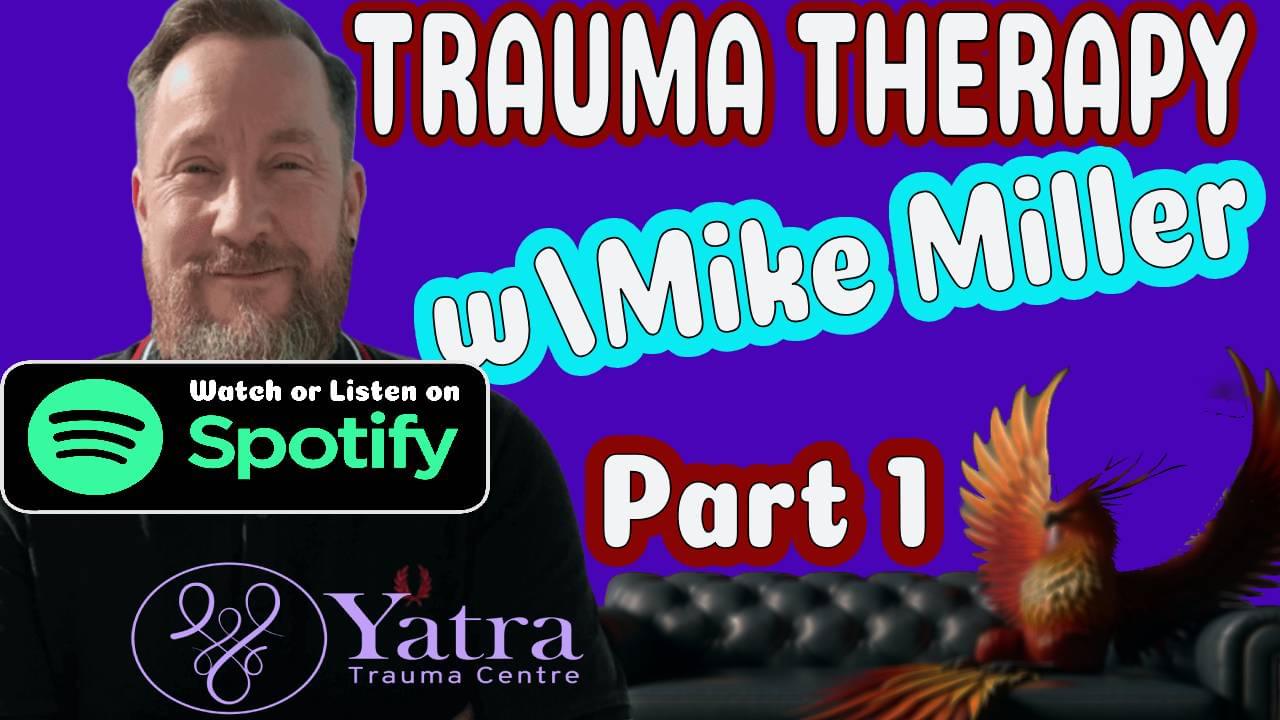
Mike Miller heads up the team at the Yatra Centre in Thailand. This trauma treatment facility is one of a kind, and after my recent stay in their residential treatment program, I genuinely want the world to know about the effects it has had on my life. In this first of a multi part series we discuss the profound and positive life change I have experienced, and we start to get into the different treatment modalities offered within their program, starting with Internal Family Systems, or IFS Therapy.
Hey everyone, it's Chris Horder here, but you might know me as Chuck LaFlange from the Ashes to Awesome podcast. We dive deep into the realities of addiction and trauma, something I know all too well. I'm celebrating a huge personal victory – a year of sobriety as of October 21, 2023!
I've got some exciting news to share: I've been given an incredible opportunity for healing therapy at the Yatra Center in beautiful Phuket, Thailand. This isn't just a chance for personal growth; it's also a strategic move to keep the podcast thriving in a more cost-effective location. My family has been amazing, covering my travel expenses, but I'm still facing a financial shortfall.
The podcast does bring in some sponsorship funds, but it's not quite enough to cover everything. The Yatra Center is kindly covering my first month's stay in Thailand, but beyond that, my financial future is a bit up in the air.
This is where I need your help. I'm reaching out to our incredible community for support. Any contribution you can make will go a long way. As a token of my gratitude, I'll give a special shoutout to you on my podcast. If addiction has touched your life, we can also share a story in honor of your loved one.
Whether it's a modest $5, a generous $25, or if you're able to contribute $100, your donation can make a significant difference in my journey.
Join me in this chapter of healing and transformation. Your support is invaluable. Thank you for being a part of this journey and for being a part of my story. Donate HERE
If you are listening on the Spotify platform, you are able to share your thoughts about an individual episode in the interactive element that Spotify offers. Doing this tickles the fancy of the algorithm and really helps us to spread the message.
Also please visit our Facebook page here, and like, share, or comment on any of the posts. Your feedback there is sincerely appreciated, and taken quite seriously.
Ours sponsors, that make spreading the message possible :
Rosecrest Recovery Services Call 615-484-8792 or email info@rosecrestrecoveryservices.com
Together We Can Recovery Society http://www.twcrecoverylife.org
Revolution Recovery - https://www.revolution-recovery.com/
Yatra Trauma Therapy Center -https://yatracentre.com/
Nate D Foundation =https://nate-d.ca/
Chuck LaFLange (00:01.042)
Hello everybody, watchers, listeners, supporters of all kinds. Welcome to another episode of The Weekend Ramble on the Ashes to Awesome podcast. I'm your host Chuck LaFlange checking in from halfway around the world in Krabi, Thailand with me in virtual studio is my very good friend and cohost Dr. Lisa checking in from Calgary. How you doing today, Lisa?
Lisa (00:18.763)
Good. I'm really good. Happy to see you. I'm happy to see Mike again. Haven't seen Mike in a while, so I'm looking forward to it.
Chuck LaFLange (00:22.734)
Absolutely. Yes, and our third panelist today, of course, is Mike Miller, who is the owner at the Yachter Treatment Centre here in Krabi, Thailand. And as anybody that's been listening or following along knows, I recently completed the residential treatment program there. I don't know if completed the program, sorry, what'd you say? I completed a 30 plus days stay, which turned into a bit more than 30 days, but at the Yachter Centre.
mike miller (00:26.198)
Thank you.
Chuck LaFLange (00:49.678)
I'm so forever grateful and forever changed as a result. So how you doing today, Mike?
mike miller (00:57.33)
I'm good. I'm glad to hear that's like, could you get stronger feedback? Like in my role, like forever changed from someone I'm grateful. Like, you know, all that stuff. It's like, um, I remember when I started working in the field of addictions, um, someone said, uh, you know, what's the difference between a large pizza and an addiction counselor's salary is you can feed a family of four with a large pizza. Like you don't get into this sort of line of work for the money. Um,
Chuck LaFLange (01:03.742)
Thanks for watching!
mike miller (01:27.95)
And I guess there's different levels of all of that and everything, but really to hear someone say that there's been a positive impact in their life, that's huge. So yeah, it makes my night. Other than that, happy to be here. Very happy to see Lucy again. Be back.
Chuck LaFLange (01:44.326)
You did it already, Mike. Here we are, a minute in. I'm not crying, you're crying. Listen, that might be a record, holy shit, hey? Yeah, you do. Man, I can't even begin to tell you the kind of feedback. I can't, I can't, I can't. My life is so changed as a result of my stay at Yatra.
mike miller (01:49.997)
Hahaha
Lisa (01:54.21)
That might be the quickest one.
mike miller (01:57.81)
I win.
Lisa (01:59.392)
You win.
Chuck LaFLange (02:13.47)
I can't begin to thank you enough for what I experienced there. And specifically with you in your office and all the staff, the entire situation, the entire experience was just absolutely amazing. From the moment I got there and Stacey said, I didn't have to stress out about lunch because I don't like spicy food. And everything after that was just absolutely amazing. Right. So, yeah. Go ahead, Lisa. Yeah.
Lisa (02:29.686)
Can I?
Lisa (02:35.415)
Hehehe
Lisa (02:40.947)
Mm-hmm. I was just gonna ask you, like, you know, obviously I think that doing therapy is a super incredibly personal thing. So not asking you for those kinds of details, but can you share for listeners who maybe haven't done any therapy or haven't done specific trauma-related therapy who maybe need to, like, when you say that you're changed, that your life has changed, like, what's different?
Like is it how you feel? Is it your perceptions? Like what is it?
Chuck LaFLange (03:10.59)
Fuck. If the treatment is holistic and it is, so are the results, right? It's how I feel, it's how I think about things, it's the tools that I was given to succeed after the fact. And all of that, again, holistic results, I think is the best way I can say it because there's just so much happened inside that state. So much happened, right?
mike miller (03:11.394)
question.
Chuck LaFLange (03:40.482)
little thing the CBT is actually the one that Okay, EMDR therapy and we'll talk about these individual modalities as we move forward EMDR therapy had a very specific impact on specific parts of my life And Arguably the biggest impacts That way I guess I maybe using comparative words isn't the right thing to do here CBT cognitive behavioral therapy
There's one that kind of really blew my mind, because you think, I shouldn't say you think, for myself and maybe other people too, you hear it and you're like, I know what that's about. But until you actually see the process, it does, right? It really does. And then Mike has put his own twist on CBT and what it does for me, like in just in the little things day to day, right?
Lisa (04:21.695)
It sounds so simple.
Chuck LaFLange (04:37.794)
And I'll give you a great example of that. I kind of joked about it with Mike in a private conversation not long ago. It feels like racism here sometimes in Thailand. And I get like sometimes it's like, you know, you're treating me like that because I'm a foreigner. And holy shit, can we talk about that? That's like, not about that specific experience, but about how easy it is to get into that mindset and how every single time somebody has
accused me of racism or accused somebody or something of racism. And maybe you're me. And I'm not saying that I, I agree with that. It was racism, but I can sure see how easily it is to let your brain go there. Right. It's like, I really do empathize for people now. And they're like, because I'm living this day to day here, but even that it's like, I can CBT that shit, right? I can, I can use CBT and I don't know if CBT is a verb, but I just kind of made it one, didn't I?
Right? It's so like, I can CBT that shit and go, no, that's mind reading. There's all sorts of things that fall into that. And, you know, it's just been amazing to me. Yeah, yeah.
Lisa (05:48.299)
The nice thing about making it a verb is that like with all therapy, if you don't practice it, it's not going to work. So it should be a verb.
Chuck LaFLange (05:56.206)
Wow. Okay, so...
mike miller (05:59.862)
We use the verb ABC it because that's the actual tool of the CBT set of, you know, there's a, there's more than one tool, but that's the tool that we sort of use because it's something that we can give to people that they can then leave and practice themselves much like a lot of the other practices that they come with. It's like, no, you do it with us at first and then you can take it and keep doing it on your own. So yeah, we've, we've used it as a verb for a while and I'll, I'll say to people like, you know, have you ABC that, have you ABC that? And I think.
Lisa (06:02.263)
Mm.
mike miller (06:28.714)
You know, when you say, Jeff, like, people think that they understand it. And it sounds like Lisa says, it sounds so simple, but people are absolutely for the most part, unaware of their own biases and their cognitive distortions that are just permeating everything. And, you know, there's reasons why we have them, you know, like our experiences, like decor beliefs that we have about ourselves and other people in the world. And that informs how that self-talk goes. But if we never question it and we just believe it.
then we're left with the same stuff all the time. I always say to people, like my brain gossips to me, about me, and in spite of the evidence that that's not true, I just believe it. But if someone else came to me and said, oh hey, did you know this about Chuck? I'd be like, really, is that really true? Like I would question it more coming from someone else about someone else, but I don't question it from me. And so when I start questioning it, and like, is that really true?
then I get to sort of like take down the level of whatever the emotional response is.
Lisa (07:33.443)
And I think people don't question their own because it's there, it's always there. And so you don't even notice it because it's always there, right? Because I find that in therapy, one of the most common things that I do is interrupt people and which, you know, sounds terrible. I'm not bad, I promise. But it's like, I'll be like, Whoa, whoa, like rewind. Like what, what did you just say? Like, can you say that again? And it's only when I stop them and say, go back a second.
Chuck LaFLange (07:33.682)
That.
Lisa (08:03.175)
and ask them to re-say what they just said that they're like, whoa, like they don't even realize it. They don't see their distortions because they're so ingrained and they've been there maybe forever, or they've slowly evolved to what they are today that they don't even know it's there, you know?
Chuck LaFLange (08:19.846)
What you just did, Lisa, was... Go ahead. Go ahead, there's a bit of a delay, so it's natural.
mike miller (08:20.38)
The saying I have is, it's not my saying, but I adopted it for this.
Sorry. Oh, you know, we say, yeah, a fish doesn't know it's out of water or it doesn't know it's in water until it's out of water, right? So it's like, it's just the water we swim in is all those cognitive distortions. Yeah, and they have been there probably forever. And so when you actually can shine a light on it, it can be pretty jarring, you know, if people are doing it. And I think interrupting people is okay. And sometimes I just ask them flat out, is that true? But like what you just said, is that?
Lisa (08:53.801)
Yeah.
mike miller (08:55.298)
Actually true. Is there evidence of that? Can you tell me that?
Lisa (08:57.387)
Yeah. But even right, Mike, let's go back a step. The point
Chuck LaFLange (08:59.366)
You've made, I can tell you firsthand, he's made for some uncomfortable, some uncomfortable situations actually, by doing that. Lisa, before you, before you, before you jump down, I've got, I do have something I wanna speak to about what's happening right now in this conversation. You've done it unwittingly, Lisa, is you've kind of.
mike miller (09:04.822)
Hahaha.
Lisa (09:08.203)
Totally. That means he's doing a good job.
Chuck LaFLange (09:21.678)
Segwayed into the third major modality that gets used in Mike's office at the center There's all sorts of shit going on but in Mike's office and correct me if I'm wrong. You've kind of got the three big ones Yeah EMDR which again we've talked about I've talked about quite a bit. I think We can talk more about that to CBT, which of course we just talked about and the third being the internal family system CIFS therapy Why is that always there? Where does that come from? Mike if you can
Again, we talked about this beforehand, I tend to bastardize things because I'm not that educated on them, is, you know, past my anecdotal experience. So, why don't you talk about IFS for a minute.
mike miller (09:58.93)
So why is it always there, the IFS?
Chuck LaFLange (10:01.486)
Yeah, yeah, like where does it come from? Like how does IFS play into this conversation? And as such into your formula, I guess, right?
mike miller (10:08.526)
Okay, well, I mean, I think it like, when it comes to sort of like my formula, and I do that with sort of air quotes, because like, I'm not, I'm not Bessel van der Kolk, I'm not like, I don't run a research center, I'm not, you know, doing peer reviewed studies of things, but they're all done already. So what I do is I take the things from people that are proven to work evidence based therapies, and I've put them together in an order of operations that we think will
be useful. And the reason we didn't do CBT on day one with you is because if we're in a survival mode, like if we're in fight, flight, freeze, that kind of stuff, if our amygdala is kicking off, it's not my prefrontal cortex that I'm coming from. Like I can't make the best decisions if I'm in a survival mode. So doing CBT when someone doesn't necessarily have access to the part of their brain that does logic and reasoning and stuff.
isn't the best order of operations, right? So I've worked at other places where it's like CBT on day one, and then you get people who struggle with it. And it's like, well, what if they were just like, what if you started with the EMDR and you desensitize some of the triggers that at the same time you did some of the body-based sort of somatic stuff, like the yoga and the Tai Chi and the mindfulness, the meditation, the sound bowls, all that, and then they can be relaxed in their body. They're not in the fight or flight stuff anymore.
They get access, their logic centers come back online, and then they can use the CBT. So, you know, we use bottom-up therapies and top-down therapies. So the CBT would be top-down, how I use my brain to kind of change how I'm feeling in my body. If my brain is, if my body's not relaxed because of the brain, I'm probably not gonna be able to access that too well. So we start with the sort of bottom-up stuff, and EMDR can be bottom-up because
It can calm down the amygdala from that fight or flight stuff by lessening triggers, desensitizing, traumatic memories, or, you know, sometimes trauma word freaks people out, but adverse experiences that people have had. And the IFS is a bit of both. And NEMDR is a bit of both too, because it changes your perception of events. But the internal family systems is there because it's an evidence-based therapy. And because
mike miller (12:30.726)
it resonates with a lot of the people that come to see us. And so Dick Schwartz was a family systems therapist. And so he would work and figure out what's the birth order, who's the scapegoat, sort of the family system stuff. And then he would have people coming in all the time and they would say, part of me really doesn't like this when my mom does that, or part of me does this.
And he just started getting curious because he was hearing it all the time and he thought Well, what part of you what part of you doesn't like that and people would have? answers for him like, you know a part of you know for talking about addiction stuff, right a Part of me just loved getting high and a part of me knew that wasn't how I was supposed to be and Both of those parts of me are real And you know if I said hey Lisa, do you want to go to the movies tonight? part of me does part of me doesn't like
As soon as I started learning about internal family systems and the parts work stuff, I watch TV, I watch movies. It's littered through everything. People use this in their language all the time. And so that's why it resonates with people.
Chuck LaFLange (13:36.527)
Oh yeah.
I think if you started making it a part of your awareness, you would be using that language literally every day and not realizing it. Like, I don't think anybody, I think someone like yourself, even me kind of now when I think about it when I say a part of me, but I'd still say it, right? So somebody that's, who's not aware of any of this, literally every day, literally every day, right? Yeah, yeah. Continue though, Mike, sorry.
mike miller (13:48.598)
Yeah.
mike miller (13:58.154)
Yeah. Well, so do I.
mike miller (14:02.442)
Yeah. People say, and especially when you're in that, um, no, it's like, when you're in that ambivalent kind of like, I want to use, but I don't want to use, like people use it that like, Oh, a part of me knows this is wrong. A part of me really just needs to get the escape right now. And so, um, with, with addiction, it can really resonate with people and with trauma, um, because, okay, so, so Dick Schwartz, it kind of gets curious, like what parts of you, and he starts, um,
sort of exploring that stuff. And he comes up with a model. So he's a family systems therapist. And he goes, well, like we have an internal family of different parts of ourselves and they're at different ages and they have different roles. So there's other things, there's like ego states therapy, you know, that doesn't give them the same roles that internal family systems does. But internal family systems basically says, you have, there's like four sort of parts of self.
And the first part is called self. And that's like our higher self, our best self. And he's got like these crazy little, like they're not really acronyms, but he's got what he calls the eight C's. So like confidence, clarity, curiosity, connectedness, compassion, et cetera, et cetera. If I'm coming from that place, that's my self. Like that's 53 year old Mike, the therapist, being his best self when I'm coming from that place.
So if I'm coming from any other place, that's a part of me. So instead of saying, I'm angry, I say, a part of me is angry, because it can't be me if it doesn't have those sort of like best qualities, right? So it's like, okay, well, what part of you is angry? So their self is one sort of like component, I guess we'd call it. And then he breaks the parts into basically three. So there's exiled parts. So.
When something happens that is so traumatic and hard to take, the theory is that my psyche breaks off a little part and sends it off into the corner of the psyche to carry that pain. So, if I grew up with a very abusive, like physically abusive adult,
mike miller (16:27.01)
to know that I'm never safe might be too much, right? Too much for me to be able to carry on, day by day. So a part of me takes that knowledge and that pain after being abused and it goes over here and carries that pain for me so that I can continue on a daily basis. Now that part is gonna be at big risk of being triggered by anything that looks like violence or abuse or whatever might mimic that sort of traumatic event.
Um, so then there's protector parts and the protector parts come in two different kinds. So one is called manager parts. And so the managers are sort of proactive and they sort of try to arrange things in your life so that exiled part with the pain won't get triggered. So if I've been abused, physically say physically abused when I'm really young and now I'm an adult, um, I don't want that exile part to get triggered because it'll be too much for me, et cetera.
So, and I'm not, this isn't a cognitive sort of process I'm going through, this is just parts of me stepping up and doing the work. So I would have a part of me that will find every way to keep me out of confrontational situations. Oh, you know, I get invited to, you should come down to, you know, see this punk rock show down on, you know, the downtown east side of Vancouver. And it's like, oh.
That can be really triggering for me. There might be violence down there. There might be just a sense of danger. So, oh, you know, I got a work lead. I can't make it. I can't, you know, my wife wouldn't let me in or whatever reason I might come up with. That's not Mike who's confident and clarity and compassion. That's like fear, right? So that's a part of me. And that's a manager part that's proactively trying to keep that exiled part from getting triggered by finding ways out of the situation, if that makes sense. Then the other sort of protector part is they call the firefighter.
Lisa (18:06.679)
Mm-hmm.
Lisa (18:16.099)
Mm-hmm.
mike miller (18:21.11)
because that exile part is going to get triggered at some point, like it's just going to, like I can't avoid confrontation my whole life and I'm gonna get that like, and my nervous system is gonna get jacked up and the firefighter part will then try to distract from the pain of the exile through certain things that can be like drinking, using drugs, sex, gambling, internet, you know, et cetera, et cetera, food.
all this sort of like classic addiction sort of process addiction behaviors or substance use behaviors, anger, rage, that kind of stuff. Now, the manager part doesn't want that exile part to get triggered because it's going to make you look bad. It really wants you to sort of adhere to social norms and make you look good and all that kind of stuff. But the man, the firefighter part does all these things that will actually make you kind of look bad, right? So they're both trying to protect you.
Lisa (19:16.823)
Hmm.
mike miller (19:16.95)
but they have different ideas about how to do it. And so sometimes different parts of ourselves can be at odds with each other. So there's a video, Chuck, you can link it maybe at the bottom, it's a guy, Derek Scott, and he talks about this stuff. And he says the next morning, if you get triggered and you get drunk and all that kind of stuff.
Lisa (19:24.554)
Mm-hmm.
Chuck LaFLange (19:33.37)
Yeah.
mike miller (19:44.802)
the next morning, like your manager parts like, oh, why did we do that? You made us look stupid. And this fire department parts like, actually, I don't really know why I did that. You know, but what it's doing is it's directing the attention away from the exile that's in pain, right? So there's all this like interaction. And then what we do is we figure out just like you do in group therapy or family therapy is like, what are the relationships between all the people in the room or all the parts themselves, right? So like.
Lisa (20:12.639)
Mm-hmm.
Chuck LaFLange (20:14.146)
Okay, I'll have to interrupt. Sorry about that, Mike. That was me messaging you, you to send me the Derek Scott video. So turn your phone on silent. So I don't forget to do it later. Sorry.
mike miller (20:14.159)
And people identify them as being in different ages.
mike miller (20:20.991)
Oh, oh, okay. Sorry.
Lisa (20:23.235)
Thanks for watching.
mike miller (20:27.126)
Yeah, perfect. My bad.
Lisa (20:27.813)
Ah!
But that's interesting. I mean, Mike, we spoke about this when you were in Canmore and Chuck and I came out to see you. And yeah, I just remember my mind just going off, exploding, hearing about this. And obviously as a psychiatrist, one of the things that I do, and I don't do this as much with my inpatients because the sort of unit that I work on, my inpatients tend to be acutely psychotic, manic, depressed.
You know, and so I don't, I usually don't get into exploring a lot of personality stuff on the inpatient unit, because to me, when someone comes in and they're psychotic, I'm not going to talk about your personality, right? But in the day hospital setting that I work in, which is this like four week intensive outpatient therapy program where people sleep at home, but they come in Monday to Friday from nine to three, and they do therapy every day.
And they've got, you know, an assigned case manager slash therapist, they have an assigned psychiatrist, they do group therapy, individual therapy. We do work a lot and explore a lot on the personality stuff. And like so much of what you're saying is just like this different angle or there's different perspective. Like as you were describing that, like I was thinking, okay, like avoidant personality, dependent personality, borderline personality, and
a lot of times you see those things, right? And you take, for example, somebody who has borderline personality. And so they don't trust people. So they push people away, they avoid people. But another element of a borderline personality is that they're impulsive and they're promiscuous. And so they're, in a way they avoid people, but then they're terrified of people abandoning them and they go out and they sleep with lots of people to try to fill a bucket. And like, it's just like all of that is kind of...
mike miller (22:20.904)
Yeah. So, so, you know, um, we, we would say I, I F S people. And so I'm not an IFS therapist. I'm what's called an IFS informed therapist. Cause I've done some training with Dick Schwartz and, um, Frank Anderson, some other people, but I haven't done the IFS, uh, like their certification. So like.
They say we can call ourselves IFS informed. But what we would say is that, you know, the borderline, like it's dissociative stuff, right? And so like these are dissociative parts of self, dissociated parts. It's like not, it's like out here, out here. Part of me is really yearning for connection. And so I jump into relationships and part of me is so afraid of getting abandoned that I like latch on to people really, really quick. And part of me gets
the exile gets triggered when someone looks like they're going to abandon me. So part of me lashes out in crazy, crazy anger. And it's like, well, that could look like borderline or it could look like all these different parts of myself doing their best to kind of protect me from the pain of that exile that, you know, I'm not a psychiatrist, so I don't want to say that borderline isn't a diagnosis that exists, but I would think most people I've met that have had diagnosis of borderline have trauma histories, right? And have abandonment issues and attachment wounds.
Um, so, you know, it's like all part and parcel of sort of the same stuff, I think. Um, yeah. And so it's interesting when I, when I learned about it, it was in the, uh, I think it was like the second part of the EMDR training when they started talking about parts work, dissociative parts. Um, and again, they have some different wording for it and I just immediately started resonating, it started resonating with me and I was like, they started talking about parts in different ages.
And I was like, immediately knew, I was like, there's a six year old part of me. And I don't know why I knew it was six, I just did. It's like, anytime like that confrontation is gonna go down and I'm like, oh, I just wanna get out of here and go like hide in my mom's basement. Like that's a very childlike thing for 53 year old men to be doing. And then if I ever feel like there's any kind of injustice going on or someone's gonna try to take advantage, there's a part of me that steps up that's like, F you and it's like, it feels very.
mike miller (24:37.282)
teenager-ish. So I somehow I was like there's a six-year-old part of me and a 15-year-old part of me and like what we want is we want 53 year old Mike leading the system but I don't want to get rid of either of those parts because they've been crucial to my survival along the way and what I want to do is integrate them. I want to unburden the exiled parts of the traumas and that's where we use some of the EMDR stuff. IFS fit therapists that just strictly do IFS they would do unburdening with that process, but
Lisa (24:58.504)
Hmm.
mike miller (25:06.67)
I'm an EMDR guy, so I use that. And then, we have a saying, there's no bad parts. And so I had a client who lived overseas and we were seeing each other online and he was like actively suicidal. He was like, and he was, we had done a bunch of IFS work and he's like, there's a part of me that's constantly telling myself to just off myself. And that was his sort of language.
And he said, but you always tell me there's no bad parts. How is that possible that there's no bad parts, but this part's telling me to kill myself? And I said, well, what is that part hoping to achieve through that behavior? Like, what is its role? Like, why is it there? And he's like, well, it just wants the pain to end, like forever. And I said, well, that sounds like a pretty important job. And that sounds like, you know, we just wanna change the job description. Good intention.
Lisa (25:40.926)
Mmm.
Lisa (25:58.295)
Mm.
mike miller (26:03.902)
not the best application perhaps, right? We don't wanna do that, but it's got a really well-intentioned part. At some point it learned a behavior that probably was useful and now it's not that useful anymore. So like, can we shift that? Just like a part of me that wants to use drugs. Like, you know, if it gets stressed, it's like, oh, I can't go to the heroin anymore, right? That part of me is still like, so what do I do? Like next thing you know, I find myself like.
Lisa (26:06.503)
Mm-hmm.
Lisa (26:16.107)
Mm-hmm.
mike miller (26:29.426)
elbow deep in a bag of salt and vinegar chips or something. You know, it's like that part of me is still trying to like bring me some, some ease and comfort. Um, but I've changed the job description a little bit.
Lisa (26:37.091)
Mm-hmm.
Lisa (26:40.755)
And I think what I love about this, like, I feel like this is something I need to, like, read about and, like, learn about because I love it. I loved it when we talked about it in Canmore. I love it now. Is it so validating? Because that's a huge struggle for patients, right? And like, I will often preface personality discussions with patients that look in psychiatry, we have 10. It's clearly this very simplified version.
We all have a personality. We all have traits of many personalities, but it's a way for us to try to capture it. And it's a way for us to speak to one another. Like if I'm inheriting a patient from somebody and they say, look, they have a personality construct that sort of falls in these categories, I go in going, okay, I kind of know what I'm working with. But I feel like, you know, again, stigma is stigma and some personality types have huge stigma.
Borderline Personality Disorder is one of the most stigmatized diagnoses you get in medicine, mental health or otherwise.
mike miller (27:42.303)
I think it's, in my experience, like one of, if not the most notorious for being really hard treatment resistant, you know, all that stuff.
Lisa (27:46.155)
Yeah.
Lisa (27:51.859)
Yeah, and I find that depending on how it's presented, I have patients who completely reject it because of the stigma that exists. And then I have other patients who sometimes, and I think it's in how you present it, where when you can say, here's a thing, read about this, see if you identify with it, they're like, oh my gosh, there's a reason for all of this, somebody understands this and they feel validated. But what I hear is you're talking about this is,
Again, just that incredible validation that there's a reason for all of these parts. There's a reason why these different things surface. And I'll often use the language that there was a time when this served you. And then what often happens is it becomes habitual and it continues on when it is no longer serving you and then it's problematic. But the wording of the
parts of you and validating that, like you said, even the suicidal part of you. Well, what's it trying to do? It's trying to stop the pain. It's trying to give you an outlet from the pain. I mean, how validating is that for people who, and yeah.
mike miller (29:01.95)
Even, it sounds weird because people that are suicidal come across as quite hopeless, but it gives you hope that the pain can end. So it's like a source of hope in some ways, right? Which sounds so counterintuitive, but anyway, sorry I interrupted you.
Lisa (29:13.443)
Hmm. No, no, but it's just, yeah, like, I think that's all I'm wanting to say anyway, but just, I just hear so much validation in the IFS model that really it's kind of like, you know, I'm thinking, okay, I could say somebody has borderline personality disorder, or I could describe it through an IFS model, and which of those is going to be more validating and shifting for a patient?
Chuck LaFLange (29:16.243)
Mm.
mike miller (29:43.134)
Yeah. Well, that's the thing is because when, yeah, when, when we, you know, pathologize people like you're sick, it's located in you, like that kind of stuff. Here's your diagnosis. People can like become the diagnosis or reject the diagnosis or whatever it is. Um, or if we say like, there's a part of you that has this behavior that used to work and it doesn't, but you could change that, like, to me, that sounds like a bit. Um,
Lisa (29:45.223)
I-F-S.
Lisa (30:09.952)
Yeah.
mike miller (30:10.97)
of a weight of the world kind of on your shoulders, right? Especially if it's a diagnosis that's notorious for, you know, helpers having difficulty helping, right? And so with one of the things that IFS therapists are supposed to do is you bring your self energy to the session with, so you're always creative, compassionate, curious, like that's how Dick Schor started this thing, he was like, oh, I wonder what that's about with the parts, right? And so that's what we're supposed to sort of do. And then how you help to heal your own
parts is you bring yourself energy to your own parts. So lots of people go like, I'll ask them like, how do you feel about that part of you that just wants to, you know, smoke crack or whatever it is, right? You hate that part, I wish it would go away. And it's like, then we start having a conversation and something will come into the conversation. I'll go, oh, so you're saying it did actually work for a bit. Yeah, like, oh.
How do you feel about it now? Or, you know, like we want to get to a place where they feel that compassion for that part of them. It's like, you know, or, oh, there's a young part of me that has a lot of pain. And if you can get them to have the compassion for that part, it's funny how those parts sort of like loosen up. And one of the questions, so then there's like after the eight C's, this is sort of the therapy model now, the talks about the six F. So it's like, you find it like, oh, where do you notice that part in or around your body? Like
Lisa (31:13.143)
Hmm.
mike miller (31:35.294)
And then you flesh it out and it's like, does, what does it look like? What does it sound like? And, you know, you sort of like, I had a client, um, who was, um, I was seeing for EMDR and doing some parts work with some IFS work and, uh, he was a gay man and he identified three parts and he saw them so vividly and they were all female and he had like it right down to. They're sort of like.
way of being, like their personalities is like, this one's really sassy and he had like their fashion sense down and everything. Like I don't experience my parts like that. I kind of visualize my parts as like younger me, like, cause there's a picture on my grandmother's wall when I was about four or five and it's like, that's kind of how I see the young part of me. I know what I looked like at 15. I was a little punk rock skateboard kid. So I see what that looks like, you know, but other people experience them differently. I've had people that have parts that are
Lisa (32:25.443)
Hahaha!
mike miller (32:32.362)
animals or parts like with addiction, they go like, oh, it's just this dark cloud part of me, like people can view it any way they want, right. Um, however they identify with it. So we flesh it out and then we befriend it. Right. And we like, what's it afraid will happen if it's not doing that job anymore and figure out like what's it afraid of. So that's one of the F's. Um, and what would it rather be doing if it didn't have to do that anymore? And would I get back a lot because these parts tend to be like younger.
Lisa (32:49.696)
Hmm.
mike miller (33:01.43)
a lot of the time because that's when they sort of like came to be. Um, they'd rather be playing, swimming in the ocean, like, you know, there's a lot of sort of like childlike things that these parts would rather be doing, but they feel it's their responsibility to keep the system safe, the personality system safe by doing this one job over and over and Dick Schwartz would probably hate it if I said this, but parts kind of become like a one trick pony. Like my part that like, like doing the drugs, it was like, Oh, uh, that worked.
Lisa (33:25.249)
Mm-hmm.
mike miller (33:30.838)
from the first time I did it. I'm gonna do that anytime anything's uncomfortable from now till forever, all the time. And like, that was just what it wanted to do, right? And I was like, great, that really worked. You helped me get through my teenage years a lot, right? But you know, I'm 53 now.
Lisa (33:49.031)
And also I like how with the part stuff, it reminds me of something that I had learned when I did as a resident, I did family therapy for a year. And the family therapy center I worked at, it was always focused on the child. Like there needed to be a struggle for the child. And then they would work with the child, but the family involved, obviously. And one of the things we talked about doing was externalizing.
negative emotions for a child, right? So like I worked with this little boy, he was like eight years old, right? But he would get really angry and he'd get angry and he'd get violent and he'd throw things and he'd... And what happens though is that there's negative consequence to that and then a kid starts to identify that I'm bad, right? So what we did was we tried to separate that out. So we talked about, you know, he... Same thing. He actually drew me a picture of anger. He named his anger.
And we would talk about anger as this external thing that would come in and almost sort of take him over at times. But it, you know, he didn't recognize we're doing this, but the part of the goal was trying to separate that you're not bad. But there are times when you have these angry feelings and the result sometimes is that you might do things that are not nice, you know?
But with the parts, again, you're separating out, like you described early on, that there's the self, which is your true self. And then these parts are external to that, right? And I think a lot of times, like in addiction again, people identify as, and that's why I don't like the term addict, you know, I'm an addict and I'm bad and I do bad things. And it's like, there's a big difference there. Like, again, to me, you are a human being, you have a true self, and then this is this part of you.
that comes with a lot of negative consequences, but I like that it separates it out, you know?
mike miller (35:44.846)
Yeah, and it's a protector. Like that's the thing. The only time I need protectors is when there's some, something at risk, right? Like I don't need to be just like right now today, I'm not burning down my life with drugs because like those exiled parts of me have been unburdened of a lot of their stuff and I don't get triggered to the, like I mean emotionally triggered like I used to the point where I need that to survive. So like those protectors don't need to mobilize, but I have them doing other things in different ways. So.
You know, it's, um, yeah, there are no bad parts. And actually Dick Schwartz's book is called no bad parts. Um, but there's a lot, there's a, there's a ton of stuff on YouTube. It's so good. I have, I'll send you some.
Lisa (36:20.503)
need to read that.
Lisa (36:26.571)
And it also makes me, we probably want to talk about other things, but I want to say one other thing before we go on, is that, you know, talking about sort of pathologizing, right? And, and sadly, you know, in medicine in general, right, we're all diagnosis driven, right? It's like, what's the diagnosis? And I mean, even from, from medical school, like you get put on the spot by your preceptors, like what's your differential diagnosis? Like what's wrong here?
And it makes me think about this one patient that I actually am working with currently who has a diagnosis of borderline personality disorder. But one of the things that I am picking up on is factitious disorder, right? So factitious disorder is when, and it's subconscious, they're not aware they're doing it, but they fabricate illnesses. And the driver is they want to be in the sick role.
Right? It's feeding their sick role. So it's not like they're not looking for a house or they're not looking for an income. The primary driver is to be sick. And they want to be sick because they want to be taken care of. And again, like I'm going...
mike miller (37:21.624)
Hmm.
mike miller (37:28.546)
Hmm.
mike miller (37:32.782)
I always get, sorry to interrupt, I always get curious about like, oh, I wonder what their parents did for a living. I always think there's like, is there a medical practitioner in the family that didn't have time but then took care, and that might not be the case with this person, but I've experienced that a lot, yeah.
Lisa (37:45.511)
Often it is, yeah. Or it's, you know, maybe what the parents did, but largely that they weren't getting attention. And what happened is as a child, they truly got sick at some point, and suddenly the parents found the time and gave the attention, and so it worked for them. But you know, I have this person right now who literally, you know, if I sit there and say, you know, tell me all about your psychiatric diagnoses and your medical diagnoses,
Chuck LaFLange (37:47.239)
Yeah.
Lisa (38:14.375)
it's like a list 25 items long. And a lot of these particularly physical ailments that they report have been searched up by urologists and neurologists. And it's like, they can't find any proof that there's anything organically wrong with this person, yet they're 20 something years old in a wheelchair claiming that they can't walk. And again, like I wonder, the reason it's coming up is that
we were to explore all the parts of this person, instead of giving diagnoses, would we actually in this particular case have avoided what I think is a Facticious Disorder? Because if we don't say, Look, you need to be sick and have a diagnosis to get help, but rather we focus on these different parts and why these parts are present, would this person be sitting in a wheelchair in front of me right now? You know?
mike miller (39:06.638)
this.
mike miller (39:10.066)
Yeah, and would you find out that it's a part of them that does do that? The study where IFS, where the evidence comes from, the first study where it's like, reviewed, evidence-based, was from a chronic pain study. It wasn't from like a mental health disorder, it wasn't from addiction, it wasn't from that, it was from chronic pain, and so they got better results with IFS than treatment as usual, right? So I don't remember the exact numbers right now, but yeah.
Lisa (39:37.731)
crazy.
mike miller (39:40.162)
Um, it's, I think that that's a really interesting proposition. Like if, if we had done this, cause if you look at it, like when you go to a doctor and you get the, you know, what's your diagnosis and all that, and doctors don't get, I mean, psychiatrists, especially not overly resourced, like time is extremely limited and it's very hard to get access and overworked and under-resourced and all of that stuff.
So to just get in the door is hard. And then to sit down and be like, tell me your life story is not going to happen most of the time, right? For the most people. So you get like, what are the symptoms? Tick, tick, you know, get the DSM out. Here's your diagnosis. Here's your prescribed treatment of whatever that is. But, you know, Vincent Felitti, who did the ACE study in the, in the late eighties or in the eighties.
like drew a direct line from childhood trauma to poor health outcomes as adults and said, the very first thing every doctor should be asking you when you go in is these 10 questions of the ACE questionnaire to figure out why is this happening? Not what's happening, but why is it happening? Now, again, I know that doctors don't always have the time for that, which is again, just a terrible part of the fact that we're not prioritizing that stuff. And, you know, it's more about efficiencies than effectiveness sometimes, I think.
Lisa (40:39.043)
huge.
mike miller (41:02.338)
people have limited resources and do the best they can with what they have. But if you were actually doing that, then you might have like those conversations about parts so you don't end up with a 20 something year old in a wheelchair. Cause you know, it's trauma driven stuff and you could resolve some of that, et cetera, et cetera. Now people listening to this are like, what is he talking about with the ACE study? But we've talked about it before.
Lisa (41:16.801)
Mm-hmm.
Lisa (41:23.709)
Yeah.
Chuck LaFLange (41:23.922)
I was just about to say, hey, let's talk about the ACE study. I don't remember what my score was on that, Mike. If you do remember, feel free to say it out loud. I'm giving you permission publicly here, but I don't remember what it was at all. But if you want, yeah.
mike miller (41:35.666)
Yeah, I just want to name this. I just want to name this, that this is quite a strange sort of setup for me to be sitting and doing a podcast with someone who's had treatment with us. Right. Um, because normally speaking, um, you know, everything's confidential and I, I won't even acknowledge if someone has ever been a client or not, because I don't have consent to do so, et cetera. And, you know, I see Lisa nodding because of course she gets that. So we're being, you know, moderately open with your experience as you.
Lisa (41:43.479)
Haha
Chuck LaFLange (41:47.045)
Right? Yeah.
Lisa (41:58.273)
Mm-hmm.
Chuck LaFLange (42:01.438)
Of course.
mike miller (42:04.766)
And, you know, just to kind of name that you've posted so much stuff of Yatra during your stay at Yatra and we have never accepted it on our, like, you know, it always says review this for your timeline. We never accept it because we're not there to, um, make, to benefit ourselves from your treatment. So the whole way through we've been like, okay, well, post your stuff because that's what you do, but we're not going to use it to benefit us. Um, so we've been pretty.
Chuck LaFLange (42:06.395)
Yeah.
Chuck LaFLange (42:19.133)
No.
Chuck LaFLange (42:31.322)
And also I'll speak to that real, and I'll speak to that real quickly in some of the posts even recently. I felt it was important at one point to say, yes, Yatra is a sponsor of the show. They're the title sponsor of this episode, Yatra, and I'm very, very grateful for that. However, anything that I have done on social media is because I want to and because I feel, and I'll say this,
mike miller (42:33.109)
with that just in order to protect.
Lisa (42:58.167)
Mm-hmm.
Chuck LaFLange (42:58.598)
because I feel that so many people could benefit from what I've experienced. So it's outside of the purview of our sponsorship, it's definitely not part of the deal. And I honestly, from the bottom of my heart, wish that so many more people could experience it. I just do, right? People that reach out to me, I had a friend reach out to me, we're gonna get a bit off topic here.
who I didn't realize back in 2009, just before I had left Calgary, had been raped and left in a ditch with a broken back, naked. And she reaches out to me because of this trauma stuff that I've been talking about online. And you're just like, I just want everybody to be able to experience this. I want everybody to have some fucking freedom from that.
So yeah, that's why I do that. Sorry. Fucking twice already. Okay. Not crying, you're crying.
Lisa (43:58.21)
Mm-hmm.
mike miller (43:58.83)
No, I, yeah. Well, I.
Lisa (44:01.891)
I mean, I appreciate, I was just going to say like, you know, I, as someone who, you know, was not at Yatra, and someone who does not work for Yatra, you know, I know, just to reiterate, like, you know, I know what Chuck is saying is very true. I know that he's sharing from his own heart because of his own, it's his own motive and desire to share it, you know, it has nothing to do with, with Yatra. But I do like,
commend you. I don't know what the right word is. But like, I think it's an incredible gift that you've given to be vulnerable and to share. Because I totally get that, you know, the majority of people who do therapy, they are not open. Sometimes they're not even open with their own families, never mind the whole damn world, right. But I think that people being open the way that you have gives others insight into what is achievable. And I think it, you know,
not everybody can necessarily go to Yatra, not everybody has access to therapy of any kind, but I think it does give people hope that, you know, that they can feel better, they can find peace, or that there is help available. So yeah, I think it's awesome that you've shared.
Chuck LaFLange (45:11.774)
I hope so.
mike miller (45:22.402)
Yeah, I agree. And I think it's inspirational for people. And I also think it flies in the face of that whole, like, men don't talk about their feelings and don't show their feelings and all that sort of stuff, to have, you know, a man talk about his experience and show his emotions during it and be okay with it. You know, to me, that's a big thing. And I think it kind of dispels some of the myths of therapy that it's like, scary. Don't get me wrong, like,
Chuck LaFLange (45:22.462)
Thank you.
mike miller (45:49.694)
It can be scary because we don't understand what we're getting into. I know it was like that for me the first time I went to therapy. I was like, Oh my God, what am I getting into now? Um, and, and really it's not, uh, it doesn't have to be like that in particular. Um, you know, some of the stuff that we're using is, is pretty gentle. So, but yeah, I happy to, happy to witness the way that you share your experience for sure.
Chuck LaFLange (46:13.17)
So with that said, and we do, we gotta get back to the topic in hand, when I say I give you permission to say what is my score, I mean, I'm putting all of that out with an end goal in mind, and that is to kind of destigmatize and maybe help inspire some people. And thank you for qualifying that to my, yeah. I don't remember either, it wasn't that high, well.
mike miller (46:25.968)
No, man.
Lisa (46:27.189)
Mm-hmm.
mike miller (46:36.05)
Yeah. Um, I don't remember the number.
I don't remember the number. It wasn't nothing, I know that. But it wasn't the highest that I've got. I've had people get like nine and 10 out of 10, you know? I remember thinking that yours might have been a little higher than it was initially. But yeah, and you know, I mean, the whole way that like you ended up at Yatra was that.
Chuck LaFLange (46:43.87)
comparative numbers here.
Chuck LaFLange (46:52.854)
Yep, yep. Seven.
Chuck LaFLange (46:57.774)
Six or seven. Was it six or seven, that's what it was. Yeah, somewhere in there, yeah, yeah.
mike miller (47:10.13)
I came on here as a guest, we talked about trauma because that's kind of what I do. And while we were doing the talk before and after, it was like, you had identified, and I had kind of identified like, you might have some stuff that you can work on. And then I kind of just flippantly, because I'm in the same place as you, it's like, I equate me having Yatra to like the guy in your friend group who has a pickup truck when people need to move. It's like...
Chuck LaFLange (47:22.544)
That obvious, eh?
mike miller (47:34.826)
I've got the truck, I'll help you move. You know what I mean? I'm like, I have this resource. And so I said to you kind of like off the cuff, like, oh yeah, I'll come, I'll give you a scholarship. You can come in, blah, check it out. And then like, it was like months later. And I had kind of like, you know, whatever, it was an offer and it was a legit offer, but I kind of put it out of my mind because I had other stuff going on obviously. And then you said, yeah, I think I might be able to make that work. And I was like, oh shit, here we go. And so it wasn't like with any,
Chuck LaFLange (47:35.173)
Hehehehe
Chuck LaFLange (47:50.05)
Yeah, right.
Chuck LaFLange (47:56.795)
Yeah, right.
Chuck LaFLange (48:01.514)
Hahaha
mike miller (48:04.882)
any intended outcome other than getting you some relief from some of the stuff that I was witnessing when we were first talking. Um, you know, and, and I think that I've, I've seen you do that and the way that you carry yourself has been, uh, you know, you've changed sort of your outlook on things and the way that you are. And it's cool to see. And, you know, I'm glad I have a pickup truck, I guess, but, but I understand what you're saying, like you wish everyone could have it, right?
Chuck LaFLange (48:13.143)
Mm-hmm.
Chuck LaFLange (48:25.558)
Oh, yeah, I have, right. How blessed am I?
Lisa (48:29.652)
Hahaha! The best pickup truck!
Chuck LaFLange (48:34.102)
Yeah, yeah, I do. I really, really do, right? And of course, you know, we've talked about some people in my life or whatever as well. I just I just do. I just I wish the whole world could experience it. What blows me away, Mike. Is that you are seemingly the only facility like yours there is, right? That that is strictly a trauma treatment center or at least that's doing things the way you do them or.
mike miller (48:47.885)
Me too.
mike miller (49:00.233)
Um.
Chuck LaFLange (49:01.742)
I mean, I've made similar kind of claims. I've kind of qualified them with, but no, but, maybe touch on that real quick.
mike miller (49:03.554)
Wellness.
mike miller (49:08.406)
Yeah. To be honest, like I haven't done enough of the, what, what would people call it? Like the, um, uh, the research, what would like, I see, I'm not even, I'm not even a business guy. I can't even get the term right. Competitor research, right? Um, I know that there are places like.
Chuck LaFLange (49:25.212)
Okay.
mike miller (49:29.09)
I know of a place, and now there are trauma centers that exist. I don't know that they do it exactly like we do it. And I think that we do it the way that we do it just because it's me and I see things in a certain way. You know, I think that there are places that have, you know, a lot more psychiatric care on site. There are places, you know, what tends to happen, we get lumped in with addiction treatment centers because that is the one thing like.
residentially that people kind of are familiar with. It's part of sort of, you know, the, the milieu that, you know, people know about it. Like people understand nowadays what rehab is and what treatment is. So like when people call us and they think about residential treatment, we get lumped in with addiction centers. The other reason we do is because addiction centers see trauma as a good bolt on to what they're doing. Sort of like, maybe this is cynical, but maybe they throw a
cast a wider web to get more client base and stuff. Not saying they're not trying to treat them the best that they can, but when trauma is a bolt on to the addiction center, it's not completely trauma focused, right? And so for me, I see sort of the addiction stuff as the bolt on to the trauma. It's like, what are your trauma responses? Oh, for you, it's using drugs. Okay, well, we can talk about that because I mean, I've been clean for 20 years. I've worked in addiction services for 18 years before I opened Yatra.
Yeah, so we can talk about that, but we're really gonna go into that, like, you know, addiction is the smoke, trauma is the fire stuff. So I think that we do it a little different, but we're not alone in the world, for sure.
Lisa (50:56.465)
Um.
Lisa (51:00.855)
And we talked about this before we started recording, but I also, I appreciate that you are not trying to do addictions and trauma. Because I really, you know, I think that for people who are in active addiction, the sort of patients who need residential addiction treatment, I don't think that those people are in a stable enough place to do the level.
of trauma therapy and work that you guys are offering. You know, like I think in a residential addiction treatment center, can they do some trauma work? Absolutely. But you know, knowing a little bit more, Mike, about what you guys are doing. Like I do think patients, if it's, you know, yes we always talk about the connection between addiction and trauma, but I think people need to get to a stable place in their addiction.
before they're going to get the full benefit out of the kind of work that you guys are doing. You know?
mike miller (52:04.01)
Yeah. And like, like we said beforehand, it's the shoot, the alligator closest to the boat, like that fentanyl is going to kill you tomorrow. Um, you know, when I've said to Chuck earlier, like, you know, if you're in a fight or flight situation and your, your logic centers are kind of online, like the CVT is not going to be great. Well, what if you're in like withdrawal or you're massively craving and so we have EMDR protocols that we use for cravings and stuff. So there's stuff that we can do, but we want people to be more stabilized. We've had people.
relatively new in the recovery process, but Physically stabilized for sure. We don't do detoxes or anything like that. We want people to be through that whole part of it and I think that Probably half of our clients Identify with some form of addiction and half don't but it's funny because a lot of the ones that don't when you start sort of Unpeeling the layers. So like yeah, they're not smoking crack. They're not shooting heroin, you know, they're not doing meth whatever
but they got other compulsive, self-soothing behaviors, which is, that's how I define addiction. I don't like the word addiction very much. I say it's just compulsive self-soothing behaviors, and whether that comes in a bag or a bottle, or a phone, or a relationship, or whatever, a lot of people who don't identify with addiction have the same sort of behaviors, and if they put that energy into cocaine, they would look like a maniac, but because they're putting it into work,
Lisa (53:06.41)
Mm-hmm.
mike miller (53:30.998)
they look, you know, they're getting accolades, right? So it's the same sort of stuff. Yeah, and sought out, right? And like getting rewarded for it. But it's the same thing.
Lisa (53:33.707)
Yeah, they're successful.
Lisa (53:38.533)
Mm-hmm.
Yeah.
mike miller (53:43.978)
and they look really high functioning. And so they would be more stable, seemingly to come to our center, even if they're actively in it right now. So they can actually be like actively in addiction per se, but they're stabilized because it's not a substance that is having massive physiological effects on them. It's not messing with their neurotransmitters the same way it's not messing with, they're not getting withdrawal, they're not gonna detox, all that stuff. So, but...
Lisa (53:56.951)
Right. Yeah.
Lisa (54:12.611)
Mm-hmm.
mike miller (54:13.642)
Yeah, we just want to do what we do and not sort of... It's funny, there's a place that I know that specializes and their list of specialties is like, I think about 15 things. And I'm like, that's not what a specialty is. Like we do one thing. We do trauma. And if the way your trauma shows up, we deal with that. But we just want to do one thing because I think to me it changed how I viewed the world of addiction.
and it changed how I understood my own history and my experience of the world. So that's the thing that became like my passion sort of changed my practice. So I'm like, that's what I wanna do because much like Chuck, I want other people to get the relief that I got.
Chuck LaFLange (55:01.274)
Yeah, right, and it sure does show. Yeah. Right? Okay, so I'll let you go down one more path. We are almost at the hour mark here, all of a sudden, hey. With that said, Mike, I want to invite you back on for next week because we're not done having this conversation. And if, you know, look at your schedule and if we can't do that.
Lisa (55:02.721)
Mm-hmm. Yeah.
mike miller (55:04.526)
And there's tons of people doing addiction treatment. So, you know, they can line them up for us after.
Lisa (55:09.443)
Yeah, yeah.
Lisa (55:23.393)
I know.
Chuck LaFLange (55:30.994)
We talked months ago about doing a multi-part series, and we're in the bundle of doing a multi-part series right now. Like, I just, there's so much more to talk about, right? You know? And I think the timing is good for all sorts of reasons, but... No, I've been... Okay, I'll jump on that real quick. I'll jump on that real quick. When we were in Canmore...
Lisa (55:36.803)
Mm-hmm.
mike miller (55:44.65)
Yeah, well, I think it's...
Lisa (55:45.859)
I feel like I'm monopolizing Mike. I feel like this is, I feel like I'm having like a personal one-on-one session here with Mike. I'm sorry.
mike miller (55:54.858)
And how does that make you feel, Lisa? No, I'm just kidding.
Lisa (55:57.662)
Well, one part of me.
Chuck LaFLange (56:00.478)
Yeah, when we were in Canmore the three of us well and shoo I should say Thank you. Okay, so let's make let's make that a date for next weekend. Anybody that's listening This is merely part one of however many come out of it when we were in Canmore the four of us because of course chew is there as well Mike's wife I Sat there and I think I said about as much as I have through this episode Because I was in awe and I'm gonna I'm gonna stroke some egos here folks
mike miller (56:03.588)
I would be happy to do that.
Chuck LaFLange (56:29.298)
To sit in a room with the two of you, to sit in an episode with the two of you, and just listen is amazing to me, right? Here's me, 14 months ago homeless, grade nine education, this like, and I'm sitting in a room with two of the most brilliant, caring, loving people I've ever met, right? And it, to me, fuck, why would I say anything? I've got a lot of listening to do.
Lisa (56:58.152)
Oh.
Chuck LaFLange (56:58.274)
Right? It's like I've got a lot, right? And I'm just like, I can't believe, I can't believe how lucky I am to be able to facilitate this conversation and to be a part of it. Right? You know, so.
Lisa (57:13.987)
Appreciate that.
mike miller (57:15.587)
A part of me loves hearing that, and a part of me really hates compliments, hates any of that. Like the imposter syndrome comes in. That's really just to illustrate the part stuff, for sure. There's a part of me that like loves a good ego stroke.
Chuck LaFLange (57:22.943)
Always, right? Yeah. Hey, hey, one of my super hero superpowers is awkward moments. So I just did that to you.
Lisa (57:25.343)
Oh yeah, totally.
Lisa (57:32.863)
Yeah, but also like what the other thing I thought as you were talking though Chuck is you did this You did this you created this you're the reason that we're sitting here Right, how awkward do you feel?
mike miller (57:34.444)
Thank you.
Chuck LaFLange (57:39.702)
Mmm. Fuck you. Kate. Kate, you just did it back now, didn't you? Shit. Yeah. Which... I'm really awkward right now.
mike miller (57:41.576)
Yep.
mike miller (57:50.786)
flip that back on you. That was one of Lisa's moments where she went, hold on, hold on, wait, let's take that back a minute. What did you just say?
Lisa (57:53.207)
Yeah. Exactly. Rewind. Yeah.
Chuck LaFLange (58:02.05)
Right, right.
mike miller (58:02.334)
No, it's true though. You created this and we would have never been acquainted had this not happened. And if I didn't know, uh, Ryan and you know, if you didn't have a history of threat, like it all just kind of, but you're the catalyst for this, you made it happen. Um, and I enjoy the conversations, you know, I, I love talking and I like listening to Lisa because I, I know I have, I'm not done learning, you know what I mean? Like there's so much stuff to learn and we have different sort of, um, backgrounds. Like I'm not a medical doctor. And I.
Chuck LaFLange (58:13.818)
Yeah.
Lisa (58:14.407)
now.
mike miller (58:32.646)
same training. So, you know, I could sit and listen all day too. And I would love to, you know, obviously we can't talk too much about confidential stuff, but I'd love to like be a fly on the wall for like a day at your work and just be like, okay, so this is what it's like day by day. It's funny, like you don't get access to other people's lives that much like that. And, you know, to sort of see a different perspective. So yeah, I could have these conversations all the time.
Lisa (58:47.117)
Yeah.
Chuck LaFLange (58:49.221)
No kidding.
Chuck LaFLange (58:58.95)
Yeah, right, right. And yeah.
Lisa (59:02.551)
I was actually going to say, you know how Ryan bounces? I feel like this is my bouncing episode. I don't bounce like Ryan does when I get excited. But I was going to say to you, even though I'm not bouncing, I'm bouncing. This is what gets me bouncing.
mike miller (59:08.539)
Okay.
Chuck LaFLange (59:12.1)
Which is...
Chuck LaFLange (59:16.238)
That was so what you would have missed Mike from because it's the episode that we actually that we were telling you to go back and listen to with Ryan I called him out on this kind of thing that he does because when he gets excited he'll start doing this so you have to actually watch it not listen to that one because he'll like yeah he like he'll start bouncing when he's getting passionate about something and he really did in this last episode I just I love it I love seeing it happen it just it makes my heart happy right because you know something good is about to come out of his mouth
Lisa (59:31.331)
And he's up to the screen.
Lisa (59:37.899)
Yes
Yeah.
Chuck LaFLange (59:44.142)
when he starts that day, right? So yeah, I just kinda called about it though. So for anybody that's listening now, go back and check out Plotoscope Wednesday, guys. It was a fantastic episode. And it's the first of our new formats where we're pulling in other people and kind of unpacking their recoveries and how things have gone for them. It was, yeah, it was definitely a different experience and I'm looking forward to doing a lot more of those. Actually, this next week, we have Jamie Tall coming on who is a giant in the content recovery world.
mike miller (59:46.946)
Yeah, yeah. Excuse me.
Chuck LaFLange (01:00:13.67)
She's gonna be coming on Kaleidoscope Wednesday to unpack some stuff with Ryan and I. Well, with Ryan, while I sit there and try and dumb it down and listen a bit, so yeah. Hey, listen, that brings us to my favorite part of the show, and that is the daily gratitudes. Let's start with you, Mike, what you got for some daily gratitudes.
mike miller (01:00:34.958)
Um, I was actually struck by it. Uh, first I'd like to say I'm really grateful for this conversation. I am grateful that you're doing this. I'm grateful. Um, I'm grateful that your treatment episode went to your liking because, you know, there's, that's always a good thing. Um, but you know, that, that you're, you're embracing life and you're taking on life here in Thailand, which is very cool to see, um, just for the record to, for all listeners.
we don't advocate that people uproot and come and move to Thailand just because we're here. It just happened to kind of play out that way.
Chuck LaFLange (01:01:09.058)
Fuck, I don't know if I advocate that people just uproot and move to Thailand anymore. Let me tell you, it's been a challenge, but oh, no, in a great way, in a great way, but yeah.
Lisa (01:01:09.204)
Ha!
mike miller (01:01:13.938)
Yeah. Um, but other than that immediate thing that we're doing right now, um, the earlier today I was grateful for, um, you know, uh, my family of people in my life, um, particularly my wife, I was really struck by, and I've got a bunch of staff members right now that are really stepping up as we transition from Phuket to Krabi and
we're doing renovations and construction and they're just like selflessly sort of throwing themselves into work that isn't really their job description in order to help sort of the greater purpose of what we're doing. And it's like, I'm just, I like, I'm floored by it. People moved from Phuket to Krabi with us, which is insane to me. And so like, I'm just floored by the support that we have. And so sometimes it just hits me out of the blue where I'm like, oh my God, this is like huge.
And so that's the stuff I've been grateful for, is just the relationships and support I've had.
Chuck LaFLange (01:02:18.13)
It's quite the family over there, the Yachter family. I know I was blessed to be there for, you know, yeah. Lisa, what you got for some gratitudes?
Lisa (01:02:29.867)
I'm grateful for this conversation. Always. I love talking to you, Mike. Always love talking to you too, Chuck. I just don't get to talk to Mike as often, but yeah, super grateful for this. Something that we had talked about discussing today, didn't get to it, which is totally fine. We'll talk about it another day. But you know, I had a girl who I will keep anonymous reach out to me asking if I could
Lisa (01:03:00.903)
I'm grateful that there are people in the world who see me as somebody they can call. And, you know, and because I'm fortunate to know people and to work in the field that I work in, I'm also grateful that I'm able to reach out to people who can step up and try to provide help. So this week, particularly, just really seeing all the privilege
that I have in being someone that people open up to, people share with, share to, and also the privilege that I have of being able to call up people and extend that ask for help and get responses. Yeah.
Chuck LaFLange (01:03:48.059)
No kidding. Yeah, it is, and you know what? There's a lot of stuff to talk about, right? So I certainly, yeah, yeah. And hey, listen, for anybody that's listening and doesn't understand the situation, it is 1.30 in the morning here in Thailand. Mike's gonna go to bed now or shortly after. I'm going to sit up and.
mike miller (01:03:48.83)
Yeah, I wanted to talk about all that stuff too.
Lisa (01:03:53.811)
Next week.
Chuck LaFLange (01:04:07.058)
deal with this episode and make sure it gets out to your ears and your eyes as soon as I can so she can be a little bit of a long stretch for me that's why we got to cut the episode because I got a lot of work to do right
mike miller (01:04:19.599)
I look forward to talking about it next week because it's important stuff. I think that access to treatment stuff.
Chuck LaFLange (01:04:22.63)
It really is, it truly, truly is, right? And so for myself, I'm obviously grateful for another wonderful conversation, both of you for donating your time. And something that I rarely touch on is my sponsors, is you Mike, TWC, who I reached out to on behalf of a friend, got an immediate response, that's Together We Can, they are our...
PSA sponsor in today's episode, Together We Can, out of Vancouver. I reached out on behalf of a friend, immediately got a response back, like trying to help out and seeing what they could do. They may or may not part of Lisa's experience most recently here as well. And I'm really grateful that this recovery community who steps up, right? And the thing about this recovery community is
Lisa (01:05:14.531)
Mm-hmm.
Chuck LaFLange (01:05:18.234)
It's not just the people that Ash is awesome or connected to. It's all these other content creators and podcasts and literally around the world, wherever you are, if I don't know somebody, I know somebody who knows somebody and we're gonna find those resources, right? I recently had somebody reach out from Ireland. Fucking crazy, right? Ireland, South Africa, I mean, we've been all over the map, right? Do you? Oh, there you go, right? Of course you do. Why would I think any different, right?
Lisa (01:05:33.859)
Mm-hmm.
mike miller (01:05:37.878)
I know some people in Ireland. Yeah.
Lisa (01:05:40.276)
Ooh, crazy.
Lisa (01:05:47.531)
Yeah.
Chuck LaFLange (01:05:48.334)
I'm very grateful for all of those things and I'm just as, if not more, grateful to every single person who continues to watch, listen, support, like, comment, share, subscribe, do all the things down at the bottom. Every time you do any one of these things, you're getting me a little bit closer to living my best life. My best life is to make a humble living spreading the message, the message is this. If you're in active addiction right now, today could be the day that you start a lifelong journey. Reach out to a friend, reach out to a family member, call into detox, go to a meeting.
I don't really care. Do whatever it is you gotta do to get that journey started because it is so much better than the alternative. And if you have a loved one who's suffering in addiction right now, you're just taking the time to listen to our conversation. If you just take one more minute out of your day and text that person, let them know they're loved. Use the words.
Lisa (01:06:35.463)
You are loved.
mike miller (01:06:35.946)
You are loved.
Chuck LaFLange (01:06:38.706)
That little glimmer of hope just might be the thing that brings him back.
Chuck LaFLange (01:06:44.506)
Well done.

Shattered Stigma
Yatra

Morning Cup