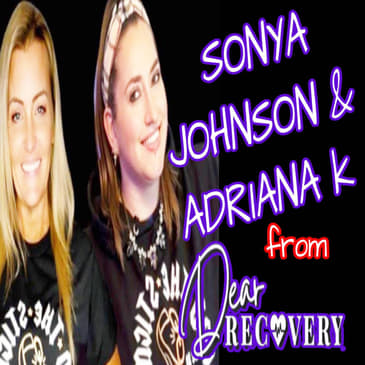



With Dr. Lisa on a much deserved vacation, Sonya Johnson jumps on the Weekend Ramble with her very good friend and fellow recovery advocate, Adrian K from Dear Recovery.
For links to watch listen on all platforms, and for more about Sonya and Adriana, visit
Title Sponsor: Yatra Trauma Centre
Special Mention Sponsor; FAR Canada (Families for Addiction Recovery
[00:01:30] Welcome to another episode of the Weekend Ramble on the Ashes to Awesome Podcast. I'm
[00:01:50] your host Chuck LaFlange checking in from Krabi, Thailand. Halfway around the world
[00:01:54] I have two very special guests with me today. First is Sonya Johnson from, well, Facebook
[00:01:59] Sonya Johnson-Peach. How you doing today, Sonya? I'm doing so good. So good to be here with you guys.
[00:02:05] Welcome back. Welcome back. This is your third appearance on the show now. So
[00:02:09] glad to be here. Our other esteemed guest, if you will, is Adriana Kay from Dear Recovery.
[00:02:15] I've been looking forward to getting Adriana on the show for some time now. So I'm really
[00:02:19] happy to have you here. How are you doing today, Adriana? Good. I'm so glad to be here.
[00:02:23] Why are we finally connected? Absolutely. Absolutely, right? Absolutely. So I guess
[00:02:30] we shouldn't assume anything, but you know, Sonya with you being on the show a couple times,
[00:02:34] I think your story is quite, I think we've got a pretty good handle on that. Of course,
[00:02:37] there's new people coming in all the time, but why don't we just, Adriana, and we're
[00:02:42] not going to do the whole recovery story thing today, but I think to establish some
[00:02:45] credibility with the audience, you know, with my audience, just people that don't know
[00:02:49] who you are. Give us a quick reader's digest version of how you end up on a recovery podcast
[00:02:53] with us here. That's just awesome. Want me to go first? Yeah, yeah, yeah. Just the quick
[00:02:58] version of it. Save us all the details. So I'm a person who longed for recovery. I have six
[00:03:04] and a half years clean and sober. Or I'll just say in recovery because I know some people
[00:03:09] don't like the sober, the clean, whatever. Six and a half years in recovery. But I created
[00:03:15] a page on Facebook, Dear Recovery. I just wanted to kind of crush the stigma and normalize the
[00:03:24] conversation. And I've met some wonderful people in the recovery community and two of them are you
[00:03:32] guys. So yeah. That's awesome. I see a ton of your content. You're one of the more prolific
[00:03:37] content creators out there, right? You know, for sure. Probably as much as me, which is weird
[00:03:44] because nobody does as much as I do out there. I've actually been slowing down a bit online.
[00:03:49] Oh yeah, yeah, yeah. I look forward to someday doing that myself. Not anytime soon. And of
[00:03:55] course, Sonja, I mean, say the same for yourself, right? Your time is somewhere in that
[00:04:00] as well, isn't it? I don't really attach much to recovery time. Thank you Adriana for
[00:04:05] that by the way. I tend to say since I embrace recovery myself rather than use clean
[00:04:12] and sober. But where are you at with all that, Sonja? Well, in a couple of months in July,
[00:04:19] I will be five years in recovery. So I'm coming up on an anniversary soon. July 1st? Nice. Yes.
[00:04:27] That's awesome. That's awesome. July 1st is it? You said? Yes. Oh, do you know that's
[00:04:32] Canada's birthday? That's our July 4th, right? I did not know that. Yeah, well now
[00:04:37] you do. That's why you said A before. That makes sense.
[00:04:49] I'm guilty as charged, I suppose for sure, right? But and myself, you know, we were talking
[00:04:55] pre-recorded, it's 18 months for me today. But technically, I'm claiming that a day ahead
[00:05:03] because it's the 21st here, or is it home back where you guys are? It's the 20th and the 21st
[00:05:08] is my date. So I'm kind of claiming that a little bit early. But by the time anybody's listening
[00:05:11] to this, it will definitely be my 18 months. So inarguably my 18 months. Or you get to
[00:05:15] celebrate twice. There's no cakes on the half year. So whatever, I guess.
[00:05:25] Actually, hey, I guess I can have a cake myself. I'll be honest with you, it's been
[00:05:28] a long time since I've had a cake or anything else sweet. I've been on to health,
[00:05:31] trying real hard to eat healthy lately. I guess that's my next thing about my recovery is,
[00:05:36] you know, now that I've seemed to have a handle on not wanting to ruin my life with drugs and
[00:05:41] alcohol, maybe it's time to start improving my health. So these days I eat a lot of sweet
[00:05:46] potatoes and fruit and sweet potatoes. I love that. I love sweet potatoes. I went on a whole
[00:05:53] health kick for a little while. Like I did exactly what you're talking about. First,
[00:05:58] you got to work on your insides, right? Because that's the most important thing. If we don't do
[00:06:01] that, nothing else is going to get right. But then I started working on my outsides. I went on
[00:06:05] this whole kick. I was actually thinking about it earlier today. I went on this whole kick.
[00:06:09] I started going to the gym. I started eating healthy, lots of sweet potatoes.
[00:06:13] And now I'm back to eating baked potatoes and macaroni and cheese.
[00:06:21] I haven't had mac and cheese since I got here. And that used to be,
[00:06:24] and of course, living on a budget, you know, back home, it was the same amount of money with
[00:06:29] a much higher cost of living than it is here. So a lot of processed food, of course, was in my
[00:06:33] diet. And like mac and cheese, that was like 10 boxes a week. Like it was like lunch and
[00:06:39] supper for most of my week. Right? So I can't say I miss that, but I do miss the odd. I
[00:06:45] really do love mac and cheese. Right? Yeah. I'm trying to, Chilk. I'm trying to. It's hard,
[00:06:52] right? It's like we go back and forth, back and forth. I was saying before, like it's almost
[00:06:57] as hard, like it's almost kind of like getting clean. Like, you know what I do to myself is
[00:07:03] like, oh, I ate bad once. All right. One more day. Won't matter. Kind of like using.
[00:07:07] Like, I already messed up, so I might as well. Like, yeah. Yeah. Yeah. Yeah. Yeah.
[00:07:14] That's self talk, right? And I don't know. I won't speak for you. For myself,
[00:07:19] um, I do find like the couple of days that I've cheated or whatever, it's self-soothing
[00:07:23] behavior. One, like 100%. That's what I'm doing. Right? I'm bored. I'm feeling shitty.
[00:07:29] I'm going to go eat. Right? These are, these are the exact same reasons I went God high.
[00:07:34] Because I was bored and feeling shitty. Right? And more feeling shitty than bored. But you
[00:07:38] know, so it's, it's definitely self-soothing behavior. And it's definitely another thing to
[00:07:41] address. Right? I think for me, I've got sunny so I can just take it for a damn walk,
[00:07:46] which when it's 90 degrees out, I typically don't do. So I try to save that for if I haven't
[00:07:52] walked in by 8 AM, it's not happening until 6 PM kind of thing. Right? Just cause like, nope,
[00:07:57] not happening. It's just too damn hot out there. Right? So, you know, for him and me,
[00:08:01] but um, it's, it's been an adventure for sure. This first topic goes today. You know,
[00:08:07] we just decided before we started pre-recording definitely a launch launching topic, a bounce
[00:08:11] off if you will. This whole, we'll start with tough love, I guess. Right? And then maybe move
[00:08:17] into, so I'm still trying to figure out how to articulate those other thoughts, but um,
[00:08:22] this idea that tough love is a good thing. I think, and it's not to me, it's just,
[00:08:28] it's not people. This is going to piss some people off too. Whatever.
[00:08:34] We're conditioned to think that, and I think like our, our parents were the generation,
[00:08:38] maybe the generation before that, that were actually taught,
[00:08:42] leave your kids to cry in the crib. It'll, it's good. Like there were, they,
[00:08:47] that was common knowledge. It was considered a fact. Good child raising was to let your kids
[00:08:52] cry in the crib. We have since discovered that that was a really bad thing to do,
[00:08:56] but this is the same generation that now wants us to be like tough love. You've got
[00:09:01] to show them tough love. Right? I'm not going to take advice from that generation.
[00:09:06] I'm sorry, but it just doesn't like, this is what you guys thought. This is what you were taught.
[00:09:09] And, and I mean, there's a lot of things I'll take advice from that generation over, but
[00:09:14] people thrive in spite of it, not because of it. Right? And, and I think we've been
[00:09:20] brainwashed, brainwashed. We've been taught to believe that we should be thankful for it.
[00:09:28] You know, we should, and especially for now, I'll talk to say it now,
[00:09:31] the gift of desperation, which by the way is not in the AA text anywhere. And it's mentioned
[00:09:36] once in the NA text. This is not a part of the culture of the way people use it. Right? It's
[00:09:42] an add on to the original 12 step process. The idea of a gift of desperation. That was
[00:09:49] if somebody added that in. So it's not, it's not what people make it out to be at least as
[00:09:55] I understand it. I'm not a huge 12 stepper, so I should be mindful of that, but
[00:09:59] somebody's desperate. It sucks. It's not a good thing. It's not in, in if we've been taught that
[00:10:05] yeah, it was a gift to me to be desperate and that's what took, but did you have to get
[00:10:08] to that point because society have done better, but society have done better at not letting you
[00:10:13] get to a point where you were suffering an addiction and society have done better at pulling
[00:10:19] you out of it before you got to a point where you were calling yourself desperate
[00:10:22] as I know like desperate for me sucks. I don't know about y'all, but
[00:10:25] like desperate sucks and I don't think it's a good thing personally. You guys might have
[00:10:29] some different views. Sonia, why don't we kick it off with you? What do you got to say about
[00:10:32] all that? So I just, yeah, you know what I was just thinking is I think that the issue is,
[00:10:38] and you know, let me just preface this by saying that it's very hard no matter who you
[00:10:43] are in this situation, right? Whether you're the person who is using or drinking or going
[00:10:49] through struggles or the family member of the person who's going through that,
[00:10:54] no matter which side of the fence you're on, it's a hard situation to be in either way.
[00:10:59] And I think that what the challenge is for the family member is that they don't know how to sit
[00:11:07] in the mess with the individual. You know what I mean? So it's easier to point the finger
[00:11:13] and to say like, you shouldn't be doing this. You just need to stop. Why can't you just love
[00:11:18] me enough to not do it? It's harder to say, how can I sit here with you through this darkness?
[00:11:26] How can I love you and show you that you are loved in the mess? You know, and I think that
[00:11:32] people just don't know how to do that. Like we don't know how to truly show up and love
[00:11:39] each other and just be right. It's a struggle for me sometimes. You know, I've had to learn
[00:11:46] how to sit with people in their mess, like literally learn how to do that because I don't
[00:11:51] know about you guys, but I definitely went through a phase and still sometimes even today
[00:11:55] get uncomfortable. Like when people start breaking down and crying, like what do I do?
[00:12:00] Do I give you a hug? I don't know because touch feels really weird to me. Like I don't
[00:12:04] know what to do. You know, and I think that people just don't know what or how to do it.
[00:12:09] And so it's so much easier to say you're bad. You deserve this. This is what you get. You do
[00:12:16] the crime. You do the time, you use the drugs. This is what you wind up with, you know, and
[00:12:22] it seems like everybody else around them is telling them like the same things,
[00:12:27] you know? And so they get that validation that this is what I should do because
[00:12:32] it's all that I know to do, you know? So you're right as a society, like we need to
[00:12:36] learn how to do things differently and we need to have these hard conversations
[00:12:41] to educate people because if we don't, it's never going to change. And if we don't, as the person
[00:12:47] who's been there say this is what I needed during that time, then nobody's ever going
[00:12:51] to know how to do anything differently. True story. True story. Adriana, what are your
[00:12:56] initial thoughts on this, that? Tanya, you said it perfectly. I think, you know,
[00:13:01] there needs to be more education. Just talking about the whole topic and starting it young,
[00:13:08] right? Because like you were saying, like even our parents of that generation was taught
[00:13:14] something else and it's not really working that well, you know, the punishment or the,
[00:13:20] you know, do this or do that. Like Sonia was saying, sit with me, ask me what's going on.
[00:13:27] Like for me, I was desperate but I didn't know how to ask for help either and nobody asked. They
[00:13:35] knew something was up, right? Like they knew there's something's up like she's just not
[00:13:40] the same as she was a few years ago. And it took to the point of me getting arrested.
[00:13:45] And like Chuck, you were saying, they didn't have to get to that point, right? Because I
[00:13:50] wanted to be clean and tried for so long. And I think like if I just had maybe even that one
[00:13:58] person that would have asked, you know, like have those tough conversations. They're very
[00:14:04] tough to have but like let's normalize them. I just want to add something to that real quick
[00:14:10] that I picked up on that you said Adriana that I also can relate with and Chuck,
[00:14:14] I'm sure you could relate with this as well. You didn't know how to ask for help, right?
[00:14:19] Because when we were out there, we felt already like we were such bad people. There was so much
[00:14:25] shame and guilt that we were carrying that we didn't know how to say, I need help. I can't do
[00:14:31] this on my own. And so I think also that adds to that stigma because we've heard from so many
[00:14:39] other people like we're the scum of the earth. Like we're a piece of shit. We already feel
[00:14:43] that way, which makes it so much harder to ask for help. And so I just want to say like
[00:14:47] that's another layer of it. And I think that makes it even more complicated because
[00:14:52] we can't ask for help. People don't know how to provide help. And so it just leaves us in
[00:14:56] this situation where everybody's pointing fingers because even as the addict myself,
[00:15:01] right? Or the person using myself, I'm using because somebody hurt me. I'm using because I
[00:15:07] was sexually abused. I'm using because these things happen in me and the other people in my
[00:15:11] life are like, she's a piece of shit. She can't stop using, you know? So it kind of just goes
[00:15:15] both ways. It's very complex. It is. It is. And something you might have heard me say in the past
[00:15:20] Sonia is that my perceived lack of connection was the boots on my neck for the last two
[00:15:25] years of active addiction. Right. It wasn't I was loved, but I believed I was not 100%.
[00:15:33] I knew I wasn't nevermind believed it. I knew that I wasn't loved right. Like in my own
[00:15:37] head. That was my reality at the time and perceived reality is reality to the person
[00:15:41] experiencing it. So same damn thing as not being loved really. Yeah. How do you ask for
[00:15:45] help when you just like this cycle of, ah, I used because I feel like shit. Now I feel like
[00:15:52] shit because I used and how do you break that and get out of that when you don't even feel
[00:15:57] like you're worthy of the help? You know, I'm already such a burden and I'm already causing
[00:16:03] so much pain and I don't want to cause more pain. Exactly. Exactly. Right. No,
[00:16:09] something I've spoken openly about my mom switched gears for about the last year for me
[00:16:15] and rather than we'd go literally years with no communication with any of my family.
[00:16:20] So I wasn't the guy that was at home stealing and causing chaos. And I was just,
[00:16:24] I would disappear for years at a time. Right. Um, and my mom switched gears at the end
[00:16:31] and she just, she started randomly letting me know I was loved, randomly reaching out to me
[00:16:35] and chaotic conversations that they were would always end with you are loved. Right. And you
[00:16:40] know how those conversations go, right? It's just fucking nuts. But it was always end with
[00:16:44] this you are loved. And over time, I think when I talk about that, maybe it comes off as like,
[00:16:49] is this I portraying it to be this magic cure and it's not, but over time, it really
[00:16:55] did mean something. And when that day came and I was just, I'd had enough.
[00:17:00] So I thought, I know she's there. Like, I know she's there now. Right. Whereas I
[00:17:04] previously that I never did believe it. So it was a big difference for me. Sonya.
[00:17:10] Changed like, for her. Yeah. For her to start doing that. We have my cousin, her niece,
[00:17:18] I was actually like serious opiate addiction for a very long time.
[00:17:23] We lost her brother already a couple of years previous to an overdose. She decided,
[00:17:27] you know, she had five kids. She decided that she wanted to get clean. And she moved into my
[00:17:32] mom's place, like move cities and moved into my mom's place. So my mom became very educated
[00:17:38] all of a sudden. And not that I say that it became a bigger thing for mom to get educated
[00:17:44] and maybe I don't even know if she would admit that to herself and sorry, mom,
[00:17:48] if you're listening, but the timing was definitely there. You know what I mean? Like it
[00:17:53] became this all of a sudden she could maybe see a different path. Right. And it wasn't that she
[00:18:00] didn't love me. She always loved me. Of course she did. Right. But, you know,
[00:18:04] she became much more aware of all the things all of a sudden. My cousin, Jesse did very
[00:18:09] well until she didn't. Here's the fucked up thing, the system, this othering, this
[00:18:15] pathologizing of people who have suffered an addiction or do suffer an addiction.
[00:18:19] She was sober for 11 months and lost the battle to get her five boys back
[00:18:26] permanently to her mother-in-law's where they were, her ex-mother-in-law. And she'd been
[00:18:32] sober for 11 months. That was too much for her. And she went back out and she very short
[00:18:37] while later died alone in a battle. Sorry to hear that. Thank you. But that is the problem.
[00:18:44] That is this whole fucking problem in a nutshell. This is what society is doing.
[00:18:51] People, they're pathologizing people and making them to be horrible people when even after,
[00:18:58] you know, 11 months of clean time. How does that happen? You know what I mean? Maybe she
[00:19:03] shouldn't have had them back yet. There's all sorts of nuances involved in any case. And
[00:19:08] Sonia, you're more familiar with that than I think anybody is, right? You know, as far as
[00:19:12] battling your kids back. But maybe, I don't know, losing after 11 months clean should not have
[00:19:17] been the way. Most certainly. Well, it does happen though. And you know, it's unfortunate.
[00:19:24] I'm grateful that you shared that. And I just want to tell you like, it's a confirmation to
[00:19:29] me, right? Because I think I was sharing with you guys before you started. I'm about to go
[00:19:33] speak on that topic. And it's labeled as the civil death penalty here. To lose your kids and
[00:19:41] never get them back to have your rights permanently severed is called the civil death penalty.
[00:19:46] And to me, that speaks volumes because if you know that it's the death penalty,
[00:19:55] why are we still doing this? You know, and you can be 11 months sober and still lose your
[00:20:01] rights because you don't have housing yet. Because you went to treatment, you did your
[00:20:05] therapy, you got sober, you did everything you needed to do. But you couldn't obtain housing.
[00:20:11] So we're going to take your kids forever. You know, like it is a very messed up system. And
[00:20:17] at the other thing that we were just saying, the fingers get pointed at the parent because
[00:20:22] you couldn't do what we thought you needed. Right? Because we're going to fix you. And
[00:20:27] we're going to tell you what you need. And if you don't do it, then you never get to see
[00:20:33] or talk to the thing that the one or five people that matter the absolute most in life to you.
[00:20:41] How can we go forward without a relationship with our children? You know, so I can,
[00:20:48] I can, you know, thank you for sharing that.
[00:20:54] Adriana, what do you got here? What do you want to throw in?
[00:20:57] I feel like, and we need to do better as a society and just kind of like,
[00:21:03] collaborate with each other. You know, whether it's like the judge, the counselor,
[00:21:08] that, you know, whoever is involved in the treatment plan, right? Like, collaborate and
[00:21:14] see what's really going on. And is this really an issue, right? Because if that's
[00:21:18] really the housing, it might be just an issue. Like, let's bring that up. Let's bring that
[00:21:22] to the table and discuss it. Right? Like,
[00:21:27] that's a really good point.
[00:21:30] That's a really, really good point. What's your name from Trap House? Chantel from Trap
[00:21:35] House Testimonies. I'm sure you know of her if you don't know her personally, right? Worked
[00:21:38] like close friends being from the same part of the world. And right now she's been working
[00:21:43] in a leadership course. And their focus right now is on inter-agency because it is lacking.
[00:21:51] You've got everybody's competing for these resources and everybody has their own agendas
[00:21:56] and everybody like, can we just all get together and have a real conversation where we're not
[00:22:00] competing with competing ideas and competing financing and competing. Just like really look
[00:22:05] at how to solve the problem. Because I'll tell you what, Lisa, Dr. Lisa quotes a study
[00:22:11] quite often that's been done in multiple countries around the world. So it's not just
[00:22:14] a one-off thing. For every dollar you put into treatment, six to 10 come back, right?
[00:22:19] Six to 10 because of the penal system, because the healthcare system, because the judicial
[00:22:23] system, because all of the things that cost so much for the taxpayers. So even those
[00:22:30] people who are all about just the money, and we know that there's a whole group out there
[00:22:36] where it all comes down to my tax dollars should be paying for. Guess what? If you look
[00:22:41] at this in a different way, you can actually save a whole shit ton of those tax dollars.
[00:22:46] Right? But then they find something else to pitch about anyway.
[00:22:50] They find another way to villainize those people that suffer.
[00:22:53] I do think the solution is community though. I mean, as a community, if we could collectively
[00:23:00] work together instead of against each other like you were saying, competing for resources,
[00:23:04] everybody working in silos doing their different things and you having to go 5,000 places just
[00:23:10] to get a whole care, right? Like a whole different domains of care, whatever you call that.
[00:23:18] But if we all work together as a community, I think we could get a lot further because
[00:23:22] there seems to be like a lot of gatekeeping that happens around resources and housing and
[00:23:29] just everything. There's like this gatekeeper that you have to get past and then there
[00:23:34] leaves room for personality conflicts and biases and like all of these other things that happen
[00:23:39] which means people aren't able to access the treatments that they want to receive.
[00:23:43] And as far as the systems go, without us, the systems don't function. Like they need us to
[00:23:49] function and so they don't really want it to be different because if they were different,
[00:23:53] then a lot of people wouldn't have their jobs. The system wouldn't be there. The system needs
[00:23:58] its people to feed the system, right? But the answer really is community because
[00:24:05] if we could all take off the system hats and then work together as a community and offer these
[00:24:10] resources as if it was just like this known thing that everybody knows, here's this resource,
[00:24:15] here's that resource. We would be in a much better place and I think it would save tons
[00:24:22] and tons of money if we gave people on the front end instead of on the back end.
[00:24:28] No doubt, right? Now it's prevention, it's a pound of cure and all that stuff, right?
[00:24:34] The community aspect of it, Sonia, I was just saying to a friend who's still struggling back
[00:24:39] home because she's like, well, I want a 12-step and I, you know, well, god dang,
[00:24:44] I'm just like, listen. It's the easiest place to find fellowship and she had never even
[00:24:51] heard, here's how fucked up, she had never even heard the term addiction is the opposite of
[00:24:54] connection. This woman is almost 40 years old, has been using drugs almost her entire life and
[00:24:58] had never even heard that term before. And to me it just seems so like, doesn't everybody say that?
[00:25:03] Right? Like isn't that, like really? I was kind of taken back and so I said to her,
[00:25:11] I was explaining to her like, you know, it's actually the brain kind of filling a void,
[00:25:15] you know what I mean? Like, and that's where it starts and quite often that's where it ends.
[00:25:20] Community is connected, right? 100% that's what it is. I know definitively had I not started this
[00:25:28] podcast and I'd gone to work in a warehouse or whatever I was going to do that there's no way
[00:25:34] I'm sobered. The connection that I've got from my recovery community is what has kept me sober.
[00:25:41] Right? Because I started this four months in, I was a hot mess, right? Like I was just
[00:25:44] barely holding on back then as much as I'd like to. Background, I wouldn't have told you
[00:25:48] that but with the benefit of hindsight, yeah I was a fucking mess. Having recovery community
[00:25:53] around me all the time, right? So it takes a village name the cliche, right? Like there's so
[00:25:59] many of them, right? You know if we all just kind of got together and helped each other out
[00:26:04] it would be a better place in so many ways, right? Not even just with mental health.
[00:26:07] I think we also need to do a better job at like letting people know about resources,
[00:26:14] right? Like when you were saying she didn't know like that phrase, I only knew of like A,
[00:26:20] A and N, that's it. That's literally all I knew of when I was trying to get clean.
[00:26:26] Nothing else. I didn't know about all these other different services, right?
[00:26:32] That was my only option but what if I wasn't really into the 12 Steps and wasn't, right?
[00:26:38] Because there's so many different pathways so I'm just stuck. What's my option?
[00:26:44] I could share that with you too, Adriana. I knew of nothing else, right? It's only through doing
[00:26:50] this and the advocacy and the things that I do now that I understand that there's smart recovery
[00:26:54] and recovery capital in all these different avenues, right? But yeah absolutely I think
[00:27:00] that was the one which let's touch on that. When that community shames somebody for their
[00:27:08] because like you said it's the only path you knew, it's the only path many people are aware of
[00:27:14] in early recovery. When they shame somebody for their path whether it's Matt or something else,
[00:27:20] you are doing a massive disservice, a massive disservice to somebody who is
[00:27:25] who was trying to get their shit together, right? Go ahead. I have a lot of perspective
[00:27:31] on this because I was one of those people. You know like when I was first introduced
[00:27:36] to recovery like you guys the only recovery modalities that I was aware of was NA or AA
[00:27:43] and there was no other way, right? I was told get clean, work the steps or die. Like that's
[00:27:48] what they told me, you know? And so in my early recovery that's what I used and I was just
[00:27:54] talking to somebody about this the other day. I became very very rigid in the fact that I
[00:28:00] was indoctrinated, right? Like I needed to be indoctrinated quite frankly because the way I
[00:28:05] was living before was completely like not healthy. So you know like committing crimes and like doing
[00:28:12] all the things I did for addiction, I needed to be indoctrinated in a way but over time I think
[00:28:19] that you grow. Adriana you and I have talked about this like so many times, you know? I
[00:28:23] think that over time that you grow and it's really good to expand your toolbox and so that's
[00:28:29] what I have done and I'm really grateful for the recovery community that I met online through
[00:28:36] doing Facebook and social media and such because I've learned about other pathways of recovery
[00:28:42] and I've seen how toxic it is. Not just toxic but how dangerous it is when you tell somebody
[00:28:49] who's on Suboxone that that's not clean, you know? I actually heard a story of somebody who
[00:28:55] was told that and then they stopped taking it, they relapsed and they died. You know like it is
[00:29:01] that serious you know? And now that I know all of these different pathways from working and
[00:29:07] from knowing people in recovery that do all of these pathways and that have been clean for
[00:29:11] years and years and years on these different pathways, my mind has opened to it and now
[00:29:16] I'm still involved in the 12 step community and so I still see it all day to day. You know
[00:29:22] like I see this happening day to day. Like there's a lot of rigid people in 12 step recovery and I
[00:29:27] think they're told, at least I was told, that this is the only way and if you don't do this
[00:29:33] way you're gonna die and so what people are taught to do is to shame people and is to shun
[00:29:40] them or outcast them and I don't see it that way anymore. Like my perspective on it has changed
[00:29:46] but it's been a growth process for me you know? And I'm grateful that I've gotten to open
[00:29:50] my mind a little bit because they tell people in 12 steps it takes how you do it is honesty,
[00:29:55] open-mindedness and willingness although we're not open-minded enough to think that there's
[00:30:00] any other way of recovery right? I can share my own experience with that so yeah I you know
[00:30:08] I was huge into 12 steps when I first got clean and I stayed clean for a while and then
[00:30:14] I eventually relapsed after like a year, year and a half. I eventually got on it my toes.
[00:30:19] I tried both suboxone and and methadone and um and I came back and I raised my hand and I would
[00:30:25] say you know I'm on this or this is what's going on with me and to them I wasn't clean
[00:30:32] right? And you're entitled to your opinion but it was almost like you're not clean. You
[00:30:37] might as well be using. That's that's where my mind went right? You might as well be
[00:30:41] using. Well I'm not clean like I'm not doing well enough up to your standards right? So
[00:30:48] I went back out eventually and um I this is and then I eventually got mandated
[00:30:55] and I my therapist said like you don't have to share that like as long as the judge knows
[00:31:01] and like the therapist like you don't have to share that it's nobody's business
[00:31:06] and um but even to me I felt like but I'm not being honest then. I'm kind of hiding something
[00:31:12] right? So like it really messed with my mind. It really messed with my mind so I just didn't
[00:31:18] tell anyone anymore after that. I eventually got off of it but it definitely kept me in
[00:31:23] like this weird space of like I felt alone almost. Nobody gets me. I'm really trying. I
[00:31:30] want to get clean and I'm trying my hardest but like people are just not seeing it for them.
[00:31:37] Part of recovery you're living within your values right? So now you're questioning your
[00:31:42] own values. Oh yeah. Because of what? You know because somebody else has decided that
[00:31:47] that's not valid right? And I don't know who your DOC was Adriana. I'm assuming it was
[00:31:53] obviously obvious of some sort of if you're using that right? This day and age and so
[00:31:59] you've got close to seven years under you. Things have changed drastically even in that
[00:32:03] seven years right? Like what fentanyl and now the things that they're cutting into fentanyl
[00:32:07] Jesus they made the worst drug that the world's ever seen worse. How that happened
[00:32:12] you know that brand of evil. You can do a whole episode on that but
[00:32:18] that person that goes back out now is literally one use away right? And Sonia you said it like
[00:32:26] that's how serious it is right? That's how very very serious it is. So if you're if you are in
[00:32:32] in a room and you are in the rooms where you want to word that and you're shaming somebody
[00:32:38] for a recovery path that's different than yours, you're really running the risk of contributing
[00:32:44] to their death right? Is what you're doing and still with that said the amount of online
[00:32:52] debates we'll call them they're full-blown knocker down arguments right? That I have with people
[00:32:57] in the comments about this is just like how can you how can you judge somebody else's recovery
[00:33:05] if you are willing to contribute to somebody else's pain that way? Pain and maybe worse
[00:33:11] death right? How can you question your own shit? You really need to look at your own stuff
[00:33:17] and the moral it's talked about 12 steps all the time how it doesn't work and it's not a
[00:33:23] deviated you know it's not a more but yet when somebody comes in the room you accuse them of
[00:33:28] having a moral failing so what the fuck right? And for the language but I mean and you're a
[00:33:35] great example of that Adriana right? Like you shouldn't have to hide that you just should
[00:33:39] not have to right? And why does it matter like you know why does it matter if somebody's
[00:33:45] on a medication? Why does it matter like we're all most likely trying our best and that was my
[00:33:51] best at that time. Absolutely right and I mean here you are sitting here now you know you're
[00:33:57] you're helping many many people more people than I think you'll know and Sony same goes for you
[00:34:02] and I hope someday the same for me but by doing what you're doing and advocating and
[00:34:07] recovering out loud right? And you got there with the help of Matt so anybody who's got
[00:34:14] anything to say about that could piss right off in my mind. Like I'm a friend or advocate for it you
[00:34:20] know they need it yeah who's to say they're going to be on it for over? Yeah right and
[00:34:26] even if they are. And who cares if they are. Right who cares? Lisa talks about that often.
[00:34:31] Many patients she knows of families jobs all the things contributing to society you know
[00:34:37] healthy people and they're still on Matt so what right? The moment you start judging somebody
[00:34:43] else's recovery you need to start looking right you know. Sorry you were saying Adriana I didn't mean
[00:34:47] to cut you off there. I just think it's an MAT's man or medication treatment has just such a stigma
[00:34:53] still until this day and like when people think of it they think of the methadone line
[00:34:58] and people on the line at 5am and they can't wait to get their cup and blah blah blah blah
[00:35:03] like you know I it really led me to like get a job and go back to school and like
[00:35:12] just start working on myself because I couldn't work on myself if my you know I'm still not really
[00:35:18] healed right so like I needed to do some healing and I was able to with that help.
[00:35:25] Yeah there's so many confusing things in the rooms anyways because why is it that some
[00:35:30] medications are okay some are not okay like it's okay if you take your psychiatric medication
[00:35:35] but god forbid you take your medicated assisted treatment medication so it just doesn't
[00:35:40] make sense there's so many little debates. Who the fuck is judging anybody else's medication
[00:35:45] anyway right just be happy that person is sitting in that room not out using
[00:35:50] and let's just let's just run with that right make them feel welcome you know first um yeah I
[00:35:56] could that one gets me rightly wound up um that's pretty wicked arguments I expect people
[00:36:03] that have never suffered in or had to live you know live in or have a lot won't say it
[00:36:07] an excuse but I can understand how they can be so cold and shitty and judgy but like if you've had
[00:36:15] to fight your own fight and you're still cold and shitty and judging then you're somebody that
[00:36:22] I really want to go to battle with right like every time you know and it's I've seen you go
[00:36:27] to battle a few times and I love it. Chantel's Chantel's taken to to messaging me saying
[00:36:34] you better come into this conversation right so
[00:36:39] yeah that's the same with like why is Narcan free and this isn't
[00:36:46] yeah okay well then advocate for that other thing being free right right like I know
[00:36:49] insulin is brutally priced and it's like it's ridiculous okay but that doesn't mean Narcan
[00:36:54] shouldn't be free exactly it means that Narcan or it means that insulin should be priced
[00:36:58] reasonably is what it means right but it's so like that's that's a yeah but and those
[00:37:03] yeah but arguments are like the sure sign of somebody who's just not up for the challenge in
[00:37:07] my mind right like you're gonna you know it's got nothing to do with insulin and diabetes it's
[00:37:11] got everything to do with saving lives and addiction so you know one has nothing to do
[00:37:15] with the other that's just one why is this free why is that Narcan saves lives that's why
[00:37:20] like and it saves a lot of lives saves a lot I know a lot of people that are alive
[00:37:25] because of Narcan my husband included and we're still living in the day and age when people
[00:37:30] think that we shouldn't be using Narcan on drug addicts because if they use they deserve it I
[00:37:36] cannot tell you of all the comments that I see on my social media that's the one that gets me
[00:37:40] the most and I cannot tell you how many times I've seen somebody say that yeah yeah it's all
[00:37:46] the day in person right because like I do Narcan trainings in the community for my job
[00:37:51] and like somebody literally was just walking by let them die anyway like hearing that even like
[00:37:56] in person online is a little different but either way it's just like what like people really
[00:38:03] think this way they do they really do right you know it would be hard not to say anything
[00:38:09] back to them if it was I yeah there's there's I really wanted to but I still have to remain
[00:38:15] professionals and set yeah there's a pre-trauma Chris was kind of an asshole like a really bad
[00:38:19] guy and like I think he might come out right at that age you know I think that that might
[00:38:25] do it you know you might get a real version of me that nobody wants to see if I had to hear that
[00:38:29] face from somebody right like I can't I can't imagine I can't imagine all right but that
[00:38:34] people still think that way that's just the family Sonia right off the bat you know when
[00:38:40] I when I got to speaking that I think I think um when I say things like tough love people
[00:38:45] thrive in spite of tough love that's not to lay blame on families who do like I don't
[00:38:50] think that it's the cause of the problem I think it can be but I don't think that it is
[00:38:54] you know what I mean and a lot of these families the trauma that they face the things that they've
[00:38:59] gone through they've gone to a point where they've kind of I don't want to say well I'll say it
[00:39:04] earns earned all of those feelings right and and you to dismiss that by saying you can't have
[00:39:12] tough love is is I don't mean to to dismiss what a family member has gone through right at
[00:39:18] all right the opposite you know I I believe that family members should be getting a hell
[00:39:22] of a lot more resources than they're getting right now a hell of a lot more getting right now
[00:39:27] it's awful it's awful what 90% of people affected by addiction aren't the people who are addicted
[00:39:34] it's the people around them they're they're you know because of the suffering consequences
[00:39:38] of that person's addiction and I think we got to do a help like a much better job
[00:39:43] of uh of helping those people and addressing their traumas and um I'm having I don't know
[00:39:49] four or five individual conversations right now with mothers about um attending trauma therapy
[00:39:55] right it's like like no I'm not saying you have to come to Thailand do it online with him
[00:39:59] or somebody else or but like your trauma is just as valid as the person who's in it
[00:40:05] it's just as valid as anybody's more so than a lot of people's right like these are
[00:40:10] conscripted soldiers in a battle they didn't want anything to do with and and their lives
[00:40:15] have been upset and they face some of the most horrible situations right like there's anything
[00:40:22] I would want to impress to a family member though it's and I've shared this on the podcast
[00:40:27] before but I have a friend who I used to use with and uh we tried to get clean together one
[00:40:35] time in the day before I used or the day before I got clean I used and I overdosed
[00:40:41] the day before I got clean she used and she overdosed and I made it and she did it and
[00:40:47] I've been in contact with her mother ever since still in contact with her mother
[00:40:52] and her mom wrote something one day and it has always stuck with me and she has said you know
[00:41:00] if they need food feed them if they call answer the phone screw this tough love
[00:41:07] because if your child doesn't make it are you going to be okay with what you said last are
[00:41:13] you going to be okay if you didn't pick up the phone when they called are you going to be okay
[00:41:18] knowing that they were out on the streets by themselves trying to reach out for help and
[00:41:23] you were giving them tough love you know and that has always stuck with me and I think what
[00:41:28] you said about your mom I just love that so much and I think it sounds to me anyways
[00:41:36] like she had that realization you know by knowing what happened to your family member
[00:41:43] like she thought to herself I could really lose him like I don't want him to know
[00:41:48] that he's not loved I want him to know that I love him no matter where he's at because I
[00:41:55] know for me and my kids there's nothing that they could ever ever do that is going to change
[00:42:01] the fact that I love them and I want to make sure that they know that and I couldn't imagine
[00:42:06] how hard it is to be in that position and the the philosophy behind tough love that everybody
[00:42:11] who's going through that hears but I think the thing like your mom did is the thing to do right
[00:42:20] doesn't matter where you are you are loved it doesn't mean you've got to go and pull them out
[00:42:26] of the trenches or go and you know enable or those things but just to let them know their
[00:42:31] love like that made a difference in your life and I believe it would make a difference in
[00:42:36] the lives of many many many others. I think there's a huge difference between
[00:42:43] putting setting up boundaries and tough love right like we could still love the person
[00:42:49] and like we're saying and have different boundaries set still but the tough love
[00:42:54] right it's definitely there's a it's different it's different you already you spoke to this
[00:43:00] Arnie but I've been saying it for some time I have a ton of memorial moms because we used
[00:43:04] to do memorial Mondays right so I have memorial moms that are in my messages and who I've
[00:43:09] developed great friendships with not one of them speaks about how they wish they would have been
[00:43:14] tougher with the love not one of them right you know or that can you imagine a mother saying
[00:43:21] well I wish I would have had more time but it would have had to have been like chemically
[00:43:25] abstinent sober like like 12 steps over right it's just there's no mother is ever
[00:43:30] going to say that right so like just quit quit quit with all that um and feeding if you
[00:43:38] that's feeding human being is feeding human being and it stops with that like it doesn't it
[00:43:43] doesn't matter why they're hungry feed them right in my mind if you want to be considered a good
[00:43:49] person that's the bare minimum right it doesn't matter why they're hungry just feed them
[00:43:55] so and if you just leave as a standalone statement so and so is hungry I'm going
[00:43:59] to feed them you can take the addiction you can take the mental health you can take all
[00:44:02] the other shit out of it just feed them and you know I think there won't be a better place
[00:44:08] for more people thought like that um we could go on for hours here I think that kind of gets
[00:44:16] us to the point of this discussion around the gift of desperation right because if you think
[00:44:22] about all of the things that we have talked about and then we talk about how desperation
[00:44:27] is a gift um is it really a gift or is it this thing that we're conditioned to say the tough
[00:44:34] love that I gave you got you to the desperation that now is the gift that's going to give you
[00:44:40] the keys to recovery oh shit right and it's such and and the thing is here's the thing
[00:44:48] you're gonna have this argument I know what's gonna happen now it's gonna happen because I
[00:44:52] gotta make short form with this shit in it and people are gonna be all over me for it
[00:44:55] well no that I needed that gift of desperation like we've convinced ourselves now to think that way
[00:45:01] right like that's what but no right you were desperate that's a lot of good things never a
[00:45:06] good thing to be that way I don't like you know I just yeah those arguments are gonna happen
[00:45:15] yeah yeah right I agree um why don't we take that into my favorite part of the show which
[00:45:22] is the daily gratitudes Adriana I didn't forewarn you about this but I hope you've watched an episode
[00:45:26] so uh okay good stuff good stuff um why don't we start off with you then so what you got for
[00:45:34] some for some gratitude um I'm just grateful for the online community like I've just made
[00:45:41] so many great connections with people like you guys and like I talk to Sonia all the time like
[00:45:47] she's become one of my like literally close friends now where like I could talk to her about
[00:45:52] anything and like without you know social media and like putting it to good use right and
[00:46:00] normalizing conversations like you know I met some incredible people that like might not be
[00:46:06] close to me where I live physically but like they're close to me in my heart and like
[00:46:11] but I'm just so grateful for the online community and like that we're able to
[00:46:16] have discussions no matter where we're at around the world right with all the people
[00:46:20] that comment or message us like it's just so awesome yeah sure it's a sure well said
[00:46:27] Sonia what you got for grad yes I love that actually you know and that's so true because
[00:46:32] I have connected with I mean we're literally sitting across the world from each other right
[00:46:38] now like having this conversation and I'm grateful that we can have hard conversations
[00:46:43] and challenge the narratives because things do need to change and it's going to take people
[00:46:49] like us to speak on these things in order for them to change so I'm grateful that we get to
[00:46:54] have hard conversations and that we get to be in a position in our lives where we're able
[00:46:59] to speak on the things that have happened and not still have to live in those places anymore
[00:47:04] so I'm grateful for you guys and I'm grateful that we finally made our schedules align so that
[00:47:11] this could work out um myself I'd be grateful when that rooster shuts up I don't know if you can
[00:47:17] hear in the background it's like we're we're in town that's my next door neighbor he's got
[00:47:23] they're fighting roosters it just bothers me a lot right western culture wait he's fighting
[00:47:30] yeah that's why he raises them yeah they're they're fighting cocks
[00:47:36] they might just mysteriously disappear in the middle what would you do with them
[00:47:40] what would you do with them trust me I thought about it trust me right I'm an animal guy
[00:47:44] big time I'm like what would I do with them set them loose right one of the dogs one of the
[00:47:49] stray dog packs and eat them in about three minutes right you know that's how that ends every
[00:47:54] time right so like there's nothing you can do in your house they'll give you away around
[00:47:57] five o'clock in the morning yeah we know that's gonna happen right you know so what do you do with
[00:48:02] these damn things I tell you oh geez but it just it wouldn't bother me it's so much if I
[00:48:08] if they didn't know they were fighting roosters I was like really man yeah and they're worth
[00:48:13] they're worth like a thousand dollars each he's stretched around with them he's real proud of
[00:48:17] them and you know it's like but like last week you left with four and you came back with
[00:48:22] two man like that you know like you know do you name them what the fuck anyway so
[00:48:29] but either way I'll be grateful when that thing shuts up which will happen in a couple
[00:48:32] hours for a couple hours and then we'll carry on for it don't just do that shit at sunrise
[00:48:36] that's a myth that is a myth they sit there they talk shit to each other all day every
[00:48:41] day that's what they do right yeah anyway yeah yeah yeah you heard me anyway
[00:48:48] uh I'm also grateful to the recovery community like we are literally halfway around the globe
[00:48:53] each other right now right like there's opposite sides of the world and uh I think it's pretty
[00:48:58] damn cool that we can have these con the recovery content creator community has just been
[00:49:02] gracious and amazing and um for the most part wonderful people I mean I've come across some
[00:49:08] whoo some ego some toxic ego to say the least geez what we'll talk post record actually
[00:49:13] about that one jackass on you the one that I ended up attacking pretty um I'm also grateful
[00:49:18] to every single person who continues to like comment share talk about do all the things
[00:49:23] that you're doing on all of our different platforms here it's uh it really does make
[00:49:27] a difference and it helps to spread the message and the message is this if you're
[00:49:30] an active addiction right now today could be that day today could be the day that you
[00:49:33] start a lifelong journey reach out to a friend reach out to a family member go to
[00:49:37] a meeting pray go to church I don't care call into detox do whatever it is you got to do
[00:49:41] to get that journey started just so much better than the alternative if you have a loved one who's
[00:49:46] suffering an addiction right now she's taking the time to listen our conversation you should
[00:49:49] take one more minute out of your day attacks that person let them know they are loved
[00:49:54] you are loved that little glimmer of hope just might be the thing that brings them back

Shattered Stigma
Yatra

Morning Cup