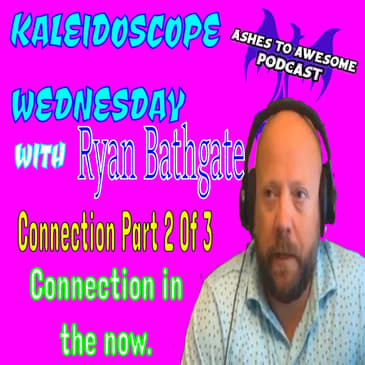


Ryan Bathgate is back for the middle of our 3 part series on connection. Last week we talked about what connection is, and how it has always been a part of our evolution. This week we work on understanding, loneliness, and how it can be used as an asset to strengthen connections.
If you have a nonprofit or fundraiser that you would like to advertise for free and spread a five-minute dose of kindness to the world while doing it, you can on the latest Chuck LaFLange Production, Morning Cup of Kindness. Details HERE
Remember if you are listening on Spotify, you can watch the video version there as well. If you are listening on any other platform, you can watch the video version on YouTube by clicking HERE, or searching "ashestoawesomepodcast" in YouTube.
VIST WWW.A2APODCAST.COM FOR ALL THE THINGS, INCLUDING CHUCKS NEW E-BOOK, "TURN SORRY INTO THANK YOU"
Thank you so much for listening. If you are listening on the Spotify platform, you are able to share your thoughts about an individual episode in the interactive element that Spotify offers. Doing this tickles the fancy of the algorithm and really helps us to spread the message. Also please visit our Facebook page here, and like, share, or comment on any of the posts. Your feedback there is sincerely appreciated, and taken quite seriously. Lastly, most of our alumni guests from the podcast are members of our Facebook group. If you would like to get to know any of them, or have questions, or perhaps would like to invite them onto another show, this is a great place to interact. You can join that group here . Ours sponsors, that make spreading the message possible:
Dent Kits - WEBSITE
Together We Can Recovery Society
WEBSITE Revolution Recovery - WEBSITE
Yatra Trauma Therapy Center -WEBSITE
Nate D Foundation = WEBSITE
Chuck (00:02.07)
Hello listeners, welcome to another edition of the Kaleidoscope Wednesday on the Ashes to Awesome podcast. I'm your host, Chocolate Flange, and today in Virtual Studio, of course, I am sitting with Ryan Baffgate. How you doing today, Ryan?
RBK Kaleidoscope (00:13.736)
Chuck, you know, I'm really good today. We've got, you know, as you know, we've got some exciting stuff happening around here that I, based on my association to the organization, can't speak too much about, but I'm sure that you will. But yeah, I know we've got a lot of cool things going on and, you know, I think I want to take a second and just express some extreme gratitude for your dedication and devotion to helping the people that I personally serve.
Chuck (00:44.41)
Oh, okay.
RBK Kaleidoscope (00:44.57)
And yeah, like it's, you know, what we're doing is, it's pretty cool. And, you know, I'm always about, let's look at the system and see where the holes are. And this is a really good way to do that, look at that and bring some awareness to, you know, all levels of our social tapestry.
Chuck (01:00.098)
it is. Yeah. Well, you know, I'll speak to that real quick, right? It's an easy thing to get behind that the fakes really aren't needed. It's, you know, having experienced homelessness myself and it's a rough go out there, man. It's a really rough go. So I'm more than happy to do it. And to the listeners, I guess by the time this airs, you may or may not have seen some of it. We'll see how it all goes. But what we're doing is there's a 24-hour homeless event happening in Mission, BC.
RBK Kaleidoscope (01:15.021)
Yeah.
Chuck (01:29.814)
And we are, what the show is doing is covering this event where they've got 10-ish, whatever the amount is, volunteers that have come in to live like somebody who is unhoused and do it for 24 hours without the benefit of keys and cards and cash and phones and all the things. And just to get you experience how tough that can be out there and trying to get some basic things done in life. So what we're gonna do is interview those people before and after.
for a quick little five minute interview and kind of get their takeaways from it. I'm really excited to do it this afternoon. I've been looking forward to it now for a couple of months and let's go, right?
RBK Kaleidoscope (02:07.637)
Yeah, in the e-mail.
Without saying too much, I'm fortunate to be part of an organization that has an extremely innovative and creative leader that has a deep understanding of all levels of the social tapestry. So it's a good spot for me personally because of my, you know, that injustice bone that I have to constantly be, I don't know, picking, scratching, when it's an itch, yeah, it's an itch. And so, yeah, so no, I'm, yeah, so like, you know, like I said, it's a little bit
Chuck (02:36.235)
Yeah.
RBK Kaleidoscope (02:40.326)
There's a lot of cool things happening, and I think today we're going to get into, like, we talked last week a lot about loneliness, and the reason is because I... Okay, so I'll tell you what, I'm going to shut up for a second.
Chuck (02:51.566)
We should probably introduce what we're doing here. I never did do that, so. All right, yeah, yeah? Yeah. Okay, okay, let me introduce what today's all about and then we'll get to it. And I'll do my job, then you can do your job, then we can do our job. How's that sound, right? Okay. All right, all right. So this is our second part in a three-part series about connection. And this one we're gonna call Paradigm Shift. So take it away from there. That's all you had to do is wait for that, man.
RBK Kaleidoscope (03:05.724)
Yeah, that sounds pretty good. Who, yeah.
RBK Kaleidoscope (03:18.184)
Okay, well, you know me, I'm really good at boundaries for me, just not everyone else. So...
The reason I say paradigm shift is because it becomes an opportunity for us. And so I talked about what implies, what implies another thing. In order for something to exist, the contrast has to be present for it to have sustainability, if that makes any sense. You know, we don't, like a fish, a fish doesn't know that it lives in water until it jumps out of water and experiences what it's like to be outside of water, you know what I mean? And so at that point, the fish knows the difference between wet and dry.
Chuck (03:52.373)
Yeah.
RBK Kaleidoscope (03:57.298)
So we talked about loneliness, because loneliness, I think, is such a, I think it's something that impacts all of us at some point in our life. And it changes the way we are and the way we see the world. And I think that is a really crucial part of this process, because we have to understand what the other side is in order to appreciate the yin or the yang, if that makes any sense to you. And so I think we kind of like, we left off
Chuck (04:21.422)
Okay. Yeah, it does, yep.
RBK Kaleidoscope (04:27.078)
Exploring, you know what loneliness was how we experienced it what it feels like and it you know it's the best thing that I can do is describe it as You know being lost in a cave, you know Like without any direction and there's no light and there's a you know Almost a sense of hopelessness that exists within that state and so You know it I guess like I don't like to spend a lot of my time in deficit thinking but it is important to explore
to understand the asset, if that makes sense to you. Okay. Yeah, and so I just put myself in that space, and when I'm in a state of loneliness, what am I really yearning for? We have all these coping strategies that we've developed throughout both history and our social tapestry that are really not conducive to the human spirit and how the human spirit can thrive or flourish.
Chuck (04:59.458)
OK. It does. Yeah.
Chuck (05:25.102)
Okay.
RBK Kaleidoscope (05:28.078)
I always think about organics. I think about, you know, that thing we talked about, about like the nutrients being required, the, you know, the, the rain, the sun, and then the tension that's created from a storm and how that creates a stronger organism. And so, you know, we, you know, like
Chuck (05:45.079)
Thank you.
RBK Kaleidoscope (05:54.248)
I don't know if you've ever been on Bender before or anything like that and you come out of that and you wake up and the first thing that we open our eyes to is the cold hard reality of the loneliness that exists within that moment. Now that every time is an opportunity. Unfortunately most of us we get rid of that feeling as soon as possible which is snort, sniff, drink, shoot.
Chuck (06:10.996)
Yeah.
Chuck (06:24.462)
Of course.
RBK Kaleidoscope (06:24.582)
swallow, whatever, ingest. And that's the easy way for us. I mean, you know, like people that have experienced characteristics of addiction, it's very in our face what the problem is, or sorry, what our solution to that problem is. And there are many resources like this network to be able to help with that. The, I think that where it becomes difficult is that, I think, you know, we got seven, now I read something that there's 7.8 billion people in the world now,
Chuck (06:39.499)
Yes.
RBK Kaleidoscope (06:54.162)
Maybe I'm on some old stats, but I think, yeah. But I just read that yesterday and I'm like, oh boy, I guess I better shift my data. Yeah. Yeah, yeah, like do you call a quarter two bits? That's old. Yeah. So I guess what I'm saying here is like, every time that happens, every time we experience a depth of loneliness, there is opportunity.
Chuck (06:56.534)
That seems like a lot, right?
Chuck (07:05.311)
Well, we're old. We're old. We can get away with saying old things, right?
Chuck (07:11.687)
Yeah
RBK Kaleidoscope (07:24.522)
I mean it almost takes like, it almost takes an extreme number of times to be in that space before we start to crawl out. And I mean like trudgingly crawl out and we don't know where we're going. The reason it's scary is because we don't know what's going to happen. Fear is a lack of information. So when I think about that space, I've got options. I can either get more of whatever I've been using to cope, whether it be money, don't
sex, alcohol, drugs, which to me are the same, or whatever that might be, or the other option. And what that option is, is where we start to begin the process of healing and really flourishing as a human being. And it's really simple. We pick up the phone, we reach out, and that moment, it requires such an incredible...
amount of courage. And courage is just, it is, I think it is the number one thing that we need to be practicing on a daily basis in order to access the things that we want to achieve in life, which are predominantly embedded in joy and happiness and understanding and peace and all of these beautiful things. Creativity, which is that shift to the right side of the brain. So...
So how do we take loneliness and turn that into something fruitful? How do we make it a strength? How do we go from deficit to asset in something that is like, you know, I said this so many times in the show, that, you know, a life hack is to try and find value where value is undetectable. So how do we find value in loneliness when it's seemingly impossible and undetectable?
Chuck (09:12.887)
Okay.
Chuck (09:19.63)
Okay, ow, yeah.
RBK Kaleidoscope (09:20.432)
Okay, how? How? Yeah, and how? I mean, the answer is pretty simple.
we access what's called a phasic strength, which means, phasic means it is flexible, it goes up and down. And so when we look at a list of strengths, and there's 24 common strengths as per the Values in Action Survey called VIA, it's a VIA strength survey. And so they did this, we use this in organizational culture development.
Chuck (09:36.546)
Okay.
Chuck (09:48.32)
Okay.
RBK Kaleidoscope (09:58.019)
a tool, I guess you'd say, that we use to...
to do an assessment on our own personal strengths as a human being. So they did a study over a number of years with 50 of the top researchers in the world and went through all cultures and through all countries and they pulled out 24 strengths that every single human being embodies. You do that. I can't, your mic's off, I can't hear you.
RBK Kaleidoscope (10:33.188)
There you go.
Chuck (10:33.342)
I'm looking at this list right now, actually. I just pulled it up here. Yeah. Let's not start qualifying it like that every time. Jeez. All right.
RBK Kaleidoscope (10:37.28)
Oh, yeah, so yeah, so there's proof I'm not making it up.
RBK Kaleidoscope (10:43.914)
Heheheheh!
Yeah, so for me, my top strength is, I've done the survey many times, and usually bravery is number one, love of learning, curiosity, creativity, leadership. And so when we think about those strengths, some of those strengths will be in the middle, 15, 16, but let's just say bravery is one. When bravery goes from 15 to one for an instance,
Chuck (11:05.832)
Yep.
Chuck (11:14.73)
Yep. Ah, okay, that all makes sense. Okay, ties together nice, yep. Okay.
RBK Kaleidoscope (11:15.274)
movement.
Right, so at any time we can access these strengths, but it's about, again, understanding our consciousness, understanding our ability to access awareness, and expanding our horizon of understanding to include things that are happening outside of our awareness so they don't impact us in a negative way. Alan Watts, I know I say this about probably every other show, everyday ordinary consciousness leaves out more than it takes in. Okay?
Chuck (11:47.082)
I don't think you've ever said that exact word in the show, or exact quote in the show. No, no. So I hate to challenge you, man, but that was a bold statement every second show, and I'm like, yeah, I've never heard that before. So yeah, okay. You meant to, you meant to. You think in every show, you think in every show. Right?
RBK Kaleidoscope (11:48.372)
No, really? My god, I think I... Okay!
RBK Kaleidoscope (11:58.912)
Well, what do I know? Well, I do, and because it's such a part of my regular thought process, now if you understand what that means, okay, every day ordinary consciousness, it...
takes in more or leaves out more than it takes in. In other words, there's so much happening outside of our awareness, out beyond our horizon of understanding that impacts the way that we operate in our day-to-day life world. Okay? And this is why all these things that have happened, like understanding how trauma is affected to, you know, let's just say I'm somebody who's deeply traumatized.
RBK Kaleidoscope (12:44.61)
Run across somebody I meet them and then I just decide to go home pack my bags and leave and live a whole life Of like, you know drug addiction and just leave my whole life behind now
Chuck (12:56.439)
Okay.
RBK Kaleidoscope (12:58.464)
And how does that impact, how does trauma impact that? So that is happening outside of awareness, that trauma happens, where I don't believe, based on my traumatic experience, and the reinforcement of shame, that I have the ability to deserve the life that I am currently living, so I forfeit it, and thinking that I'm chasing this exciting experience of sex, drugs, and rock and roll, you know what I mean? But really what's happening is,
It's a, outside of my awareness, I have a belief that I don't deserve to have a good life because I didn't say, I don't know, maybe I was sexually abused and I didn't stand up for myself. So I will never give myself any credit I don't deserve. You know what I mean? And so when we start to expand our horizon of understanding, those things that are impacting us outside of awareness become into awareness and give us access to control of that.
Chuck (13:42.058)
Yeah.
Chuck (13:54.743)
Okay.
RBK Kaleidoscope (13:58.278)
to use it, it's part of our being, it's not in the outside, doing the, what do you call the puppeteer thing, you know, Mary, yeah, pulling strings, exactly, and so when the outside of awareness events start controlling our lives, which they do for pretty much all of us, until we keep expanding that horizon of understanding, we will never really be able to get out of the grips of what the impact of those events are. And so like, you know, I've heard so
Chuck (14:06.954)
Marionette, pulling the strings, whatever.
RBK Kaleidoscope (14:28.218)
many times. I don't understand how my trauma has got me to this place I am today. And then we'll have a conversation where I kind of open up the awareness and then you can see the light bulb going like, all these dots. And like, oh my God, I can totally see how that has affected me 30 years later. And so now we have this great opportunity. Now we understand loneliness.
Chuck (14:48.034)
Right? Yep.
RBK Kaleidoscope (14:58.118)
understand what it is as part of our being. When it becomes embodied within our awareness, we now can access that as part of who we are, which means it's not all of who we are. So what we don't attend to, or whatever we don't control, controls us. So if I have a history
Chuck (15:25.526)
Alright.
RBK Kaleidoscope (15:28.178)
and I don't attend to that, I don't have it inside of awareness, it is doing an immense amount of damage and it's really doing its job because it's trying to keep us safe and it thinks keeping us safe is to keep us isolated and to keep us isolated is actually against the entire makeup of what we are as human beings. We are connectable beings. That is our whole access to meaning and purpose is to be connectable. So how do we become connectable from loneliness?
Chuck (15:57.271)
Yeah.
RBK Kaleidoscope (15:58.074)
And it is really like, you know, talk therapy is really good with that. But I mean, it's just like the access to vulnerability. So if we think about loneliness and how loneliness and shame work together so well, because shame needs secrets to thrive. And loneliness is a darkness that also feeds shame to be able to be so strong. And as long as I feel like I'm not enough, I will never be beyond. I'm not enough.
Chuck (16:22.762)
Yeah, yeah, right.
RBK Kaleidoscope (16:27.97)
And that makes me think of like Mandela, Gandhi, Martin Luther King, like those people all believe they had the power to change the world and they did. You know what I mean? So if they were in that space of shame, they would have never got to where they got to because they would have never believed they had the power to do that. Now, so like, so when I look at that for myself, I'm like, you know, whether or not I do change the world, which, you know, in reality isn't really what I want.
Chuck (16:38.758)
Yeah. Mm-hmm.
Chuck (16:44.063)
Yeah.
RBK Kaleidoscope (16:54.404)
But as long as I believe I can, then I have the power to do so.
Chuck (17:00.366)
Fair enough. Yeah.
RBK Kaleidoscope (17:01.076)
You know, and so now I know loneliness. And I think about this as like, you know, one thing I know how to do in this world is I know how to be poor. You know, I've got a lot of practice. So, yeah, you know what I mean? And so, but by knowing how to be poor has informed me on how to be responsible accessing a freedom when it comes to economics. You know what I mean? And so I look at, like I grew up in a pretty posh place in co-ops and like some of the people there
Chuck (17:10.89)
Yeah. I got that east. Yeah. Right. Yeah.
RBK Kaleidoscope (17:30.95)
understood what it is to be poor and as life went on, the silver spoon kind of lost its luster and then they experienced it. They experienced it and had no idea what to do with that. You know what I mean? So it always finds a way to balance itself out. So now what are my opportunities here? Well now I know that I don't enjoy the experience of loneliness. It feels like it's against the human spirit itself. And so what are we ending
we need to feel human, we need connection. Connection is the answer. Connection is the conduit that love travels through. You know what I mean?
Chuck (18:09.354)
Yeah, yeah, yeah. Oh yeah, that's the way, yeah.
RBK Kaleidoscope (18:13.14)
So let's look at the Anonymous Connection. How do I turn that? So what do I have to do? I have to start practicing the art of living. I have to practice. In other words, there are no expectations of being perfect. There are no expectations of being amazing at whatever I'm doing. I'm just practicing. Like when I was learning how to do a snapshot, I sat in the backyard and I did snapshots over and over and over again until I finally broke all the stucco off the wall and got chipped by my dad. You know, you know.
Chuck (18:43.261)
Yeah.
RBK Kaleidoscope (18:44.935)
You need to learn how to do it and practice doing it. When we talk about the art of living, we get one life to live and there are no rules. The rules that we have in life are rules that are probably imposed by us by the social tapestry or shame laden. I never look at it. Instead of a rule, I call it a boundary. I call it a technology. It's something that helps me become more than who I already am. The only rule that we really have is to enjoy the gift.
of life that we've been given. If we are practicing the art of living, then we are practicing the self-expression of life itself.
Okay. And so, and so, and art has no, art is hermeneutic. It has no, sorry, I'll define that word, hermeneutics is a fancy word for interpretation of. Chooching. So, so how do we interpret the expression of life? And like, and so like, so how do we, what do we do? How do we practice that? So Chuck, you're, it's something,
Chuck (19:33.652)
Yeah.
RBK Kaleidoscope (19:52.618)
good at is expressing your vulnerabilities and I think that when we have the courage to put our emotions out on the table with you know because that's a scary place to be like to be honest like I'm gonna put my true feelings out and what you do with them is not in my control that's scary you know and so and but that's how we create the media so connection requires
RBK Kaleidoscope (20:22.378)
And here I'll just like, you know, asterisks. Don't try and be authentic. It's never gonna work. Well, no, but there isn't an anatomy to authenticity. If you're focusing on being transparent, being honest, being integral, and standing up for what you believe in, the byproduct of that will be authenticity. You know what I mean? So when it comes to us entering into the realm of
Chuck (20:29.065)
You either are, you're not, right? Yeah, a little dope, yeah.
Chuck (20:46.224)
Yep.
RBK Kaleidoscope (20:52.558)
transcending into a connectable being, we have to, I mean there's going to be fear so we need courage. You know, we're going to have to find a support network or support group or even a support person that we get to practice this on where we're not going to feel judged, we're not going to feel pushed out, we're not going to feel rejected and we're not going to feel less than. You know, and so I would go back to the tenets again, find somebody that you feel heard, seen, loved and can be lovable with. You know, and then we
Chuck (21:20.278)
Yeah, yeah, right, right.
RBK Kaleidoscope (21:22.118)
We just practice these things. As we do that externally, there's a shift that happens intrinsically that starts to create and evolve a level of intrinsic resource based in self-worth, self-respect, and self-esteem that starts to grow and grow and grow. The more that I become connectable, the more I become complete as a human being, as what we were designed to be, which is connectable.
So I guess we want to archive the loneliness feeling. We want to put it in the library. We want to be able to go and leave our bag at the door of emotion and go and look up that chapter of our life about what loneliness looked like, how we experienced it, and what it means to us. And I say cherish our experience of loneliness. Because like I said in part one, loneliness changes us.
It can take away our childhood, it can take away our dreams, it can take away our hopes, our ambition, our access to potential, and most of all our access to capacity. Because all of a sudden this glass ceiling drops when we're in a state of loneliness and our intrinsic resources are low and we don't feel like we have the ability to be more than what we are which is stuck in a hole or stuck in a cave. And so what do we need?
I need you to throw me a ladder down to this hole, and I don't want you to get me out. I want you to come down there with me first. Yeah, yeah.
Chuck (22:55.168)
Yep.
Yep.
Oh, there's that story, right? That story about the addict in the hole. Yeah. Right. Yep.
RBK Kaleidoscope (23:04.164)
Right and so I think of the bernay brown sympathy and versus empathy video, which is pretty funny It's a short little clip on YouTube And like so empathy is going down in the hole with the person so that's what we require empathy we require somebody that we can be connectable with that can take our vulnerability with understanding and Empathy and use it as a way to reflect back to us Our our actual true worth because in here in our mind We're naming it's a it's the you know
Chuck (23:13.256)
Yep.
RBK Kaleidoscope (23:34.258)
our mind is going to be a monster. It can tell us things that are absolutely ridiculous that we'll actually believe until they're externalized. And then we get this feedback that says, hey, you know what actually, the strength does. You're resilient, you're brave, you're intelligent, you're resourceful. So if I'm talking about even, let's go to the extreme. Someone's been living on the street for 10 years. They're going to embody those things as survivors.
And so now we take that and now I have a foundation of this being that I am that is rooted in values and that gives me access to have the courage, whether phasic or not, to be able to open myself up to the vulnerability of connection. Because let's be frank, you cannot have connection without vulnerability. Not authentic connection. It's not going to happen. And you cannot have vulnerability without courage.
Chuck (24:30.218)
No, no, that makes sense.
RBK Kaleidoscope (24:34.198)
And so that's why we start with that idea. Have the courage to think big. Have the courage to believe you can be more than what you are. And I'm not saying think that, I'm saying have the courage to start, to practice to believe that. What if, what if I could go and get my master's degree? What if I could be a father and raise a family? What if I could even just get that job that I've always wanted or go back to school or whatever it is? You know?
And I always say, so we take that idea and we start processing with people through connectability and it flourishes into something bigger than that. And as we move along, it's like the stars align and it just kind of comes together. If we look at what happened here, Chuck, you talked to your mom about doing something. Your mom said, why don't you do a podcast? Boom, courage. For you to do that, take that first step to go. An immense amount of courage.
Chuck (25:27.247)
Mm-hmm. Yeah.
Chuck (25:34.454)
Yeah, yeah, I do.
RBK Kaleidoscope (25:35.198)
and what came along with it? Doubt, insecurity, fear of failure, and like think about that when I say fear of failure. What are you left with if this doesn't work? You know, the answer doesn't matter, but the feeling of that really does. You know? Yeah, like, you know...
Chuck (25:37.955)
Oh. Yep.
Chuck (25:43.458)
Oh yeah.
Chuck (25:55.646)
Oh yeah, damn straight it does. Today, still, on some level. So yeah. Yeah.
RBK Kaleidoscope (26:02.048)
Well yeah, and I think like, you know, like for me, like I, you know, I'm pretty good academically. I'm pretty good. I've always been pretty good at school and things like that. But.
From the age of 20, I think it was the last day I went to a class in college, to 34, I was so afraid to return back to academics because I had nothing except for my intelligence. And if I went to school and failed, then I wouldn't even have that. Then who am I? You know, I talk about loneliness. That is a lonely state to be in. So I stayed away from it and I did jobs that I hated.
Until I finally had the courage to go and just, you know, I just, I made a phone call and all of a sudden it just took off. It was just like the universe was waiting for me to make that phone call for 14 years. You know, and so this is how we transition out of this idea that loneliness is a perpetual state that will never change because that's not a reality.
RBK Kaleidoscope (27:16.07)
opportunity. We have to have the courage to make the action to make the thing happen so we can start momentum in that direction. And typically like it doesn't always work out the way we planned. You know and you know to be to be honest with you like my plan wasn't to be doing this. My plan was wasn't even to be a counselor. It just happened that way that it's almost like the universe needed that from me.
Chuck (27:17.631)
Absolutely.
Chuck (27:24.577)
Okay.
Chuck (27:29.965)
Yep.
RBK Kaleidoscope (27:46.25)
or for the people I was going to cross. And you think about to be very transparent. Like, I've had depression and I've had suicide attempts. And thank God that's something I'm not good at. Because I would have never met all these amazing people. I would have never experienced a big... That's what loneliness did, is it took me to that place where that was an option. So that's the power of it. And the other side of it is...
of that, what I've learned from it, has molded me into this individual that just wants nothing more than connection. I told you that story about success and with the... Yeah, yeah, you remember that, right? And so that is a really good example of understanding both experience and knowledge to create wisdom, to be able to make a decision based on who I want to be.
Chuck (28:28.814)
your father version and your version. Yeah, yeah, yeah.
RBK Kaleidoscope (28:46.07)
in the world and the courage to start walking in that path through a momentum and trajectory and all I did I picked the phone up that was the momentum and you know 12 years later I'm here talking to you about it
Chuck (28:58.57)
Yeah, right, right. Yeah, no kidding.
RBK Kaleidoscope (28:59.664)
You know what I mean? And so, it's a really... And the reason I said, you know, I'm quoting this as a paradigm shift because this process is a process that can change the rest of our lives. It can change the way that we see ourselves in the world. It can change the way that we see and feel every single day of our life. You know, and I mean for the better. Now I know through this practice that I can shift my lens at any given time and it alters
and the way that my emotions attach to that reality, and it can be in a place of peaceful contentment, which is my ultimate goal. I'm not always in that space, but I know what it is, I experience it, and there isn't, and I've had enough practice to know that, like, it's not, it's within me. It's not a destination that I need to go to. It's a place that I need to uncover within myself. And, you know.
Chuck (29:39.666)
Yeah, exactly. Yeah. And you're capable of getting to it when you need to, right?
Chuck (29:54.414)
Absolutely. I think, go ahead, sorry, continue. Yeah. No, I was gonna say, I think that's about the perfect spot to actually kind of wrap up part two of the Connection Series, right? Where, you know, we've gotten into the paradigm shift now. And, right? Yeah, yeah.
RBK Kaleidoscope (29:58.016)
No, no, no. No, go ahead.
RBK Kaleidoscope (30:09.456)
Yeah, and so like, I just want to keep, and we'll do a tie up here. Let's be collective in this process. If you find yourself in a state of loneliness, reach out to somebody that has earned the right to hear your story.
and tell that person about your loneliness and see how the magic of words shifts the way that we see the world. And if you're listening to this podcast, take some of those ideas of practicing vulnerability, practicing self-worth, practicing self-care. And, you know, like, one of the things, the easiest things we can do to make this loneliness start to dissipate is make connections with people, make connections with ourselves through, like, you know, like, I used to go hit a bucket of balls. I like to go to the gym.
I like to go play baseball with my friends. All those things are things that mitigate me from that cave of loneliness. And they start to open me up to the potential of what connection is. And if we get into that place, then we can see as those horizons of understanding start to move further and further out, bringing more into our awareness, we can see that our potential is completely unlimited and our ability to...
we want in this lifetime. It's just a matter of hard work and time. I don't think I'm going to be a power forward for the Raptors. Within reason. But I could be a doctor if that's something that I really wanted to do and had the time. I could find a way to make that happen. And who knows, maybe I'll get my PhD. I don't know if I want to do any more school.
Chuck (31:29.23)
Absolutely.
Chuck (31:34.726)
Probably not.
Chuck (31:49.97)
You got another 10 years in you?
RBK Kaleidoscope (31:54.524)
And when I finished my master's, I was like, that's it. I can't wait to read it. And then I read The Old Man and the Sea, the first book I read after I finished school, just to read a book that I wanted to read, which Hemingway, love Hemingway. Anyway. So yeah, so if you have questions, if you have, if anything about this podcast in our part two or part one has driven you or brought ideas or questions about, please ask some questions.
of comments in the thing below here, email us. But there is so much more to this that is intricate and really unique to each individual human experience that either Chuck or I or Lisa or any member of the team can definitely help with that, walk through that, or we can bring another show.
Chuck (32:44.066)
Yeah, absolutely. Right. Absolutely. So and remember guys, you can do that anywhere. You see the logo. It's just easier way to say it now. Right. You know, wherever you are, you can ask those questions or direct message or whatever you want to do. And of course, the email is ashtonsofsonpodcast.gmail.com. So why don't we move on to the mailbag and go from there. We've got some great questions today as we always seem to have great questions. They seem to get better and better all the time. So not that the first ones weren't great. I shouldn't say they seem to get more.
RBK Kaleidoscope (32:50.924)
Yeah.
RBK Kaleidoscope (33:01.421)
Sure.
Chuck (33:13.302)
very in detail all the time. I don't know. I'm just looking for something to save that from, you know. Anyway, all right, all right. It's the story of my life, man. The story of my life. All right. So the first question comes from Amy in Nashville. And Amy asks, what strategies do you recommend for coping with cravings and triggers during the recovery journey?
RBK Kaleidoscope (33:17.684)
Yeah, yeah, put the shovel down. Ha ha ha. Yeah, yeah.
Chuck (33:35.622)
talked about this before. It's not that we can't, it's something we can't talk about enough, right? For instance, you know, some of my own cravings things that came up last week, right? So that we talked about. So I mean, if I'm still asking the questions, certainly some of our listeners are. So yeah.
RBK Kaleidoscope (33:49.525)
Yeah, okay, um...
And so like, you know, like I think like the first thing we need to do is do, you know, we need to, we need to do a shame check. Like how much of shame is driving this? How much of I'm not enough is driving this? And so like there's a depth to like understanding what's underneath it all. Cravings triggers are a flag or an indicator of a turbulence below. You know, like the whole iceberg thing. It's not actually.
Chuck (34:17.326)
Okay. Yeah.
RBK Kaleidoscope (34:21.718)
happening there. I think the first thing to do is normalize the fact that you know everybody that has experienced characteristics of addiction that's going through any form of recovery or rehabilitation is going to experience this. It's gonna happen. You know we lived our lives this way for a long time. If you know like if I lived on a beach my whole life and put you know that coconut oil on my skin, every time I smell coconut oil I'm gonna be on that beach you know and so like that's gonna happen.
So, um, especially these days. So my advice is to like, you know, give yourself a break. It's okay. Here's what I'll say. And I said it in the end of the last one. When you have a plan, you're in trouble.
Chuck (34:51.941)
There's a visual I didn't need. Oh, thank you. Yeah, all right. All right. Ha ha ha.
Yeah
RBK Kaleidoscope (35:12.868)
Okay, when we're like, okay, this is how I'm gonna do it, here's how I'm gonna get away with it, and that's when we're in trouble. And that means that there has been, we have lost alignment, we have lost our ability to access rhythm within our life world, and the gap that is created in between the set point and where we are in our trajectory, that is where that pain fills, and we need to cope. And it feels like if we use
it'll get us back to this place, but it actually takes us way off. It does the opposite. Yeah. So I recognize your triggers, like Bic Lighters, Tinfoil, like, and then we have a conversation. I would recommend accessing vulnerability through your support network, making authentic connection, and expressing with transparency exactly what you're experiencing. When we... Yeah.
Chuck (35:46.794)
way off indeed, right? Yeah.
Chuck (36:05.49)
I was just about to say right there for me, say it out loud. But I can't even begin to express how important that is and how powerful that is as far as addressing it and getting past it, I guess.
RBK Kaleidoscope (36:19.604)
So by no accident, it's when we verbalize that it loses its power. It's when it gets in the tumbler of our own consciousness and starts to turn into all these different things. In our heart, there's purity. When we feel it's pure. Fear cannot hide in my heart. I know it's there. Fear can turn into so many things in my head. You know what I mean? But when I say it out loud, if I say it to you, Chuck, I'm like, oh.
That makes no sense or that sounds ridiculous or like, you know, and so like in any way it goes back to the power of the pen So even if you can't talk to somebody Journal it
Write it out. You know what I mean? And I'm not saying go through the world with a little checklist of all your triggers and be writing them down. I'm just saying understand the emotion that is attached to whatever that object is, whatever that trigger point is, whatever that energy is, that person, that phrase, and understand that is not part of who I am or who I want to be. It is a part of a process. And I'll say it again and again and again. As long as we're breathing, we're in process, which means we're constantly changing and there's constantly moving parts.
So cravings are going to happen. I don't know what you guys know about post acute withdrawal syndrome, but it's 18 months before your brain is fully repaired of abstinence before we have...and our brain will be better than it ever has been. Now the male brain takes 26 years to develop to completeness. Legal alcohol is 19 here.
Chuck (37:56.758)
Yeah, so. Right. Yeah.
RBK Kaleidoscope (37:58.08)
Right, so most of us have never actually experienced the capacity and potential of our fully healthy brain. 24 years old for women, women develop their brain faster. Yeah, wow, yeah, they're pretty much smarter, so it makes sense, yeah. And so like, and so like, you know, and then, so in that 18 months, 18 months is the, you know, if I'm downtown Eastside using for 20 years, that's gonna be an 18 month process, it's not the same for everybody, but I will say between months five and eight,
Chuck (38:08.239)
We all knew that.
Chuck (38:11.906)
Yeah.
Chuck (38:24.726)
Yeah.
RBK Kaleidoscope (38:28.114)
I can't remember, are the most difficult times because that's when the limbic system is doing its reparations. And so that's the emotion center and the memory center. So memory triggers emotion. I don't think it's a good design that they put the memory and emotion in the same place in our brain. It's not working well for us addicts. And so like, you know, understand, this is why, you know, I caution going into like step
Chuck (38:44.11)
Ha ha ha ha ha ha ha ha ha ha ha ha ha ha ha ha ha ha ha ha ha ha ha ha ha ha ha ha ha ha ha ha ha ha ha ha ha ha ha ha ha ha ha ha ha ha ha ha ha ha ha ha ha ha ha ha ha ha ha ha ha ha ha ha ha ha ha ha ha ha ha ha ha ha ha ha ha ha ha ha ha ha ha ha ha ha ha ha ha ha ha ha ha ha ha ha ha ha ha ha ha ha ha ha ha ha ha ha ha ha ha ha ha ha ha ha ha ha ha ha ha ha ha ha ha ha ha ha ha ha ha ha ha ha ha ha ha ha ha ha ha ha ha ha ha ha ha ha ha ha ha ha ha ha ha ha ha ha ha ha ha ha ha ha ha ha ha ha ha ha ha ha ha ha ha ha ha ha ha ha ha ha ha ha ha ha ha ha ha ha ha ha ha ha ha ha ha ha ha ha ha ha ha ha ha ha ha ha ha ha ha ha ha ha ha ha ha ha ha ha ha ha ha
Yeah, that's true story. Yeah, yeah, yeah.
RBK Kaleidoscope (38:57.894)
that five and the four to seven month period, because it's a very vulnerable time and a very vulnerable state. But know that, you know, the one thing that we can always count on that we know is a constant is that emotions always shift and change, they're always in motion. So whatever you're feeling, whatever you think you're stuck in, give it 10 minutes, breathe, do a grounding exercise, remind yourself of, you know, like a gratitude list, whatever it takes. But that emotion will change. It's not a state of being like,
pieces or like loneliness is also a state of being. You know, it is a trigger is a craving is a part of the emotion center and it's part of a triggered response through the limbic system, which means it will guarantee you will change. So, you know, it's like, you know what I have, I want to use, I'm going to give it two hours and recheck in and see if it's still want to use. Now give it another two hours. Yeah, you know what I mean? Like, and then in that, in that time, I'm going to call my buddy and call me, you know, if you're in the program, you're going to call my sponsor.
Chuck (39:48.79)
Yeah, right. That's a great technique there too, for sure.
RBK Kaleidoscope (39:58.034)
You know, if you're part of a church, call your member of your church, or you're part of your sports team, call them in. Call somebody that's earned the right to hear your story. Right. But build that network with, I'd say like, be...
Chuck (40:03.512)
Whatever, part of your network, right? Yeah.
RBK Kaleidoscope (40:11.264)
Hold a high standard in the people you surround yourself with in that network. Because I'm not confident that everybody gives good feedback. So for me, you've got to earn the right to listen to you. So I don't know if that answers that. So many versions of that same question, I guess.
Chuck (40:28.65)
I think so. I mean, yeah. Yeah, yeah. Well, and again, it's going to be asked again, and I'm okay with that. And actually, I'm going to make an executive decision on this one now. You might not even like this, because I'm going to say that's the end of the mailbag, but for a reason, my friend. So we've entered, and because you talked about journaling, it kind of sparked something that I want to talk about in the show anyway, so we're going to go real quick into that. The, yeah, what? What?
RBK Kaleidoscope (40:53.632)
Oh hey, can I just say that, oh I just want to let you know that when I leave back it's because my back hurts, not because I'm disinterested. Yeah, I know. I thought it was important to say that.
Chuck (40:59.57)
I gotcha, I gotcha, I gotcha. Okay, okay, okay. So, we've introduced something to the website. I've got just one fellow so far. There's a bunch more stuff coming, guys. And it's called Shattered Stigma, Amplifying Voices in Addiction and Recovery. And what it is some of the people that are attached to the show are gonna be submitting blogs. And hopefully on a weekly basis, I'm not gonna hold anybody to anything. I'm gonna see how things go, and under promise, over deliver is kind of the idea there.
The first person that I think whose blog post we're going to see is Tammy, who you might recognize from episodes 92 and 92.5, I believe it was. Yeah, 92 and 92.5. She did that two parts. You remember, Ryan, you actually spoke to Tammy out in Ontario somewhere about her daughter, Brittany. Yeah, yeah, right. So Tammy's actually one of the people that's agreed to contribute in a blog post every week. She sent me kind of her first thoughts this morning. It's powerful. It's amazing.
RBK Kaleidoscope (41:46.86)
Yep.
RBK Kaleidoscope (41:52.772)
Very cool.
Chuck (41:58.866)
So the idea is to have people from, but we'll have an interventionist in there if all goes well. We'll have a trauma therapist, we'll have.
two different moms that are living it right now with adult children inside, you know, inside active use right now. I'm a memorial mom. There'll be all sorts of different angles and stuff coming out of it. They'll be on the blog or on the website there to check out and give feedback to and, you know, even do some two-way communication with them if all works out well. But for me personally, where it came from, and I will say who, one of the people that I've approached about doing this blog and I were talking and she's having a really hard time in life.
And I thought back to when I was doing my blog and how unbelievably cathartic it was for me, I thought, hey, why don't I do this? And then that just, me like everything else, I've gotta, oh, can't just do something simple, you gotta blow it up and make it really complicated and time consuming and stressful, right? Otherwise, but, you know, right? So, that's what I did. Yeah, right? Yeah, I went from like four in the morning from this idea till by noon, I had the whole damn planet involved. All right? I'm not even kidding, it was crazy, right? But.
RBK Kaleidoscope (42:49.508)
Ha ha ha ha ha ha ha ha ha ha ha ha ha ha ha ha ha ha ha ha ha ha ha ha ha ha ha ha ha ha ha ha ha ha ha ha ha ha ha ha ha ha ha ha ha ha ha ha ha ha ha ha ha ha ha ha ha ha ha ha ha ha ha ha ha ha ha ha ha ha ha ha ha ha ha ha ha ha ha ha ha ha ha ha ha ha ha ha ha ha ha ha ha ha ha ha ha ha ha ha ha ha ha ha ha ha ha ha ha ha ha ha ha ha ha ha ha ha ha ha ha ha ha ha ha ha ha ha ha ha ha ha ha ha ha ha ha ha ha ha ha ha ha ha ha ha ha ha ha ha ha ha ha ha ha ha ha ha ha ha ha ha ha ha ha ha ha ha ha ha ha ha ha ha ha ha ha ha ha ha ha ha ha ha ha ha ha ha ha ha ha ha ha ha ha ha ha ha ha ha ha ha ha ha ha ha ha ha ha ha ha ha ha ha ha ha ha ha ha ha ha ha ha
RBK Kaleidoscope (43:06.776)
Well, I know you're not, that's why I'm laughing. Funny because it's true.
Chuck (43:09.699)
So check it out, it's on the website there, you know, a shattered stigma. And we talk about these things and the stigma goes away. And that's what, the stigma is the worst part about all of it, right? That's what keeps us in, you know, it keeps us in addiction, it messes us up so many different ways, right? So.
RBK Kaleidoscope (43:27.872)
I'd like somebody to tell me the difference between stigma and shame, because I think that stigma falls under the umbrella of shame.
Chuck (43:35.367)
I don't see the difference. Right? It's, you know. Yep. Well, without, 100%. I don't think a person could really argue that, right? So, yeah, I just, go ahead.
RBK Kaleidoscope (43:44.612)
and yeah remember I just wanted to say like shame needs darkness it needs secrets it needs isolation to exist stigma is no different stigma is a maladaptive
Chuck (43:53.663)
Yeah.
RBK Kaleidoscope (44:01.264)
consequence of the social tapestry especially with capitalism. Anyway, I'll stop with that. I do want to... You're right, I'm not happy with ending the mailman. You're right. I know that there's more questions than I want them. But it's... But it's not my show.
Chuck (44:06.185)
Yeah. I'm sorry.
Chuck (44:15.135)
I'm going to save it for next week.
Chuck (44:21.646)
I do have a crazy busy afternoon as you well know today too. So that's part of the reason too, there's only so much time to give it today. I mean, I'd like to do an hour and a half episodes every time.
Chuck (44:34.878)
I'm so looking forward to doing these interviews this afternoon and then who knows by the time this airs what the listeners will have seen or watchers now I don't know what do we call them? What do we call them? Fans? Listeners? Watchers? You know? Right? I don't know. Attendees?
RBK Kaleidoscope (44:43.896)
we call... I think listener or watcher, yeah, supporters.
Chuck (44:56.123)
Supporters, supporters, there you go, right? Yeah, okay, okay. Yeah, now we're a network, right? I know, and we are a network, we are a network. I like, literally, we are, and I like the way you said that. We had that talk last night, right? But it's definitely turning into something, right? You know, and yeah, I guess it does, right? And it's spanning the globe, like it's a network of people that now is, you know.
RBK Kaleidoscope (44:57.792)
Yeah, supporters of the network.
Well...
RBK Kaleidoscope (45:07.747)
Yeah.
RBK Kaleidoscope (45:11.456)
Well, it's a series of shows, which makes it a network.
Chuck (45:20.494)
We're all over the damn map, right? We're all over North America and into Thailand now. We've covered some in England. Remember the episode with Mike Powers. We're getting around, we're getting around, so yeah.
RBK Kaleidoscope (45:26.752)
Yeah, yep. Well, you are, you're getting questions from cities I've never heard of, which is cool.
Chuck (45:33.962)
Yeah, yeah, all the S's just makes my lisp come out, right? So, no. That place with the river. Anyway.
RBK Kaleidoscope (45:39.269)
Mississippi.
Chuck (45:48.202)
So with that said, that brings us to my favorite part of the show, that's the Daily Gratitudes. What you got for us today, Ryan?
RBK Kaleidoscope (45:55.512)
First and foremost, as always, my beautiful wife and family and that driving force that they give me every day.
Chuck (46:03.496)
Did she tell you about the comment on her Facebook post?
RBK Kaleidoscope (46:07.52)
Oh wait, yeah, no, I think, okay. Yeah, yeah, right, yeah, I did, it was like 18,000 months. Yeah, right, I saw that, yeah.
Chuck (46:10.154)
She says, how come people talk about their kids in months? Right? Yeah. Yeah, I was like, well, I'm 96,000 hours old. So I bet you the months doesn't sound so bad now, does it? Right? So then I follow that up with it. Your man's always going on about perception is reality. You know, so. Right? Yeah. Sorry to interrupt your gratitude, sir, man. Yeah. Right?
RBK Kaleidoscope (46:27.237)
Yeah, but you know, a lot of people listen to me in this world, so she's one of them that doesn't.
RBK Kaleidoscope (46:37.08)
Well, hey, you know what? I'm actually really grateful that I got a partner that can call me on my shit and be honest with me And not yeah, but no my beautiful family is just everything to me I love them so much and they this whole thing for me is about Is about adjusting shifting changing influencing impacting the world that my daughter is gonna grow up in my daughters are gonna grow up I am
for the experience I have with all walks of life and to be able to see the ignorance and stigma and how that comes about, the ontological perspective of that. I am grateful that I can recognize at times my own privilege and hope to be a better ally. And I'm grateful for...
our network. I'm grateful having somebody come up on the street the other day and say, hey, you're Ryan Bath, you're from Gladyscope. That is the coolest thing, man. I'm grateful what we're doing is helping people. You know what I mean? I can't think of a greater gift and I'm so happy to be a small part of that.
Chuck (47:46.275)
Hahaha. Yeah, hey. Yeah.
Chuck (47:52.246)
Yep.
Chuck (47:59.938)
Likewise. Yeah, yeah, for sure. And the final gratitude goes out to you guys, the listeners. I'm not going to list all the things. If you see the logo, drop a like, comment, share. Whatever you got to do, any time you do these things, you're getting me a little bit closer to living my best life. My best life is to make a humble living, spreading the message. The message is this. If you are in active addiction right now, today could be the day. Today could be the day that you start that lifelong journey. Reach out to a friend, reach out to a family member, call in to detox, go to a meeting. Do whatever the hell it is you need to do to get that journey started, because it is so much better than the alternative.
purple ribbons. And if you are the loved one of somebody who's suffering an addiction right now, just taking the time to listen to our show. Maybe take one more minute out of your day and text that person, let them know they're loved. Use the words.
RBK Kaleidoscope (48:42.145)
You are loved.
Chuck (48:44.098)
That little glimmer of hope just might be the thing that brings them back.
Chuck (48:49.814)
Fucking purple rims.

Shattered Stigma
Yatra

Morning Cup