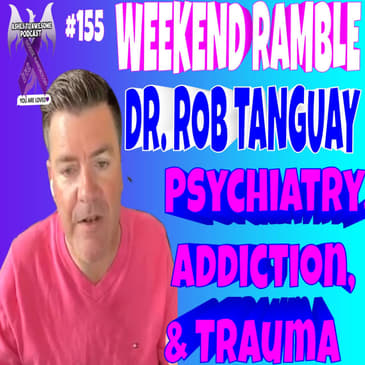


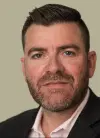
Dr. Tanguay is a Psychiatrist who completed two fellowships, one in Addiction Medicine and one in Pain Medicine. He is a clinical assistant professor with the departments of Psychiatry and Surgery at the Cumming School of Medicine, University of Calgary.
Most recently Dr. Tanguay helped found and is the Chief Medical Officer of The Newly Institute, a disability and rehabilitation program dedicated to providing medical and psychological intervention for people living with complex and treatment resistant mental health disorders such as PTSD, depression, anxiety, addiction, and chronic pain. He was the Medical Lead for the Alberta Addiction Education Sessions and Opioid Dependency Treatment Education for Alberta Health Services (AHS) developing award winning educational programming. He was the Regional Director for Alberta and North West Territories for the Canadian Society of Addiction Medicine (CSAM) where he sat as a board member, the former President of the Pain Society of Alberta, and continues to be the co-chair of the internationally recognized Alberta Pain Strategy. He is the founder of innovative programs including the Opioid Deprescribing Program with AHS, the Rapid Access Addiction Medicine (RAAM) Community Clinic with AHS, and the Transitional Outpatient Pain Program for Spine (TOPPS) clinic working with UofC spinal surgeons to optimize spinal surgery outcomes. He previously consulted with the Operational Stress Injury Clinic treating veterans and RCMP for trauma related injuries.
Academically, he is involved in research in trauma, addiction, chronic pain, opioids, psychedelics and cannabis and is a member of the Hotchkiss Brain Institute and the Mathison Centre for Mental Health Research & Education at the University of Calgary.
If you have a nonprofit or fundraiser that you would like to advertise for free, and spread a five-minute dose of kindness to the world while doing it, you can on the latest Chuck LaFLange Production, Morning Cup of Kindness. Details HERE Remember if you are listening on Spotify, you can watch the video version there as well. If you are listening on any other platform, you can watch the video version on YouTube by clicking HERE, or searching "ashestoawesomepodcast" in YouTube. VIST WWW.A2APODCAST.COM FOR ALL THE THINGS, INCLUDING CHUCKS NEW E-BOOK, "TURN SORRY INTO THANK YOU" Thank you so much for listening. If you are listening on the Spotify platform, you are able to share your thoughts about an individual episode in the interactive element that Spotify offers. Doing this tickles the fancy of the algorithm and really helps us to spread the message. Also please visit our Facebook page here, and like, share, or comment on any of the posts. Your feedback there is sincerely appreciated, and taken quite seriously. Lastly, most of our alumni guests from the podcast are members of our Facebook group. If you would like to get to know any of them, or have questions, or perhaps would like to invite them onto another show, this is a great place to interact. You can join that group here . Ours sponsors, that make spreading the message possible: Dent Kits - WEBSITE Together We Can Recovery Society WEBSITE Revolution Recovery - WEBSITE Yatra Trauma Therapy Center -WEBSITE Nate D Foundation = WEBSITE
Chuck (00:02.794)
Hey, listeners. Welcome to another edition of the Weekend Rumble on the Ashes to Awesome podcast. I'm your host, Chuck LaFlange, and today I am joined by my co-host, Lisa. Of course, how are you doing today, Lisa?
Lisa (00:13.083)
I'm very good. Thanks, Chuck.
Chuck (00:14.934)
I'm great, I'm great. It's good to see you again. It's been a week. And we have a special guest today. He's a prominent psychiatrist with fellowships in addiction medicine and pain medicine. He's a clinical assistant professor at the University of Calgary Cummings School of Medicine. He is the chief medical officer of the Newly Institute aiding mental health through rehab and work programs. He co-chairs the Alberta Pain Strategy, leads clinical initiatives like the Opioid De-prescribing Program, and holds awards like the Early Career Leadership Awards.
Beyond these roles, he's part of the Calgary Police Commission and contributes to health policy. He's a research force focusing on addiction, trauma, opioids, and more tied to the University of Calgary's research centers. Welcome to the show, Dr. Rob Tanguay.
Rob Tanguay (00:57.752)
Thanks so much, I'm really excited and honored to be here.
Chuck (01:01.162)
Thank you, thank you. I gotta say that's the longest introduction I've ever given. So that's a lot of things going on there, Rob. Dr. Rob. Humility suits you well. I had actually talked to Dr. Tangay months ago now, I guess, but things didn't work out. Lisa's managed to do what she does and we've got him sitting here on the show with us today and I'm really excited for that.
Rob Tanguay (01:09.236)
It's embarrassing sometimes to listen to, so.
Rob Tanguay (01:15.321)
Ha ha.
Chuck (01:32.929)
What's your story, Dr. Schenke? Let's just start there. How do you get to where you are, the Cliff Notes version, and doing what you're doing?
Rob Tanguay (01:35.46)
Yeah.
Rob Tanguay (01:41.844)
Oh man, you know, I was very late into university. I was a college dropout at 17, spent 10 years in sales and then owning some small personal proprietorships and then ended up at a corporate position working down in New Zealand. Before I really said to myself, I really want to go back to school. And I felt like I...
kind of messed up that first year at college. I mean, by all means, I had a lot of fun, but I didn't really know how to study. I really didn't understand what was necessary and required. And so I left kind of my career and moved back home from New Zealand to Alberta and started redoing courses that I failed, redid some high school courses.
Chuck (02:16.055)
Ha ha ha.
Rob Tanguay (02:37.64)
ended up in a degree in neuroscience down in Lethbridge. And then I remember, yeah, well, you know, it's, I mean, once you get into university, you can kind of do whatever you want. But I remember a bunch of friends wanting to go to this University of Calgary med school presentation. I was like, I'm not interested in that at all. And I'll come along. So I went.
Chuck (02:42.37)
Just casually, yeah. Okay, yeah. Right.
Rob Tanguay (03:02.98)
And a lady named Adele was there presenting. And if you've been to the University of Calgary Medical School, you know Adele. She was amazing. She did this incredible presentation. I was like, man, that sounds much better than the rats I work with. And yeah, I applied to med school and got in Calgary and Edmonton and chose Calgary and didn't really know what I was gonna do, but it was my psychiatry rotation that I really enjoy. I thought it was gonna be neurology or surgery or.
even looked at dermatology for a while, but I did a rotation up in Penocha after that and I really loved it. I really found that it was a lot of like the research I was doing with rats, which was about brain and behavior and the intersection of understanding the behavior of people. And I felt like I could really help people and I liked that part of it. And I'm someone who struggles with chronic pain and have for...
Chuck (03:40.576)
Okay.
Rob Tanguay (04:02.04)
you know, since I was 21. So I wanted to do pain as part of my training, which turns out you can do anything you want and become a pain physician. So I ended up in psychiatry. I did an addiction fellowship to be a better pain physician. And now I probably do much, much more addiction than anything, but really it was learning how many of my patients struggle with trauma and PTSD, both in the pain and the addiction world.
that I really kind of pursued that area of interest. And there's no fellowships in becoming a PTSD expert, but once you understand it and work in it, you realize just how undiagnosed it is.
Chuck (04:43.818)
Wow, wow, so you answered like my next three questions, which is great. Right? You're a pretty easy guest to have. So there's a couple of things I want to pick out, you know, from the introduction here. And the one that immediately jumped out at me was the opioid de-prescribing program. I've never heard of anything like that. I'm ignorant, so what's that all about?
Rob Tanguay (04:47.108)
Hehehehehehehehehehehehehehehehehehehehehehehehehehehehehehehehehehehehehehehehehehehehehehehehehehehehehehehehehehehehehehehehehehehehehehehehehehehehehehehehehehehehehehehehehehehehehehehehehehehehehehehehehehehehehehehehehehehehehehehehehehehehehehehehehehehehehehehehehehehehehehehehehehehehehehehehehehehehehehehehehehehehehehehehehehehehehehehehehehehehehehehehehehehehehehehehehehehehehehehehehehehehehehehehehehehehehehehehehehehehehehehehehehehehehehehehehehehehehehehehehehehehehehehehehehehehehehehehehehehehehehehehehehehehehehehehehehehehehehehehehehehehehehehehehehehehehehehehehehehehehehehehehehehehehehehehehehehehehehehehehehehehehehehehehehehehehehehehehehehehehehehehehehehehehehehehehehehehehehehehehehehehehehehehehehehehehehehehehehehehehehehehehehehehehehehehehehehehehehehehehehehehehehehehehehehehehehehehehehehehehehehehehehehehehehehehehehehehehehehehehehehehehe
Lisa (04:48.054)
Mm.
Rob Tanguay (04:53.122)
I'm sorry.
Rob Tanguay (05:03.604)
Yeah, it's just coming back to life. So it was a program, because of my intersection with pain and addiction, there's a lot of individuals who struggle with daily pain and struggle with either opioid addiction or poor control of their opioids, or quite simply, the opioids aren't really improving their function. And getting off of prescription opioids is really
really hard. And so we opened a program to help people get off. And it ended up becoming a complex program where we got mostly people struggling with addiction and had some chronic pain where it was initially kind of focused on mostly chronic pain with maybe a bit of addiction. But unfortunately, operations has a strong role in Alberta Health Services and
They deemed that this was a primary care issue, not a specialty issue, and it was closed. Now, it's been reinstated with some funding in a provincial virtual program called the Alberta Virtual Provincial Pain Program, which is just underway as we speak, and the deprescribing program should come online in the next year or so. So it'll be here for all Albertans.
Chuck (06:17.204)
Okay.
Chuck (06:30.634)
So is that kind of a parallel to the oat, or is it kind of independent of that?
Rob Tanguay (06:35.924)
It is, it worked inside of the ODP or the opioid dependency program. So I would take a lot of the referrals from some of the physicians that worked there with pain and addiction patients. But once the community learned we were there, most of our referrals came from primary care and we got flooded. And it was myself and a couple of nurse practitioners, an incredible psychologist.
Chuck (06:44.096)
Okay.
Rob Tanguay (07:03.816)
And yeah, we did amazing work. It was a ton of fun. We changed a lot of people's lives and we had some great news media out of it. And I still stay in touch with some of those patients today.
Chuck (07:13.806)
Okay. Oh, wow, that's gotta be rewarding.
Lisa (07:15.006)
And Rob, is that sort of, is that driven by the fact that chronic pain, the evidence supports that opiates shouldn't really be used for chronic pain?
Rob Tanguay (07:25.044)
Yeah, so, you know, this was going back a few years, but kind of the beginning of what was called the opioid crisis. Now, then it was the overdose crisis and then the drug crisis. Anyways, there's new names for it. Just wait a couple months. But at that time, you know, we saw significant overprescribing of opioids. You know, you stubbed your toe, you got 50 Percocets to go home with. You had a tooth pulled, you got 100 Percocets to go home.
So we had no regulation on our prescribing. And really we were taught quite simply, palliate the pain. So if somebody's in pain and not functional, an opioid will improve their function and help them remove the pain and you keep going. There's no ceiling, you just keep going till the pain's gone. But more and more data was actually showing that's not true and that in fact, many people were ending up with opioid induced hyperalgesia
the opioids long-term cause pain. No different than a lot of our substances, alcohol does the same thing. So I started in my fellowship, tapering people and taking on some of the most difficult patients at the chronic pain center. And we saw people getting better. And I pursued trying to open that, it took a few years afterwards. And we had a good run for a couple of years and we'll get her going again.
Chuck (08:27.595)
Oh.
Chuck (08:44.223)
Okay.
Chuck (08:54.626)
Wow, it's funny because just three days ago, I watched that series on Netflix, that new one, that, what's it, about, yeah, Purdue or whatever. So this is all kind of, but I guess you're about the same age as me, so you would have been not quite into your medical career when all that was going on, right? When all that began, the whole Purdue thing, and when OxyContin first hit the scene, I guess, right? Yeah, yeah, right, so.
Rob Tanguay (09:00.85)
Yeah.
Yeah.
Rob Tanguay (09:13.572)
Correct, at the beginning of it, yes.
Chuck (09:18.066)
I remember, and of course it's just my experiences, but I remember saying to somebody back then, I don't know anybody who's been prescribed this shit and not been addicted to it. I don't know a single person, right? Of course, might speak to the people I was hanging out with too, but you know, let's be honest, at that point in my life, but it was scary, scary stuff, and I guess, you know, it's still, well, a lot of people are still there as a result of what happened back then, so.
Rob Tanguay (09:41.972)
Yeah, it's where it started. There's no question. You know, you can watch the documentary. I lectured on almost everything in the documentary, so now I don't need to lecture on that anymore. You can go watch Netflix. But you know, you can't go around and tell everyone this is non-addictive, and you can't say, well, for pain patients, it's not addictive, but maybe for other people, it's like, well, where does that differentiation pull out of someone's hat? And you know,
Chuck (09:44.043)
Yeah.
Chuck (09:54.447)
I get so many.
Chuck (10:03.795)
What? Right? It's... Yeah.
Rob Tanguay (10:11.068)
A lot of people don't become addicted. A lot of people genetically actually get sick and dizzy and don't feel good on opioids. You know, I always teach people, if an opioid gives you energy, that's a red flag. If I have a patient who comes in and tells me, oh man, doc, that was the right prescription. That has changed everything. I feel great. It's like, you're not getting it anymore. Like that is really bad. You shouldn't feel great.
Chuck (10:19.21)
me.
Chuck (10:26.114)
There you go. Yeah.
Chuck (10:32.43)
Hehehehehehehehehehehehehehehehehehehehehehehehehehehehehehehehehehehehehehehehehehehehehehehehehehehehehehehehehehehehehehehehehehehehehehehehehehehehehehehehehehehehehehehehehehehehehehehehehehehehehehehehehehehehehehehehehehehehehehehehehehehehehehehehehehehehehehehehehehehehehehehehehehehehehehehehehehehehehehehehehehehehehehehehehehehehehehehehehehehehehehehehehehehehehehehehehehehehehehehehehehehehehehehehehehehehehehehehehehehehehehehehehehehehehehehehehehehehehehehehehehehehehehehehehehehehehehehehehehehehehehehehehehehehehehehehehehehehehehehehehehehehehehehehehehehehehehehehehehehehehehehehehehehehehehehehehehehehehehehehehehehehehehehehehehehehehehehehehehehehehehehehehehehehehehehehehehehehehehehehehehehehehehehehehehehehehehehehehehehehehehehehehehehehehehehehehehehehehehehehehehehehehehehehehehehehehehehehehehehehehehehehehehehehehehehehehehehehehehehehehehehehehe
Lisa (10:35.941)
Hahaha
Rob Tanguay (10:40.844)
But you know, some people, especially those who are genetically prone, get a lot of energy. They feel great and unfortunately the risk of losing control is very high in that group. And then a lot of other people, it masks all of your mental health symptoms.
Chuck (10:58.942)
Ah, okay, okay. I know for myself, a couple T3s and I turn into a blabbering moron, so I would never, right? No interest, never in my long and comprehensive drug career did I get into opiates, so that was good, that was good. Yeah, yeah, yeah. You work with the police, what's that about?
Lisa (11:12.127)
Mm-hmm.
Rob Tanguay (11:12.548)
Yes.
Rob Tanguay (11:19.82)
Well, so again, as I learned more and more about trauma, I ended up working at the Operational Stress Injury Program. This is a federally funded private healthcare system for RCMP and veterans. And so, really wanted to be better suited for understanding trauma, treating trauma. And I figured, well, there's not a better place than treating first responders and.
Chuck (11:34.764)
Okay.
Rob Tanguay (11:47.54)
military veterans who have some of the most horrific traumas. It was different. Some of my colleagues will call that the big T versus the little T. I think that's super stigmatizing to somebody who's got sexual trauma in their background and saying that's the little T. So, you know, I ended up working with a lot of police officers and really actually quite enjoyed it. And...
I have friends and family who are police officers and really have a belief that I grew up in a small town with community police and I was a bit of an ass as a kid and you know we did dumb things but we knew all the officers by first name. They lived in the town with us. We grew up with them and it made a difference right? There were times that you know they kind of give you a cuff in the back of the head, drive you home and let your parents take care of you which was probably worse than.
than them. And I don't think that happens very much anymore. And I'm a big believer in it. And I think when you have trauma, you're easily irritated, you're easily set off. And so we have a lot of officers kind of out there that were struggling, couldn't access good treatment. And, you know, that affects the relationship, you pull over someone.
Lisa (12:44.877)
Hahaha
Rob Tanguay (13:11.948)
Maybe they give you a bit of a hard time that turns into a pretty negative interaction. And so being on the commission was just kind of a long-term piece to that of really believing in, you know, policing is an important part of our society and allows us to have our kids playing on the street and not worrying.
Chuck (13:24.193)
Okay.
Chuck (13:33.366)
kidding. But that said, how big of a role does stigma play in police? Well, first responders in general, but specifically police, you know, addressing something like PTSD, right?
Rob Tanguay (13:44.852)
Yeah, huge. But the culture is changing. Yeah, it is. I did a great presentation. Former Commissioner Lucky used to run Chiefs of Police meetings. So all the major cities' chiefs would meet with the RCMP commissioners. And I presented to that about shifting culture by access to good care. And that's what
Chuck (13:51.695)
That was my next question. Yeah, okay.
Rob Tanguay (14:14.524)
the newly Institute does. And, you know, I talked about how we can shift culture because when, you know, Joe or Mary Beth go back to the force and they're telling everyone how amazing they feel, some people are looking at them like, who are you? You're not the same person as before. And that starts to shift culture. And then when they realize they can get into it right away, that starts to shift anymore, even more. And then when,
You know, I had a testimonial from one of the chiefs standing up and saying, look, not only is, is what I'm saying, correct. We see it in our precinct because of, of the newly being in our city. And we've, we've already seen the shift. So it is always about being able to access good help and getting help. And I've always maintained that's how you break all stigma. Um, you know, cancer used to be highly stigmatized when, when people got cancer, they didn't want anyone to know they did it to themselves.
Chuck (14:55.541)
Oh.
Rob Tanguay (15:14.28)
As a society, we looked upon that, you know, cigarette smoking was often intermixed and, you know, you got what you asked for. But now nobody talks that way. But there's also a cancer center in every major hospital across this entire country. And we've poured tons of money into it. And cancer is just another diagnosis, but it's accessible. It's available. Treatment is there. And we normalized it. And we haven't done that.
Chuck (15:30.628)
Okay.
Chuck (15:41.638)
There you go. It's funny. You just pulled a card out of Lisa's deck. We're going to cope with cancer to addiction. She does that often, so is this where you got it from, Lisa? Or is she pulling a card out of your deck?
Lisa (15:46.508)
Hmm.
Rob Tanguay (15:50.187)
Nice.
Lisa (15:52.282)
I don't think Rob and I have ever, yeah, I don't think we've ever talked about it, but interesting that we both, you know, use that example. But yeah, I'll often say that to people if they're saying something stigmatizing around addiction, I'll reframe it with cancer and say, would you think it's acceptable to say this out loud in public if we change the word addiction to cancer or if we change the word addict to cancer patient?
Rob Tanguay (15:56.152)
No.
Rob Tanguay (15:59.812)
Hmm
Lisa (16:18.854)
And a lot of times it's just like, no, like, I don't know, Rob, if you remember, there was a coffee shop. I won't say the one, you know, on here, but there was a coffee shop in Calgary. It was a few years ago and they had a, a campaign or an advertising marketing thing that they did around Christmas one year. And it was all about, you know, being addicted to their coffee. Like their coffee was so good. It was addictive. And I don't remember the exact verbiage, but I remember it.
bugged me and I went home and I wrote an email to them and basically reframed it. Like, would you think it acceptable to change this word addiction in your marketing to cancer, recognizing that there's so many people who are suffering in addiction and families who are suffering because they've loved one in addiction and you know, would you do this? And they took the campaign down or the marketing, it's not a campaign, but they took the marketing down and it was, it's a huge coffee shop in Calgary.
Rob Tanguay (16:48.867)
Hehehe
Rob Tanguay (17:14.721)
Right.
Lisa (17:15.966)
But yeah, I think it just helps people. I don't know. Yeah.
Chuck (17:16.094)
I never did ask you the name of that one, actually. I'm not going to do it on air, but yeah. That's why I never asked, right?
Rob Tanguay (17:20.996)
Okay. You know, I think it's, they should get some kudos for responding to it. You know, I think it's just a lack of really knowledge and understanding. I don't think people purposefully do it, but no, but it is unfortunate. We do see this a lot. And I love what you say. I often talk about, imagine if we treated addiction, like heart disease and cancer.
Lisa (17:27.461)
Totally.
Chuck (17:34.69)
There's no malice in it, most certainly, right? Yeah, yeah, right.
Chuck (17:48.203)
Right.
Rob Tanguay (17:48.408)
and we had addiction centers everywhere, like we do heart disease and cancer centers. The difference being heart disease and cancer, you know, and prostate cancer specifically, where we see these massive prostate cancer centers. Those are white male elderly things where a lot of the funding is controlled by. Addiction was often a younger impoverished society that simply didn't, right, but simply didn't require that kind of funding.
Lisa (17:49.463)
definitely.
Chuck (18:05.802)
Ah, well, yeah, right, yeah.
Chuck (18:12.222)
Well, or so we thought, you know. Yeah, right. Yeah, yeah, right. Gotcha, gotcha. That kind of leads me into the next one here. So Lisa, with that very same line of speak, we were talking about mandated treatments. And I'll tell you, when the news first started to break here in Alberta, right, about what was going to happen and what they were thinking about doing.
Lisa (18:31.202)
Mm.
Chuck (18:37.678)
I'm joking about this, I think just last week, Lisa, where I said this was about to be the no-mandate a treatment program. Like I was going on a mission, right? Yeah, okay, okay. So yeah, I was like fired right up about the whole thing. The news story I saw framed it very differently than I think what will actually happen.
Rob Tanguay (18:46.84)
Yeah. I'm still here.
Chuck (18:57.546)
or maybe I just chose to take it that way either way. It made it look like it was gonna be a police state or at least that's how I understood it, right? So went completely off about the whole damn thing. And then, you know, I'd mentioned that Lisa, and she used that same line, right? Well, we're helping people with mental health, we, you know, we mandate them into treatment, right? You know, somebody's schizophrenic, a danger to themselves. And the shift, not just in myself, but by extension, the whole show changed.
Rob Tanguay (18:58.081)
No.
Rob Tanguay (19:03.724)
Right.
Chuck (19:24.942)
I went from these hard-line views to really opening my mind because of that way of speaking. And with that said, I don't know how much you're in the know about what's going on. There's a lot of trepidation about what's about to happen in Alberta as far as, you know, and I don't know what you're allowed to speak to, and I'm not gonna pry too hard, but yeah. Right? Yeah, yeah, right. Yeah.
Rob Tanguay (19:40.02)
Mm-hmm. That's the better question. Yeah. I do have some nondisclosure agreements, but we can talk about what is in the public realm. So we know, for instance, in Massachusetts, under Section 35 is one of the first areas that mandated addiction treatment separate from mental health. And in doing so, they had a 90% increase in referrals and started displacing voluntary patients.
Chuck (20:03.126)
Okay.
Chuck (20:09.258)
referrals, what do you mean by that? Sorry.
Rob Tanguay (20:09.568)
In a system, well, so that's what they'd be called. They'd be called a referral. So an individual who is now mandated to treatment was referred into a treatment center, right? And so, but those treatment centers were already quite limited, even though it had a bigger system than most in the US. And it significantly started displacing voluntary patients. So that's the first thing you got to think about.
Chuck (20:18.438)
Okay, okay, gotcha.
Rob Tanguay (20:34.884)
If we looked at mandated treatment, so in Alberta, you can go to a judge and you can have your loved one arrested and brought in for assessment, secondary to addiction. Now, as Lisa can attest to as much as anyone, a psychiatrist will then discharge them from hospital saying, we can't do that here and there's really nowhere for you to go. Other thing that you can say is a lot of those people come in because they're smoking pot and it's like, I'm not.
to throw you into a lockdown treatment center for smoking pot. There's good treatment for that in the outpatient community. And so, you know, there's a few worries. One, we mandate treatment and every parent out there struggling with a friend or family or child is going to send them through this process. Two, every kind of criminal justice diversion is going to throw them into this process.
If we start thinking, okay, are we mandating treatment for everyone? We don't even have close to the number of beds required for that. We're still...
Chuck (21:36.022)
No, no, no. What are we on, a 30 or 60 day wait right now for people that wanna go? Right, you know, right, yeah.
Rob Tanguay (21:41.736)
in a province that has the best system in the country, with the most access in the country by far. And we still have these kinds of wait lists.
Chuck (21:52.458)
Yeah, yeah, so, yeah. So what's the solution to that then? Yeah, yeah.
Rob Tanguay (21:54.144)
So first thing before you can even think about, well, you've got to build beds. No beds, no chance it can happen. So that's the most important thing. The other part, I still stand by this in shock and awe. Calgary is one of the only major centers in the country that doesn't have one, not one addiction bed in its hospital system. Not one, nope, not one, zero.
Chuck (22:16.214)
Really?
Wow.
Lisa (22:19.226)
they end up on psychiatry, right? If a psychiatrist will keep them. But I was gonna add to another interesting point, right? So what Rob is talking about, you know, with the Mental Health Act is that patients can be held in hospital under the Mental Health Act against their wishes if they meet certain criteria. Now, with people suffering an addiction, the most common, you know,
Chuck (22:22.163)
I would think, yeah. Yeah.
Rob Tanguay (22:24.077)
if.
Rob Tanguay (22:40.248)
No.
Lisa (22:46.554)
message that you'll hear is that, well, you know, we can't hold them under the Mental Health Act. And a lot of times when I've challenged colleagues as to what do you mean and why, and even have challenged review panels who review these certificates to decide whether to uphold them if a patient wishes to challenge them, I've been told repeatedly, well, that's just not what we do here. But if you look at the criteria under the Mental Health Act,
Chuck (23:11.621)
What?
Lisa (23:14.742)
People in severe addiction, and again, like, yeah, not your kids smoking some weed, but people in severe addiction absolutely meet criteria under the existing mental health act to be held in hospital against their wishes. We do it with schizophrenic patients, we do it with depressed patients, we do it with a numerous multitude of other psychiatric illnesses. But with addiction,
Chuck (23:38.63)
I imagine there's a lot of boxes to check, but can you kind of, what are those criteria that you're speaking to without having to explain your entire profession?
Lisa (23:48.402)
Yeah, so they need to have, you know, some sort of impairment in their thinking, right? So they've got impaired judgment, they've got disorganized thought process, so some sort of impairment there. They need to, it needs to be an illness that's treatable, okay? Check. Criteria, I'm trying to do this without looking at the form. There needs to be either a risk of harm to themselves, a risk of harm to others, but.
Chuck (23:56.706)
Check. OK. All right. Yeah.
Chuck (24:04.339)
Okay.
Rob Tanguay (24:09.293)
No.
Chuck (24:09.932)
hahahaha
Lisa (24:16.362)
there doesn't like even beyond that you don't need to be a risk of harm to anybody but you can simply be at risk of deteriorating in your mental health or your physical health. Check and it needs to be that they won't stay voluntarily right so if somebody is unwell but they're like well I want to be here then you wouldn't certify them because why would you and you know Rob and I've even spoken about cases before where you'll have people sometimes come in who have addictions who want help who will say
Chuck (24:26.062)
Okay, yeah, there's another box here.
Lisa (24:44.918)
Can you please certify me? Like, I need to do this, I want help, but I'm telling you in 12 hours or in three hours, I'm out the door. Like, can you please stop me? Yeah, but so again, like I feel like within the system, that to me is a huge demonstration of horrendous stigma because it's like, what do you mean we don't do that here? It's like, it's a mental health act, they satisfy criteria.
Chuck (24:52.106)
Not a chance. Yep. That moment of lucidity, right? The iron's hot. You've got to grab it, right?
Rob Tanguay (24:53.492)
Right. Yes.
Chuck (25:10.862)
That's most...
Lisa (25:12.562)
What are you, like, I don't care that, like, what your personal opinion is, if they check the boxes, then why are we not doing this?
Chuck (25:14.482)
100% stigma, right? Yeah.
Chuck (25:20.545)
No kidding. No kidding. That is crazy. That's an argument.
Rob Tanguay (25:23.252)
Yep, I agree with that. I think, you know, as Lisa spoke about it is that it's a treatable disorder, but there's also got to be the part that the disorder is being the individuals being held in a program that can treat the disorder. So, you know, we can't hold someone with suffering from schizophrenia on an OB GYN unit with no psychiatrist providing treatment. So
Lisa (25:38.412)
Yes.
Chuck (25:50.174)
Okay.
Rob Tanguay (25:51.096)
That's one of the problems that we have is most of our psychiatric units in Alberta have no one working there that has any expertise or knowledge about treating addiction. And so, you know, there was a court case not long ago where the individual one who was held because of alcohol and cirrhosis and the psychiatrist felt if they...
allowed the individual to go, they would start drinking again and probably die of uh... serotic complications uh... and lost that case quite simply because they held him against his will for a significant period of time without providing any treatment so you know there's always those balances. The other part is that the mental health act is more focused on assessment and stabilization than treatment so you know
Chuck (26:32.354)
Gotcha. Yeah.
Rob Tanguay (26:44.14)
things like PCHAD where we can hold a child under the age of 18, we can bring them in and force them into detox for like 10 days. It's actually detrimental in many cases and can put that person at high risk of overdose. We can't follow the same process in addiction where we're just going to take you in, hold you for, you know, whatever, a week or two until you're stable and then discharge you. That's called detox.
Chuck (26:46.702)
peach head, sorry.
Rob Tanguay (27:13.352)
And involuntary detox has much evidence to show that it's detrimental, especially in opioids, specific to opioids. So there's lots of intricacies that we have to look at. I agree 100% with what Lisa's saying. It's all stigma based. It's also funding and money. We would never let someone jump off a bridge in order to end their life, but we will allow them to inject a substance that will end their life. It's pure stigma.
Chuck (27:40.875)
Yeah, yeah, and hurt 100 people around them in the process, right? You know, right? Yeah. Commit crime and all of that, right? Yeah, yeah.
Rob Tanguay (27:44.104)
It's right, which both would probably end up doing. So it's, it's an unfortunate reality that, uh, it takes political will and significant funding in order to start shifting this.
Chuck (27:56.482)
Okay.
So, and I'm guessing, go ahead Lisa, sorry.
Lisa (27:59.266)
Yeah, and I think there's, I just, I think there's that awareness, though I don't think the right people talk about it, but there's the awareness that if we were to start doing that, then we would need to have the treatment available as Rob saying, you know, because we can't just hold them, we have to be holding them and treating them. And where, where do we put them? Like, we don't have resources.
Rob Tanguay (28:21.292)
Well, no.
Chuck (28:21.454)
Yeah, well, even if we have the beds, where do we come, where do the people come from? Right, I know our healthcare system's pretty taxed in the way of professionals, so, right.
Lisa (28:28.894)
Like you take even from a psychiatric perspective, Chuck, like I was in eMERGE last week, I work in the eMERGE every second week. And last week I went in on Tuesday, Monday had been a holiday. And city-wide, so at our four main hospitals, we were holding 39 patients waiting for inpatient psychiatry beds. You know, so the units were full.
Chuck (28:48.522)
Wow. And without knowing the actual stat, how many of that revolves around addiction? Do you know offhand or can you take a guess? Uneducated? No? Okay.
Lisa (28:57.122)
No, no. I mean, it's, there's always a huge addiction piece, right? Like even in people who have substance, like who have things like schizophrenia, it's often complicated than by substance use. So substance use is, it's a huge portion in some, at some level. But again, like you think just psychiatry and these would be people who are not there primarily with a substance use disorder. They're there with something above and beyond that. And, you know, like in one day,
Chuck (29:07.806)
It's so often, right? Yeah.
Chuck (29:21.334)
Yeah. Okay. Yeah.
Lisa (29:26.918)
Every unit in the city is full. We're filling over capacity beds on our units and we still have, you know, almost 40 people sitting in the emergency departments waiting for beds.
Chuck (29:35.658)
40 people waiting there. Yeah.
Yeah, never mind the people that are actually waiting for bits without emergency rooms.
Rob Tanguay (29:42.788)
Right. And you know, the thing to remember, we have a massive methamphetamine problem in Alberta. The exponential growth of methamphetamine seizures and use across Canada is well documented. We also see the same thing in cannabis. We see the same thing in alcohol. We want to talk about the toxic drug crisis, but what we have is an addiction crisis. A substance use crisis is probably the correct word for it.
Chuck (29:52.056)
Yeah.
Rob Tanguay (30:12.696)
Then we have to remember one in two people who are using meth daily or close to daily will end up psychotic. One in two, they will all end up on a psychiatric unit or at least presented to a hospital at one point. In many cases, they clear and emerge and are sent home because, oh, now you're not psychotic anymore. Not our issue. I've been there.
Chuck (30:20.855)
Really?
Lisa (30:36.02)
Totally.
Chuck (30:36.234)
Wow. I never would have guessed that anywhere close to that number. I'm coming out of the scene not that long ago myself, right? So that's, wow, right?
Rob Tanguay (30:42.048)
Yes.
Rob Tanguay (30:46.668)
One in two will have paranoia, one in two will have some sort of psychotic delusional thinking. And the sad part is, probably around 20 to 25% of them, if not higher, will have a long-term sequelae of that. They won't get a diagnosis of schizophrenia, they'll have the insight around it. But they'll always feel like someone's following them, someone's right behind them, the cops are watching them.
I don't know how many patients I've talked to who went straight to the police station and said, you know, just arrest me. And the cops were like, I have no idea who you are. No, you've been tapping my phones. I know. I know you've been watching me. And they're like, I really, we don't, but come on in, you know. And they end up in hospital, of course. But it's just the reality of, you know, some of the substances. And then there's a lot of belief of like, oh, if we give him pharmaceutical grade, it'll be better. There's absolutely no data that somebody who's gone psychotic.
Chuck (31:13.826)
Yeah.
Lisa (31:20.707)
Yeah.
Chuck (31:22.267)
Yeah, yeah, right, yeah, yeah.
Rob Tanguay (31:43.196)
Meth will not go psychotic from a prescribed stimulant like Vyvanse. They become psychotic the same way. Once your brain goes down that path, it'll keep going down that path.
Chuck (31:56.126)
Okay, so if somebody starts with a prescribed stimulant, is it the same thing? They're still gonna go down that, like.
Rob Tanguay (32:03.088)
No, no the risk of psychosis from a prescribed stimulant is much lower It's it's quite rare Yeah, once you go psychotic. Yeah stimulants are out They're like yeah stimulants and pot or a no-no and you know You talk to a lot of people who use meth and they don't use pot anymore and you almost guaranteed know that person goes psychotic and they know
Chuck (32:08.806)
Okay. But once you're there, once you have a set point, you're right. Yeah. Okay.
Chuck (32:22.804)
Yeah.
Chuck (32:26.35)
I can tell you meth was the end of almost every drug except fentanyl. It took a lot of crack off the scene. It took a lot of, you know, all of it. Yeah, I can tell you from my personal experience myself, I hadn't had a drink since, yeah, right around the time I tried meth the first time. It was the last time I had a drink, right? So yeah, yeah.
Rob Tanguay (32:31.522)
Right.
Sure thing.
Lisa (32:44.482)
I feel like the things I see most commonly in the hospital that are causing psychosis is meth and cannabis. Which is funny because I feel like people are like, oh, cannabis is legal, cannabis is benign, cannabis is not a big deal. The problem is the THC content of the cannabis that people are using is like shockingly high. And you know, I see way more cannabis-induced psychosis since cannabis was legalized than what I ever saw before.
Chuck (32:51.17)
Really?
Chuck (33:08.627)
Is there an aggravating factor to that? Like is it somebody who's already gone psychotic or you know, or kind of hit that threshold? Are those the people that you're seeing as a result of cannabis? I just, a lot of people have a hard time believing what you just said without some sort of context, right?
Lisa (33:18.178)
So I mean, yeah, so I think what, like what Rob was saying, right? I think that math, like if you take a group of people using math, there's a higher proportion of them that are gonna develop psychosis than if you take a group of people who are using cannabis. And we also know that if you develop psychosis on cannabis,
you're more sensitive to psychosis. You're a higher risk individual to develop schizophrenia than if you become psychotic on math. Cause it's kind of like almost everyone who uses math will become psychotic at some point, right? But I just, I still, I wanted to say that because, you know, just thinking about who the listeners are to the show. And again, people have this idea that cannabis is benign. And again, if you're 50 years old and you've been smoking weed on and off your whole life and you never had psychosis, you're probably safe.
Chuck (33:45.566)
Okay, okay.
Yeah, yeah, yeah.
Rob Tanguay (33:53.112)
Yes.
Lisa (34:05.77)
But if you're 50 years old and you've got a kid or you're 40, you've got a kid and your kid is using it and telling you it's fine, it's legal, it's benign, don't worry about it. Not true. Like, you know.
Chuck (34:14.474)
Yeah, yeah, right, yeah.
Rob Tanguay (34:15.892)
It's so factual. Look, all of this really comes down to access. So pot is really accessible right now. There's stores everywhere, as is alcohol. So I developed along with Dr. Monte Gauche, the two of us developed and built the RAM clinic or the Rapid Access Addiction Medicine Clinic here in Calgary. This is now Alberta's largest addiction medicine program by far. Last year we serviced about 11,000 patients.
Chuck (34:37.664)
Okay.
Chuck (34:41.122)
Okay, yep.
Rob Tanguay (34:45.096)
in Calgary alone. We have a virtual RAM starting right away as well for all of Alberta. But what's interesting is the majority of what we see is still alcohol and pot. And we have seen cannabis skyrocket. We have protocols for cannabis detox and using a medication called Nabalin, which is like a synthetic THC to help people detox. It is prominent in our addiction medicine clinics of treating cannabis addiction.
Chuck (35:14.358)
Wow, that's, so what I imagine then is if it's prominent to you now, at some point in the near or subjective future, but the rest of us will start seeing it too, because at my level, it's just the layman on the street. I've never even heard of such things until Lisa kind of mentioned it not that long ago, right? So it's certainly not the norm at this point, but.
Rob Tanguay (35:33.548)
Yeah, we don't have a lot of prevention, education, you know, all the things we said we were going to do with the money from cannabis sales. I don't know where any of that money went. But yeah.
Lisa (35:37.281)
No.
Chuck (35:42.596)
Went with the carbon tax.
Lisa (35:44.694)
someone's pocket. But Rob, can I ask you about RAM? So that's interesting hearing you say that because I actually had a patient recently in hospital who, you know, had come in with a cannabis-induced psychosis, cleared pretty quickly, super lovely guy, very motivated to stay off cannabis, and I tried to get the addiction team at the hospital I work at involved and also had talked to them about helping connect him to RAM, and they told me that RAM is a medical addiction clinic and that they don't, that cannabis patients do not go to RAM.
And so they wouldn't get involved. And I was like.
Rob Tanguay (36:14.948)
So that's just purely, that's absolutely false. First of all, there's good medications for treating cannabis addiction, number one. Number two, we have 30 counselors and a nurse practitioner, several nurses, and one therapist, we're hiring our second who focuses purely on trauma and trauma-focused therapy with ART and EMDR. We are an all-inclusive program.
Lisa (36:20.354)
Okay.
Lisa (36:41.57)
Amazing.
Rob Tanguay (36:44.716)
So unfortunately you were provided with quite simply false information. And it makes no sense why. I don't know what to say to that. But we have more counselors there than anything else. RAM is adult addiction. Adult addiction is RAM. We are the same thing in Cal.
Lisa (37:06.927)
Right. So that's good to know. I will take that back with me. And this individual is still my patient at Day Hospital, so I can still make that happen.
Chuck (37:06.994)
Okay.
Rob Tanguay (37:09.877)
Yeah, you can.
Chuck (37:09.91)
Yeah.
Rob Tanguay (37:12.984)
Well, they can come on over. We look forward to seeing them. Yes.
Chuck (37:16.584)
Absolutely. I do want to ask you about the Newley Institute as well. Yeah, the Newley Institute. I did do some reading on it, but if you just kind of want to describe it, you'll do a much better job than I can.
Rob Tanguay (37:29.676)
Yeah, I mean, the Newly was kind of the culmination of everything I had learned in medicine and trying to build into treatment. So you know, there's great programs for treating veterans and police officers out there, but you know, I worked at one and I never understood why a template said we expect the person to be well and return to work in 18 months.
I didn't understand why people would spend months with a patient seeing him weekly before they would do their first trauma session. None of it followed data, none of it followed any of the studies that were out there. I started inquiring and speaking to people in Europe, in the US, prominent military psychiatrists who also disagreed with how we were doing things. And so I built something, not I, there was a group of us, but we built something that's very, very different.
It was based on really my desire to build something that makes sense. So it was about intensifying treatment. It was about no longer treating people like fragile, crystal, but rather the resilient human beings that they are and need treatment, not back rubs and soft blankets. And that's exactly what we created. We created a world-class facility. You will not feel like you're in a medical
you will not feel like you're in a WCB rehab program. It is top notch from the furnishings. We won a national award for the best designed medical clinic in the country. We have some of the most robust outcome data where two papers are being published right now, working with some University of Alberta researchers and psychiatrists.
by employing everything that people with PTSD really need. So someone with PTSD often has a moral injury. So we had to add an acceptance commitment therapy to deal with that. A moral injury is, so let's say I'm a police officer and in a shooting, I ended up shooting a child and that child died. And I'm going to take that home with me like I did that.
Chuck (39:31.082)
Moral injury, can you define that?
Chuck (39:41.742)
Okay.
Rob Tanguay (39:48.352)
Maybe I'm in the military and I'm in a firefight and I'm being forced to keep fighting. It goes against everything I believe in. I can't shoot these people, but I did. Maybe I've been sexually assaulted and abused and it happened repeatedly, but there were physiological responses to it. It was my fault. I did that. That's where your moral injury comes from. And many, many people with trauma have a moral injury intermixed with it.
Chuck (40:13.954)
Gotcha.
Rob Tanguay (40:17.888)
So we needed to address those moral injuries. And with moral injuries, there's often a sense of injustice and anger. So we needed to approach that. Many people, if they've got chronic trauma or complex PTSD, which North America likes to just ignore, most psychiatrists in North America have no idea what it is. Every other country in the world follow the ICD-11. It's a different diagnostic criteria, which includes complex PTSD. So...
If I've been traumatized many a times, usually as a child in an area where I can't get out of it, or I'm a first responder who's gone through trauma after trauma after trauma, it starts to affect kind of our personality and how we do things, our skills, how we cope. So we added dialectical behavioral therapy as a really it's cognitive behavioral therapy on steroids. It's skills, skills. We needed to teach mindfulness how to just
calm the system without taking drugs. So we incorporated significant amount of mindfulness, drumming, artistic expression, things that you can really focus on being in the moment and being where you need to be at that time. So we wanted to build resiliency and long-term sequelae of recovery from trauma. Turns out my belief is this fits perfect for addiction. This fits perfect for most of our mental health disorders.
Do I meet someone with severe personality disorders or depression or anxiety that don't have trauma in their background? So we go to the root and that's what I call it. This is the root of mental health is often what we call adverse childhood experiences. We call them experiences. Some of those experiences are not experiences. Those are traumas, except they're treatable. So we treat them. So many...
programs and treatment facilities and quite simply the way people approach mental health as experts. Adverse childhood experiences are a risk factor in Pandora's box. We don't open them, we just ask a few questions to get to, yes they have four more adverse childhood experiences so they have risks. We should never call them an experience, they're traumas and we should treat them as that and that's what we do. So when an individual comes in through a disability, whether it's Alberta Blue Cross or Sun Life or...
Rob Tanguay (42:44.284)
at WCB or Veteran Affairs Canada or RCMP. We start with their earliest trauma. We build a trauma timeline and we deal with them all. And they may start doing trauma-focused therapy the first day they show up in clinic. We don't wait and we don't, oh, can you handle it? These are resilient human beings who are living in hell in many cases, who need help and we need to start helping them. And so,
We took every bit of evidence around trauma, around addiction, around transdiagnostic approaches to treating mental health, around functionality, and we built it into a single pro.
Chuck (43:24.886)
Wow. That's um... Yeah. Hahaha. Wow. Go ahead. Listen.
Lisa (43:26.544)
Thank you.
Rob Tanguay (43:27.064)
That's the newly, there's a long monologue of what it is, but.
Lisa (43:30.918)
And I think, I think to Rob, like, just to like, add to that, and I haven't even been to Newly, which is really sad. But I think, you know, to speak to the fact that if you go there, right, you are seen by a psychiatrist, you have a thorough psychiatric assessment, you're seen by a psychologist, you have a neuropsychological assessment done, your psychiatrist, your psychologists speak to one another to work on things, there's addiction physicians who are there.
Rob Tanguay (43:37.26)
Not yet, I know, I gotta get you over there. Give you the tour, I know.
Rob Tanguay (43:47.692)
Yes, everyone, everyone.
Lisa (44:00.138)
So it's, you know, the number of different experts who are brought in to sort of holistically provide care to somebody is also, I think, very unique.
Rob Tanguay (44:00.245)
us.
Rob Tanguay (44:09.74)
Yes, we've done a lot of different things. So nobody has an office. Everybody works in the same staff room. We chart in the same staff room. We have lunch in the same staff room. We do rounds in the same staff room. That's intentional because we have physiotherapists, occupational therapists, social workers, psychologists, nurses, primary care physicians, addiction medicine doctors, psychiatrists, all working together. And they're learning from each other and seeing the person differently.
The other thing that we do is a rotating model. So you won't see the same psychologist every time. You'll see a different therapist every time you're in clinic. That takes the onus off the therapist to get that person better. That removes the risk, not completely, but abates the risk quite a bit of trauma from what you're doing, or vicarious trauma being transposed onto the therapist themselves. Removes some of the pathological relationships of...
therapists asking for another 12 weeks or another 15 weeks, it is always the team. It is the team's job to get that individual well. It is not a person's job. And so it's made a huge difference. Now, there's been pushback and we've had some therapists not like it and didn't work out working with us, but the team that's there love it. And it really is about being in that team atmosphere and.
Chuck (45:28.268)
Yeah.
Rob Tanguay (45:33.421)
That's a different process for a lot of mental health clinicians who are often on a boat by themselves trying to figure their things out
Chuck (45:41.782)
Well, yeah, you picture any psychiatrist, psychologist, therapist, and it's one person and a coach. It's not about this team environment, that's for sure, right? So that's interesting.
Rob Tanguay (45:50.508)
Yeah, that's called treating the walking well, but we treat really unwell people. There's no couches. The other part of it, I don't believe good psychiatry in mood disorders and trauma and anxiety disorders can do it without a team of therapists. Otherwise, you're no different than anyone who can memorize a few algorithms and carry a prescription pad, which...
Primary care can do that, nurse practitioners can do that, addiction medicine can do that, many, many practitioners can do that. It's about understanding the diagnosis, working with that individual, having a therapeutic approach. I'm trained in many different therapies. We all get one that we get trained in residency, but I've trained in many of the trauma-focused therapies and in some of the group therapies like acceptance commitment therapy and DBT. I don't necessarily practice it all the time.
But I know the language every time. So when a therapist, when they're seeing our therapy team and they come to me and we're having a meeting and they start talking about stuff, I can start throwing skills at them and terminology at them that everybody understands. Rather than just like, oh, well, let me give you some advice. That's called supportive therapy. And supportive therapy has no better data than sitting on a wait list. So there's no point, it's nice to be nice, don't get me wrong, but we can do things much better than.
Chuck (47:00.068)
Okay.
Lisa (47:09.11)
Mm-hmm.
Chuck (47:09.806)
Ooh, shots fired, right? Yeah.
Lisa (47:16.118)
But the other thing with supportive therapy that I've found is it actually ends up being very discouraging for patients. Because what will happen is I'll see people in day hospital particularly, right, and they'll come in and we'll start to get a sense on like what their personality style is or what their, again, their traumas are, what sort of therapies they need. And then they'll say, well, you know, I just don't believe in therapy. I've been going to therapy for 10 years and like, I still have the same issues I had 10 years ago. And then we'll kind of dig into, okay, like what kind of therapy were you doing?
Chuck (47:16.151)
Wow.
Rob Tanguay (47:37.4)
Yeah.
Lisa (47:44.434)
And in most of those cases, it's supportive therapy. They went, they spoke to somebody, it felt good to say it out loud. They were, you know, a pat on the back, like, oh yeah, that's really hard. But they weren't taught skills, no specific modalities of therapy were utilized. And so patients actually get discouraged. I think it feels nice in the moment, but over time, I think it's actually really damaging to just be doing supportive therapy.
Chuck (48:06.218)
I just this past week had a conversation with somebody very close to me out in Regina who she, I'm saying, I've learned a lot about some different things that are available to you and I might be able to help you kind of get that direction and no, 10 years of it, I'm just saying it's funny you said 10 years, 10 years of it and nothing's helped, nothing. Now I'm afraid to do it because it seems to get worse with it by every time, right? And so she's just sitting there in her own hell now, right, as a result, so you know.
Lisa (48:20.674)
Mm-hmm.
Rob Tanguay (48:22.409)
Yep.
Rob Tanguay (48:25.636)
Well, that's the worst part is, right. Those people have spent 10 years paying for a friend and that friend bought a house and a car on their dime, but did not get better. And even worse is the majority of that money that goes to those individuals doing supportive therapy, either comes from insurance companies, WCB companies, all the things that drive rates up for all of us to keep on paying. And look, so there's always a dialect.
There's always two sides to this story. A therapist doing this kind of work all day, every day by themself, it's hard, hard work. So it's nice to have a few healthy patients that you get to talk to on Friday and try to balance your schedule so I don't have patient A, B, and C at the end of day Monday, because then I'm just never gonna get home. They can only be here Tuesday morning when I have a different group here. You start arranging yourself.
When all of a sudden your entire caseload is difficult, that becomes hard. Supportive therapy is really easy. We just give advice and we're nice to people. Please, and then we start backing that up with, can you read this mindfulness book? Can you check out this app? Can you look at this? And then they say, well, I'm doing CBT or I'm doing mindfulness. That it's not true. It's a hard job being a therapist and this is why having a team around you is so important.
Because you need the support and you need the help and you're going to be seeing really difficult stuff now It's an easy job being a supportive therapist out in the community But I don't know what kind of outcomes you're going to be expecting and it becomes what we call and this is no Disparaging to chiropractors, but it becomes a chiropractic model. We want to see you every week for the rest of your life And this isn't appropriate
Chuck (50:12.588)
Ah, yeah.
No, no.
Lisa (50:16.642)
therapy, I will say, like, I don't know how you how you found it, Rob, but like, for me, you know, I don't do a ton of therapy in my jobs. But when I had to do therapy training through residency, I found it absolutely exhausting. Like, I really found it draining. Like, and I and there are there are psychiatrists in the city who that's all they do. They don't prescribe, they don't diagnose, they do therapy all day, every day.
Rob Tanguay (50:38.153)
It is.
Rob Tanguay (50:41.858)
this.
Lisa (50:46.43)
And I like, I don't know how they do it. I mean, they always say different strokes for different folks. And I guess for some people that fuels them, but like, I just, I'm blown away by people like that because I've, I personally found doing, you know, especially when you're doing hard, when you're working hard and you're really, you're not doing supportive, you're actually trying to, you know, teach skills and use skills and it's hard work.
Rob Tanguay (51:08.928)
Yeah, it is. So when we, I learned the hard way and burnt myself out by trying to run like a two man show basically there was there was me a fellow who continued with me afterwards. And we had a great assistant who worked with us and a psychologist who I recruited from AHS who came and worked a little bit with us.
Chuck (51:09.067)
Ha ha
Rob Tanguay (51:36.3)
But I was basically running the acceptance commitment therapy groups. I was doing all the opioid work, the deprescribing. This was for a surgical program where I built their surgical pain program. And we were tapering their opioids before surgery, which has much better outcomes. So we were doing some really hard work and I was basically leading it all. And it's a recipe for burnout. It's, you can't be a one person show. It just doesn't work. And that's where I've really learned, you know,
I've made a strong commitment to myself. I will never work outside of a team unless it's for assessments. I'll never ever do that again.
Lisa (52:15.906)
Mm-hmm. Yeah, I can see that.
Chuck (52:17.666)
So if somebody's interested in attending or being a client at the Nuuly Institute, is it something they can do outside of insurance or do they need a referral? Is it private pay? What are the options?
Rob Tanguay (52:33.096)
You can private pay. It's a small subsection of the program, but there's a full stream of private pay. If you're WCB, we only treat first responders, so you're not probably gonna win that battle with WCB. If you're in a long-term disability or short-term disability, most of them will pay for it.
Chuck (53:02.453)
Okay.
Rob Tanguay (53:02.716)
So it's mostly fully funded third party. But there are a few people who have just given up on the system and come through the program and can afford to do so. And by all means, the ultimate goal would be to create a system that can do what the Nuuly does and do it for free for everyone. But changing a system, I have learned also some hard lessons in that as well.
Chuck (53:30.66)
I can imagine. It sounds like you're maybe in a position to actually start affecting some sort of change, or at least influencing some of it now. I think you've earned your way to that, to that part.
Rob Tanguay (53:39.7)
Yeah, and I think the RAM clinic is doing a lot of it. We've really tried to focus on treating the root of the addiction, working on doing some trauma work. We're excited to be hiring our second full-time trauma therapist. And I mean, like it's really cool to have a therapist who all they do is trauma therapy. It's something that doesn't exist in most of Alberta and really focusing on the root. So a lot of...
Chuck (53:59.402)
Yeah.
Rob Tanguay (54:09.164)
what I've tried to do at Newly, I had already been trying to get going at RAM. It just took us a long time to get funding at RAM. And now I still work at the RAM clinic and I'm there right now a day a week, but starting in September, I'll be there two days a week. And it's a great program and anybody can go there. There's no charge.
Lisa (54:26.233)
Thank you.
Chuck (54:31.97)
kidding, eh? I'm kidding. We actually have a friend of the show, one of our sponsors, the Yachter Treatment Centre out in Phuket, Thailand, Mike Miller, full-time trauma therapist. We're addictions to smoke, traumas to fire, right? Mike's come on the show now, oh geez, two or three times I guess, a hell of a guy, hell of a guy, right? He might be listening right now actually, he's one of the people I gave the live link to.
Rob Tanguay (54:44.035)
Right.
Lisa (54:47.86)
Yeah.
Rob Tanguay (54:53.585)
I think it's great, we need more.
Lisa (54:53.942)
Yeah, actually, it's interesting. He does more EMDR.
Rob Tanguay (54:58.314)
Mm-hmm.
Chuck (54:58.398)
Yeah, that's definitely a specialty.
Lisa (55:00.826)
Yeah, yeah. What's your take like on the on the difference or like is there a time you do ART versus EMDR or?
Rob Tanguay (55:02.058)
Yeah, EMT is great.
Yeah.
Rob Tanguay (55:09.344)
Yeah, so we allow our therapists to decide which modality. It's almost invariably always EMDR, ART, one of the two. Remember, ART is just a manualized break-off of EMDR. They're very similar. Yes, sorry, terminology.
Chuck (55:22.358)
So I want to pause on that if you don't mind, Rob. Well, fair enough. When Mike first came on the show with Lisa, we tried to kind of have that conversation about the difference, but it never really, we never really did clear that up. Yeah.
Lisa (55:36.65)
Yeah, because I'm not trained in either. And so I was more asking Mike, and of course, Mike's not trained in ART. And so we were sort of two people lost in the dark, but just recognizing that you hear about them.
Rob Tanguay (55:38.978)
Bye.
Chuck (55:45.326)
It was kind of awkward because I thought Lisa was coming into it with this information about it. So I thought, you know, I was like, oh my god, right? It actually, we changed the format of the show that weekend. That's when I decided that there's a real appetite for this, even though I never got the answers I was looking for. So here's your chance Rob to kind of clear that up for us. What are the fundamental differences?
Rob Tanguay (55:45.496)
Sure.
Lisa (55:56.97)
Yep.
Rob Tanguay (56:01.38)
Sure. So look, there's three kind of, well, the gold standard for trauma focused therapy is prolonged exposure, PE. So prolonged exposure is basically you go in, you see your therapist for an hour and a half a week. In that time, you'll work on the traumas, build a trauma timeline and then pick your traumas and start going through them. And so you pick one specific
and then you're gonna remember it and the therapist is gonna help you go through the memories of it. You gotta use a lot of skills to restabilize and ground yourself, it's quite destabilizing talking about. But they want every little specific about it. Then what you're gonna do when they got the story is you're gonna record it. And then you're gonna listen to it every day. And then you're gonna come back the next week and do it again, and the next week and do it again, and the next week and do it again. So you have about
Chuck (56:50.346)
Yeah. Nope.
Rob Tanguay (57:01.788)
a 40 to 50% dropout rate in studies makes sense, right? And when you look at outcome data, it's about the one third, one third, one third, clinically what we see in real life. One third of people get better, one third of people not much, and one third of people get worse. So it's a tough process. It's also really hard. Even the first time I actually had been triggered,
Chuck (57:05.507)
Mm-hmm. Yep. Ha ha.
Rob Tanguay (57:29.244)
And understanding what a trauma trigger was, was going through prolonged exposure training. And some really horrific stories that you have to process with a patient, da da. And I got triggered at a coffee shop by something that reminded me of that patient's trauma. And it was just shocking how it like blew into my head and I was like, holy cow, so this is what people go through all the time. So prolonged exposure, the gold standard.
It's got good data also under Edna Foa, who's really led prolonged exposure in the treatment of alcohol use disorder. You don't have to wait for someone to be sober to do it. That's the key. The second one is cognitive processing therapy. So prolonged exposure is a form of CBT. But when someone says you can do CBT for PTSD, that's false. You need to do a specific form of it. So one of it is called prolonged exposure. One is cognitive.
processing therapy. So this is a lot like CBT. You're gonna get a manual, you're gonna get homework every day, you're gonna be plowing through homework. And it's about changing, reframing as Lisa had mentioned, changing how you think about your trauma and you respond to the triggers of the trauma itself. So cognitive processing therapy, excellent outcome data. It's the only one that you can do in group. But a really pivotal study compared
one-on-one individual cognitive processing therapy versus group cognitive processing therapy, an individual is phenomenally better. The next one is EMDR. This is eye movement desensitization reprocessing. This is kind of the voodoo of the three. The concept really comes down to going into the memory where REM is, so when we sleep, we go into REM sleep or rapid eye.
Chuck (59:03.017)
Okay.
Rob Tanguay (59:23.672)
This is where we believe memory becomes stored. So the goal is to try to replicate a bit of REM. Now, there's many, many different theories here. This is just one of the theories. So don't sound like this is the absolute, but to kind of go into REM and to change how you see that memory. So it's kind of like changing the cover of a book. The books, you can't change a memory. The memory is still there, but the way you see the memory differs by changing the cover.
And that's kind of the concept. Now, ART takes it to one step further and really says, here's your memory, how are we gonna change it? And so that's accelerated resolution therapy. And so you're literally helping someone change the cover. Now, a lot of people believe EMDR is still a form of exposure because you're still talking about your trauma. ART is fascinating because you actually don't have to talk about your trauma.
Chuck (01:00:06.062)
Okay.
Chuck (01:00:21.75)
which is the way EMDR was explained to me too. So that's.
Rob Tanguay (01:00:23.936)
Well, you, so look, most good EMDR therapists will bring in some exposure to it. Um, some of the best that I've worked with are OSI, uh, ones that, you know, they, if you've got a, an aversion to a smell, which I don't want to go too deep into it, but a lot of military people have a lot of smells that they can't cope with. They will bring the smell into the EMDR session. They will. So there, there's, you know, the more intensive EMDR therapist.
Chuck (01:00:26.99)
Is that a nuance or?
Rob Tanguay (01:00:54.424)
they start to bring in a lot of the other areas. When we developed the Nuuly, a lot of what we do is with first responders and we'll do our occupational therapists, we'll bring them to the site of the trauma, to the workplace. Now that's a significant exposure, a flooding sort of exercise. Now we don't do that first day, right? But that's part of the return to work process.
Chuck (01:01:09.345)
Okay.
Chuck (01:01:15.909)
Mm-hmm.
Rob Tanguay (01:01:18.904)
There's a really good study out of the Netherlands and this is where a lot of the EMDR studies come from is Europe. And what they did is they did a day of EMDR and PE together. So in one group, they got EMDR in the morning and then they did prolonged exposure in the afternoon. In the other group, they did prolonged exposure in the morning and EMDR in the afternoon. The group that did EMDR in the afternoon did significantly better. And that's because EMDR is a stabilizing type of therapy.
Chuck (01:01:32.799)
Okay.
Chuck (01:01:45.624)
Okay.
Rob Tanguay (01:01:48.832)
like ART, prolonged exposure is a destabilizing, leading into stabilizing type of therapy. Correct, so most of what, there's truth to it, but it really is we're going to open yourself wide open and then keep you open for a long period of time. Whereas EMDR is trying to kind of trick you into wellness, so to speak, and it works. The best part about EMDR, you have lower dropout rates, so much higher retention rates.
Chuck (01:01:56.278)
break them down and build them up kind of thing. That's what it says. Yeah.
Lisa (01:01:56.866)
Mm-hmm.
Chuck (01:02:13.923)
Well, yeah.
Rob Tanguay (01:02:19.008)
So what we decided to do, if ROTs are bringing someone to the work site, they'll always come back and offer an EMDR ART session as a stabilizing type of therapy. And that's been a remarkable shift for people. So we're not sending people home. We would have at the OSI, our CP officer saying, I sit in the parking lot and cry for an hour before I go home. Like, what kind of therapy is that? It's terrible. So we really tried to develop.
Chuck (01:02:19.602)
Okay.
Rob Tanguay (01:02:46.436)
protocols and programs that are supportive to that individual but are evidence-based and intense. So that that's how to break it up. Now ART is just a manualized break-off but you don't have to speak about your trauma at all. You can just think about it and then go through the cycle. EMDR really as you get into the more intensive EMDR training it really starts bringing in more and more of the exposure stuff to it and
Chuck (01:02:58.367)
Okay.
Chuck (01:03:13.504)
Okay.
Rob Tanguay (01:03:14.384)
I would say of all of them EMDR is probably the most advanced, the most able to kind of work all different scenarios. The best therapist that you're going to see is trained in all of them, period. They should be trained in all of them. If you're doing all of this, you should be a PE expert, you should be a CPT expert, you should be an EMDR expert. And then the nice thing about ART, at a systemic level, I can train nurses in ART, I can train addiction counselors in ART. I can treat.
Chuck (01:03:27.54)
which stands to reason, right? Yeah, yeah.
Rob Tanguay (01:03:43.48)
therapists in ART. You can't do that with EMDR or PE. Most of those, you either need to be a physician or a master's or PhD level psychologist or social worker. So, you simply can't do the training for it unless you're that. But ART, any healthcare worker with a professional college can do it, which is awesome. So from a system level, I wanna train everyone on ART.
Chuck (01:03:53.782)
Okay.
Chuck (01:04:04.554)
It certainly opens a lot of doors, right? Yeah, absolutely, yeah, 100%.
Lisa (01:04:09.322)
Mm-hmm.
Rob Tanguay (01:04:10.656)
So hopefully that helps. There's one last one is Trauma Focus CBT, but that's for children and adolescents only. So that's TF-CBT.
Chuck (01:04:16.562)
OK, OK. What you're saying about prolonged exposure, I mean sitting here now, I, whew, there was a second there. I was like, no, right? I'm not going to, you know, you could, right? I still have some pretty unresolved stuff, Rob. So you're right, you know? But sitting here, I was just like, no, right? That's not going to happen. So I'm really glad you kind of cleared that up, right? Yeah, yeah.
Rob Tanguay (01:04:24.777)
It's intense, yeah. Yeah, yeah.
Lisa (01:04:27.286)
I feel like I could like see your heart beat go up as he was talking about that.
Rob Tanguay (01:04:30.912)
Yeah.
Lisa (01:04:39.895)
Hahaha
Rob Tanguay (01:04:39.976)
Oh, I get it, I do. And you know, what's interesting is now, does the use of psychedelics improve our response to trauma-focused therapy? And that's where we're learning.
Chuck (01:04:52.406)
You just, you did it again. You don't even need to be here, Rob. That was my next line. I wanted to talk to you about psychedelics. So, and at least touch on that anyway. One of my colleagues over there, Daniel Unmanageable at the Hard Knocks talk show, just a couple, oh, you know of Dan? Yeah, a couple weeks ago he did the psychedelic thing, their trip, you know, or whatever. Completely changed him. At least when I first saw him, maybe less than a week later or whatever online.
Rob Tanguay (01:05:05.696)
Yeah, I know. Yeah, I do, yeah.
Rob Tanguay (01:05:12.377)
I'm aware.
Chuck (01:05:20.33)
man, you're a different guy, right? You're a different guy altogether. So what are your thoughts on that? And is that something you offer as well? Or, you know, psychedelic?
Rob Tanguay (01:05:28.264)
So it is a small piece at the Nuuly that is offered. It all has to go through, so look, there's underground psychedelics. I have nothing to do with that. And then there's kind of taking the special access program through Health Canada, getting the approvals. So we have done a few of those, mostly end of life care, and dealing with the existential crisis of death, which who doesn't?
Chuck (01:05:41.76)
Of course.
Rob Tanguay (01:05:57.636)
deal with that. In my opinion, probably in 10 years, everyone in hospice and palliative care will be offered it. With regards to treatment resistant depression, which is usually just trauma that's not been diagnosed well, and in PTSD, we see the ability. So what things like ketamine and psilocybin
I don't have much experience with MTMA, although that's now becoming available as well for us. What they do is they turn off the autonomic nervous system that's leading to the panic attacks to them. Yeah, it's your fight or flight system. So most people with PTSD are just stuck in fight or flight. There's no rest and digest for them. They're just ongoing, going, going.
Chuck (01:06:38.645)
autonomic.
Chuck (01:06:43.383)
Okay.
Rob Tanguay (01:06:54.548)
And this turns it off like that. A ketamine treatment can shut that down. It turns off the panic attacks. It turns off the intrusive thoughts. It turns off the suicidal thinking. It's most powerful anti-suicidal stuff out there. It's got some great, great opportunities and purposes that need a bit more research. Ketamine is often linked as a psychedelic. It's not. It's a dissociative anesthetic that has powerful.
Lisa (01:07:14.946)
Thank you.
Rob Tanguay (01:07:23.588)
antidepressant, anxiolytic and anti-suicidal effects. Personally, I believe the emergency departments will all be using ketamine. Many are already in Canada using them. And it'll be, you come in suicidal, you'll get ketamine treatment. And the problem is there's no follow-up after, but that's a whole different story. But I have no doubt that what these truly are,
Chuck (01:07:43.781)
Yeah. Right. Yeah.
Rob Tanguay (01:07:50.684)
our enzymatic processes, they speed up the treatment. They make therapy. So what do we do? We take someone really, really unwell and we throw them in group. They can't concentrate on group. They can't focus. They're worried about what everybody else is thinking. They're having little mini panic attacks. If not a full blown one and they leave, even worse, there you go. Even worse, they're doing it online.
Chuck (01:08:01.61)
Yeah.
Chuck (01:08:10.287)
Yeah, hard time sharing this crap with myself, nevermind a room full of people, right? All right. Yeah.
Rob Tanguay (01:08:15.86)
So they're sitting at home and they just like, screw it, black out the screen, I'm gonna have a drink or I'm gonna go do something else and supposedly I'm in treatment. So, you know, I really think what it does is it speeds up the process. It stabilizes someone physiologically in a biological process in order to move forward with really good therapy. Remember all the data for like maps.
Chuck (01:08:17.834)
Yeah.
Rob Tanguay (01:08:42.408)
includes, I think, 26 hours of therapy. So if you were to look at what 26 hours of therapy is, that's one year at an hour a week, right? So, and you're jamming it into a couple of months. It's a lot of like what we're doing in our intensive programming. So it's a lot of therapy. There's not a lot of data for just kind of one-off treatments and now Ayahuasca is an interesting thing that we don't have a lot of data on, but everyone will tell you it changes their life.
Chuck (01:08:52.286)
Yeah, yeah, half hour a week.
Rob Tanguay (01:09:12.78)
But these are the kind of things that we need to bring this experiential understanding into medical treatment algorithms. And that's a bit of a passion of mine, but it's really hard to do. Well, it's hard to get funding on some of this. Now, initially, everybody and their dog opened a mushroom company, so they were everywhere. Most of them are bankrupt now. So there was money flowing for a while.
Chuck (01:09:26.978)
That's an uphill battle, I imagine, right? Yeah, right.
Chuck (01:09:32.711)
Yeah.
Chuck (01:09:38.716)
Yeah.
Rob Tanguay (01:09:42.484)
You know, it's going to be an interesting process. And what's most exciting is that psychedelics are going to be a new tool for psychiatry and addiction medicine in a world where we haven't had a lot of new tools in a long, long time. So it's exciting.
Chuck (01:09:55.282)
Yeah, no kidding, eh? No kidding. Wow, wow, wow. Doctor, I could sit here and talk to you for hours. You're definitely one of the, one of the more comprehensive guests I've had. Jesus, there's so much I wanna talk to you about. I do wanna dig more into the mandated treatment bit here. We kinda touched base on it, and I'm not sure how we verged off of it, but you know, it is kind of the thing right now in Alberta, right? So.
Lisa (01:09:55.446)
Mm-hmm.
Rob Tanguay (01:10:02.657)
Hehehehe
Chuck (01:10:26.134)
You can only talk so much about it though. I'm not even sure what I'm allowed to ask you when I'm crying out loud, right? You know.
Rob Tanguay (01:10:29.316)
Right, so what I can say is drug policy is a major part of this, right? And how do we approach the current issues that we're seeing today, whether it's social disorder, violent crime, toxic overdoses, the significant rise in alcohol and drug-related injuries leading to hospitalizations?
It's all of this, right? It's not, and of course everybody has a simple, easy answer, right, just give them safe supply and the world's cured. But we've seen this several times, right? Everybody gets a Naloxone kit and will never have an overdose. Well, that didn't quite work and we hand out a lot of Naloxone kits and we should not stop. It's very good, probably the most powerful harm reduction thing we have.
Chuck (01:11:05.584)
Yeah.
Chuck (01:11:14.402)
Yeah, we do. That's a great time for a PSA. We'll be right back. Perfect. We do a PSA in every episode that everyone should carry and you need to lock something with them, right? So, right? Yeah, right.
Lisa (01:11:20.706)
Yeah.
Rob Tanguay (01:11:21.028)
Hehehehehehehehehehehehehehehehehehehehehehehehehehehehehehehehehehehehehehehehehehehehehehehehehehehehehehehehehehehehehehehehehehehehehehehehehehehehehehehehehehehehehehehehehehehehehehehehehehehehehehehehehehehehehehehehehehehehehehehehehehehehehehehehehehehehehehehehehehehehehehehehehehehehehehehehehehehehehehehehehehehehehehehehehehehehehehehehehehehehehehehehehehehehehehehehehehehehehehehehehehehehehehehehehehehehehehehehehehehehehehehehehehehehehehehehehehehehehehehehehehehehehehehehehehehehehehehehehehehehehehehehehehehehehehehehehehehehehehehehehehehehehehehehehehehehehehehehehehehehehehehehehehehehehehehehehehehehehehehehehehehehehehehehehehehehehehehehehehehehehehehehehehehehehehehehehehehehehehehehehehehehehehehehehehehehehehehehehehehehehehehehehehehehehehehehehehehehehehehehehehehehehehehehehehehehehehehehehehehehehehehehehehehehehehehehehehehehehehehehehehehehehe
Rob Tanguay (01:11:27.544)
I love it. Now it's really important. I got one in my backpack. I got a nasal one in my briefcase. Everybody should have them, right? Then we thought, okay, Suboxone. Suboxone will be the answer to everything. And Suboxone's a great medication, the best protective medication to prevent overdose, bar none. And so a great medication, but.
Chuck (01:11:34.71)
Walk in the talk, right? Right, yeah, absolutely, yeah, so, yeah.
Rob Tanguay (01:11:53.7)
Simple easy answers aren't the answer. Then it's just going to be safe consumption sites. Then it's going to be safe supply. Then it's going to be treatment access to everyone. Then it's going to be everybody's got a plan. The answer is it's all of it. So, you know, when I hear someone saying, treatment doesn't work, it's got to be harm reduction. That's not correct. When I see someone saying, harm reduction doesn't work, it's got to be treatment. That's not correct. To give you an idea.
In Alberta, there are 6,650 people living without a home. 6,650, we gotta talk about housing as part of this process too. So of that, approximately 40 to 70% of those individuals are using substances. So guesstimation half. Of that, about 30%, no, not of that, that's just one subset.
of the 6,650, 30% have a mild traumatic brain injury. Sorry, 30% of a moderate to severe traumatic brain injury. A moderate to severe traumatic brain injury often requires significant supports around an individual. These people are living on the streets with no supports. So that's about 2,000 people living on the streets with a moderate to severe brain injury. About 25% of these people, one in four,
Chuck (01:12:57.261)
Okay.
Chuck (01:13:01.998)
Okay.
Chuck (01:13:08.162)
Mm-hmm.
Yeah. Yep.
Rob Tanguay (01:13:22.344)
are living with untreated schizophrenia. So when we talk about drug policy and we talk about mandated treatment being a part of it, what are we gonna do with all of these individuals? So our policies for a long time was deinstitutionalize. Has that been the right thing? All the data shows when you close a mental health institution, you fill a jail and the rest end up on the street.
So we tried to fix it with group homes. I think anyone who's worked in mental health can talk about some of the difficulties with group homes. Great people, really trying really hard to help people, but it's not enough. And so we have major issues there. And where are most of the politics right now? The premier of BC talked about mandated treatment long before Alberta did. The mayor of New York talked about mandated treatment before Alberta did. Alberta then started talking about mandated treatment.
Chuck (01:14:00.576)
Yeah.
Rob Tanguay (01:14:15.98)
But are we talking about mandated treatment in the setting of social disorder and violence on our LRTs or sea trains or whatever public transportation? You know, I was talking to a bunch of downtown workers in Edmonton who were like, I don't take the LRT anymore. Like, it's just not an option unless I can get on exactly at four o'clock when it's full and I can get off at that time.
Chuck (01:14:35.306)
Yeah.
Rob Tanguay (01:14:41.556)
Otherwise, like I'm not using it at night, I'm not using it, it's dangerous and the data supports that. So we've got this social disorder thing. So if we're talking about treating social disorder and we're talking about probably mostly methamphetamine, somebody uses fentanyl, they're not a very aggressive person. They're usually fairly subdued and quiet, but meth is quite the opposite. And people who go psychotic, one and two.
often paranoid. And so, look, they're not dangerous or evil people. They're influenced by a substance that's leading to harm. What are we gonna do with all these individuals? There's no easy answer. So we can say, well, we're gonna crank up treatment. We've done that in Alberta better than anyone. We have access to treatment better than almost anyone. Not so good for pediatrics, not so good for geriatrics, but for the general adult population struggling with...
alcohol or cannabis or gambling, like we're great. Meth, they need a longer period of time. We're building these now one year programs. That will be great for meth. Opioids, we have the best access to opioid agonist therapy in the country. We have the virtual opioid dependency program. We have the only network of publicly funded opioid dependency programs run under Alberta Health Services.
We have a bunch of the little private ones out there as well. We have the only network of emergency programs, so every emergency department in Alberta has been trained on initiating buprenorphine naloxone or suboxone. We were the first province to fund a sublicate, the once a month injection. Now it's transformational time takes time. We're the first province to provide
injectable opioid agonist therapy to the entire province through the Narcotic Transition Service. Are there problems with it? Of course, everybody wants access everywhere. But when I started prescribing methadone and suboxone, if I would have sent them to Safeway, it would not have gone well. No offense to Safeway. If I would have sent them to any major big pharmacy, they'd have been like, no, we don't, we don't treat that. Now they all do. All of
Lisa (01:16:38.626)
Thank you.
Chuck (01:16:52.822)
Yeah, pharmacy, yeah of course. Yeah, really, yeah.
Rob Tanguay (01:17:00.904)
If I were to send somebody with a prescription for heroin to a large pharmacy with no experience, that's not gonna get done there. So it's going to take time for the pharmacies to catch up, but they will. And eventually these kinds of programs will be accessible to everyone as well. But we're the only one who's doing it at a provincial level. Not...
Chuck (01:17:14.027)
No, no.
Rob Tanguay (01:17:27.804)
center of excellence level, a small clinic and a small subset of a small population, but the whole population. But it is taking time. So we've got lots of great stuff, yet we see our overdose is continuing to climb back up again. We need to work a bit more on some of the harm reduction processes. In my opinion, we need to medicalize the consumption sites. You want the so-called, we can call it safer supply or whatever.
Chuck (01:17:33.43)
Yep. Yeah.
Chuck (01:17:42.367)
Yeah.
Lisa (01:17:45.201)
Thank you.
Rob Tanguay (01:17:57.4)
pharmaceutical grade substances to take over for illicit drugs. The best place to do it is inside of an SCS, under the guise of a physician, where it cannot be taken out of there, where there is no diversion. So now you remove diversion, which is one of the biggest issues around safe supply right now that everybody's talking about. You remove the drug dealer. So you remove a lot of the social issues that can come.
the problems of consumption sites, especially when centralized. And you start creating relationships with healthcare teams that are recovery-orientated, where you can start talking to that individual where you deserve what everyone else deserves. You deserve love, you deserve a home, you deserve a car, you deserve a job, you deserve everything. And...
Chuck (01:18:55.534)
Absolutely.
Rob Tanguay (01:18:55.908)
There's a way that you can get that and I can help you with that if and when you want it. Yeah.
Chuck (01:19:00.938)
I'll jump in on that for a second. Again, there's a big Lisa moment here, right? When she had said to me, well, to her harm reduction is a chance for connection. And that was another one of those for me aha moments where, yeah, it is, yeah, it is. Whatever your thoughts are on all the little parts of harm reduction, yeah, it's an opportunity for connection and for somebody to start having those conversations. And I think they're pretty powerful, right? So, yeah, yeah.
Lisa (01:19:18.697)
Thank you.
Rob Tanguay (01:19:23.16)
Right. And you can't mandate treatment till all of this is available. Until you have access voluntarily on demand for everything, you can't mandate people into something that they didn't have access to in the first place. So, and if we're gonna mandate, let's say we decide we're gonna mandate, individuals who are living without a home.
Chuck (01:19:41.055)
Well said.
Rob Tanguay (01:19:50.253)
who are causing safety concerns to the community. However you wanna look at that, there's many ways you can look at it. We're talking about thousands of people. Where are we gonna put them?
Chuck (01:20:00.759)
Yeah.
Rob Tanguay (01:20:01.74)
So, you know, a lot of this becomes a moot point. There's, at the same time, we've talked about the mental health part. I 100% agree we should be doing something similar. I think it's nothing more than stigma that we allow someone to continue to use a toxic drug that can kill them at any given moment, to continue to put themself into a psychotic episode without any treatment.
but we wouldn't allow them to jump off a bridge and we wouldn't allow them if they had primary schizophrenia to live that way. We talk about stigma, they sit in a marriage, they clear, oh, you don't have schizophrenia, you're out of here. Oh, you do have schizophrenia, we're gonna treat you. What? That's ridiculous. So there's so many layers that it's easy for people to catastrophize that we're just gonna throw them all in jail. Simply we don't have room in jail to do that.
Chuck (01:20:41.322)
Yeah, what? Yeah, right, right. I'm kidding.
Lisa (01:20:42.651)
Yeah.
Rob Tanguay (01:20:57.036)
It's easy for people to catastrophize. We're going to take everybody's rights away. So somebody gets caught drinking on the street and we're going to lock them into a one year treatment center. That's insane. How could you do that? You would have to spend billions of dollars building hospitals dedicated to this all over the province. That's insane. So it's going to, I mean, it's probably coming because the premier and deputy premier and ministers are out there talking about it all the time. So I assume it's coming.
Chuck (01:21:10.892)
Yeah.
Chuck (01:21:15.146)
Yeah, right. Yeah.
Rob Tanguay (01:21:25.848)
BC is looking into it. Other states all over the US are looking into it. I just joined an advisory group in Oregon and they're discussing it. It's happening everywhere. The question is, who's gonna put up the money to make it viable? And this isn't a $10 million job. This isn't a $100 million job. This is a multi-billion dollar process.
Chuck (01:21:45.194)
No, billions. Yeah, it is, yeah. I think even at a provincial level, it's billions of dollars, right? Go ahead, Lisa, sorry.
Lisa (01:21:50.398)
Now Rob, I remember a few years ago, and I haven't looked at it more recently, but I remember looking at studies that had been done, I believe in the US, the UK, maybe Australia as well, but where they've looked at sort of the cost of treating people with addiction versus the cost of not treating. And so the cost of not treating is, you know, crimes, hospitalizations.
Rob Tanguay (01:21:53.385)
Mm.
Rob Tanguay (01:22:10.529)
Oh yeah.
Chuck (01:22:15.298)
It was a 1 to 6, wasn't it?
Lisa (01:22:15.302)
And every single one of those studies, it was, it ranged between every dollar spent save six to every dollar spent save 10. It was like somewhere in that range. And that's also always kind of stood out to me. I mean, somebody was saying, well, the reason politicians don't really care is because they're only there for four years and this is going to take more than four years. But like economically, it like it makes sense to be building these facilities, having these beds, doing this work. Like it will save money.
Rob Tanguay (01:22:43.78)
Correct. That's all I can say. We absolutely know. In fact, the whole reason of community treatment orders and schizophrenia is that untreated schizophrenia has a much worse prognosis and outcome than treated. That's the whole part. We need to keep someone treated or it's going to be devastating. Eventually, if we force treatment that's non-voluntary, it has to be because they're at risk of harming others, but all of them coercibly signed voluntarily.
Chuck (01:22:47.129)
Alright.
Lisa (01:22:47.327)
I know.
Lisa (01:23:12.77)
And just interject, just Rob, just because a lot of people won't know what a community treatment order is. But so if we have someone in the hospital with schizophrenia, we'll stabilize them in hospital and then if there's, for example, a history of harm to self, harm to others, history of medication non-compliance and so relapse of their psychosis, then what we can do is put them on what Rob's talking about, which is a community treatment order. So what that means is that there's, it's two physicians need to sign on to do it.
Rob Tanguay (01:23:16.952)
Sorry.
Lisa (01:23:39.698)
It needs to be overseen by a physician in the community. And so this patient is mandated to take their treatment. We usually try to do it with injection, but you can do it with oral medication. And so if that person does not show up to get their medication or does not cooperate with visibly being seen to take their oral medication, police will bring them into hospital. Now in hospital, what'll happen is they'll be seen by psychiatrists, they'll be assessed.
If it hasn't been that long since they missed their medication and they're still stable, then they'll have the option of receiving the medication in hospital and being sent home. If, on the other hand, sometimes it takes a while to track these folks down, if by the time they're being seen, they're unstable again, then it could warrant a readmission to hospital for re-stabilization. But basically, it's a way of mandating ongoing treatment once they've been discharged back to the community.
Chuck (01:24:23.884)
Yeah.
Rob Tanguay (01:24:23.981)
Yes.
Chuck (01:24:30.858)
Yeah, yeah, I think in Saskatchewan, that's a CPO, Community Protection Order, I think. Yeah, I think, but anyway, go ahead.
Rob Tanguay (01:24:31.081)
On the basis.
Rob Tanguay (01:24:35.832)
Could be, I don't know for sure. But it's all on the basis that if we don't treat that individual, they will get worse and worse and worse and their prognosis gets worse. Guess what? Untreated addiction has a horrible prognosis. Yes, right? You know, at the same time, you know, some people will argue 80% of people who struggle with addiction stop on their own accord. Now that's a really,
Chuck (01:24:48.051)
I was just going to say there's another box checked, right? Yeah, right? Absolutely, it does.
Lisa (01:24:50.978)
Exactly.
Rob Tanguay (01:25:05.984)
It's a wonky number based on some telephone survey stuff, on alcohol specifically. We don't really know. That's the reality of what we sit at is we don't know. But what we do know is that when individuals start on opioid agonist treatment, their risk of death significantly reduces. What we do know is that if somebody's not using fentanyl, their risk of death is much, much lower than someone who is. And what we do know
Chuck (01:25:07.49)
Does that include death?
Rob Tanguay (01:25:36.256)
is that the number one cause of death for individuals between 18 and I believe 40 in Canada is a drug overdose. In British Columbia, it is now anyone between, I believe the age of 10 and 60 or 10 and 50. It's horrific. And doing nothing is not the right answer. And that's why I have a lot of love for the harm reduction community because they agree with that, doing nothing is stupid.
Chuck (01:25:55.348)
That's awful.
Rob Tanguay (01:26:05.592)
We have to do something. And the answer is we need harm reduction. We need to medicalize some of it. We need access points as Lisa had stated that it's an access point to treatment is what harm reduction is. It's the first connection many people will be making. The hospital is not a good place for many people struggling with addiction. It's highly stigmatized. The emerge is not a soft, comfortable landing for many people. So harm reduction facilities, we can learn so much.
Chuck (01:26:28.578)
Cough.
Rob Tanguay (01:26:34.5)
from the non-judgmental approach, the kindness that's being put across. It's sad that we have to teach our healthcare system how to be kind and nice, but it turns out we probably do.
Chuck (01:26:44.198)
Well, I can tell you, if I can interrupt with just a real quick personal story, I was injecting meth at the time. It was my drug of choice. Very short-lived thing for me. It's at the end of my drug career, if you want to call it that. In Regina, I ended up with an abscess, went to the emergency room. Outside of the extreme violence, the most traumatic thing I've ever faced. Hands down. It was the most awful, awful experience. The triage nurse at the top of her lungs.
When's the last time you injected crystal meth on family? Fuck sakes, right? There's a whole, you know, everybody in the waiting room could hear. Three and a half hours later, I left untreated after they stuck me in the secure room in the ER and treated me like I was there, like a prisoner or something like that, right? And three and a half hours later, I just got up and left. So that's how that ended. It was horrible. Go ahead, Lisa. Thank you. I'm a normal looking white guy.
Lisa (01:27:20.289)
I'm going to go ahead and turn it off.
Lisa (01:27:28.278)
Mm-hmm.
Yeah.
Rob Tanguay (01:27:34.384)
sorry that happened and I think it happens to a lot of people.
Chuck (01:27:41.126)
I can't imagine how that feels for somebody that's already hypersensitive to being, you know, stereotyped and stigmatized. I just, oh, it'd be just the most horrific experience.
Rob Tanguay (01:27:44.868)
Sure. Yep.
Lisa (01:27:46.85)
Hmm
Mm-hmm.
Can I ask you a question about OAT, Rob? So I remember a while back at one of the journal clubs, we had reviewed papers and it was sort of looking at if somebody has an opiate addiction, they're put on some form of OAT. I think at the time what the evidence was showing, and this would have been maybe six years ago now, but it was showing that even five years, ten years into sobriety, they had a very high relapse rate if they were taken off.
any form of OAT. I'm just curious, do you know like what it what does it say now? Like if you're if you have it you get onto OAT, you achieve sobriety on OAT, is the recommendation to come off it at some point to stay on it indefinitely or...
Rob Tanguay (01:28:39.272)
There's no recommendations right now. The recommendation is if you and the patient in front of you, if the two of you decide that maybe it's time to start tapering, you do it slowly over a long period of time. There's your entire guideline recommendation right there. Because we don't know. The data clearly shows that if you detox people, their risk of overdose cranks up.
The data clearly shows that OAT is protective, supportive, and highly beneficial to people with opioid use disorder or opioid addiction. What we don't know too much about is what happens after stabilization. But what we do know, this is the Optima trial. This was a multimillion dollar trial done in Canada, the largest of its kind.
What we do know is the vast majority of people, 60 to 70% of people will drop out of OAT within the first three to six months.
That is devastating.
Lisa (01:29:50.294)
And are they relapsing back to use or do we know? Yeah.
Rob Tanguay (01:29:53.78)
Nobody knows, nobody knows, nobody knows. They just quit coming to clinic. That's what we know. So.
Chuck (01:29:59.755)
I think it'd be a safe assumption that, yeah, that they're lapsing, right? Yeah, yeah.
Rob Tanguay (01:30:02.272)
It could be, could be, or maybe they just stop on their own accord and say, I'm not going to be tied to this pharmacy anymore, and I'm not going to have a ball and chain following me around everywhere. And, you know, it's hard to hard to know exactly. But what we do know is that simply prescribing a medication in and of itself is not enough. And that has been the Canadian model. The American model is not that the majority of people in the US will get addiction, counseling and therapy. The majority of people in Canada.
we'll get a prescription and be seen every three months. So I challenge everyone to the concept of, can you change somebody's life in 15 minutes every three months or one hour a year?
Chuck (01:30:45.794)
Well, just one or two individuals in my life have been capable of it, but that's a pretty rare thing, right, yeah, yeah.
Rob Tanguay (01:30:46.72)
Not a chance. Yeah, it's just, right? Like, you know, you're really relying on that person saying, no, I wanna come in more, I want more help, I wanna do something, I gotta do it. Now, here's the best study, it's out of Boston, out of Massachusetts, and they looked at risk of overdose death after detox from opioids. So, highest risk is detox and nothing. Huge risk of death. Second highest risk,
Or now to reduce the risk from that. Now interesting, the detox may be still lower than continued use, but we don't know really, but the risk is high. Then from there, it's inpatient treatment center. So you go into inpatient treatment or residential treatment. I don't like using the word residential for many reasons. So inpatient treatment center. So you do inpatient addiction treatment. You drop the risk by 20, 30%. It's a good drop.
Then medications for opioid use disorder, which is a new terminology being thrown around a lot, mode or OAT, opioid agonist, there's suboxone, methadone, significantly reduces it again, 50, 60%. The biggest reduction was when you combine the two, inpatient treatment with opioid agonist therapy, where you had almost a 90% reduction in risk of death. Incredible.
And we still have the majority of our inpatient centers in Canada not prescribing OAT.
Chuck (01:32:13.068)
Wow.
Chuck (01:32:20.125)
Is there a logic to that or is that just one of those? No.
Rob Tanguay (01:32:21.52)
No logic, ideology, nothing more. A lack of regulations forcing all of them to have addiction medicine there working. Now, that has shifted over the years. The majority that get provincial funding do have opioid agonist treatment as part of it. Many of them will just use outpatient clinics and send them over there. But it is an absolute necessity that we combine good treatment, addiction medicine, addiction therapy.
psychiatric care, trauma therapy, all of it, all of it combined together in one way or another. Ultimately, it's in one facility. And, you know, there's a great study out of the UK that was published in The Lancet, so fairly reputable, I think. And what it showed is that individuals who weren't stabilizing on methadone or suboxone, when added individualized therapy,
Chuck (01:32:56.225)
Yeah.
Rob Tanguay (01:33:16.408)
had a significantly increased response to treatment, i.e. a majority of those individuals ended up stabilizing just by adding therapy. So you wonder what would happen if all of our Canadian institutions all had therapists, psychologists, psychiatrists working within them, rather than just a prescriber model, which in many cases is a for-profit.
Chuck (01:33:26.135)
Wow.
Chuck (01:33:41.386)
Yeah, well, there is that.
Lisa (01:33:44.847)
Mm-hmm. Yeah. Rob, can I ask you another question? We had somebody on the show from the US who was talking about Naltrexone for opiate use disorder. So my understanding is that it sort of blocks receptors, but it doesn't decrease cravings. And so that's the reason that we don't tend to use it in Canada for opiate use disorder. So what's the reason? Why don't we use it?
Rob Tanguay (01:34:07.32)
So two things, one, right, there's two forms of naltrexone. There's oral, we have that in Canada. There's IM-Depo medication, a once a month injection. We don't have that in Canada. That has as good of evidence, in fact, it has inferiority studies to show as good as taking Suboxone. No difference in cravings, no difference in anything else. It...
Chuck (01:34:07.714)
Yeah, she was a pretty big proponent of that.
Chuck (01:34:14.103)
Yeah.
Lisa (01:34:15.403)
Mm-hmm.
Chuck (01:34:32.375)
Wow.
Rob Tanguay (01:34:36.804)
absolutely works. We just don't have it in Canada. So
Chuck (01:34:39.786)
and we don't have it available just because it hasn't got there yet or?
Lisa (01:34:42.41)
But what about the oral? Why don't we use the oral? Like, because we don't, I only ever see it used for alcohol. I don't see it used for opiate.
Rob Tanguay (01:34:49.465)
So similar to, what's it called? Disulfiram, Antibuse for alcohol. You just stop using it one day and you can start using again. So disulfiram or Antibuse is a drug that you would take that if you have a sip of alcohol, you'll immediately start vomiting and get sick, right? So we don't see it very much.
Chuck (01:35:00.131)
Not which is what, sorry.
Chuck (01:35:10.11)
Okay, I've heard it. Okay, okay. My job basically on the show, Rob, is to like, to ask questions when I don't understand a word on behalf of the listener. So, right, yeah, yeah. Yeah. I'm the dumb it down guy, right? Yeah. Oh.
Rob Tanguay (01:35:14.66)
Yeah, clarify the overuse of medical terminology. But yeah, no, it's true. So this medication is designed to get you really sick if you use. Why don't we use it for everyone? Because the data shows unless somebody's watching you take it every time, people just stop taking it and then they start drinking and then it doesn't do anything. So yeah, many of us still use it just at a lesser scale.
Lisa (01:35:21.655)
Hahaha!
Chuck (01:35:28.244)
Okay.
Lisa (01:35:35.682)
Mm.
Rob Tanguay (01:35:43.672)
That's the problem with Naltrexone. So, Naltrexone, you have no tolerance of what Suboxone and Methadone keep your tolerance to opioids very high. So if I use an opioid, I won't overdose because I have very high tolerance. Naltrexone doesn't keep any tolerance. You have no tolerance at all. It just, it's an antagonist where it blocks your opioid receptor so the opioid can't come onto it. So,
Chuck (01:36:12.174)
Okay.
Rob Tanguay (01:36:12.404)
you can't get high on it. But if I just stop taking my Naltrexone and tomorrow I go get fentanyl, my risk of death is super high. So it really, I don't use it at all for opioid use disorder. It is in the Alberta primary care guidelines as one of the treatments and many of us were quite upset that it was there, but there's evidence for it. But the evidence comes from like the, the heroin or prescription opioid days, not from the fentanyl.
Chuck (01:36:21.526)
That's why we don't use it.
Rob Tanguay (01:36:43.664)
It is a danger to use it with fentanyl, unless you got the depot. But we don't have it in Canada. It's the most frustrating thing. Oh, 100%. It would be a first-line treatment. It is a first-line treatment in the US. The company deems Canada too small. So I sat on a provincial committee that approved it. That was years ago with a former government.
Chuck (01:36:43.79)
Right?
Lisa (01:36:50.333)
Right, because then you can. Yeah.
Chuck (01:36:53.026)
So if we had the depot in Canada, is that something that you would be a proponent of? Yeah? Well, yeah, yeah.
Rob Tanguay (01:37:13.2)
I sat on a federal committee that approved it. We can't get it approved. It has nothing to do with approval because the company won't send it here. So you can get it through special access. And that's it. And it's expensive. So you have a small subset of the population that can get it. Some actually will drive down to the border and get it out of a mailbox on the other side of the border. That's how ridiculous it is.
Chuck (01:37:22.562)
Wow. Yeah.
Lisa (01:37:24.523)
Okay.
Lisa (01:37:40.49)
What's the advantage though, like, because you were saying that the depo form of naltrexone is sort of on par with suboxone. So if we have suboxone, we have sublicate, what would be the reason to have naltrexone if we have other things that are equivalent?
Rob Tanguay (01:37:54.284)
Yeah, so some people get really sick on Suboxone. Some people just can't tolerate, they don't do well with it. Some sort of genetic drug metabolism, whatever it may be. You know, methadone is basically a liquid handcuff for many people. It's really hard to have a high functioning life and go to a pharmacy once or twice every day.
Chuck (01:37:58.082)
Thanks for watching!
Rob Tanguay (01:38:21.8)
So an extra medication to win. The other part, opioids are still cognitively impairing. Suboxone much less so than full agonist because it's a partial agonist, which I don't know how to... So basically you have your receptor, you have your drug and it lands on top and stays there. That's an agonist. It comes and it activates, right? An antagonist comes and blocks it. A partial agonist,
If there's not enough activity there, activates it. If there's too much activity there, blocks it. That's what a partial agonist is. Yes, so if you're on suboxone and you take fentanyl, it'll block the fentanyl. But it'll still activate the receptor so you don't get sick, if that makes sense. Now, Trexone as an antagonist,
Chuck (01:38:51.03)
Elisa?
Lisa (01:38:57.502)
can alternate between them.
Rob Tanguay (01:39:17.356)
doesn't have any of the activation of that receptor. So hence, you don't get any of the side effects from the opioids, you don't get constipated. You don't get cognitive dysfunction, you don't get sleep issues, you don't get opioid-induced depression, opioid-induced anxiety, you don't have any of those other side effects. Now, it has its own side effects, including kind of flattening of affect, and quite simply, it can be depressing for some people. You don't get the enjoyment out of things that some people would normally get.
Lisa (01:39:26.792)
Hmm.
Rob Tanguay (01:39:47.68)
So there's side effects to everything that we take. But it's another tool. Yes, a huge option that would be a game changer for many people. Is it gonna turn the world around? No, but it would help in a subset of people that aren't responding well to other meds.
Lisa (01:39:51.582)
It's a really, it's just another option. Like, yeah. Yeah.
Chuck (01:40:07.598)
I'm kidding, eh? I'm kidding. It's funny that it's the actual company that produces it is the reason that we don't have it. It's not for lack of regulation.
Lisa (01:40:09.051)
Interesting.
Rob Tanguay (01:40:14.04)
So this is what I've been told. Have I gone and talked to that company and sat down with them and said, why aren't you in Canada? No, but we've been told that by many, many groups.
Chuck (01:40:24.694)
Really, eh? That's unfortunate, that is. Yeah. Well, Doctor, I mean, again, I could keep you here forever, but we're at an hour and 40 minutes, which is a really long episode. By the time I add a few ads, we're gonna be closer to two hours, so. Yeah. Well, I feel like they will, I feel like they will, most certainly. Before we go, I just, for the listeners, this is something I wanna talk about real quick that happened over the weekend here.
Rob Tanguay (01:40:27.297)
It is.
Lisa (01:40:36.31)
Yeah.
Rob Tanguay (01:40:38.887)
Yeah, people are hanging in there right on. Oh, that's good.
Chuck (01:40:51.63)
In Mission BC we did this 24 hour homeless event. Lisa, I'm sure you've seen a couple of the reels that have come out over the last couple of days. What they did, and of course Ryan Baffgate, who's our Kaleidoscope Wednesday guy, he lives in Mission and he works at the Mission Community Services Centre. They did a 24 hour homeless event where seven people were.
They volunteered to go live as a homeless would for 24 hours in order to raise money for their mobile medical unit, the new one out there. What a great group of people. But what we did here at Ashes to Austin was to interview them going in and then interview them afterwards, with a quick five minute interview. So watch for that episode. I'm gonna get this episode out for the weekend ramble here and then I'll be hammering down on that. So it should be out on Monday or Tuesday, guys. So take a look or watch, take a listen. There's a bunch of reels and stuff up on the Facebook page.
Some really great things happened there and some really great answers to came under those participants. It's a it was One of the fantastic fundraiser. I think I think we should all do that once a year, you know I'd have them in all the major centers really kind of get some attention. So Yeah, that brings us to my favorite part of the show and that's the daily gratitudes do the thing edit So Rob every day on the ashes are every episode on the ashes awesome podcast. We take our daily gratitudes So you got a few for us?
Lisa (01:41:51.657)
Mm-hmm.
Rob Tanguay (01:41:52.097)
Awesome.
Rob Tanguay (01:42:08.44)
Whew, yeah, maybe. You did, yeah, not prepared at all. You know, I think for everyone listening and everyone who is living with addiction or a family member, a friend of someone living with addiction, we just gotta always remember that you gotta take it one day at a time.
Chuck (01:42:09.558)
Couple, a couple few, whatever you got. Sorry I ambushed you with that, I forgot to tell you ahead of time. Ha ha ha.
Lisa (01:42:16.741)
Mm-hmm.
Rob Tanguay (01:42:38.36)
and you gotta be kind to yourself. I always tell people addiction, when you're in treatment for addiction, it's the most selfish time of your life and it's gotta be about you. And just like when the stewardess is telling you when you gotta put on your air mask, you put yours on first, this is time for you to put your own air mask on and get well and you can do it because so many others before you have and so many people believe in you and recovery is real.
Lisa (01:42:41.09)
Thank you.
Chuck (01:43:09.038)
It really is, it really is. My gratitude, it goes out to the listeners. It's always to the listeners. What you guys are doing is amazing. Please keep doing it. I won't list off all the things, but if you see the logo, don't drop a comment, do a like or share. You know what you gotta do to help us out because you've been doing a lot of it. So thank you very much to each and every one of you. Every time you do these things, you're getting me a little bit closer to living my best life. My best life is to make a humble living spreading the message. The message is this, if you are in active addiction right now, today could be the day.
Today could be the day that you start that lifelong journey. Reach out to a friend, reach out to a family member, call in to detox, go to a meeting, do whatever the hell it is you need to do to get that journey started because it is so much better than the alternative. And if you are the loved one of somebody who's suffering an addiction right now, just taking the time to listen to this rather long episode, just take one more minute out of your day, text that person, let them know they are loved, use the words.
Lisa (01:44:00.127)
You are loved.
Chuck (01:44:02.05)
That little glimmer of hope just might be the thing that brings it back.
Rob Tanguay (01:44:05.333)
and you deserve it.
Chuck (01:44:09.215)
we go.

Shattered Stigma
Yatra

Morning Cup