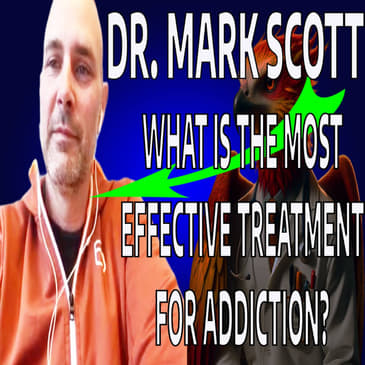



Dr. Mark Scott is a physician specializing in addiction and emergency medicine. After experiencing burnout in his emergency medicine career, he shifted focus towards treating addiction and vulnerable patients. Now, his work primarily involves outpatient and inpatient addiction care, along with family medicine for vulnerable groups. Additionally, Dr. Scott is active in academic teaching, especially in addiction medicine, and manages a multidisciplinary team dealing with complex addiction cases.
Hey everyone, it's Chris Horder here, but you might know me as Chuck LaFlange from the Ashes to Awesome podcast. We dive deep into the realities of addiction and trauma, something I know all too well. I'm celebrating a huge personal victory – a year of sobriety as of October 21, 2023!
I've got some exciting news to share: I've been given an incredible opportunity for healing therapy at the Yatra Center in beautiful Phuket, Thailand. This isn't just a chance for personal growth; it's also a strategic move to keep the podcast thriving in a more cost-effective location. My family has been amazing, covering my travel expenses, but I'm still facing a financial shortfall.
The podcast does bring in some sponsorship funds, but it's not quite enough to cover everything. The Yatra Center is kindly covering my first month's stay in Thailand, but beyond that, my financial future is a bit up in the air.
This is where I need your help. I'm reaching out to our incredible community for support. Any contribution you can make will go a long way. As a token of my gratitude, I'll give a special shoutout to you on my podcast. If addiction has touched your life, we can also share a story in honor of your loved one.
Whether it's a modest $5, a generous $25, or if you're able to contribute $100, your donation can make a significant difference in my journey.
Join me in this chapter of healing and transformation. Your support is invaluable. Thank you for being a part of this journey and for being a part of my story. Donate HERE
If you are listening on the Spotify platform, you are able to share your thoughts about an individual episode in the interactive element that Spotify offers. Doing this tickles the fancy of the algorithm and really helps us to spread the message.
Also please visit our Facebook page here, and like, share, or comment on any of the posts. Your feedback there is sincerely appreciated, and taken quite seriously.
Ours sponsors, that make spreading the message possible :
Rosecrest Recovery Services Call 615-484-8792 or email info@rosecrestrecoveryservices.com
Together We Can Recovery Society http://www.twcrecoverylife.org
Revolution Recovery - https://www.revolution-recovery.com/
Yatra Trauma Therapy Center -https://yatracentre.com/
Nate D Foundation =https://nate-d.ca/
Chuck LaFLange (00:02.102)
Hello everybody, watchers, listeners, supporters of all kinds. Welcome to another episode of the Weekend Rambal on the Ashes to Awesome podcast. I'm your host, Chocolate Flash. With me in virtual studio is Dr. Lisa. How you doing today, Dr. Lisa?
Lisa (00:13.979)
I'm good. I'm good. Jack, how are you?
Chuck LaFLange (00:16.694)
I'm excellent. I'm in Thailand, it's middle of the night, but it's 25 degrees out still, and life is pretty good here. I really can't. You know what? I got nothing to complain about. I just don't. Every day is, I wake up with gratitudes and a lot of excitement. I've got my new place paid for, as you know, right? So my first place in years and years, and it's mine. So that's wonderful, right? With us as well also,
Lisa (00:23.155)
can't complain, it is not 25 degrees out here.
Chuck LaFLange (00:45.654)
Halfway around the world for me in Calgary is Dr. Mark Scott. Mark is a physician who specializes in addiction and an emergency room physician who is also an addictions physician. Is that correct, doctor? Yep, Mark, yep, okay. Hey, thanks for coming on, thanks for coming on. So I'd like to just like right out of the gate here.
mark Scott (00:59.953)
That's right. Good morning or I guess good evening for you, Chuck. And thanks so much for having me.
Chuck LaFLange (01:10.77)
Why don't you let us know a little bit about yourself and how you end up with us being interested in having you on the show at all.
mark Scott (01:18.589)
Yeah, so my story is essentially spent most of my career as a full-time emergency room physician in a major urban tertiary care center, sort of practicing full scope of emergency medicine. When I hit about six years ago, it would have been about my ninth year of practice, I really started to burn out. And it was a matter of saying, I still love emergency medicine, but...
I don't see how I can do this full time. It's sort of slowly destroying me and my family. I need to kind of reinvent things a little bit. And actually, as I sort of took stock of why am I burning out, believe it or not, the patient population that I felt was partly responsible for my burnout was vulnerable patients, homeless patients, and patients with addiction. And so I sort of had this reckoning, right? I'm still early in my career.
I can keep doing what I'm doing and just sort of slowly become a kind of bitter, middle-aged white doctor. Or I can push into this, you know, a wise person once said, you know, if something is exhausting and you're not very good at it, just get good at it and things will change. And so I sort of pushed into that. I started working at a charity run family medicine clinic that serves vulnerable youth and started trying to get better at treating addiction and vulnerable patients. And through that,
My practice has actually changed over the last six years to the point where I actually am no longer in the emergency department. My full practice now is either outpatient and inpatient addiction work as well as some family medicine with vulnerable populations.
Chuck LaFLange (03:00.162)
That's amazing. You know, much like Lisa's backstory, I just find that heartwarming that you found something that really means something to you and managed to turn it into your work and now you're trying to make a difference. What is that typically, what's a day typically like for you then in this new world of yours that you've kind of created for yourself, I guess, right?
mark Scott (03:25.809)
Yeah, I've kind of got three and a half jobs. So I work about a week out of the month. I work actually with Lisa at the same hospital. She's a psychiatrist, as you know, and I work with the addiction team. We consult and collaborate quite a bit. And my job is to run a team, a multidisciplinary team that focuses on managing patients that are complex and with addiction. So that's a week a month.
Chuck LaFLange (03:28.626)
Okay.
Lisa (03:28.784)
Thank you.
mark Scott (03:49.437)
The other weeks are split between, I still work at that family medicine clinic for youth. It's run by a charity in Calgary called The Alex. And then I also work, what might be more sort of, you know, of interest to today's discussion is I work at the opiate dependency program in Calgary, which is sort of a clinic which is tasked with treating the patients with the most sort of severe forms of opiate use disorder. So those are kind of my jobs. I said I have.
Chuck LaFLange (03:57.863)
Okay, I know the Alex, yep.
mark Scott (04:18.633)
and a half, I guess my other sort of half job is I do a fair amount of academic teaching. I was saying to Lisa, I've never come up with a novel thought myself ever, but I'm pretty good at analyzing research, critiquing it, and then dispensing that research and that knowledge to more junior learners. So I kind of geek out on the evidence, particularly surrounding addiction treatment.
Lisa (04:43.999)
Mm-hmm.
Chuck LaFLange (04:44.406)
So that makes me think about, and Lisa, from Angie from a couple weeks ago, who spoke to how there isn't enough physicians being up on addiction medicine. So is it something more are doing with this new generation of physicians, Mark? Or is it, are the numbers improving, I guess, that way? You know?
Lisa (04:55.268)
Yeah.
mark Scott (05:05.005)
I think so. I mean, I can just, you know, speaking from my own experience, I started doing this type of work about six years ago. And I just felt like I was sort of that chicken little running around saying, this work is amazing. It's super exciting. I was trying to tell my emerge colleagues, your emerge skillset can marry very well with addiction medicine. You guys should be doing this. And people sort of said, we're really glad you're doing that, but we don't want to do it. Um, and, and now actually it has come full circle in the last few years. Um, there's a couple of emergency.
Chuck LaFLange (05:30.112)
Okay.
mark Scott (05:34.169)
medicine residents in Calgary that are actually doing formal addiction fellowships. There's a lot of just staff physician that want extra training in addiction and so it's really heartwarming because now there are younger, more energetic and definitely smarter people in my realm that are sort of taking over from me which is very exciting.
Chuck LaFLange (05:39.575)
Oh, okay, okay.
Chuck LaFLange (05:52.766)
No kidding, no kidding, that's promising for the future. And that was one of the things that kind of struck me when Angela spoke to that deficit was that it takes so long, right? Like if the next generation to train and subsequent generations, it just takes so long. It's not something that happens overnight and I'm glad that it's happening. I'm just really glad that it's starting somewhere and that perhaps the next generation and then following the numbers will continue to grow. Go ahead.
Lisa (05:52.999)
Mm-hmm.
Lisa (06:16.995)
Mm hmm. And I think there is a.
Lisa (06:22.067)
I think there's a shift. Like, I agree. I think you're seeing more residents wanting to do training and do fellowships. And that's kind of that long-term generational change, I think, that we'll see. But I do feel like even within physicians who've been in practice a long time, I think that you do also see a shift in them in their compassion towards addiction, in their desire, even if they don't wanna be addiction physicians, but to have greater understanding.
Chuck LaFLange (06:23.246)
Go ahead, Lisa.
Lisa (06:52.431)
You know, like Mark, I always remember, and I've talked about it on the show before, but I remember being, I would have been a clerk actually, because I was on labor and delivery. And I remember, you know, and I'd always been interested in addiction. And a lady had come in and she was addicted to heroin, and she was in premature labor, and I was working with this like 60 something year old Caucasian male obstetrician.
Chuck LaFLange (06:53.134)
Okay.
Lisa (07:21.087)
stigmatized statements about this girl. And then there was like this little lull, you know, where him and I were just kind of sitting there, I think they were prepping her for c-section, we were chatting. And I started talking to him about, you know, if you were to look at, you know, her brain and an fMRI machine, and like, what areas of her brain were really not activating and what areas were, and like, literally in a five minute conversation, again, with somebody like him, you know,
focused on the science of it, he shifted. Like it was, I'll never forget it because it happened so quickly and it was, it sort of shocked me. But so I think there's a shift, hopefully for the better overall.
mark Scott (08:03.357)
And you know, those five minute conversations are so potent, right? I mean, it's awesome that we have more residents doing fellowships in addiction and more physicians getting trained. But actually a lot of the addiction care happens from people that aren't formally trained, right? It's Lisa sitting down with one of her residents and just explaining how she can do, they can do trauma-informed care. It's working with that.
60 year old OBGYN to help him understand that addiction is a disease and this is how the brain is functioning differently. It's me sitting down with another family doc and saying, hey, you know how you have these patients that are struggling with their oxycodone use and misusing it? Well, can I teach you how to start them on Suboxone? You know, they don't have to do a whole fellowship, but sometimes these five to 10 minute teaching sessions can really, I think, help patients out ultimately.
Chuck LaFLange (08:53.266)
Okay. So you said suboxone. Now, the whole MAT or OAT, I guess, right, seems to have different, well, I guess MAT is a little more encompassing than OAT would be, if that's, am I correct when I say that? Because it's, okay. But the OAT, and so the listeners is methadone suboxone, right, and I imagine some other things as well. A couple things I wanna ask about that. One of the common,
mark Scott (09:07.089)
Yeah, it's a broader category.
Chuck LaFLange (09:20.87)
arguments against it is that methadone is more addictive or, you know, there are suboxone just as addictive or whatever, then, you know, fentanyl or heroin or whatever, and I don't know if that's true or not, and you guys can certainly speak to that, but that there's no end to it. From what I remember, very anecdotal, my own experiences, I was never, you know, I do have my own history with addiction, opiates were never my thing, so everything I experienced was
as a standby or somebody watching what was going on. But it seems to be when it first became mainstream, lack of a better term, that it was this understanding that they were gonna taper you up and then taper you down. But now it doesn't seem like that, especially south of the border in the US, where it's like they're gonna taper you up and that's what you're gonna do for the rest of your life. And or at least that's people's idea that that's what's happening anyway. So.
mark Scott (10:14.045)
So I think that's a great question. And that's a question that my patients ask me all the time. So what does the evidence show? Well, we know, you know, I don't have to convince you that addiction is a disease of the brain. There's, you know, certain pathways that we know through functional MRI imaging that get damaged during addiction. And so when we start a patient on a medication like Suboxone or methadone, it is not swapping one drug for another. What the...
imaging of the brain shows throughout recovery is that those medications actually help the damaged circuitry in the brain heal now It takes years which is Reminds us that addiction is a chronic disease, right? It takes a long time to heal and We don't get a hundred percent healing. So we've developed addiction. We've damaged some of the pathways The brain looks different from a neuroanatomy standpoint Suboxone and methadone taken properly
Chuck LaFLange (10:49.953)
Oh, okay.
mark Scott (11:10.177)
Over years helps the brain look more like it's non addicted brain, but it doesn't go back 100% to its sort of novel state. So so this is not swapping one drug for another This is this is you know, utilizing a treatment that does produce healing and interestingly You know, we have this concept in evidence-based medicine of the number needed to treat right? So this is the number of people that you start on a medication to get one successful outcome and so, you know for
Chuck LaFLange (11:14.431)
Okay.
Chuck LaFLange (11:36.106)
I gotta interrupt to just really quickly say, I love that Lisa is my co-host because she spoke to this just recently. And I'm like, she just started saying like, I get it. I understand. And when you're me, that's a big deal. So thank you for that, Lisa, but continue Mark, please do. All right.
Lisa (11:44.755)
Hahaha!
mark Scott (11:48.773)
Okay, and please, if I'm getting too geeky here, please interrupt me. Anyway, just to speak a little bit more about the medications that we use for opiate addiction in particular. So we have this concept of number needed to treat, the number of patients you have to start on one drug to get a meaningful improvement. So for instance, in the world of cardiology, you have to start a couple hundred or even a couple thousand people on a certain drug to reduce one heart attack.
More effective drugs would be like antibiotics. Number needed to treat for antibiotics are somewhere between kind of like four or five. You put a patient on that antibiotic, four or five people. One of them will get completely better. When it comes to methadone and suboxone, number needed to treat is between two and four. So these are the most potent medical interventions that we have out there. These are on the level of like the impact that diabetic medications have on patients' diabetes.
Lisa (12:51.071)
I don't know if you, like obviously you prescribe this stuff, I don't. I call people like Mark to come help me. Why did we lose Chris?
Let's give them a minute.
I've never had that happen before.
We'll just wait a minute.
Lisa (13:14.515)
What's he saying? My computer just flipped out, restarting. Okay.
Lisa (13:22.635)
one thing about like since he's been in Thailand you know because he's running on the treatment centers Wi-Fi and so every now and then I don't know if this was a Wi-Fi thing or a computer thing but yeah we'll give him a minute
mark Scott (13:28.199)
Right.
mark Scott (13:33.017)
I would imagine like the electrical grid is not quite as robust as here in Canada either. Yeah.
Lisa (13:36.503)
Yeah, yeah, exactly, right. That's okay. So how was football season?
mark Scott (13:40.633)
You can just put a good commercial break in over this rate.
Lisa (13:44.091)
Yeah, he totally, he'll take all this out. He'll just chop it all out. Us bantering back and forth. But yeah, football season was good. Is it your son that plays football?
mark Scott (13:48.055)
Yeah.
mark Scott (13:52.982)
Yeah, football is great. Yeah, so I think I told you I coach as well. So football season is a lot. It's two different teams and one that I coach on. And so it's literally like five or six nights a week plus the weekends and it's a lot, but it's fun. And football is nice because it's busy for like three months and then it's done. It's not sort of like, I think hockey for instance, can drag on to seven, eight months depending on your family. So.
Lisa (13:58.13)
Yeah.
Lisa (14:05.348)
Ho ho ho.
Lisa (14:09.01)
Yeah.
Yeah.
Go on. Yeah. Yeah, totally.
mark Scott (14:17.721)
Yeah, have your kids kind of gotten into the sports yet? I think they're a little bit younger than mine.
Lisa (14:21.079)
So I just have one. I have a six-year-old girl and like yeah she's in a she's on a pre-competitive gymnastics team so she does that twice a week for three hours a night which I remember when she started it last year and I was just like this seems insane to me. I expected she would come home like falling asleep in the car. She does not unfortunately. She's like still like full of beans.
mark Scott (14:33.211)
Well
Lisa (14:47.167)
So she does that, she dances for a few hours one night of the week, and then she swims multiple times a week too. Those are kind of the things she loves. Like we've tried soccer, we've tried a few other things. Like soccer, she'd literally would do cartwheels around the field. And I'd be like, chase the ball! And she'd be like, why?
mark Scott (15:01.243)
Yeah.
mark Scott (15:04.997)
I know you gotta, you gotta stoke their passion, right? I mean, otherwise it's just painful and yeah. Yeah, that's cool. That's cool.
Lisa (15:07.755)
Yeah, yeah, we tried like the first few years to like, let her experiment with lots of things. But you can totally tell what your kid's natural aptitude is, you know, like, dance is probably the biggest stretch, like, I kind of get her to do it, because I think there's a lot you need a lot of control in dance, and she's a very hyper little one. And, oh, and climbing.
climbing, gymnastics, swimming. So she's active and I have one. I don't know, you have three, right? She does. Like how? I'm like, I don't know how people do this when they have many children. Like I feel.
mark Scott (15:36.133)
So she sleeps well at night. Yeah, I've got three. Yeah, yeah.
mark Scott (15:45.301)
It honestly, I mean, it sounds silly. It's the same amount of work. It's one is the same as two is the same as three. It's more work when they're young, right? I mean, between ages sort of, you know, 12 months to sort of four years, they try to kill themselves on a regular basis, right? Running into things, falling off of things, eating things. So that's exhausting, but minor, minor is super fun age. Like I think you're probably starting to notice that. Like there are these, so there are 12, 10 and eight.
Lisa (15:49.127)
Really?
Okay. Yeah.
Lisa (16:01.8)
Totally.
Lisa (16:10.163)
How old are they now?
Lisa (16:14.056)
Okay.
mark Scott (16:14.945)
And they're just, they're these cool little people. Like they're honestly some of my best friends. I love hanging with them. They're better at sports than I am. I can't keep up with them. You know, it's super fun.
Lisa (16:19.149)
Yeah, I agree.
Yeah, yeah, no, I agree. I love it. Where did you go? Yeah.
Chuck LaFLange (16:23.804)
Wow.
mark Scott (16:26.417)
We have our leader back, I think.
Chuck LaFLange (16:26.746)
Hello. Hey, I don't know. Like all of a sudden it was like, man, my ears and like everything just froze up on me and that's terrifying. That really concerns me actually. And geez, okay. Last thing, I need another computer crap anonymy. So I'm actually gonna stop recording and then we're gonna start again because it'll just make life easier for me.
Lisa (16:35.326)
Oh, weird.
Lisa (16:42.663)
So yeah, I was going to say, OK.
Chuck LaFLange (00:02.033)
All right, go.
mark Scott (00:05.246)
Yeah, so we were just talking about sort of, you know, what does the evidence suggest about different forms of treatment? Interestingly, if you just sort of think outside the box and just look at what research shows is the most potent intervention for addiction, we have one. We have a treatment that outperforms medication, outperforms residential or inpatient treatment programs, it outperforms counseling. This treatment, if you implement it, it reduces hospitalizations, it reduces emergency department visits, it reduces infectious disease.
It improves people's quality of life, their mental health. It dramatically reduces their substance use. And it, yes, it improves their mortality. So this is everything that we wanna do, but we're not doing it. Now, I'm gonna tell you what it is in a minute, but I'll also tell you that from a cost benefit analysis, for every dollar that we spend on this intervention, we get $2 back in savings to society. And this treatment intervention is housing.
Chuck LaFLange (00:41.233)
I feel like there's something simple and profound about to be said.
Chuck LaFLange (00:48.515)
Okay.
mark Scott (01:04.914)
It's taking a patient with addiction from a state of homelessness to a state of being housed regardless of whether you actually treat their addiction at all. All you do is house them. You save money and you dramatically improve the outcomes that we're interested in.
Chuck LaFLange (01:05.041)
Really.
Lisa (01:10.705)
Thank you.
Chuck LaFLange (01:19.79)
Really?
Lisa (01:20.417)
So I have to ask a question about that. Cause that is something that I think a lot of families struggle with and I know my family struggled with is this idea that like with my brother, for example, to house him, freeze up whatever money he has in his pocket to spend on drugs. Now this is a theory that I think
a lot of families believe. You know, and again, it's, maybe it's connected to the rock bottom thing, which I don't like this idea of let people hit rock bottom, but this idea of if I feed you, if I house you, if I do those things, then I'm making you more comfortable to remain in the life. If the life gets hard, if the life gets uncomfortable.
then maybe you're going to finally recognize or agree or whatever the word is. I don't think it's recognized because people already recognize that they're living in chaos and shit. But I think a lot of families feel that, well, I don't want to help keep you warm and comfy in that life. So what do you, because that seems to contradict your saying the evidence.
mark Scott (02:34.335)
it.
Well, and this is where there's a difference between what does the research show about, you know, thousands of people that you can study together in one cohort, and what we can maybe do as a society, and what do we actually do for individual loved ones in front of us. So yes, you know, enabling doesn't help. I'm just speaking to what, you know, are there societal outcomes or interventions that work, and that's our best. But it's also the most difficult thing that we've been able to
Lisa (02:45.442)
Mm-hmm.
Chuck LaFLange (03:04.354)
Okay.
Lisa (03:04.8)
And I also.
mark Scott (03:06.861)
Implement.
Lisa (03:08.529)
Yeah, for sure. And I also wonder too, if, you know, like without knowing the data, and maybe you know this, but it's like, I'm, from a personal perspective, thinking of a case where I know that my brother had the option of asking for help and it being given to him. He could say, I want help, and we would say, we will give you any help you want. Not everybody has access to that. You know, and so for some people, on housed,
you know, means being on the streets and being in the life more. And that housing them can actually be one step away from the life and may for some people be the only step away from the life in any capacity that they have access to. So maybe there's also that difference, but I've always struggled with that because I know Gabor Matej talks about, you know, that stress feeds and fuels active addiction and that leaving people homeless and suffering and stressed out.
keeps them in that life. And so he's a huge supporter of house first. But having, you know, for again, the family members listening to this, I also know a lot of family members feel like, well, but if I give them a hotel or an apartment, then the money in his pocket can now go to drugs. And so, yeah, I don't know.
mark Scott (04:24.318)
It's fair. I mean, and it's complex. But on the other hand, I mean, I think you could probably tell the same story that I'm about to tell. I met with a young man yesterday who was 23. He'd been in and out of incarceration, been homeless for the majority of the last three or four years, and I was seeing him at the opioid dependency programs. So we were talking about how, is he still taking his opioid agonist therapy? He was. After I built some rapport, I sort of asked him, you know.
much fentanyl are you still using? Are you still using it? And he sort of looked at me like I was a little bit dumb. And he sort of said like, doc, like, no, I have a house now. Like he got accepted into this group housing, sort of supported housing environment two months ago. And he's like, no, I haven't stopped using fentanyl when I no longer was homeless. I don't need fentanyl anymore. And that sort of reiterated, I think what the research does show.
Lisa (04:57.021)
Hahaha
Chuck LaFLange (05:17.913)
Wow, that is interesting. I hate being that guy, but just listening to some of the things Norris talks about in the National Overdose Response System, right? And I think Monty quoted 70% of overdoses happen when they're alone in the home. Do you remember that? Yeah.
Lisa (05:18.21)
Interesting.
mark Scott (05:39.518)
Our data in Alberta, Alberta has pretty good drug surveillance data, so it would suggest about 60% of overdoses happen in a private residence.
Chuck LaFLange (05:45.793)
Okay, okay, yep. Yeah, so how do we mitigate that against, I'm assuming the data that you're talking about has been collected over many years. The new reality with fentanyl, and I don't have to tell either one of you, right? The reality these days is very different than it was even 10 years ago, right? On the street and in the drug world because of fentanyl poisons and all of that. So how does one...
Can you even speak to that, Mark? If we give people housing, then, right? Ha ha ha.
mark Scott (06:19.35)
Well, just to say that like, if you want a fan of Nors, you've got one right here. I mean, that's a cost effective, primarily volunteer run program that's brilliant, that meets people in their homes. I think you've presented on this in your podcast before. I mean, if you wanna talk about stuff that works, like that's a program that works, right? Like way to go guys, huge, huge high five.
Lisa (06:24.982)
Hmm
Chuck LaFLange (06:35.293)
I'm 100% a fan of it. Yeah. No kidding, no kidding, right? Yeah. And you'll save me from running what is apparently a heart-stopping commercial. I've had some feedback for that one. The commercial that we usually run for them is very, it's being punched in the face with an ambulance, as Ryan put it, right? So, like I said, yeah, well, it's supposed to get people's attention.
Lisa (06:40.781)
Mm-hmm.
Lisa (06:49.261)
Hahaha!
Chuck LaFLange (07:01.309)
Right? Like that's, you know, and we should be paying a lot of attention to what's going on out there. So, and you know, it will take this minute. So I won't have to run the commercial now. I mean, folks, if you're listening and you want to help and you want to like really help, Norris is wonderful in that when you volunteer, you're only committing to what you need, what you can volunteer for that day, right? You don't have to commit to a schedule. It doesn't have to have this giant footprint on your life. And so you just kind of log in when you're able to log in and log out when you can't.
Lisa (07:02.27)
Yeah.
Chuck LaFLange (07:31.233)
And what you can do with a small footprint on your life, you can have a giant impact on the lives of others. So if you've got some time and you really do wanna make a difference, 8,500 phone calls, not a single death. That is making a difference right there. So please folks, if you wanna help out. Yeah, yeah, so kind of went off topic, but not really. Right? So, again, and I know we've had this conversation with...
Lisa (07:47.478)
Totally.
Chuck LaFLange (07:59.777)
Somebody in Vancouver, and I'm sorry, I can't remember who, you know, on downtown Eastside about, we house people and now we've given somebody with a serious opiate addiction a locked door that they can use in a loan and often, and I don't know what the numbers are, but often that leads to tragic circumstances. So is there a way we can mitigate that? And I don't even know if you can speak to that, Mark, but you know, if your thoughts on it.
mark Scott (08:24.638)
I mean, I think it's important when we have a life threatening epidemic, right? I mean, opiate epidemic is the number one killer for patients between ages 20 and 35 in Alberta and BC for all comers. It's the number one cause of death for people between 15 and 40. You know, I mean, this thing is killing people left, right and center. I think stories are important, but evidence is more important because.
Chuck LaFLange (08:30.204)
Yep.
Chuck LaFLange (08:54.268)
Yep.
mark Scott (08:54.594)
Stories tug at your heartstrings, but they don't tell you how to answer the question, right? So, I mean huge kudos for instance, you're talking about Vancouver who huge kudos to the BC Center for substance use who is saying like let's just research the shit out of this stuff and Have an open mind and try to figure out what works Because people are dying at an alarming rate So I can't I can't speak too much like certainly there are a lot of horrible stories I mean so getting back to the
Chuck LaFLange (08:59.037)
Okay, yep.
Chuck LaFLange (09:14.868)
100%, right? Yeah.
mark Scott (09:24.75)
you know, people dying behind closed doors, you know, the evidence would, would bear that out. This is what happened during the pandemic, right? We were actually starting to win the opiate epidemic. Numbers of deaths were going down in 2019 and then March 2020 hit and our opiate overdoses skyrocketed. And the predominant number of those were on their own in a private residence. And so we lost connection, right? We lost this sort of social, meaningful social connection. We were isolated and overdoses went up and, and not surprising.
Chuck LaFLange (09:53.457)
So, and maybe, and again, who knows, because this is an exactly evidence-based theory that I'm about, but maybe that housing mixed in with real connection is the answer. Then, right, if you're gonna house people, don't just give them an apartment with a locked door, let's put them in a community where they're, so we can get to the connection side as well, right?
Lisa (10:06.336)
Mm-hmm.
mark Scott (10:10.306)
Right, and so the.
So exactly. And the programs that have been studied that show these outcomes that I was mentioning are supported housing, right? Not necessarily like an environment where there's somebody there with you, but it's a housing connected to some kind of a social worker or somebody that can take you to your medical appointments and can call you to make sure that you're not suicidal and can connect you to resources that can help you. So there's a connection piece as well that's really important.
Chuck LaFLange (10:21.016)
Okay, okay.
Lisa (10:30.785)
Hmm
Chuck LaFLange (10:39.353)
And that I think that is the most important part of that entire thing. You know, if you can qualify with that, then, you know, yeah. Go ahead, Lisa, you're about to say.
Lisa (10:39.388)
Yeah.
Lisa (10:45.757)
Yeah, that makes that just that makes a lot more sense to me. Because again, it's kind of like, you know, when we talk about other harm reduction, the idea is that, I think a big part of the benefit of harm reduction is connection, like, even if it's a safe injection site. Yes, obviously, having clean needles and, you know, those things are important. But I think a big part of why places like safe injection sites can be helpful is that you go in their staff, there's people to talk to, there's, you know, like,
you might not be ready to take the next steps in a sobriety journey, but if you go in and build relationships with people who are able to say, look, there's more than just clean needles, you know, there's other things that can be available to you. I think that's a huge benefit of things like Safe Injection. So to me, the idea that housing, when there is some connection or support to people, yeah, it makes more sense to me that that's, you know, we're seeing good outcomes with that.
Chuck LaFLange (11:41.425)
hell of a lot more sense, right? Yeah, yeah. Wow. Ah.
Lisa (11:45.437)
Yeah.
mark Scott (11:47.682)
So I think that comment, I wonder if we should then jump into, you were talking about harm reduction, like kind of, and saying how it's the connection piece that's important. And I think some of the evidence would actually bear that out. I wonder if we can take that one step further and actually talk about safe supply a little bit. Are we, have we done this to death already in the, in the podcast or?
Chuck LaFLange (12:08.373)
No, we've done it, but we haven't done it. I don't think you can do this one to death. And it actually came up the last two weeks in a row. I thought two of the last three weeks. Anyway, we've talked about safe supply. Yeah, let's get into that. I couldn't, yeah, I love it. I love the conversation.
Lisa (12:10.021)
Oh, we've talked about it, but yeah.
Lisa (12:16.873)
Yeah, I think after CSAM, we've spoken about it a few times. Where, Mark, were you at the talk? Were you at the safe supply talk?
mark Scott (12:25.818)
So I wasn't at the talk, but I viewed it after. And so I sort of know what was presented. And again, this is something I think a lot about. I've read a lot of the research. Interestingly, there's no really good research on safer supply, but there's a lot of research. And some of it is helpful. And actually a lot of it is Canadian. So Ontario and BC has been researching the heck out of this to try to figure out what does this mean? So.
Lisa (12:29.458)
Oh, okay. Whoa.
Lisa (12:44.909)
Mm-hmm.
mark Scott (12:54.486)
So obviously we're talking about safe supply. We're not talking about safe supplies, right? We're not talking about clean needles and that kind of a thing. We're talking about providing primarily pharmaceutical grade, usually things like opiates like hydromorphone in the hopes that patients are gonna use that instead of an incredibly toxic street source fentanyl. And so this has been, you know, looked at in a number of different fashions and there's sort of a signal in the literature. So unfortunately the two most important questions have not been answered.
We haven't shown a decrease in mortality with safer supply. And we haven't shown any evidence of diversion. Those are the things we really want to know, and we haven't answered them. But we do have answers to questions. So for instance, if you take a patient and you put them on safer supply, we know that their inpatient hospital costs go down significantly. So they don't go to the emergency department as much, they don't get admitted as much, their mental health presentations go down.
their infectious complications go down as well. Interestingly, their overall healthcare costs do not go down. So they actually go up a tiny bit and that's because their outpatient hospital costs go up. And it's because the program costs something to run, but they also, these patients, once they get on safe supply, they also start taking their HIV meds. They go to the clinic to get treated for hep C. And so, you know, the engagement with the healthcare system and maybe what Lisa was talking about, the connection with healthy.
people increases. That's what we know so far about safe supplier, at least what I have been able to distill.
Chuck LaFLange (14:29.19)
That's a very different kind of take on the whole thing than what we heard from that talk. Of course, I wasn't there, but that we've talked about in the past weeks. Yeah, can't put a cost on connection though, right? Go ahead, Lisa, sorry.
Lisa (14:41.385)
Yeah, because I feel like, you know, when like that. Yeah, like, I feel like that CSAM talk, one of the things that they spoke about is that through speaking with patients, that patients who were addicted to fentanyl, for example, they said that they would divert their hydromorph. They said that the hydromorph did nothing for them.
So I don't know, like does the stuff that you're talking about, is that mentioned anywhere? Or you're saying there's just not really enough true data to analyze.
mark Scott (15:15.338)
Well, well, and this is why evidence is so important, right? Because I could also, I could show you presentations where people said the opposite, right? They said that this prescription grade hydromorphone saved my life. So I know I no longer use fentanyl, but these are anecdotal stories, which I think you kind of have to ignore, right? You got people on one side saying hydromorphone saved my life. You got people on the other side saying my 10 year old is now addicted to hydromorphone because you found it on the playground. Like these are stories with very little evidence. And I think you have to kind of remove those.
Lisa (15:32.608)
Right.
mark Scott (15:44.578)
from the equation, especially if we want to try to save people's lives, we need to do it with evidence. And that's where it's frustrating because there is quite a lack of evidence.
Lisa (15:45.225)
Mm-hmm.
Chuck LaFLange (15:54.201)
Right? How would you, we did mention this, talked about this before. That's exactly what I was about to say. Yeah.
Lisa (15:54.36)
Now how like how do we prove diversion?
Lisa (15:59.769)
Yeah, sorry. Yeah, you know, so, because that was, that was a, yeah, and that was like a kind of a core, I mean, I have to say that at the CSAM talk, I felt like what they were saying above and beyond everything was that we don't really have data to know if we're helping or harming. I felt like their talk lent more towards the idea that this may be harmful.
mark Scott (16:03.71)
Oh my goodness, that's really difficult.
Lisa (16:28.853)
That was my impression of it. But again, it's like, how do we identify? I mean, like some of the things I was saying to Chris is like, if you have someone come in an opiate overdose or opiate poisoning, and you're able to look and say, well, these people were not prescribed opiates, and there's hydromorph in their system, then that would maybe suggest that somebody's hydromorph had been diverted, and it ended up in their hands. But really, it's like, it's such a hard thing to study.
Chuck LaFLange (16:43.894)
Uh oh.
Lisa (16:59.381)
So I don't know, I don't know how we get that data to know.
mark Scott (17:00.778)
Yeah, they've looked at that. I think they're...
Well, there's a lack. There's a little bit though. So they have looked at that exact issue that you brought up. So I think I can't remember if it was Ontario or BC, but they did do a pretty extensive analysis of the medical examiner cases with overdoses to try to figure out when BC started prescribing safe supply, how many of the people that are overdosing have hydromorphone in them. And it's basically none of them. So people are still dying from fentanyl. They're not dying.
from hydromorph, but that doesn't answer the question about diversion. Now, the clinic, one of the clinics I work with in Calgary, we do actually prescribe quite a bit of safe supply. Alberta has a model where we are very restrictive with our safe supply. So the only, if you have opioid use disorder, the only way to get a short-acting opiate like hydromorph is to get it in a witnessed environment, like the clinic that I work in. So it's called Narcotic Transition Services. And so we can actually follow these people pretty closely.
with urinalysis is and I can tell you that we do see a dramatic reduction in fentanyl in our patients' urine once they start on safe supply. Certainly they do not all stop using fentanyl, but we do see a large reduction.
Chuck LaFLange (18:15.077)
And I think that's the key. It has to be supervised. 100% has to be supervised. And that's the only way to know 100%, right? Like you're saying there, Mark. Sorry, Lisa, I cut you off.
Lisa (18:15.425)
But again...
mark Scott (18:27.074)
Well, the other question too is, are we using the wrong drug? Like, should we just be using safe pharmaceutical fentanyl? I mean, is hydromorphone not quite the right medication? I don't know. These are things we don't know, but they're really interesting questions.
Lisa (18:27.189)
And are you talking about?
Chuck LaFLange (18:33.938)
Well, you know.
Chuck LaFLange (18:40.281)
Well, anecdotally, I can tell you that anybody I talk to is hydromarphal, it's just not going to cut it, right? You know, right? So.
Lisa (18:44.974)
Even like when you're talking about the medical examiner cases, like have they looked at, okay, so there's no hydromorph in their system, but were they prescribed hydromorph? Because if they are prescribed it and they're still dying of fentanyl, is that more evidence that the hydromorph is not getting used by them because they don't feel that it's effective?
Chuck LaFLange (19:05.773)
I would think that's a pretty low hanging fruit way to find that information.
mark Scott (19:08.542)
It's a great question. I guess I would come back at saying, let's first just stop people from dying, right? Because that's the horrible thing that's happening that we can maybe intervene against. So again, real lack of evidence, but it does seem like the people that are dying don't have hydromorphone in their system. And that's all we know from that research.
Lisa (19:08.838)
I don't know.
Lisa (19:16.81)
Yeah.
Chuck LaFLange (19:18.309)
Yep.
Lisa (19:31.937)
Right. Yeah. And actually, so we often have.
Chuck LaFLange (19:35.569)
So is there a difference in the application of the programs, Mark, between like BC and Alberta, for instance, with BC having less supervision? Is that, is that, yeah.
Lisa (19:43.681)
I think so.
mark Scott (19:44.862)
Yeah, a huge difference between BC. I think a lot of people would say BC is on one side of the equation with a very liberal prescribing policy for safe supply and Alberta is much more on the restricted side. So very much a different philosophy. It's hard to know. There's probably the truth is somewhere between the two. Right. It's hard to say.
Chuck LaFLange (20:03.28)
Okay.
Chuck LaFLange (20:09.164)
Yeah, yeah, yeah. Okay, Lisa?
Lisa (20:09.333)
Mm hmm. Yeah. I don't even remember what I was gonna say now. But yeah, I
mark Scott (20:18.014)
Well, I can talk a little bit about what the drugs actually do themselves. If that's of interest. So, you know, I think we, we all know that opiates do two things. Every opiate does two things to different degrees. They give you analgesia and they give you euphoria. Analgesia pain, pain release, um, euphoria. We know what that is. That's high. That's being high, right? Um, no, some, some opiates do much more of one than the other.
Lisa (20:23.413)
Yeah.
Chuck LaFLange (20:24.294)
Yeah.
Chuck LaFLange (20:33.245)
Okay, $20 word.
Lisa (20:35.233)
Pain, pain control.
Chuck LaFLange (20:37.173)
Okay, okay, okay. You guys are like, well, yeah, come on. My job to dumb it down. Okay. Yeah. Okay.
mark Scott (20:46.778)
So for instance, oxycodone is a really crappy analgesic, really poor for pain, but it does make you high. And that's probably why it was sort of that gateway drug that led to a lot of, you know, that kind of led to, you know, for a certain extent, parts of the opiate epidemic. Hydromorphone would be the opposite. So hydromorphone does not really make you high, but it's actually a very good analgesic. So that makes me wonder we're taking somebody who's using fentanyl, we're giving them hydromorph.
Chuck LaFLange (21:04.814)
Yeah.
mark Scott (21:15.818)
I think what the users would say is, well, I don't get the high from it that I'm seeking. I'm not dope sick. So it's working for that and it's working for my pain. But it gets back to the question, like, are we using the wrong pharmaceutical for safer supply?
Chuck LaFLange (21:31.873)
Yeah. Well, I mean, I would argue from my very limited, you know, perspective on it that, yeah, we are using the wrong one.
Lisa (21:40.301)
And that's something that Attica talks about a lot, right? So do you know Attica, Mark? Yeah.
Chuck LaFLange (21:43.005)
She sure does. Yeah.
mark Scott (21:45.47)
I do, I met her at CSAM actually, yeah. Yeah, really interesting individual.
Lisa (21:48.253)
Right, so totally. And she's actually often on the weekend ramble, but she's not feeling well this week. But that's something, and one thing about Attica is she does have, I think, a very, she has a, her lens is harm reduction, right? Like she's in the alleys, she's on the streets. Her thing is, can we not stop these people from dying with whatever it is we need? And she is very,
Chuck LaFLange (21:49.405)
Yeah.
Lisa (22:15.605)
very explicit and I think, you know, I'm speaking for her here, but I think her belief is if we would just give people clean drugs that won't kill them, that's step one in harm reduction. You know, so like you're saying, like if someone is addicted to fentanyl, then why don't we just give them safe fentanyl instead of trying to get them to use hydromorph that maybe they're going to divert because it doesn't do the same thing. You know, so she
Yeah, that's I feel like I had to put that plug in because I know if Attica was here right now, she would be like, yeah.
Chuck LaFLange (22:47.973)
And she'd be all over that, right? And Ryan spoke to the same thing and said, half measures, that's what we're doing is half measures. And so it's like, let's deregulate the entire damn thing, all of it, and regulate, sorry, and decriminalize all of it and see what happens. Was Ryan's kind of answer to that. But go ahead, Mark, you were gonna say.
mark Scott (22:50.614)
Yeah, I mean, if we look at what's...
mark Scott (23:09.43)
Yeah, I mean, what's in our drug supply? I got an email a couple of weeks ago with the kind of the latest sort of seizure of fentanyl on the streets in Calgary, and they do a chromatophic analysis, which is basically figuring out everything that's in it. And our fentanyl, if I go and buy a point of fentanyl right now in Calgary, it's got fentanyl in it, obviously. It's got carfentanil, which is an incredibly potent version of fentanyl. It's got this thing called xylazine. Most of our drug supply is xylazine, which is a synthetic tranquilizer.
Chuck LaFLange (23:34.515)
Oh
mark Scott (23:36.85)
a couple different benzos. The supply that I last looked at in the analysis had things like gravel in it, ketamine, cocaine and meth are sometimes mixed in. So this is an incredibly, this is not, you're not buying fentanyl, you're buying a recipe of 10 different ingredients, right?
Chuck LaFLange (23:52.829)
It's like saying a cigarette is nicotine, right? Kind of same idea. There's so much more going on, right? Than that, right? So, yeah. Oh, that's scary. How do you know? This isn't medical in any way, shape or form or clinical, but I gotta say it pisses me off that they've taken the worst drug, street drug the world has ever seen by far and made it worse, then made it worse, then made it worse. That kind of raw evil.
Lisa (23:58.921)
Yeah, yeah, for sure.
Chuck LaFLange (24:20.141)
it takes to do that to make a few bucks pisses me off. And I've just, I have to throw that in because you know.
mark Scott (24:25.838)
So how do we fix it, Chuck? How do we, what's the answer like? That's the thing that keeps me up at night.
Chuck LaFLange (24:29.189)
You know, part of me says, carpet bomb Mexico. I'm sorry, I shouldn't say that out loud, but that's where it's coming from. We know this, right? The precursors are coming from China and the cartels are mixing this stuff up at Mexico and they're shipping it out, right? So.
Lisa (24:33.655)
Hahaha
mark Scott (24:44.13)
But we know like drug seizures only make deaths go up, right? So like.
Chuck LaFLange (24:47.697)
The war on drugs, right? You're right, you're right. So that's the emotional side of me, says that. Now, right? The emotional side of me would handcuff my niece to a pipe in the basement if I found out she was in opiate addiction, right? So, right? The emotional side of Chris doesn't get to our Chuck. By the way, Chris is my real name. Chuck is what we use for the show. Started a long time ago. Monster's been created, so that's why it seems confusing sometimes to anybody that's listening so right. But the...
mark Scott (24:52.778)
Yeah, yeah.
Lisa (25:15.273)
I know some people don't realize Chris and Chuck are the same guy, so.
mark Scott (25:15.746)
Bye.
Chuck LaFLange (25:18.149)
Yeah, right. Right. Me too. Me too. Right. Chuck LaFlandre has like a much better like, you know, but media personality to bring to it than Chris Horter does. Right. I'm Chuck LaFlandre. Right. Don't make me break out the radio voice here. Right. Yeah. So.
mark Scott (25:20.074)
I immediately feel cooler when I call you Chuck.
Lisa (25:22.978)
Mm-hmm.
mark Scott (25:30.274)
Oh yeah, man, you're friends with Chuck LaFleur? That guy's awesome.
Lisa (25:39.177)
So I'm curious, Mark, like what are your, you know, like, and I asked this of everybody who comes on, I obviously there's no simple solution. I don't think there's one solution. But as someone who does this day in and day out, who's been doing this for years, what's your theory? Like, do you have a theory? Do you feel like, you know, if you had a magic wand, and you could do anything policy wise, medication wise, systemic wise? Like, what would you do?
mark Scott (26:06.73)
Well, I mean, I already told you what I think the best treatment is. So I think if we could be dramatic and intentional, I mean, Alberta just announced a $5.5 billion surplus. Imagine if 5% of that went into subsidized housing. Um, so, I mean, that's, that's a treatment, right? Um, policy wise, I guess I'm really curious about it. What if we just provided a source of clean fentanyl?
Lisa (26:11.885)
housing.
Chuck LaFLange (26:11.901)
housing.
Lisa (26:24.224)
Yeah.
Chuck LaFLange (26:24.581)
No kidding, eh? No kidding.
mark Scott (26:35.99)
You know, patients already have developed the disease, right? They have an incredibly potent opioid use disorder. Like give them something that is much safer to use while they're working on everything else. They're working on their housing, their trauma, their, you know, you name it.
Chuck LaFLange (26:50.809)
No kidding. Well, Portugal had some success with this, right, some time ago. Arguably that success has fallen off. Not with Fentanyl, but heroin, same idea though, right? I mean, the principles apply. Arguably that success has been short-lived. However, the counter to that would be because it was working, people stopped paying as much attention, funding started being taken away from that program, and so it wasn't, to say that it's not a success isn't fair because funding was taken away from it. So, and that's.
That's for me reading like three articles. So it's not like that. So, you know.
Lisa (27:23.085)
But it's true, I guess if you took away the stress and the survival focus of housing and keeping yourself from going into withdrawal and being sick, and maybe you do free people up to focus on wellness and connection and engagement.
Chuck LaFLange (27:42.617)
Well, I think it'd be obvious you take away a lot of the criminal element, right? Now you're not breaking into cars and hurting people and doing the things that opiate addiction makes you do, right? You know, and that's to not be a great person. Well, to not do great things, to say, you know, right.
Lisa (27:46.506)
Yeah, big time.
Lisa (28:00.621)
And I think for me too, like one thing that I think is really important is that it has to be more than safe supply. It has to be more than harm reduction, right? These people are sick. And I think that, yes, step one is let's stop them dying. But I think it, like they deserve more from society, from their health care system.
Chuck LaFLange (28:27.525)
Dev straight.
Lisa (28:30.353)
that it's you know maybe it is house them maybe it is ensure they've got access to safe supply but then you know like it shouldn't stop there.
Chuck LaFLange (28:40.669)
some sort of program holistic in its, yeah, right? Yeah.
mark Scott (28:41.47)
Yeah, make sure there's a bed available if they want to do addiction treatment. Like how, when was the last time that you had a patient come and talk to you and said, Hey, I'm ready now. I want to get on medication. I want to go to addiction treatment and, and you had a bed available because that happens very close to never, right? There's a six, eight month, eight weeks. Sorry. Wait.
Chuck LaFLange (28:50.361)
Yeah.
Chuck LaFLange (28:58.67)
Yeah, right.
Lisa (28:59.785)
I feel like...
Lisa (29:03.881)
And I feel like Mark, you've probably witnessed like experience this with me, but I will often hold those people in the hospital. And I know a lot of people won't do that. You know, a lot of people, um, you know, like I've talked about on this show that I, like even this week, I showed up at emerge on Monday. There was a guy who had been admitted on the weekend to short stay with severe substance use disorder. He had been trying in the community phoning fresh start on a daily basis.
trying to get a bed had recently become homeless because his family said, that's it. Like you can't live here anymore doing this. And I said, no, we're not gonna go to short stay. And he's now on unit 25 with me. And it's like, no, and you guys are helping them. Arch is involved. And it's like, I will keep him. As I said to him, as long as you're doing what we're asking, as long as you're showing motivation,
you can stay here until there's a bed. And I have managers yell at me. Like.
Chuck LaFLange (30:07.353)
I love that about you, Lisa.
mark Scott (30:07.85)
Keep letting them yell, keep letting them yell. But, and that's awesome, but that's rare, right? That's super rare that patients get that opportunity, which is really frustrating.
Chuck LaFLange (30:12.782)
Right. Yeah.
Lisa (30:13.174)
Yeah.
Chuck LaFLange (30:17.357)
It sure is, it sure is, right.
Lisa (30:17.501)
It is. Yeah. And it's funny because I've had people even say even management have had management say to me, but there's thousands of them. And I'm like, Yeah, but they're, you know, unfortunately, or fortunately, whatever, it's like, they're not all my patients. And the one in front of me, I'm gonna help them. And yeah. Yeah. But it is sad when you hear these
Chuck LaFLange (30:37.273)
And that's all you can do though, right? That's all you can do. It's that one in front of you, right? Lisa, every time you tell those stories, I gotta say, it just makes me so fortunate that you're a part of the show because that's such a rare thing. Yeah.
Lisa (30:49.993)
Oh, thank you. Thank you. But I feel like I feel for these people, you know, like, because I'm looking at this guy and you know, he's got young kids. He's a super nice person. He's sick. He's trying. And it's just like, you know, like, why are we not helping these people and like, I'm sorry, but to have him in hospital for
mark Scott (30:52.686)
agreed.
Lisa (31:12.065)
for 72 hours and to send him out to the streets, that's not helping him. Like what a waste of 72 hours that is. Like what are we doing? We're not doing anything. We're, you know, I guess giving him a warm bed for a few days and some food for a few days. And then we're basically throwing him to the wolves. And it's, yeah, it's not good.
Chuck LaFLange (31:31.065)
Well, that brings me to something else we can talk about towards the end of the show here. Mandated treatment, Mark, where are you with that? Right?
mark Scott (31:41.93)
Um, again, I mean, uh, I think this, this highlights a little bit that mental health and addiction are the same disease, but that when you actually research them, they function a little bit differently. So, you know, most of the research does show that forcing people into treatment when they're not in a stage of change that they're ready. Um, it doesn't work. Um, they do not reduce their substance use. And there's actually
some associated harm. So we know for instance, from the incarceration data that if somebody is released from incarceration, their rates of overdoses are between 20 and 50 times higher in the two weeks after release. So they lose their tolerance rate to their drug and then they go back and they use the same amount and they overdose and die. I guess from my standpoint, I think we should talk about it. I think we should research it. And I think it's awesome that you guys have been talking about this, but I'm just.
Chuck LaFLange (32:16.294)
Okay.
mark Scott (32:33.29)
sort of thinking, let's get the voluntary treatment piece down first. Like why we have a six to eight week wait for people to get into addiction treatment programs. Why, why would we even consider mandating treatment for people that aren't ready? The other concern I have is when it comes to indigenous populations, right? So we, this is the elephant in the room. We did some really horrible things with our indigenous population, where we forced them into residential schools, you know, environments that were not healthy for them against their will. And like,
Chuck LaFLange (32:37.884)
Yeah.
mark Scott (33:03.25)
look how that turned out, you know, that terrifies me when we bring up the idea of mandated treatment.
Chuck LaFLange (33:09.745)
Fair enough, fair enough. I'll sidebar on that for a minute. So Mike Miller here at the Atra Treatment Center and for anybody listening, I am right now at Atra in Phuket, Thailand, which is a trauma therapy center and I gotta say, shout out, I'll do the plug for Mike right now too instead of running a commercial. Wow, so what happened here, Mark? I don't think you know the backstory, at least I haven't told you.
I recorded with Mike, who's just a gifted trauma therapist, just as another guest on the show. As soon as we hit stop record, he went, you have some things you need to deal with. And he could just tell throughout. Because you'd see that psychosomatic thing happening to me as we were talking about things. And so he offered me a scholarship here. And he said, if you can get to Thailand, you can come for a 30-day stay on us, right? Which is no small bill. So I.
One thing led to another, it took a few months. In the course of that few months, he was telling me about how much easier life is in Thailand if you're capable of working remotely. And of course, that's what I do. So one thing led to another and I grabbed a one-way ticket and I came to Thailand. So I live here now. When my stay at Yacht was done, I have my first apartment of my own in years ready to go. I am like...
so excited for that. You know after years and years in active addiction. I've only been cleaned now for 14 months. So it's uh wow right what an opportunity it's been. No no it's not only I should as I said that I was like oh shit here goes right it is it is something yeah.
Lisa (34:45.517)
It's not only though. It's not only.
mark Scott (34:49.116)
something.
Hey, I have a question for you, Chuck, with regards to that. What allowed you to get to the point in life, that's a very bold, scary thing that you did, which is also really cool. How did you get the confidence and the strength to be in the point where you'd say, yeah, I'm gonna do this?
Chuck LaFLange (35:09.069)
you want to put that into real perspective, I'll add to your point before I answer the question. When I started the show in January, February 27th of last year, of this year, sorry, I started it because I was, my, I sobered up for the first time in decades. My last couple years of active addiction were horribly violent. Some of the things I went through were just, it was so bad, right? The,
The appearance of fentanyl and meth together in the drug scene completely changed the world. You have one drug, and this is the way I like to say it, it's this perfect storm. One drug people will do absolutely anything for, and that's fentanyl, it's physically and psychologically addicting beyond anything the world's ever known. And another one, meth, keeping them awake for two weeks at a time doing those things. And it's, like what it did, I'll speak very bluntly. I was in, I was.
I've been a drug dealer one form or another for most of the last 25 years. Until the last two years of it, I had never even come close to thinking I might be about to get robbed. And then in two years, tortured, house invaded, kidnapped, beaten to a pulp multiple times, robbed, knife, gunpoint, crazy things in two years. And that was because of these two drugs entering the scene. It just changed the world.
So when I got sober, now all those traumas, whoa. Like they all hit me and they hit me really hard. So 13 or 10, 12 months ago, I couldn't even get on a bus in Calgary. I'd just turn around and go back to my room. Nope. Right? It's like I was so like just, it was really bad. Think about it now, like that feeling of getting on the bus and just nope, disappearing. I've been an alpha my whole life.
Right? It's like, you know, so for me, that was really disturbing and humbling. And, you know, when I started the show, I had no idea what was gonna happen. But we've created now this network of people. And I've never actively participated, not never, since moving out of Saskatchewan back into Calgary and getting clean, I haven't done any 12-step work. I haven't been a part of a program.
Chuck LaFLange (37:31.153)
but I've had the show and the people and this community of people that we built. I mean, and sorry, because of those traumas, I couldn't get a real job. I can't get on the bus. How am I gonna get a real job? Right, like I just, it wasn't a thing. Social services wasn't available to me just because of moving provinces and whatever. So I started the podcast with the intent that this was gonna be my living. And so from day one, 12, 16 hours a day, go. Right, I've worked my ass off.
to get to the point where we're at now. My income is meager, but it's a hell of a lot more than most people are making after a year. And you know, I'm like way more than most people are making after a year. And the community of people that we built with the show is phenomenal. It's absolutely phenomenal. Ryan on our Kaleidoscope Wednesdays, the therapist that we were mentioning earlier, changed my life. He's got a huge part to do with where I'm at today. Lisa has a lot to do with where I'm at right now.
And my mother, the community, the support that I get is second to none. And it's from now hundreds, maybe thousands of people. It's incredible. So I went from not getting on a bus with 30 people to getting on a plane with 400 people to move halfway around the world and start a new life in a country where I knew one person. Right, and it's like that strength, right? I'm really proud that I did that, right? Like I've come so, so far.
And it really comes from the sense of accomplishment and pride you get when a mother checks in, and we get that a lot. I get messages every week from people that we're supporting and helping and trying to help navigate this. That's where it all comes from, and connection. For me, it was connection times a million. And that's what's able to get me to this point. Now that I'm at Yatra,
Like the day I walked in, I'm sitting there doing my admin with Stacey and she says, and she starts talking about food and I says, well, I don't like spicy food, but I guess I better get used to that. I'm in Thailand now. She says, ah, you're at a trauma treatment center. Lunch is not going to be stressful. Right? So every day I sit down and there's a plate with Chris on it. And that's what I get to eat. Right? Like everything about this place. I've got EMDR, CBT, internal family system therapy, yoga, meditation, Tai Chi the other day.
Lisa (39:45.581)
Hahaha
Chuck LaFLange (40:01.621)
Ice baths, like the holistic approach here is holy shit amazing, right? Like I've, there's a freedom, I get emotional when I say this, there is a freedom after being trapped in my mind and even my home for so long, that's just hard to express, right? The amount of gratitude I have for this is, I can't put it into words, right? It's been absolutely amazing. With all that said.
mark Scott (40:30.538)
That's a story that I'm so glad you're telling and we just need to tell those stories more. It's awesome.
Chuck LaFLange (40:33.835)
Oh man, right connection, connection. I'm the exaggerated version of it because I had so much connection, right? But so you're talking about the indigenous population and what's now intergenerational trauma, which I've learned more about here. And for people that go, wow, you can't pass on fear. Mike put it in great perspective for me the other day and said, are you afraid of heights? How many people are you not afraid of heights? Why?
Lisa (40:36.491)
Yeah.
Lisa (40:41.522)
Mm-hmm.
Chuck LaFLange (40:59.933)
It's not like you almost fell off a cliff. Because generationally, you're genetically, you're afraid of heights for a goddamn good reason. So yes, intergenerational trauma is a real thing, right? Of course it is, it can be passed on genetically. I was just like, whoa, that's a great way to explain that. When we had that conversation, I got to thinking, because I'm from Saskatchewan, huge indigenous population there, right? Huge indigenous population there.
Lisa (41:03.263)
Yeah.
Lisa (41:11.917)
Hmm
Chuck LaFLange (41:26.373)
and I have some connection back there still with some of the people that are involved in those communities. It's that if we could get one person here from the reservation.
get them to run this program and see what it's all about, take it back with them and then talk to the bands about how to integrate an Indigenous culture component to this, have an elder here on staff with sweats and all the things that go along with that population. I said, just imagine if you could take these people out of the reservation that really need healing, bring them here, send them back. What could they bring with them back? What's the cost benefit to that?
So now, and I know you're aware of her, Lisa Chantel from Trap House Testimonies. She's somebody in Saskatoon. Mark, if you're on social media at all, check her out, she's something else. But she cares beyond, like I actually made a gif of my phoenix going, fuck's sake Chantel. Some of the things she says are just over the top, but she cares like very few people in the world do. She's indigenous and she's connected with the people that matter that way.
Lisa (42:28.266)
Ha!
Chuck LaFLange (42:38.181)
or that can make a difference to influential people. She's been invited over for a scholarship now. And yes, right? So if we, and she's kind of the perfect person for this. So if she can get over here, and her first answer was fuck no. As soon as I said it to her, it was like, nope, no way. It was a trauma response, right? Because she's been through a lot of the same stuff I have and even more so. She was a gang member and you know, so some really, like for a woman gang member in the indigenous street gangs of Regina, that's where she was for all that.
Lisa (42:43.561)
Oh, I didn't know that.
mark Scott (42:45.324)
awesome.
Chuck LaFLange (43:06.641)
The stuff I, not that you compare because trauma is all relative to the person experiencing it, right? But I can't even begin to imagine some of the hell that she went through, right? In that lifestyle. So again, if we can, it's contagious, the healing is contagious, right? And, and so hopefully we can kind of create some sort of pipeline, you know, between us and get that thing rolling. And like I said, if you take, if you take the thuggest street gang member and drop him into a reservation, he's going to spread.
Lisa (43:15.378)
Mm-hmm. Yep.
Chuck LaFLange (43:36.689)
that. If you can take somebody that's healed and drop them in, they're going to spread that. So let's look at that cost benefit and talk to the bands about maybe getting some people over here to experience it the way I have. Right? So hopefully, you know.
Lisa (43:49.045)
And the other thing in your story, like with what you're just sharing, for me is I think there's a lot of hope in hearing what you're talking about, and the fact that yes, there's not enough resources. There's definitely not, but I think sometimes people suffering feel like there's nobody, that there's nobody who cares, that there's no access, and you hear stories like this, and there are people who care.
Chuck LaFLange (44:18.193)
damn straight, this is a lot more than we think.
Lisa (44:18.465)
And there is help to be had, and hopefully people listening hear that, that there is help.
Chuck LaFLange (44:26.777)
Well, what was the boot on my neck for the last two years of active addiction? Right. It was perceived lack of connection. Right. It was perceived lack of connection. You know, it wasn't that it wasn't there. It was that I believed it wasn't there. And that was the problem. Right.
Lisa (44:34.313)
Yes, perceived.
Lisa (44:40.567)
Right.
mark Scott (44:42.223)
It sounds like, and I would absolutely echo what you say about connection, like that's it. That's how people get better. It sounds like you had some people that believed in you. Like you had a couple people in your camp.
Chuck LaFLange (44:49.785)
Yeah.
Chuck LaFLange (44:58.297)
Yeah, yeah, I sure did. And it, but I didn't, I knew I didn't have those people for the last two years. It wasn't that I believed it, I knew it. I knew it much like the most devout Christian knows there's a God. I knew that nobody loved me. I knew I wasn't lovable. Right? And that's what.
Sorry, when I think about families doing this cold shoulder, starve them out, let them hit rock bottom, shit, because that's what it is, it's shit, right? I'm sorry to anybody that's making those choices and I'll just call you out on it. There's a way to have boundaries to protect you and the rest of your loved ones while still making sure that person knows they are loved. And it is so important as we go into the holidays here that people keep that in mind.
your loved ones, and Lisa, we talked about this with mom last week, they don't know they're loved. You know, and I say to people all the time, let them know. Well, they know. No, they don't. They know they're inactive addiction. They know they're dope sick. They know that they have to survive another day. But the one thing they don't know is that they're loved. So let them know, right? And let them know every fucking day if that's what you've got to do. Because you just, you know, had my mom shifted.
And that's what saved me at the end of the day. She shifted her perspective of, you know, he's doing his own thing, he'll get to us to making sure I knew and boom, my life changed overnight. As a result, not overnight, it was a long couple of years, but it took me a while to get there. And it's the other thing, recovery is not a linear thing. It's just not, right? There's ups and downs and backs and forces, three dimensional, fuck it's four dimensional, right? It's like recovery is a...
Lisa (46:30.145)
Hahaha
Chuck LaFLange (46:45.885)
crazy journey for a lot of people. And people, I hope that we can help people understand that and maybe have some tolerance and patience with it. You know, right? So, yeah.
Lisa (46:55.281)
Yeah. And Mark, you talked about.
mark Scott (46:56.782)
Boy, I'm so glad you told that story. It's kind of made my weekend, actually. I'm feeling a little bit like I bored you with what is the research, you know? And now you tell us this story that just breaks through and just tells us what is so meaningful. So thank you so much, Chuck. That's awesome.
Chuck LaFLange (47:02.157)
Oh
Lisa (47:02.407)
Bye!
Chuck LaFLange (47:07.096)
No, no, that...
Chuck LaFLange (47:16.002)
Oh, no, I appreciate you coming on. Yeah. Lisa, you're about to say.
Lisa (47:20.845)
I was gonna ask a question and kind of in keeping with what Mark's just saying, right? Is that I think it's these personal stories that are so inspiring, right? Like as physicians, right? We read evidence, we study data and that's important. But I think feeling, you know, what like listening to Chuck right now, feeling what that brings up in us, that inspires us and motivates us to do better and work harder.
Do you feel like now, like, because I know you do a lot of teaching, do you feel like, you know, in people that you're seeing interested in this field, do you feel that they're, that they are inspired? Do you feel like they get it beyond just the data?
mark Scott (48:10.118)
so and I think you know like how do you treat burnout well the way you treat burnout is you get people meaning right if you are doing something that is helping people don't burn out doing that right so just teaching somebody to use some tools I think you also have to surround yourself with people that are getting better you can work in the realm of addiction and never see people get better just depending on the environments
that you work in. And so you gotta, gotta meet some chucks, you know, um, that young, that young guy that I told you that thought I was kind of dumb because, um, I asked him if he was still using fentanyl and we got housing. I mean, like you gotta have people like that, right? That's, that's what gets you through.
Chuck LaFLange (48:44.337)
Ha ha ha.
Chuck LaFLange (48:52.029)
That's awesome. That's awesome. Yeah. Damn straight. I love that. I do. I do.
Lisa (48:55.06)
Yeah.
Totally. Yeah. And I feel like at work, probably with Arch, you know, like, we do, we share those stories. Like even last week, you know, we had helped a guy who's doing really well, and he'd reached out to the social worker I work with and sent a photo of him, you know, celebrating a year of recovery. You know, and he's like, you got to come see this, you know, and it's like, we thrive on it, you know, because yeah, it's just so motivating that, okay, you know, we're making a difference, like keep going.
Chuck LaFLange (49:15.632)
Ah...
Chuck LaFLange (49:19.377)
Cough cough
mark Scott (49:27.182)
That's our fuel, I think.
Lisa (49:27.241)
Yeah, totally.
Chuck LaFLange (49:27.449)
You know, when you get those, Lisa, and maybe even that fellow, ask them if they'd be interested in being on a podcast. Right? Those are wonderful, wonderful stories, right? And the show has kind of moved away from recovery stories and gotten into the recovery side of things. Like, I don't want to hear the gory details anymore. Quite frankly, I don't want to relive my past anymore. I don't expect anybody else to do it. What I like talking about is this. What's going to work? What are we going to do?
Lisa (49:34.269)
Yeah. Yeah, I know.
Chuck LaFLange (49:57.245)
Like, what do we do from here? What's worked for you? Yesterday's live feed on Black Ash that we did, the whole thing was about what works for you. And all four of us got to comment on that and we talked about some of the things that get us to a point where we need something to work because that happens. ADHD for me, Mark, has been by far, what's probably got a lot to do with why the show is where it's at, but it's also been for me the biggest challenge. The closest thing to relapse I've had.
is knowing that 40 bucks in a phone call make the chaos go away because I'm not medicated. And I had to wrestle with that for quite some time. And I often say, hey, I wish I didn't know. My buddy's wife pointed it out to me sometime. Well, of course you do. You've been self-medicating for 25 years. So now, all of a sudden, it's coming to the forefront and the chaos. I just want the chaos to stop sometimes. And when I get mad at myself 25 times a day for this and that, and it's just like...
40 bucks on a phone call, you know, it's all it's gonna take to make this go away. And now, you know, one of the things here, that's helping me in a big way, in a big, big way. Meditation, some self-talk, the internal family systems, like who's calling you an idiot 25 times a day, right? Like, let's look at that, you know, and so I can't express enough. Mike is a genius, the way he mixes these into these different modalities.
and they actually feed each other. He has like a formula, and I don't know if he would call it that, but it's a formula where the CBT feeds into the IFS, the IFS feeds into the EMDR, and all of that is happening with meditation and yoga and everything happening around it, and you come out of this feeling like you can kick ass. It's just amazing, right?
Lisa (51:47.981)
Can I ask Mark another question? So this was years ago, I had helped Dr. Al-Khbali with a paper he was writing on the self-help theory of addiction. And I think we had reviewed, it was a hundred and something papers kind of looking at it. And I mean, the disappointing thing is I felt like the outcome was that it was sort of inconclusive as to-
Chuck LaFLange (51:50.053)
Of course you can.
Lisa (52:15.809)
do people choose the drugs they choose because they're trying to treat underlying conditions? Now, I did that with him back in like 2012, I think it was a long time ago. Haven't read research around the self-help theory since. And then I was looking at the stimulant use disorder guidelines last week and noticed that when you look at the pharmacologic recommendations,
One of those is prescription stimulants. And you know, it talks about weak evidence, but nonetheless. And so I'm just curious, like either your opinion or if you've read up on it, but what is the thought? Like, do we think that people who have a, like a tendency to go towards crystal meth, that they're likely untreated ADHD? Like, what's the data on that now?
mark Scott (53:08.382)
Well, I think, and actually if you look at those guidelines that there's, it's an incredibly weak suggestion to use prescription stimulants for stimulant use disorder. And I would add that when you actually look at the entirety of the evidence, it just doesn't work. People have been thinking for years like, hey, methadone is a long acting opiate, it helps people with opiate use disorder. So let's give them a long acting stimulant and that's going to treat their stimulant use disorder. It doesn't work.
research a thousand times. There is obviously as you know a subset of patients that have ADHD that say if you put them on you know had pre-morbid ADHD that was diagnosed before their stimuli used to sort of you put them on stimulants they do way better right their quality of life and their function improves but yeah I think I would agree that like the evidence just doesn't say use you know you stimulants just don't work.
Lisa (54:02.153)
Yeah. Okay. Yeah.
Chuck LaFLange (54:02.461)
Okay. Yeah.
mark Scott (54:03.298)
But you're asking about like are we self-treating conditions? Well I mean in addiction in general we're self-treating trauma. I think that's coming out over and over again. I mean if somebody breaks a leg and they go to the emergency department and they get prescribed an opiate, the vast majority of those people are going to use that opiate for a couple days while they have severe pain. They're just going to stop using it. But there's a subset that are going to go, oh my goodness this is what I've been seeking.
Chuck LaFLange (54:15.045)
Yep.
Chuck LaFLange (54:30.597)
I'll jump on that. You said a vast majority, you said a vast majority, and it's you speaking, even after this short time, I assume that there's a number behind that to back that up, that you're not just saying that. What is the number of people that will use an opiate and move on and carry on about their lives and the ones that will, generally speaking, well, not generally, but specifically, yeah.
mark Scott (54:32.328)
and they're going to develop an addiction.
mark Scott (54:52.162)
That's tricky. The studies show it's somewhere between one and 11%.
Chuck LaFLange (54:58.301)
Oh, okay. Okay, that is lower than I would have thought by far. So that's good to know. I know there's all sorts of other factors.
Lisa (55:07.341)
Are you saying Mark 1 to 11 percent of people who are prescribed an opiate will become addicted to the opiate? Yes.
mark Scott (55:13.838)
Correct, so the studies show that short acting opiates that are prescribed for painful conditions, somewhere, depending on the study, obviously there's a study showing 1%, studies showing 11 is kind of the highest number I've seen. Percentage of people will then either start misusing that opiate or develop an opiate use disorder.
Chuck LaFLange (55:33.045)
a perfect example is why anecdotal cases don't work. Because for me, everybody I know that was prescribed an opiate turned into an addict. However, or to a person suffering an addiction, sorry Lisa, it jumps on me for using the word addict. But that's because of the people I'm around. Right? So it's just the amount of people that said, well, methadone doesn't work. Like, I don't know anybody who it's worked for. How many people are you talking to that are sober?
Lisa (55:51.657)
Yep.
mark Scott (55:54.378)
Yeah, it's the trauma.
Chuck LaFLange (56:01.201)
Like you're surrounding yourself and people that are still using and then asking them what's worked for them, right? How about, you know, go jump into it, into the rooms, into a 12 step and ask those guys how many it's worked for. Right. So.
Lisa (56:03.969)
right? Active in their addictions, right? Yeah.
Lisa (56:12.733)
Yeah. And you know, when this podcast used to have an episode, there was an episode a week where it was somebody telling their recovery story. And, you know, Chuck would always ask them to describe their first use of a substance. And it's definitely, you know, there was that consistency, that for the majority of these people who of course had developed severe substance use disorders and were thankfully now in recovery, you know, they described their first use as
sort of feeling normal for the first time or feeling okay for the first time, you know, versus, you know, myself, who everyone who listens to this show knows that I do not have a history of substance use disorder. And like, I remember the first time I drank alcohol, I hated it. Like, I was like, What is wrong with my head? Like, I don't like this feeling. So I think it speaks to there's something, you know, whether it's always trauma, whether it's other untreated things.
I think people, there's something that when they have that first experience of being in an altered state, that feels good.
mark Scott (57:21.426)
Yeah, there's something that's being treated. I mean, I bet, I bet you've had this dynamic, patients that have told you Lisa, that the first time they tried X drug, usually for me, it's fentanyl. They say the first time they tried fentanyl, it was like a warm hug that they've never gotten before in their life. And I mean, Oh my goodness. If that's your response to fentanyl, of course you're going to develop an addiction. I would. Right. You just got a hug that you've never gotten. Holy smokes.
Chuck LaFLange (57:37.05)
Yeah. Right. Yeah. Right. That is universally. And I can't speak for you, Lisa, but almost everybody that I talk to about opiates in general, we had heroin or now fentanyl. That's the same thing. Yeah. It's that warm hug. Right. You know. So, yeah.
Lisa (57:42.081)
Yeah, yeah, yep.
Yeah, I know.
Lisa (57:55.957)
Yeah. Whereas again, like after I had a baby, and you know, I was given some opiates in hospital, because I was having some, you know, post baby pain. And I was just like, do not give me that again. Like, I'll just take an Advil. Thank you. Do you know what I mean? So it's just like, you know, but yeah, yeah.
Chuck LaFLange (58:14.065)
hahahaha
kidding me. I'm kidding. Yeah. Hey, listen, we're looking at a rather long episode, and I'm looking at a very long night. And I've got to go play with some elephants tomorrow. So I want to I want to get this stuff done. Isn't it though? Isn't it? Hey, tell you what, I've my first place and I like talking about this because it's what a contrast. First place I've had in years. It's a studio like it's a it's weird. So many other places here. It's a duplex.
Lisa (58:27.447)
Yep.
Tough life. Yeah.
mark Scott (58:33.228)
Sounds awesome.
Chuck LaFLange (58:46.917)
but it's a studio, right? So it's like this duplex that has two studios on either side, one on either side. With a loft that I can use as a recording studio, my rent is equivalent to $140 Canadian. If you can imagine for this, right? This is a $1,200 pad in Calgary right now. No problem, it's a $1,200 pad in Calgary right now. All right? Yeah, yeah, right, so.
Lisa (59:09.705)
Yeah, probably at least. A duplex in Calgary, I think, is even more than that. Yeah.
Chuck LaFLange (59:15.545)
Yeah, yeah, so I'm pretty, I'm pretty excited for that. But why don't we get into my favorite part of the show and that is the daily gratitudes. Mark, why don't we start with you? What you got for some gratitudes today?
mark Scott (59:31.286)
You know, I'm just, I'm grateful. You talked about connection. I'm just grateful for the people that I'm able to surround myself with, my family and friends that just feed into me. I would be a shell of myself if I didn't have their support. So yeah, that's just huge. That's what I think about and what I'm grateful for. Ironically, sometimes the people that I mistreat the most, right, but the people that I'm most grateful for.
Chuck LaFLange (59:57.542)
Right, right. That's a great one for sure. Lisa, what do you got for us today?
Lisa (01:00:03.209)
I'm going to say I, yeah, last week I got you good, hey. I'm grateful for my colleagues, including Mark, you know, I'm grateful that I get to work with people with hearts, you know, people who care, right? Again, prior to medicine, right, I worked in engineering.
Chuck LaFLange (01:00:03.537)
You can't make me cry again, by the way. Hey. Oh. Yeah.
Lisa (01:00:28.017)
And so I feel like I've always been lucky to be surrounded by really intelligent people, which I enjoy. It's, you know, it's stimulating. But I'm grateful for colleagues and I have so many of them that have so much heart for the work that we do, for the patients that we try to help. And that inspires me. You know, it makes me want to know more and do more and do better. So, yeah.
Chuck LaFLange (01:00:51.801)
Awesome. That's awesome. Cool. For myself, I mean, I wake up every day with so much to be grateful for right now. It's like so much to be grateful for right now. Today specifically, I am excited to see some elephants. I am really like, who gets these crazy opportunities, right? I've done a Thai cooking class. I've done the elephants thing we're going to be doing, which I don't even know what we did last week. That's like I'm actually losing track of all the cool things that are happening. So.
Lisa (01:01:19.169)
Can you go ATVing last week? Was that last week?
Chuck LaFLange (01:01:21.197)
Yes, we did. We went ATVing last week. So in the jungle, which was really cool, right? I'm grateful for, to Mike. I can't express enough, Mike Miller here at Yatra, the opportunity he's given me here and what, you know, I often say, Mark, what we've managed to build is amazing. And that's a broken version of me. Imagine once we have a healed version.
Lisa (01:01:26.655)
Yeah.
Chuck LaFLange (01:01:48.033)
and all these people that are part of this, what we're gonna be able to do. And I'm just, I am so excited for what the future brings now, right? So I'm also thankful to everybody that's contributed to the GoFundMe. I'm almost financially independent, right? Next month, it should be good to go and on my feet. And I'm really happy for that. I've had a couple of sponsorship opportunities that I'm looking at right now that I never could have imagined a week ago.
like some really crazy things are happening right now for me. So I'm really excited for that. I'm excited and I'm grateful to every single person that continues to like, comment, share, you know, get involved in any which way you're getting involved. We really need you to keep doing those things because every time you do those things, you're getting me a little bit closer to my best life. My best life is to continue making a humble living, spreading the message. The message is this, if you're an active addiction right now, today could be the day. Today could be the day that you start a lifelong journey.
Reach out to a friend, reach out to a family member, go to detox, call in a meeting. I don't really care what you gotta do, just get that journey started. It is so much better than the alternative. And if you have a loved one who's suffering an addiction right now, just taking the time to listen to the weekend ramble, you could just take one more minute out of your day and text that person, let them know they're loved. Use the words.
Lisa (01:03:02.889)
You are loved.
mark Scott (01:03:03.726)
You are loved.
Chuck LaFLange (01:03:07.037)
That little glimmer of hope just might be the thing that brings them back.
Good.

Shattered Stigma
Yatra

Morning Cup